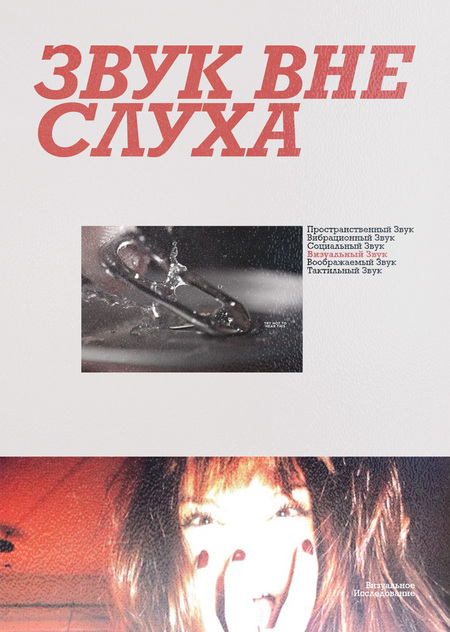
Concept
Sound can exist not only as an auditory phenomenon. It has the capacity to be visible, tactile, spatial, imagined, and social.
In creating this work, my goal was to introduce the reader to alternative modes of perceiving sound: through vibration, acoustic memory, visual cues, and bodily experience—all rooted in the neuroplasticity of the human brain. The term «unsound» becomes a critical concept in my research. It can be interpreted in the conventional sense as «non-audible"—existing outside the audible range, being distorted, unstable, or broken. However, within the scope of this project, I refer to a different meaning of this term—"sounding in another way.» In this approach, sound ceases to be solely something perceived by the ear and begins to exist through vibration, movement, light, space, and memory. Embodied listening plays a vital role in this process—a form of perception where sound is felt not only aurally but also through the body: via vibrations, tactile impulses, and spatial responses, which allows for a more holistic perception of space.
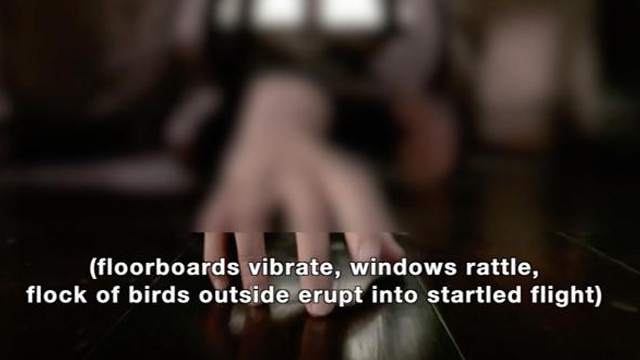
«Close Readings» Christine Sun Kim (2015)
The key concepts here are spatial orientation (sonic orientation), acoustic affordances, and acoustic readability of space. James J. Gibson noted that sound is capable of conveying information about the source, the action, and the characteristics of the environment within an aural space—a concept tied to acoustemology, which is a unique way of perceiving and knowing the world through sound. For instance, a vibration can signal an approaching train, while the rustle of fabric can communicate its material and texture.
Sound is capable of conveying not only information about space but also becoming a part of culture and the social environment. R. Murray Schafer introduced the concept of the acoustic community—a group of people united by shared signals, rhythms, and acoustic habits. Sounds can form a sense of belonging and become an element of collective identity. In this context, the voice functions not only as a means of communication but also as a form of presence, self-expression, and social participation. Sonic memory also plays an important role here—a kind of acoustic «library» through which we interpret and associate the surrounding world.
The research is conditionally divided into several parts: «visual and spatial sound, ” „sound as vibration and sensation, ” and „social sound.“ In each section, I have attempted to illustrate how sound can exist even in places where it cannot be heard in the conventional way.
Visual and Spatial Sound
As Pierre Schaeffer writes: «sound is not a point, but a temporal accumulation.» Even after it dissipates, sound continues to exist within memory, anticipation, and perception. Considering that memory can be embodied, auditory, muscular, and visual, we can also speak of the visual memory of sound. The brain interconnects multiple sensory channels, augmenting incoming information with prior experience. This is precisely why the memory of a place can be sonic, even when the sound is physically absent.
In sound studies, space is often viewed not as a neutral container, but as an environment in which sound leaves traces even after its disappearance. This gives rise to the concept of spatial or acoustic memory. Architecture is physically shaped by sound: materials, scale, ceiling height, and the room’s geometry determine how sound will reflect, attenuate, and resonate. In other words, the space already contains sonic potential—potential sound behavior. Sound continues to exist as a spatial trace, as a residual sense of resonance.


visually resonant spaces
If we consider this idea through the concept of deaf gain, the acoustic trace is not necessarily an audible remnant. It could be the vibrational memory of the floor, the visual anticipation of movement, the bodily memory of rhythm, or the spatial behavior of light. After a concert, the body still feels the bass, the floor continues to vibrate faintly, and the space feels «charged» with sound, despite the silence that has fallen.
Concert hall acoustics
Christine Sun Kim is a sound artist who explores the experiences of deafness, communication, and sound perception. In her work, she employs scores, graphic notation, text, as well as performances and media installations to reimagine the relationship between sound, language, and visual perception. As a co-creator of the open symbol <0/, which denotes «Deaf Culture, ” Kim addresses themes of Deaf culture, intersecting identities, and the social hierarchies embedded within communication systems.
For the «Mindful Reading» project, Kim edited fragments from five films, removing the audio track and partially blurring the images. She then invited four Deaf and hard-of-hearing collaborators to create their own subtitle versions, which were overlaid on the original studio captions on each screen. The four simultaneously playing videos showcase radically different interpretations of the same scene, underscoring how subtitling methods influence the perception of image, sound, and meaning.

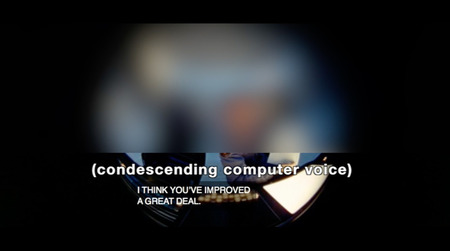
«Close Readings» Christine Sun Kim (2015)
«Close Readings» Christine Sun Kim (2015)
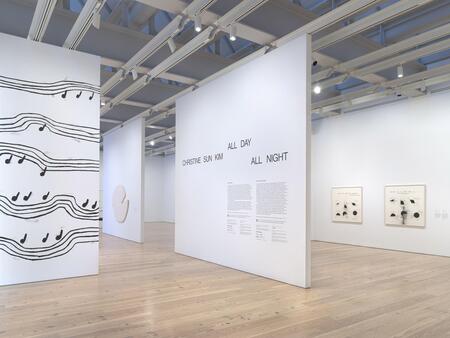
In 2020, Kim was invited to serve as an American Sign Language (ASL) interpreter during the Super Bowl. She performed two patriotic pieces alongside pop artist Demi Lovato and gospel singer Yolanda Adams. The large charcoal drawings she created later that same year illustrate the meticulous preparation the artist undertook for this performance. The musical staves, clusters of symbols, and newly organized lyrics visualize her ASL interpretation, which was structured according to the rhythm and emotional dynamics of the musical performance.
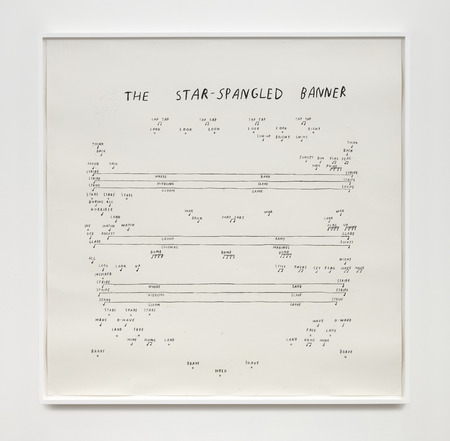
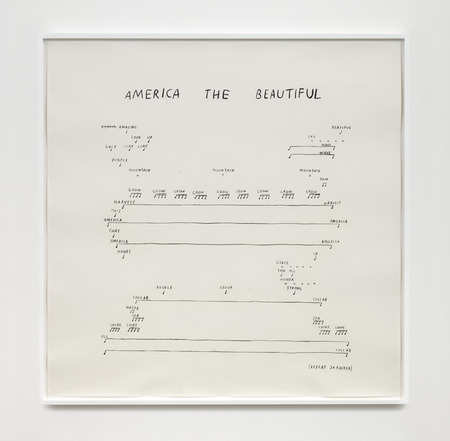
Christine Sun Kim, «America the Beautiful» and «The Star-Spangled Banner (Third Verse)» (2020)
Christine Sun Kim, «Voices Series» (2015)
Speaking of space, it is important to revisit the concept of neural plasticity in the brains of deaf individuals. Research indicates that the visual capacities of the deaf can be repurposed across several parameters, leading to: accelerated motion processing, deepened spatial perception, the development of peripheral vision, and enhanced sensitivity to visual cues. Based on these characteristics, the DeafSpace concept was developed—an architecture oriented toward visual and embodied communication.
Gallaudet University
One of the most prominent examples is Gallaudet University, where peripheral vision becomes a crucial element of comfort and safety. Rounded corners in the hallways allow individuals to anticipate an approaching person and avoid collisions. Soft lighting, devoid of harsh shadows, facilitates the reading of gestures and facial expressions. Transparent walls and windows help people notice movement, eye contact, and visual cues. The space also incorporates vibrational and light-based alerting systems—flashing lights in place of an alarm bell, floor vibration, and visual warning signals. In such architecture, sound ceases to be purely an auditory phenomenon and transforms into a spatial, visual, and tactile experience.
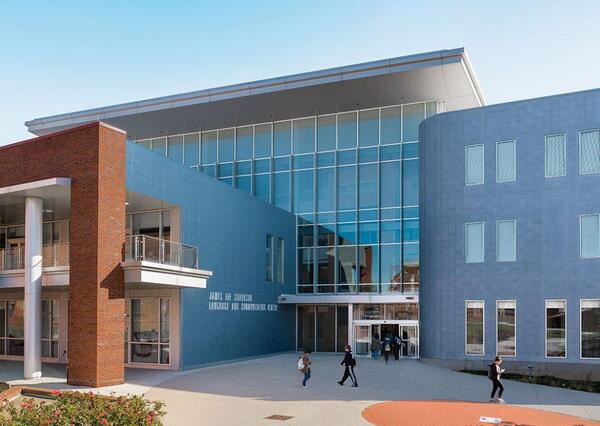
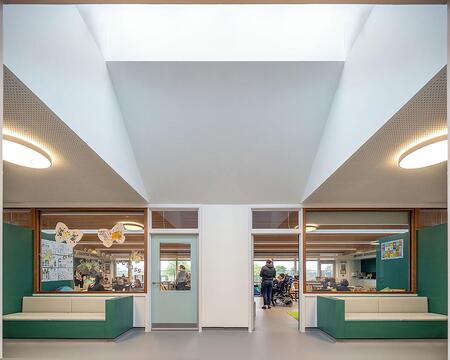
Gallaudet University

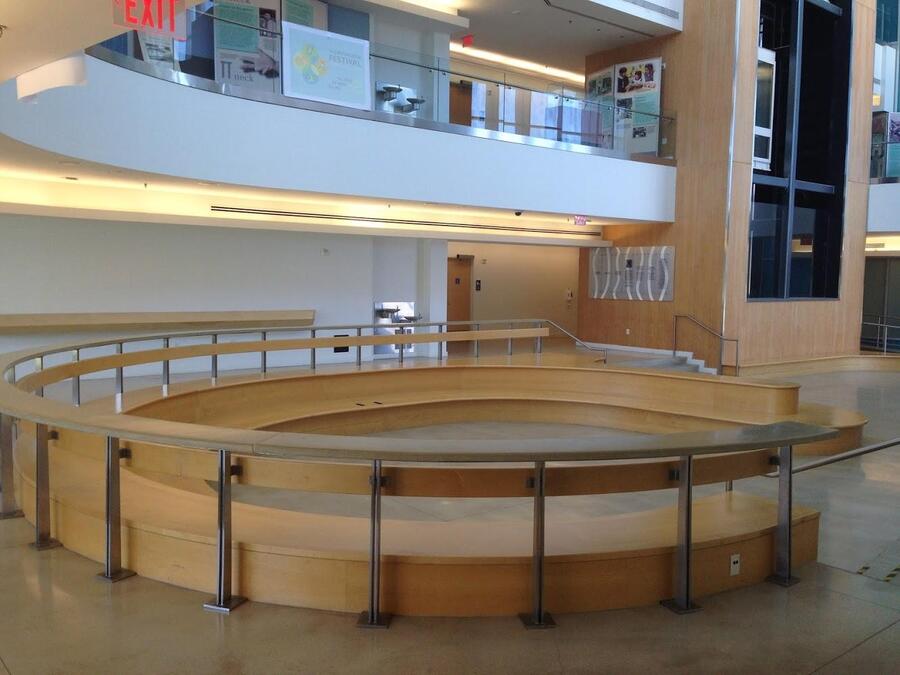
Deaf Spaces
Sound as vibration and sensation
I examined the topic of vibration and the tactile perception of sound in greater detail in my audio article dedicated to acquired deafness.


Vibrational and tactile (haptic) perception of sound is closely related to the concept of embodied listening, as well as to somatic forms of auditory experience. This is because the human body is capable of perceiving vibrations through bone conduction: sound waves travel through the skin, tissues, and bones, after which the brain interprets them as sensory information.
In the culture of the deaf, these forms of perception are often particularly significant because they are not lost with hearing loss—and in some cases, they are even amplified. This is linked to the brain’s neuroplasticity—its ability to adapt and redistribute functions across different regions. Consequently, areas that previously handled auditory processing may partially reconfigure to enhance other sensory channels, such as visual or tactile perception, including a more nuanced differentiation of vibrations and spatial changes.

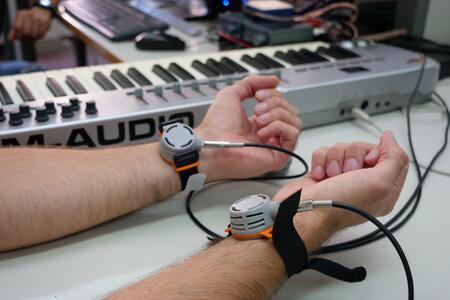
listening through vibration