Navigation
- Concept
- 19th-Century French Art Scene
- The Romantic Period
- The Impressionist Period
- The Constructivist Period
- Late Period of Creative Work and Its Influence on the Birth of Modernism
- Conclusion
- Bibliography and Image Sources
Concept
The influence of Paul Cézanne on the emergence of Modernism in painting is difficult to overstate. The artist not only moved beyond Impressionism but also laid the groundwork for the development of many modern art styles, particularly Cubism and Abstract Art. The central idea of this research is that Cézanne’s innovation stemmed not only from his genius and personal explorations but also from the artistic environment of the time and the influence of other progressive figures in the arts.
The goal of this research is to analyze how Paul Cézanne’s artistic style—which pioneered modernism in painting—emerged and developed under the influence of his external environment.
Justification for Topic Selection
The choice of topic is driven by the significance of Paul Cézanne in art history. He holds a unique place not only as an artist with a distinctive style but also as an innovator who rethought the principles of representing form, color, and space. His works displayed artistic principles that contributed to the genesis of modernist movements in painting.
Furthermore, the topic is interesting because it allows for the examination not only of one artist’s oeuvre but also of a broader context—the artistic environment of 19th-century France, which was rich with experimentation, stylistic shifts, and the search for new expressive means.
Material Selection Principle for Visual Exploration
For visual analysis, works by Paul Cézanne are selected that most vividly reflect the evolution of his artistic method. The primary selection criteria are: belonging to different periods of Cézanne’s career, the presence of characteristic signs of stylistic change, the significance of the work for the development of his artistic language, and its influence on subsequent artistic movements.
Additionally, works by contemporary artists and masters from preceding eras may be used for comparison to better understand Cézanne’s distinctions and innovations.
Principles of Research Categorization (Structuring)
The research is structured chronologically, aligning with the periods of Paul Cézanne’s work. An introduction to the historical context is also included to fully illuminate the theme of innovation. This allows for a sequential tracing of Cézanne’s artistic thought development within its cultural milieu. This division helps not only describe the stages of his creativity but also to demonstrate the internal logic guiding the evolution of his artistic method.
Principles for Selecting and Analyzing Textual Sources
Research material is selected to illuminate the environment in which Cézanne’s innovative thinking developed. Various source types are utilized: scholarly papers, contemporary accounts, and more modern articles. This approach allows for an examination of not only the artist’s biography and the artistic climate of his era but also how his work is perceived today. Ultimately, the selection aims to provide insight not just into Cézanne’s creative output, but also into his personality, which aids in better tracing the logic of his stylistic development.
Key Research Question and Hypothesis
Key Question: How did the artistic environment of 19th-century France influence the formation of Paul Cézanne’s innovative thought and the development of his pictorial method?
Research Hypothesis: Paul Cézanne’s innovative thinking developed not only through his personal explorations but also under the influence of the artistic environment of 19th-century France—including Impressionism, Romantic traditions, and the general trend toward reinterpreting classical principles of painting. It was the interaction of these factors that led to the creation of a new artistic language, which became the foundation of modernism.
The Artistic Environment of 19th Century France
The influence of the Paris Salon in 19th-century France was colossal. It shaped painting standards and determined the reputation of artists. By gaining recognition at the exhibition, an artist acquired not only social fame but also wealthy, influential patrons. Salon masters became the epitome of success and prosperity; consequently, competition was immense, and the flow of work was endless. Rejected paintings rarely found favor with the impressionable public or the jury, which usually dismissed anything that did not align with the prevailing academic style of the time.
The Paris Salon profoundly influenced the worldview of a society that largely recognized only the aesthetics of academic painting in art.
«Romans of the Decline, ” Toma Couture, 1847
Amid this atmosphere of conservatism and constraints, progressive artists began to attempt to break the old system and find opportunities to express themselves through new artistic styles and movements.
Understanding the artistic environment of France in the second half of the 19th century is essential for a comprehensive analysis of Cézanne’s style and innovation.
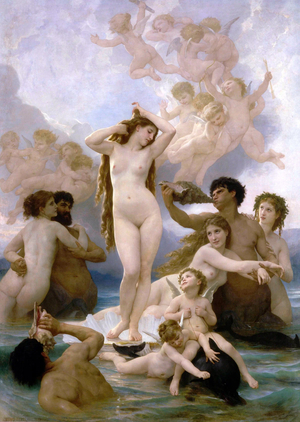
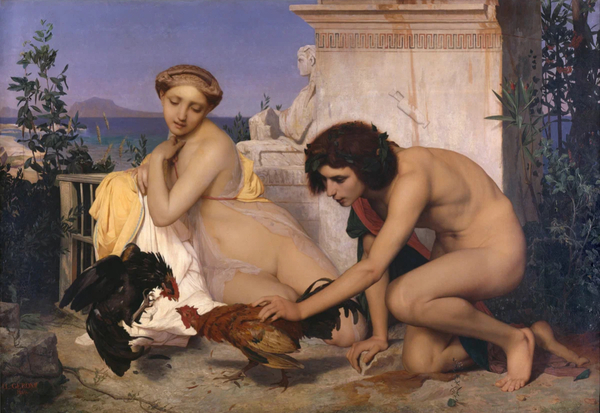
«The Birth of Venus, ” William-Adolphe Bouguereau, 1879; „The Cockfight, ” Jean-Léon Gérôme, 1846
Despite his financial security, it was not easy for Paul Cézanne to develop his own artistic style under such circumstances, as critics frequently targeted his low self-esteem and lack of confidence in his abilities.
The Romantic Period
In Paul Cézanne’s early work, pictorial styles such as Romanticism and Realism predominated. This period is also referred to as «dark» because the artist typically painted dramatic and tense subjects, utilizing a somber palette. Cézanne was inspired by Old Masters, particularly Paolo Veronese, Tintoretto, Eugène Delacroix, and Honoré Daumier, an influence that is reflected in his early pieces.
«Fisherman on the Rocks, ” Paul Cézanne, 1862–1864.
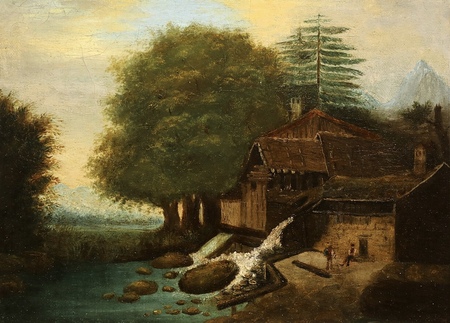
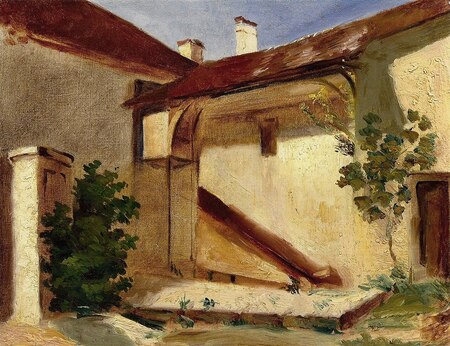
«Landscape with a Windmill, ” c. 1860; „Farmyard, ” 1862–1864, Paul Cézanne
For Cézanne’s paintings of this period, characteristic features include contrast, a complex and rich palette, and an endeavor to convey form through color.
«The Rocks on the Shore, ” Paul Cézanne, 1865–1866.
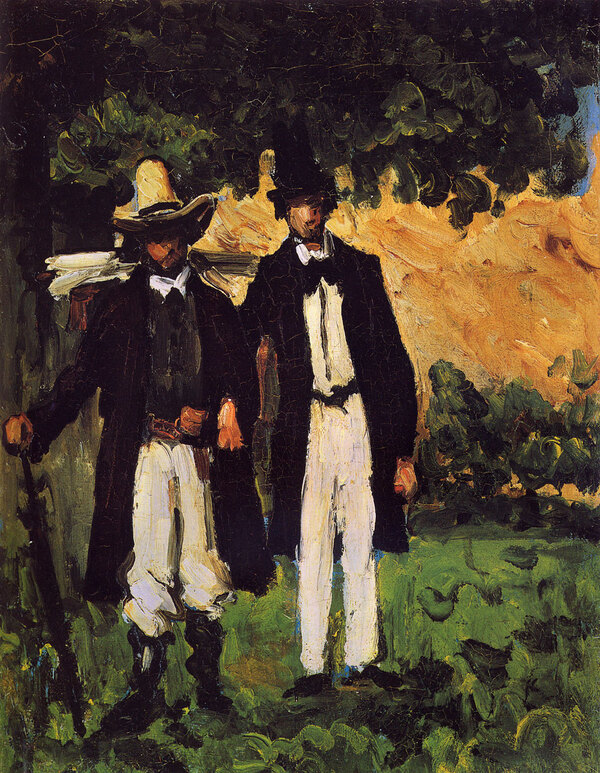
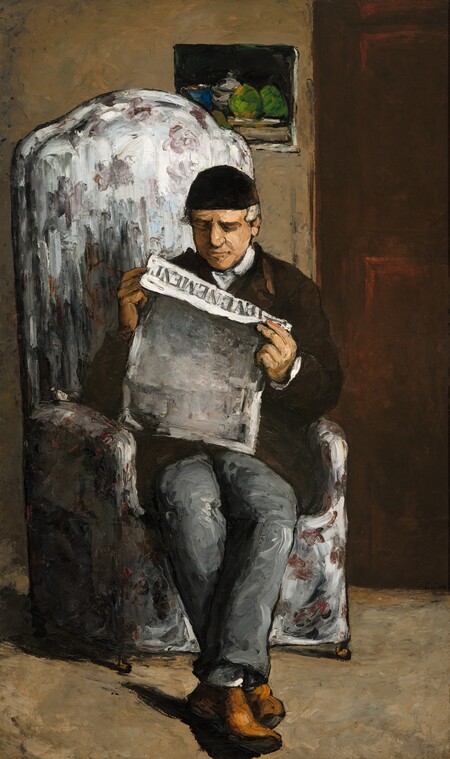
«Marion and Valabreg Leave»; «Louis-Auguste Cézanne, the artist’s father, reading a newspaper, ” Paul Cézanne, 1866