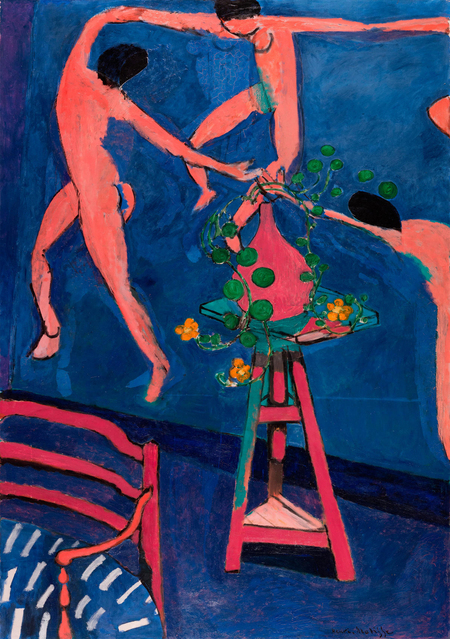
Concept
Matisse—a wild, restless, and passionate figure, the leader of Fauvism and a classic of 20th-century art. The artist’s work can be summed up with a single word: «colorfulness.» His utterly brilliant talent for combining colors, his play with space in his paintings, and the musical quality of his patterns—all define him. Matisse bends the laws of perspective and dismantles conventional ideas of depth and volume in his art. He pushes the boundaries of form and color, depicting the emotional perception of reality rather than merely copying the external world. He evokes the real world, but he doesn’t redraw it; he breaks every established rule. Henri Matisse observed and painted the world around him, refusing to label his art as abstract because he was truly painting the world—just in different colors. A rebel! Matisse transformed what he saw and played with paint like a child, yet he did so with deliberate intent. He achieved something remarkable: despite the simplification of his forms, his work invites endless contemplation. Within his pieces reside freedom, air, light, worldliness, and serenity. They radiate a distinct energy and lightness, urging the viewer to feel the joy of life and transcend the mundane. In short: «Luxury, tranquility, and delight.»
The concept of this visual study aims to explore Matisse’s creativity, which not only pushes the boundaries of color perception but also inspires a different way of viewing reality and space within his paintings. The basis for choosing this topic was the desire to delve deeper into the nature of Matisse’s unique artistic language and to reveal, through the visual sequence, the energy and freedom that permeate his work. This research not only facilitates immersion into the «Matissean world» of color fire but also inspires the application of his methods in contemporary art and design. During the study, several parallels were drawn with Matisse’s painting, as homages to his creativity are as popular as the artist’s works themselves.
Hypothesis: Matisse was unafraid to reduce things to their utmost simplicity, experiment with color like a true Fauvist, and bring movement to his paintings. This bold artistic approach, rooted in expressiveness and decorative quality, helps create a vibrant and emotionally rich space where the viewer feels a sense of freedom. «I simply want a tired person, when looking at my paintings, to taste rest and tranquility, ” the painter once said. Key Questions: How did Matisse manage to create an entirely different reality—a world submerged in color and pattern? What makes his paintings so alive? Why does the desire arise not just to look at them, but to „dance, ” dissolving into absolute harmony?
Navigation
The research is organized by thematic blocks, following the methods of Matisse:
- Color as Accent 1.2 What is Fauvism?
- Pattern as Rhythm 2.2 Geometry of Arabesques
- Space as a Window to Another World 3.1 The Window Motif 3.2 The Concept of «Interior» 3.3 The Dance Motif
- Parallels with Contemporary Art
- Conclusion
Color as an Accent
Henri Matisse, «Fruits and Bronze» 1909–1910
Fauvism, which originated in France and soon swept across Europe, became the first avant-garde movement in art. Its essence lay in the spontaneous, intuitive search for new means of expression, where emotional expression superseded theoretical construction. Fauvism lacked a strict system—what mattered was not the precise reproduction of nature, but rather the conveyance of the feelings it evoked. The works of the Fauvists resemble splashes of paint: plastic, vibrant, and dynamic brushstrokes, ready to surge upon the viewer like «wild beasts» escaping a cage.
Henri Matisse, who became the leader of the Fauvists, considered color the primary tool for creating emotional emphasis in painting. Instead of complex chiaroscuro constructions, he employed pure, saturated color. The influence of Van Gogh, Gauguin, and Cézanne, as well as the Nabis group, was evident in the drive to capture not a fleeting impression, but something deeper and more characteristic. Matisse was the only Fauvist who never ceased to acknowledge Fauvism as an integral part of his painting, and it is for this reason alone that he could confidently declare: «Fauvism is not everything, but it is the foundation of everything.»
Henri Matisse: «I want the color on my canvases to sing, without regard for any rules or prohibitions.» [1]
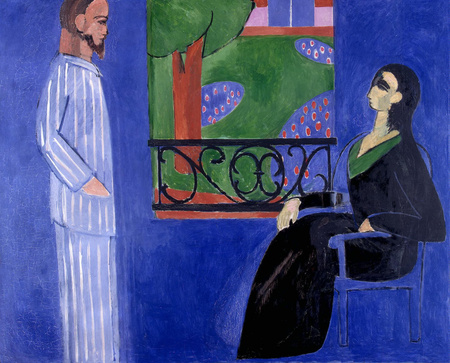
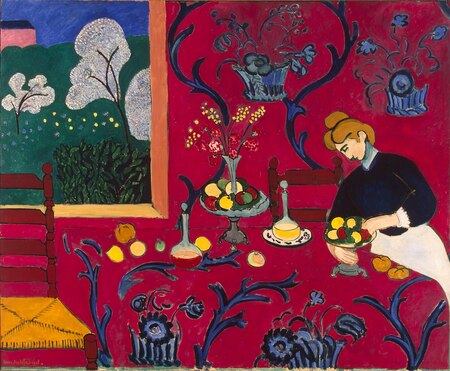
Henri Matisse «Conversation» 1909–1912 Henri Matisse «The Red Room» 1908
For Matisse, the central focus is color balance. He achieves this through intuitive feeling and openness to perception. His works seem steeped in color, immersing the viewer in an atmosphere of a richly chromatic world. Each color is a single focal point, a single spatial environment—as seen in the 1911 piece, «Red Studio.» All these varied objects appear to be floating in some kind of liquid. Time has stopped; the clock has no hands. As Matisse stated, for colors to appear intense, they must be used in large, unified patches. Small areas of color cannot convey the full depth of a hue; for instance, for red to truly «sing, ” it must be placed as a large patch on the canvas.
Henri Matisse «Red Studio» 1911
Paul Cézanne: «Line and color do not oppose each other. When color achieves its greatest intensity, form acquires its greatest expressiveness.» [2]
Henri Matisse, «Shell on Black Marble,» 1940
Matisse began using color in ways never before seen in the history of Western painting: dividing color across planes, leaving works unfinished, and reinterpreting the meaning of color. If you simply use masses of color without any relief, without black, white, or neutral tones, it becomes excessive. You must use black and white—that is, establish boundaries, create contrasts—otherwise, the painting cannot convey a sense of tranquility. For Matisse, bright, pure color combinations and a simple silhouette were crucial—it is in this union that the energy and emotionality of his art are born. In Matisse’s work, color is not a means of imitation but a way to convey feeling, to create another world: the paints burn fiercely and sing upon the canvas.
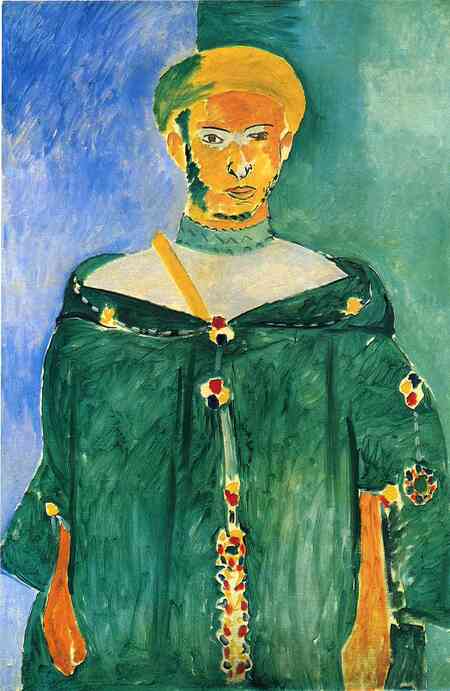
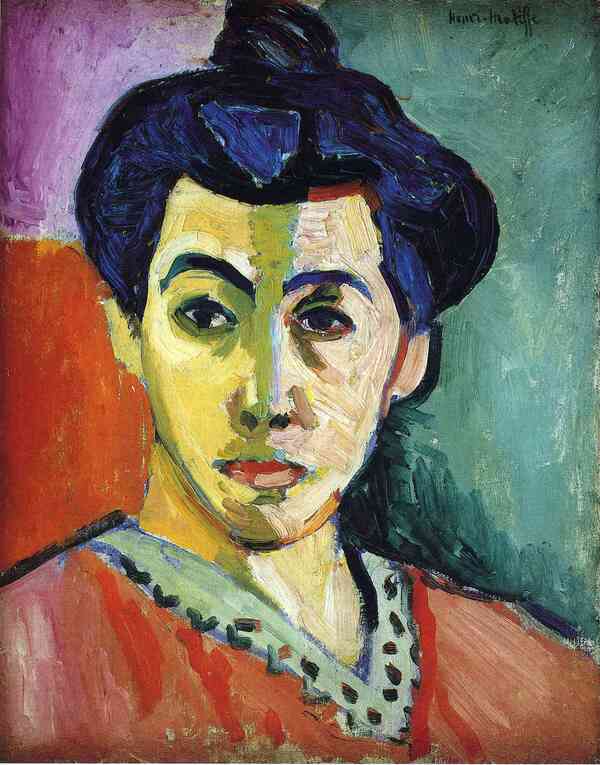
Henri Matisse, «The Standing Moroccan in Green,» 1912 Henri Matisse, «Portrait of Madame Matisse. Green Stripe,» 1905
Pattern as Rhythm
Henri Matisse, «The Little Odalisque in Purple, ” 1937
In the work of Henri Matisse, the arabesque (derived from the French word arabesque—"Arab») holds a special place—it is a complex geometric ornament made of stylized leaves and flowers, which arrived in Europe under the influence of Muslim art. The interplay of curving lines and repeating patterns accompanied the artist throughout his life. From childhood, he collected a series of draperies, which he called his «Ma bibliothèque de travail,» or working library. [3] Matisse perceived the arabesque as «a passionate impulse animating the drawing.» The patterns on his canvases can be compared to musical notes—it is a «living chord of colors, akin to a musical harmony.» It gives the impression that Matisse is painting symphonic interiors, where the arabesques establish a musical rhythm and infuse the paintings with a particular resonance.
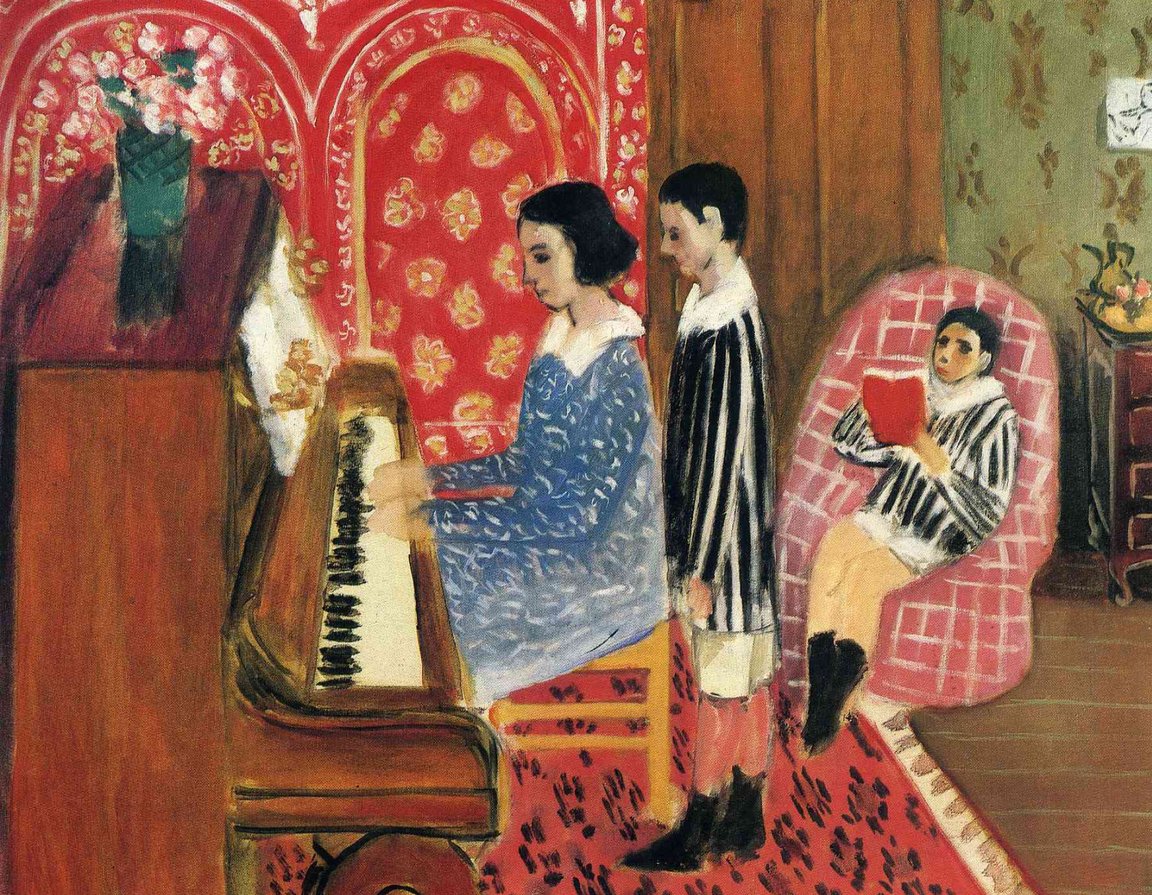
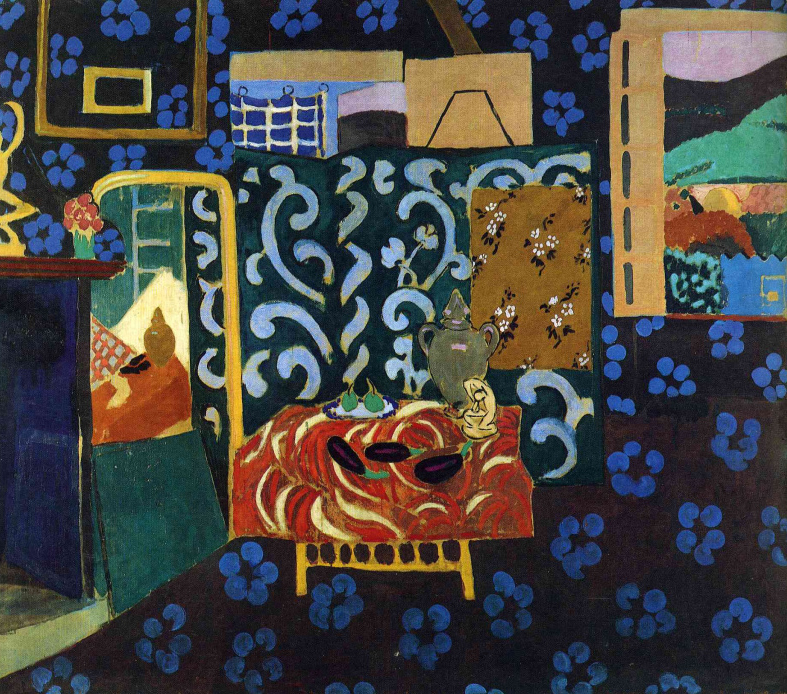
Henri Matisse, «Interior with Eggplants» 1911 Henri Matisse, «Piano Lesson» 1923
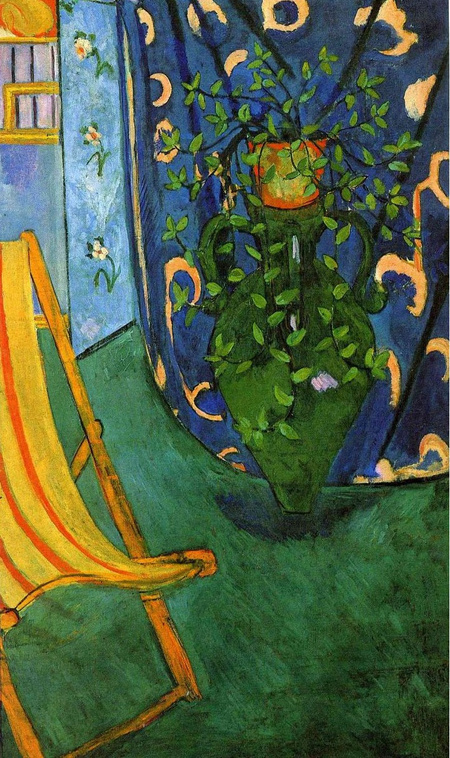
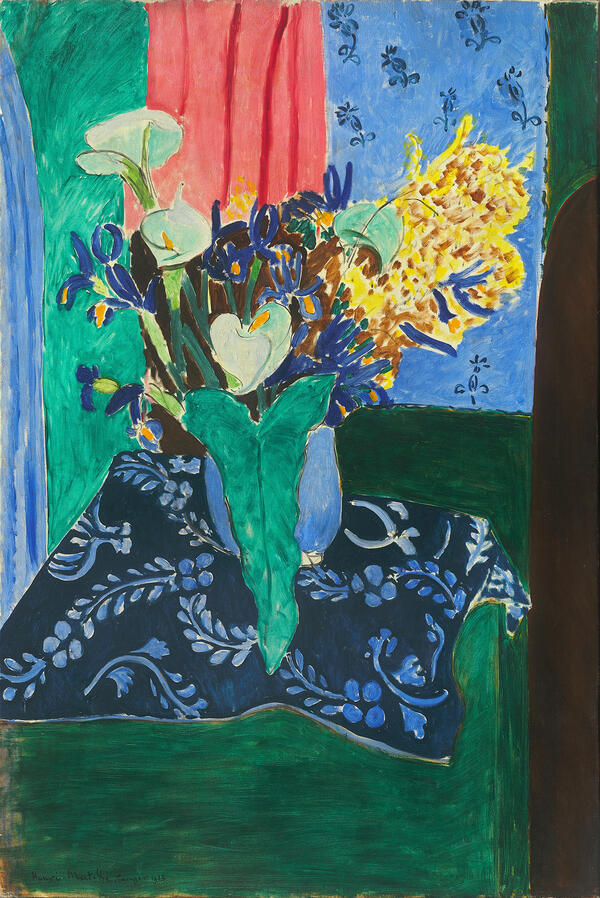
Henri Matisse, «Workshop Corner» 1912 Henri Matisse, «Aromas, Irises, and Mimosa» 1913
In the painting «Still Life with Blue Tablecloth» (1909), the rhythm is set by the fabric featuring the same pattern as in «The Red Room, ” but here the ornament is more lively and dynamic. The blue pattern flows seamlessly from the tablecloth to the walls, engaging the viewer and drawing all attention to itself—it is the compositional center. The movement of the arabesque elements lends the canvas temperament and energy, creating a spatial illusion, whereas in „The Red Room, ” the separation of planes is achieved through sharp contours and figures. Incidentally, the „Blue Still Life“ depicts „Toile de Jouy“ fabric from the French town of Jouy, one of the artist’s favorite materials.
Henri Matisse, «Still Life with a Blue Cloth, ” 1909
After his father’s death in 1910, Matisse traveled to Spain, where in Seville he created the still lifes titled «Sevillian» and «Spanish.» In these works, he utilized virtually the same ornamental pattern; the artist seemed to isolate a fragment from one painting and render it with minor variations. One sofa—a different pattern; one room—one subject. Both paintings are permeated with an atmosphere of the Orient, exoticism, and the richness of interiors.
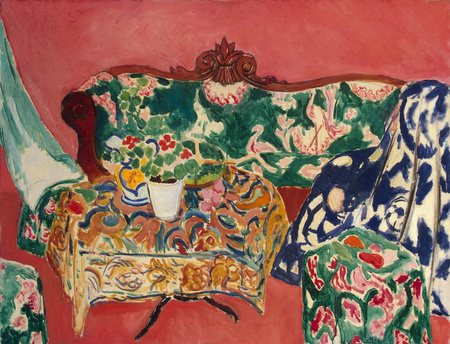
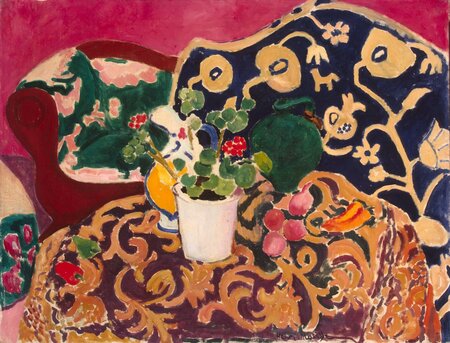
Henri Matisse «Seville Still Life» 1910 Henri Matisse «Spanish Still Life» 1910
One of Matisse’s well-known paintings is «Family Portrait» from 1911, where meticulous miniature detail merges with monumental decorative qualities. The canvas depicts a domestic scene and a family idyll: patterned fabric on the walls, a colorful rug, another patterned throw, and two children in suits. In Matisse’s domestic still lifes, patterns typically spread across the entire surface of the work—here, one can observe both floral patterns and spots with stripes, reminiscent of rug architecture.
Henri Matisse «Family Portrait» 1911
For Matisse, patterns were not merely ornamental designs on fabrics and rugs, but a kind of overarching motif that permeated his entire body of work. The characters in his paintings share a unified texture, his sculptures evolve from one piece to the next, and motifs like windows, fish, and arabesques are regularly repeated. A fitting example to illustrate this is the painting «Red Fish» from 1912. Here, even though the fabrics are not visible, an astonishing pattern is created through the use of color.
Henri Matisse, «Red Fish, ” 1912