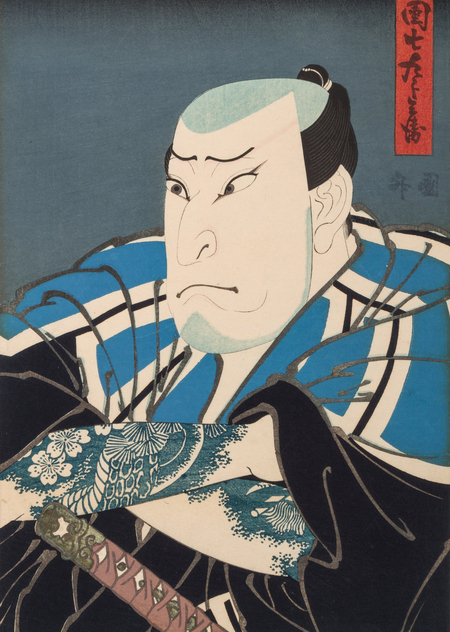
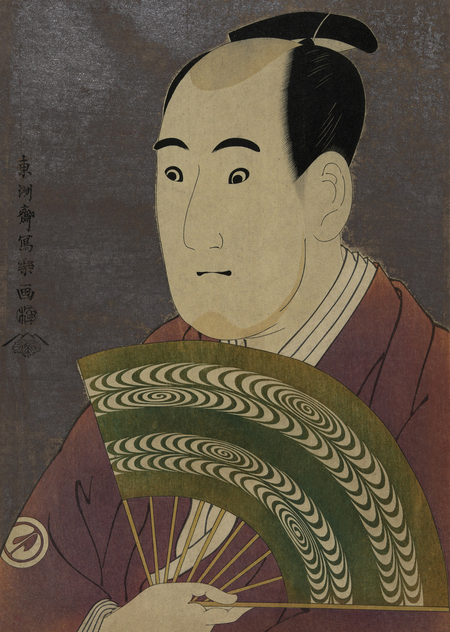
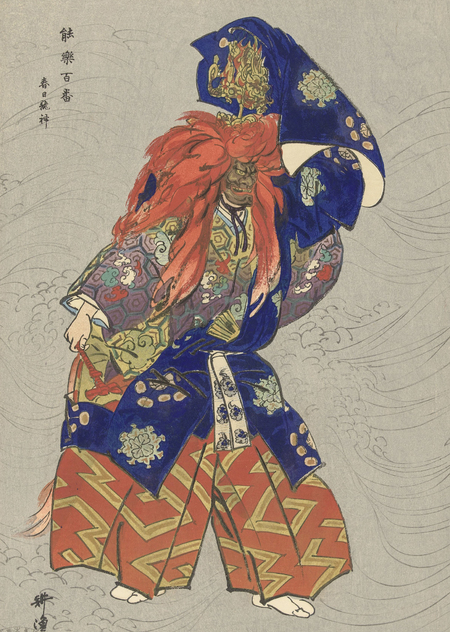
The Japanese archipelago presents a unique cultural landscape where art developed in continuous dialogue between indigenous animistic beliefs and powerful waves of continental influence. From the first ceramic vessels crafted by hunter-gatherers to modern digital installations, Japan’s artistic tradition demonstrates an exceptional capacity for adaptation and synthesis. Our timeline covers the key milestones of this evolution, showcasing the inextricable link between political upheaval, shifting religious paradigms, and the birth of new aesthetic forms. It illustrates how art served as a tool for state propaganda, an object of spiritual contemplation, and a mirror reflecting a rapidly changing society.
Около 40 000 до н. э. — 300 н. э.
Prehistoric Japan: Paleolithic, Jōmon, and Yayoi
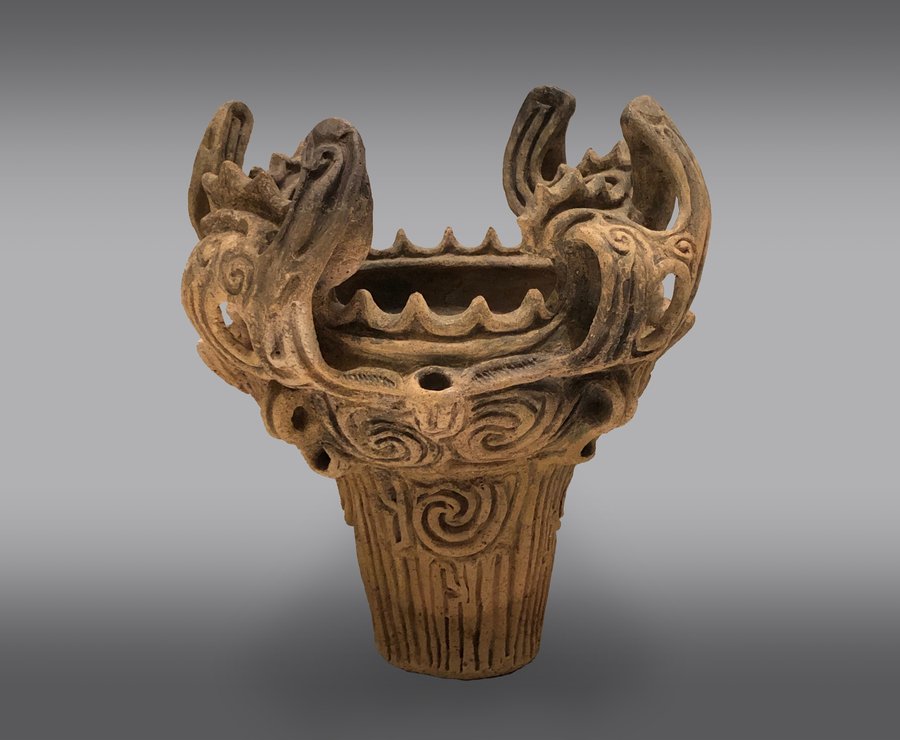
Jomon-period ceramics, crafted in the «flame» style. c. 3000 BCE
Inhabitation of the archipelago began during the Paleolithic era—ancestors of the Japanese crossed from the continent to the islands via land bridges that existed at the time. With the advent of the Jōmon period (c. 14,000–300 BCE), a semi-sedentary lifestyle based on hunting, gathering, and fishing developed in Japan. Climatic changes and migrations from the continent around 300 BCE marked the beginning of the Yayoi period (300 BCE — 300 CE), during which irrigated rice farming and the metallurgy of bronze and iron emerged on the islands; this is when social stratification began to form, contributing to the rise of the first proto-states.
Jomon art is principally represented by ceramics, recognized as some of the oldest in the world—vessels featuring a distinctive «cord-marked» ornamentation—the plasticity of «kaen-doki» (fire pottery)—vessels with sculpturally exaggerated decoration, which held ritual significance—and also dogu—clay figures with hypertrophied features linked to fertility and healing magic. During the Yayoi period, the archaic abundance of forms gave way to smooth, functional ceramics created on the potter’s wheel. Donut-shaped bronze bells (dotaku) and mirrors, decorated with geometric and figurative patterns, emerged as objects of prestige and symbols of the leaders' authority.
250–592 годы
Kofun Period
Sculptural horse head. Han Dynasty period. Kofun period
The period is named after the megalithic tombs («kofun»), a key feature of which is the lock-like, pit-style burial (zenpō-kōen-fun). This era is characterized by the centralization of power and the rise of the powerful Yamato state, whose elite controlled trade routes and actively interacted with the continent. The introduction of writing and Confucianism, alongside military technology, accelerated societal consolidation. The hierarchy of this period found expression, among other things, in the monumental landscape—gigantic burial mounds, such as the tomb of Emperor Nintoku, were comparable in size to the pyramids of Giza.
Kofun art is also represented in sculpture—specifically, the haniwa, funerary figures. These were cylindrical clay sculptures placed on burial mounds to demarcate sacred space and prevent erosion. Later, figurative haniwa emerged, depicting warriors, priestesses, houses, and animals. Their naive yet expressive realism lacks the solemnity of funerary ritual. Decorative arts are also represented by bronze mirrors with relief ornamentation and massive gold earrings discovered in wealthy burials. In the late period, Buddhism entered the archipelago via Korean kingdoms, fundamentally altering the trajectory of Japanese art.
592–710 годы
Asuka Period
Sakyamuni Triad, created by Tori. The photograph dates to 1888–1889.
The era is named after the location of the imperial palaces in the Asuka River valley. This period marked the establishment of a centralized state modeled after China (Taika Reforms, 645 CE) and the rapid spread of Buddhism, which became the state ideology during the regency of Prince Shōtoku. The conflict between the influential clans of Soga and Mononobe was resolved in favor of Buddhism, leading to large-scale temple construction and the active import of continental craft techniques, painting, and architectural principles.
The Asuka Art is marked by the first wave of powerful influence from Northern Wei art and the Korean state of Paekche. The pinnacle of sculpture is the Shakyamuni Triad by the master Kurasukuri-no Tori (Horyu-ji Temple, 623 CE)—a bronze composition demonstrating a frontal, hieratic style with characteristic archaic smiles. The Horyu-ji architectural complex, comprising the Golden Hall (Kondo) and the five-story pagoda, is the oldest surviving wooden building in the world, embodying the Chinese post-and-beam system. A canonical example of drawing from that era is the «Heavenly Dwelling» motif on the Tamamushi-no Zushi altar, which combines lacquerware painting with oil painting.
710–794 годы
Nara Period
Head of a Bodhisattva. Nara Period. 8th Century
The establishment of the permanent capital of Heijō-kyō (modern Nara) signaled a new apotheosis of Japanese state centralization. Emperor Shōmu initiated the creation of a network of provincial temples (Kokubunji) and the construction of the Great Buddha (Daibutsu) at Tōdai-ji Temple, which became the cultural and administrative center of Japan’s entire Buddhist system. However, the elevation of the Buddhist Sangha to a political power was one of the reasons for the subsequent capital relocation.
In Nara sculpture, there was a transition from bronze to dry lacquer (Dakkatsu Kansitsu) and clay, which lent plasticity and dynamism to the figures. The realistic portrait of the monk Ganjin and the formidable guardians of Todaiji Temple express the era’s profound interest in nature and internal expression. The treasure hall at Shosoin holds artifacts reflecting its cosmopolitan taste: glass, ceramics, and textiles from Persia, China, and Central Asia, alongside Japanese lacquerware executed in the maki-e technique. Painting from this period is represented by panel paintings in the Kara-e style, which copies the Tang dynasty style, and subjects from the life of the Buddha.
Heian Period
Fujiwara no Takanobu. Portrait of Minamoto no Eritomo. Painting on silk. 1179
The transfer of the capital to Heian-kyō (Kyoto) inaugurated four centuries of aristocratic cultural dominance, led by the Fujiwara clan. Following the cessation of embassies to Tang China in 894, a period of cultural isolation began, leading to the reinterpretation of borrowed forms and the flourishing of the indigenous national style, kokufu bunka. Political power gradually shifted from the emperor to regents, and subsequently—to military clans situated far from the capital. Shinto-Buddhist syncretism (Ryōbu Shintō) legitimized the aestheticization of religious life.
Heian religious art was defined by esoteric Buddhism (Mikkyo); the «Two Worlds» mandalas (Ryo-kai mandalas) served as maps for meditative practices. In sculpture, following the esoteric traditions introduced from China, the style of Master Jōtō was established. This style was based on the joinery technique of yosegi and the creation of a canon of proportions, which produced images of tranquil Buddhas like Amida (Nyorai Kannon). Secular architecture developed the Shinden-zukuri style, characterized by its open spaces and gardens. Yamato-e painting, with its lyricism and seasonality, adorned byōbu screens and emaki scrolls; the Genji Monogatari Emaki embodies the quintessence of mono no aware—the «poignant charm of things.»
1185–1333 годы
Kamakura Period
Night raid on the Sande Castle. Illustrated history of the Heiji civil war. Late 13th century
The victory of the Minamoto clan over the Taira clan in the Genpei War led to the establishment of the first shogunate—a military government (bakufu)—in Kamakura. This was an era of dual rule: the imperial court in Kyoto maintained cultural prestige while the samurai military class held the real power. The threat of Mongol invasions (1274, 1281) unified the nation but led to the financial collapse of the bakufu. In the spiritual sphere, a crisis of eschatological expectation (mappo) predominated, popularizing democratic Amidaist schools and the austere practice of Zen Buddhism.
The art of the Kamakura period is often called a renaissance of realism. The Kei school of sculpture, led by Unkei and Kaikei, created heroic, anatomically accurate figures of guardian figures and saints, lending them distinct portrait individuality. In architecture, the graceful Heian style gave way to the monumental Daibutsu-yo (Great Buddha) style and a stricter Japanese style (wa-yo). Pictorial scrolls, such as the Heiji Monogatari emaki, meticulously documented battle scenes and the lives of warriors, reflecting the pragmatism of the new elite. The integration of Zen brought monochrome ink painting (suibokuga) and portrait sculpture of masters into the art of the era.
1336–1573 годы
The Muramachi Period and the Sengoku Era
Sesshu Toyo. View of Amanohashidate. 1501–1506
After a brief restoration, Kammu Asikaga Takauji established the second Shogunate in Kyoto. The authority of the Shoguns was contested, which led to the protracted Ōnin War (1467–1477)—a conflict that devastated Kyoto and initiated the Sengoku Jidai, or «Warring Provinces.» This age of perpetual warfare fostered social mobility and the breakdown of the old aristocratic hierarchy: peasants took up arms (ikki), and talented commanders rose from «the bottom up» (gekokujō). The foundations of mercantile capital were laid during this period, and the first contacts with Europeans were established.
Japanese culture during the Muromachi period remained deeply influenced by Zen Buddhism. Suibokuga (monochrome ink painting) reached maturity with the landscapes of Sesshū Tōyō, who popularized the energetic, angular brushstroke and spatial depth. In architecture, the Shoin-zukuri (chamber style) developed, featuring tatami mats, sliding partitions, and the tokonoma niche, used to display a scroll or Ikebana. The rock garden at Ryōan-ji Temple became a pinnacle of Zen garden art (kare-sansui), where an abstract composition serves as an object of meditation.