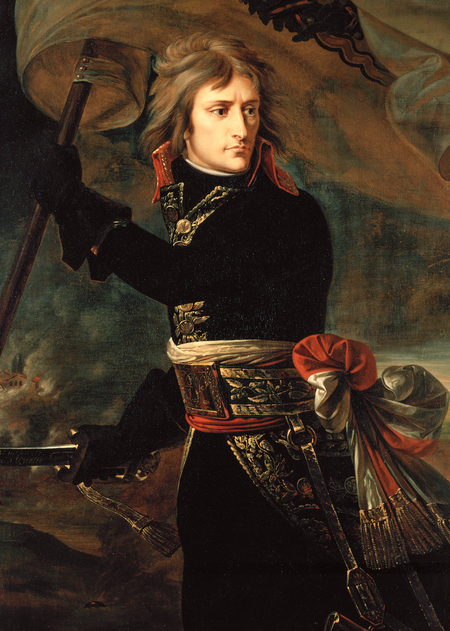
The timeline presented focuses on military leaders whose activities span almost four thousand years of conflict—from Ancient Egypt to the mid-twentieth century. We will examine these commanders not just as tacticians, but as expressions of their contemporary cultures. From the ancient chariots of Thutmose III and the philosophy of Sun Tzu to the steel formations of Eisenhower—we present a gallery of portraits where personal valor, intellect, and historical vicissitudes intertwine into a singular tragedy of violence and the human spirit’s power.
Около 1481–1425 годы до н. э.
Timos III
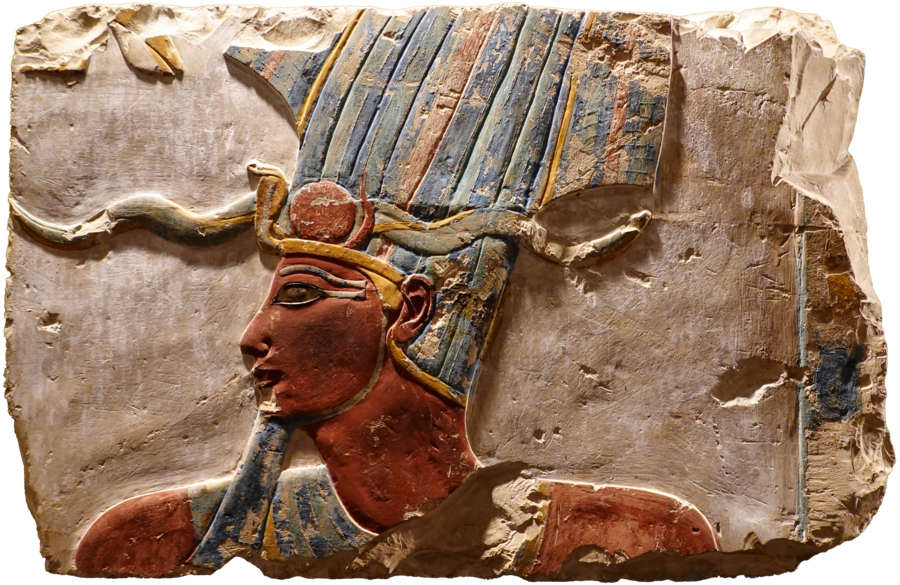
Painted relief depicting Thutmose III
The fifth Pharaoh of the 18th Dynasty, Thutmose III, entered history as the «Napoleon of Ancient Egypt, ” transforming the country into a formidable empire of the ancient world. After the death of Hatshepsut, his official co-regent and great female Pharaoh, Thutmose III soon faced a rebellion led by a coalition of 330 Syrian and Palestinian princes, headed by the King of Kadesh. In 1457 BCE, the Egyptian army launched its first campaign—only seventeen such expeditions were undertaken during Thutmose III’s reign. The primary source of information regarding the Pharaoh’s actions is the detailed annals carved into the walls of the Temple of Amun-Ra at Karnak, which were maintained by the military scribe Thyeneni. This stands as the first comprehensive chronological record of military campaigns in history.
In the Battle of Megiddo, Thutmose III demonstrated himself as a master of unconventional solutions: against the advice of his commanders, he chose the shortest yet lethally dangerous route through the Aruna Gorge (Wadi-Ara), where the troops could advance only in single columns. Personally leading the column, the Pharaoh caught the coalition forces off guard as they awaited him on comfortable roads. Building on his momentum, he employed a concave military formation that enveloped the enemy’s flanks, leading to panic within the enemy ranks. However, despite the complete rout of his opponent in the open field, Thutmose III was forced to conduct a seven-month siege of Megiddo—his soldiers became engrossed in looting the spoils, missing the opportunity for an immediate assault. During his reign, Thutmose III established a professional officer corps, integrated chariots into his army as a striking force, and built the world’s first navy.
VI–V века до н. э.
Sun Tzu
«Terracotta Army"—statues of warriors from the tomb of China’s first emperor, Qin Shi Huang. 210 BCE
Sun Tzu was a descendant of the rulers of the State of Qi, but he gained fame serving in the southern State of Wu. Basic biographical details about him are found in Chapter 65 of Sima Qian’s «Records of the Grand Historian» (Shiji), which describes how Prince Helü tested his military art by ordering the training of an army of 180 palace concubines. The execution of two principal concubines for disobedience demonstrated the general’s iron discipline and absolute authority. His traditional dates of life are 544–496 BCE. He led campaigns against the powerful State of Chu, capturing its capital of Yin, and contributed to the transformation of «barbarian» Wu into one of the leading powers of the Spring and Autumn period.
Sun Tzu entered history not so much as a military commander, but as the author of the world’s oldest treatise on the art of war—“The Art of War» (literally, «The Laws of War of Teacher Sun»), which consists of 13 chapters. His approach synthesized Daoist dialectics, Confucian ethics, and Legalist pragmatism, defining war both as a «great affair of state» and as «the way of deception.» The treatise’s key concept is built upon five principles (Dao, Heaven, Earth, Commander, and Method), which must be realized through seven «calculations.» The main objective is to «subdue the enemy without fighting, ” achieved through strategic superiority, disinformation, and manipulating the adversary. Sun Tzu emphasized the necessity of swift warfare, resource conservation, and espionage—which he called the most crucial expenditure—because „no protracted war has ever benefited the state.“ This treatise became the foundation of the „Seven Classics of Military Canon“ and remains relevant to military theory to this day.
356–323 годы до н. э.
Alexander the Great
The battle between the armies of Alexander the Great and Darius III of Persia. Roman floor mosaic. Pompeii. Circa 100 BCE. Fragment
Son of King Philip II and student of Aristotle, Alexander III of Macedon ascended the throne in 336 BCE. In the spring of 334 BCE, along with tens of thousands of infantry and cavalry, he crossed the Hellespont, initiating war against the Persian Empire. After victories at Granicus and Issus, he conquered Phoenicia, Tyre, and Egypt, where he founded Alexandria and was proclaimed Pharaoh. The decisive battle at Gaugamela resulted in the crushing of Darius III’s army; following this, Alexander took Babylon, Susa, and Persepolis, proclaiming himself «King of Asia.» Subsequent campaigns led him to Central Asia and India (the Battle of the Hydaspes), but his weary army forced him to turn back. On June 13, 323 BCE, Alexander died in Babylon, leaving behind an empire that immediately began to fracture after his death.
Alexander’s military successes were built upon the army established by his father: a phalanx of Pedzetai with five-meter sarissas pinned down the enemy, while heavy cavalry of the Getai under the king’s personal command delivered crushing blows to the flanks or achieved breakthroughs in the center. At the Battle of Gaugamela, facing overwhelming Persian superiority, Alexander employed a echelon formation and a feint, creating a breach in the enemy’s defense. He actively utilized siege weaponry (siege towers, battering rams), combined units of Greeks and conquered peoples, and established a navy to secure communications. A critical element of his strategy was his political maneuvering: he liberated the Greek cities of Asia Minor from Persian dominance, establishing democracies, which secured the support of the local population.
247–183 годы до н. э.
Hannibal Barca
Cornelis Kort. The Battle between Scipio and Hannibal at Zama. Before 1578
Hannibal was raised in a military camp from childhood, toughened by expeditions through Spain. Legend holds that as a nine-year-old boy, he swore before the altar to be Rome’s eternal enemy. In 221 BCE, the 26-year-old Hannibal was proclaimed commander-in-chief by the army in Spain. In 219 BCE, he stormed Saguntum, a city allied with Rome, which served as the casus belli for the Second Punic War. In the spring of 218 BCE, with an army numbering up to 50,000 infantrymen, 9,000 cavalrymen, and 37 elephants, Hannibal made the crossing from Spain into Italy, traversing the snow-covered Alps in 15 days and losing more than half his forces.
Hannibal’s tactical genius culminated in the Battle of Cannae (August 2, 216 BCE), where he encircled and annihilated a Roman army of 80,000 with just 50,000 soldiers, employing a classic double «envelopment» tactic: a weak center intentionally retreated, luring the enemy into a «pouch, ” while powerful Numidian and Gallic cavalry delivered a devastating blow to the flanks and rear. Hannibal skillfully utilized diverse forces (Iberians, Gauls, Africans), contrasting the uniformity of the Roman legions with flexibility and maneuverability. However, lacking support from the Carthaginian Senate and the resources necessary to besiege Rome, he could not strategically capitalize on his success.
100–44 годы до н. э.
Gai Julius Caesar
Egidiusz Sadeler. Emperor Julius Caesar. Engraving. First third of the 17th century
Julius Caesar came from the patrician Julian family, but from a young age, he aligned himself with a popular party that opposed the senatorial oligarchy. After his consulship in 59 BCE, he was appointed proconsul of Gaul. During the Gallic Wars, he conquered vast territories, campaigned along the Rhine, and invaded Britain twice. In 49 BCE, after the Senate refused to extend his mandate, Caesar crossed the Rubicon, initiating a civil war against Pompey and the Senate Republic. Over four years, he defeated Pompey’s forces at Pharsalus and his supporters in Africa at Thapsus and in Spain at Munda. Having consolidated the powers of a dictator, he implemented a series of reforms, but on March 15, 44 BCE, he was assassinated by conspirators.
Caesar was the first in Roman military practice to consistently apply the principle of creating a powerful reserve, allowing the main assault to be intensified at the decisive moment of battle. Unlike the traditional, even advance of the legions, Caesar concentrated forces on a selected direction, compensating for numerical shortages with the speed of maneuver and the skillful use of field fortifications. At the Battle of Pharsalus, he implemented an echelon formation, dedicating a fourth line to repel the counterattack by Pompeian cavalry. Caesar personally controlled the course of the battle, knew his soldiers by name, and possessed exceptional authority. He widely utilized engineering support: during the siege of Alesia, the Roman army erected a 40-kilometer double line of fortifications, and during the siege of Utica, they cut off the city’s water supply.
1137–1193 годы
Saladin
The Battle of Hattin. Saladin wrests the Holy Cross from the fleeing King Guy. Image from Matthew Paris’s «Chronicles of the Major.» Circa 1250
Saladin Yusuf ibn Ayyub was born in Tikrit (modern Iraq) into a Kurdish family that served in the court of the Syrian ruler Nur ad-Din. He began his military career under the command of his uncle Shirkuh, participating in Egyptian campaigns against the Crusaders. In 1169, he was appointed vizier of Egypt, and after the death of Nur ad-Din in 1174, he proclaimed himself sultan, founding the Ayyubid dynasty. By unifying Egypt, Syria, and Iraq, he encircled the Crusader states and declared a holy war against them. He died in Damascus on March 4, 1193, from yellow fever, leaving behind such modest possessions that it was not enough to cover his burial.
Saladin’s army was primarily composed of mounted archers (up to half the force), armed with long-range bows whose arrows could penetrate knightly armor. A typical attack unfolded in three stages: the archers rained arrows upon enemy ranks, followed by heavy cavalry striking the flanks with sabers, and only then, to deliver the final blow, infantry engaged. Saladin’s greatest military triumph was the Battle of Hattin, where he lured the Crusaders into a waterless area with a feigned retreat, encircled and destroyed their army, and captured King Guy of Lusignan. Upon capturing Jerusalem, Saladin demonstrated unprecedented nobility: the Christians were granted 40 days to leave the city, and prisoners were released for a ransom (this sharply contrasted with the massacre of 1099, which the Crusaders had committed in the city). In his war against Richard the Lionheart, he employed scorched-earth tactics, destroying food supplies around the fortresses. During the siege of the Belvoir fortress, Saladin used an innovative engineering tactic: he removed the lower stones of the walls and replaced them with wooden supports, which he then set on fire, causing the masonry to collapse.
Около 1155–1227 годы
Genghis Khan
Genghis Khan, founder of the Mongol Empire. Reproduction of a portrait from 1278 from the Yuan Dynasty album.
The real name of the founder of the Mongol Empire was Temujin. He belonged to the Borjigin clan and began fighting from a young age to unite the nomadic tribes. By 1204, he had defeated his main rivals (Tatars, Kereits, and Naimans), and at the 1206 Kurultai, he was proclaimed Great Khan with the title «Genghis Khan.» In the same year, he promulgated the code of laws, the «Great Yassa,» which established, among other things, universal military service and iron discipline within the state. After initiating conquest campaigns, he subjugated the peoples of Siberia (1207–1211), invaded the Jin Empire in Northern China (1211), conducted a campaign against Khwarezmia (1219–1224), and his generals Jebe and Subutai defeated the Rus-Polovian army at the Battle of the Kalka River (1223). Genghis Khan died in August 1227 while on a campaign against the Tangut state of Xi Xia.
The military might of Chinggis Khan’s state was built upon centralization and unquestioning discipline, codified in the Yassa: failure to aid a comrade or unauthorized departure from a unit was punishable by death. The strategy incorporated thorough reconnaissance, surprise attacks, and the classic maneuver of a feigned retreat followed by surrounding the enemy with large cavalry formations. The Mongol army was divided into light cavalry (archers) and heavy cavalry (swordsmen in chainmail and leather armor), and during sieges, Chinese and Muslim siege engines (stone throwers, arrow throwers, and battering rams) were employed. A crucial military principle was promoting commanders solely based on personal merit, which allowed talents such as Subutai and Jebe to flourish.
1336–1405 годы
Tamerlane