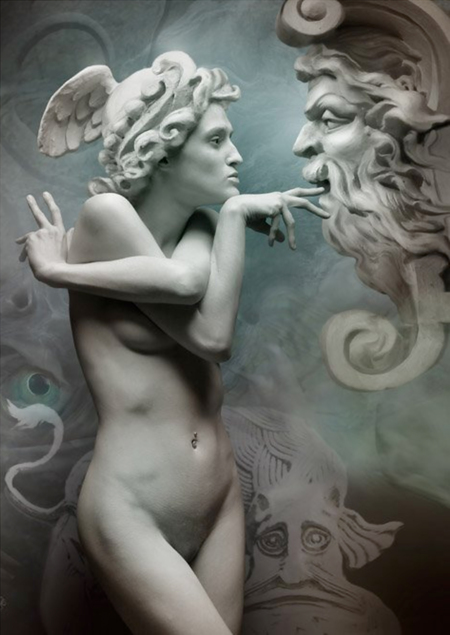
Introduction | Vladimir Fedotko
When you first see the work of Vladimir Fedotko, a strange sensation washes over you—as if you’ve accidentally stumbled into someone else’s dream. There is a girl floating in the air, enveloped in flowing fabrics, like a character from an ancient legend. There is an urban landscape where houses bend, as if viewed in a funhouse mirror, yet they manage to look… believable. And the most astonishing thing is that this is not AI generation, not a random scattering of pixels, but painstaking manual labor where every detail has been meticulously considered.
In an era where neural networks generate thousands of images in seconds, Fedotko remains true to his method: he doesn’t chase algorithms; instead, he assembles reality piece by piece—like a mosaic. First, a sketch; then, a photoshoot with a live model; and finally, long hours of digital painting, where photography transforms into folklore. Although his style is called everything from «art photography» to «digital art,» and his wife even dubbed it «surrealism,» he simply shrugs: «I just do what I like.»
But why do his works captivate? Why do certain images surface in memory even years later, like scenes from a forgotten but incredibly vivid film? Perhaps it is because behind the visual beauty always lies a story—sometimes ironic, sometimes melancholic, but invariably human.
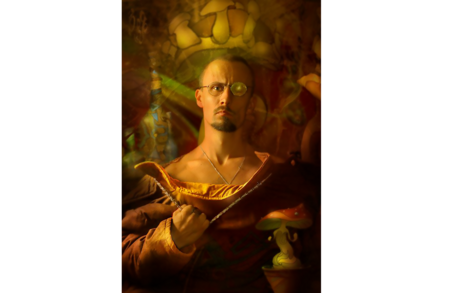
Vladimir Fedotko is an artist who effortlessly reshapes reality by merging photography, painting, and subtle self-irony. Born in Leningrad and, due to circumstances beyond his control, ending up in St. Petersburg, Vladimir has traversed a path from an institute of film engineering to the Faculty of Fine Arts—from overnight shifts moving cargo to digital canvases where the boundary between photography and painting is deliberately blurred. His style is what his wife playfully calls «chudism,» or what galleries prefer to call «digital art.» Yet, he resists definitive labels: «I just do what I like.» His work is not merely a display of technical virtuosity, but a philosophy. He creates images that balance surrealism with irony, and dream with absurdity. Furthermore, he honestly admits that for the first two weeks, any new piece feels brilliant, and then… «sometimes I want to burn the image, and sometimes—to drown the critic.» As someone who once «married» (a feat he calls an «extreme act»), Vladimir believes that creativity is not a trend, but a fundamental human need—like cavemen drawing on walls after eating «bad mushrooms.» For modern artists, «McDonald’s and the television» are enough for inspiration.
(Photo: Vladimir Fedotko, Alchemist, 2009)
In this study, I will attempt to decipher what «tricks» make Vladimir’s work so memorable and where the effect of his imagery taking root in viewers' minds originates.
The principle of rubrics is built on identifying a general trend across photographs from different years in Fedotko’s overall portfolio, which are unified under a single heading and also transition smoothly into one another due to overlapping themes.
Stained-glass backdrop
Vladimir Fedotko, Portrait of Maria Surrounded by Home and Loved Ones, 2007.
Vladimir Fedotko, Bust Portrait, 2007.
Vladimir Fedotko, Dance School, 2007
Early works feature veiled, monochrome backgrounds. They evoke stained glass or forgotten script on aged paper, yet they bear little resemblance to the medieval landscapes seen in later series.
Vladimir Fedotko, Spaciousness and Freedom, 2007.
Movement in Everything | From Women to Goddesses
Erwin Elliott, Rain in Paris/ Umbrella Jump, 1989 Vladimir Fedotko, Evening Movement, 2022
The primary subject of Fedotko’s early works is the movement of bodies. The beauty of female plasticity predominates; male figures appear rarely—either at the request of the patrons or because the author himself assumes the role of the lyrical hero.
Vladimir Fedotko, Evening Butterfly Flight, 2007. Vladimir Fedotko, Dasha, May 28. Flying weather :), 2007.
Erwin Elliott’s «Leap in the Rain» distinguishes itself through its ironic manner of capturing unposed moments, where city dwellers authentically lived their lives. Vladimir Fedotko’s «Summer Weather» primarily establishes the image composition beforehand, thoughtfully planning the placement of figures right at the beginning of production.
Vladimir Fedotko, Escape, 2020 Vladimir Fedotko, Greek Dance with Scarves, 2007
A significant comparison is found in the illustrations of Robert Ingpen. His signature graphite and watercolor works share that same vortex of action and mist enveloping the characters. This creates phantasmagorical images. People resembling elves, fairies, and other inhabitants of «Peter Pen’s» world seem almost unreal.
Robert Ingpen, Peter Pen, 2004
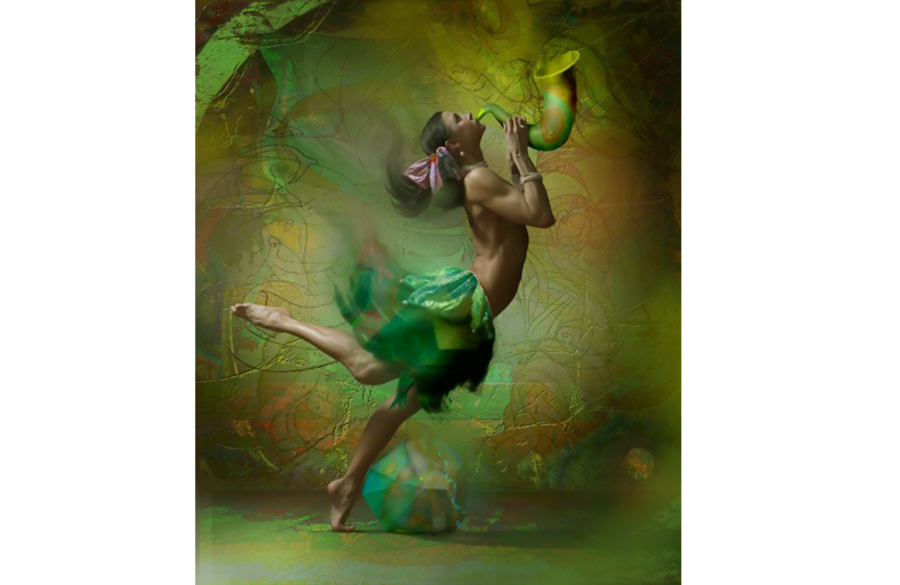
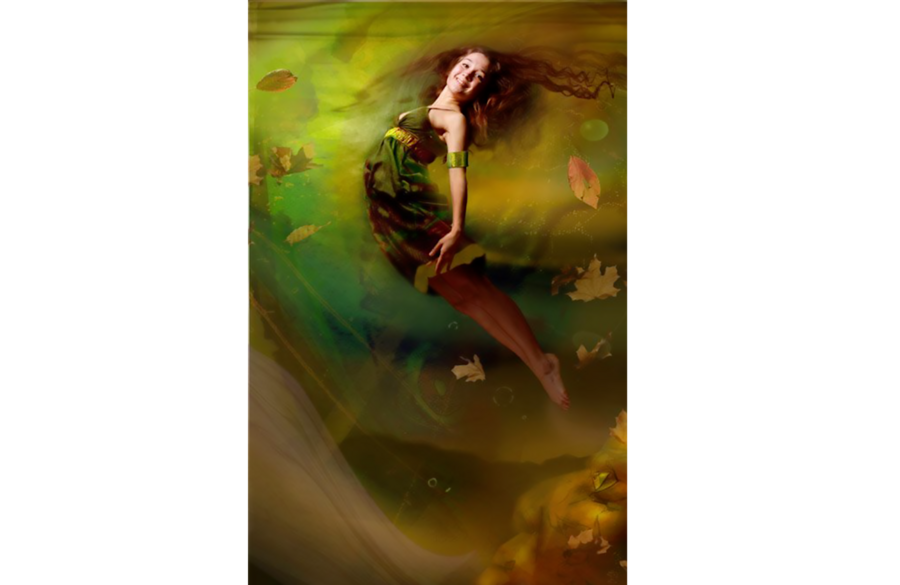
Vladimir Fedotko, Warm Autumn Wind, 2007 Vladimir Fedotko, Last Note, 2007
Robert Ingpen, Peter Pen, 2004
There are pieces featuring Eastern motifs. Most of these are categorized under the «nu» direction because in hot climates, nudity was commonplace and remains a nod to tradition. In the Soviet and post-Soviet sphere, there was a trend toward the sexualization of Eastern themes, which led designers to often exaggerate the degree of model exposure.
After V. Gauff’s tale, «Little Jack, ” The Walking-Jack, 1975
Vladimir Fedotko, Pearl, 2007 Vladimir Fedotko, Cloud Acceleration, 2008
Vladimir Fedotko, Evening Battle, 2008 Unknown Photographer, Goddess Kali, circa 2000–2020
Vladimir Fedotko, Solar Wind, 2008
Vladimir Fedotko, Dancer, 2019 Raphael Santi, Sistine Madonna, 1512–1513
Comparisons
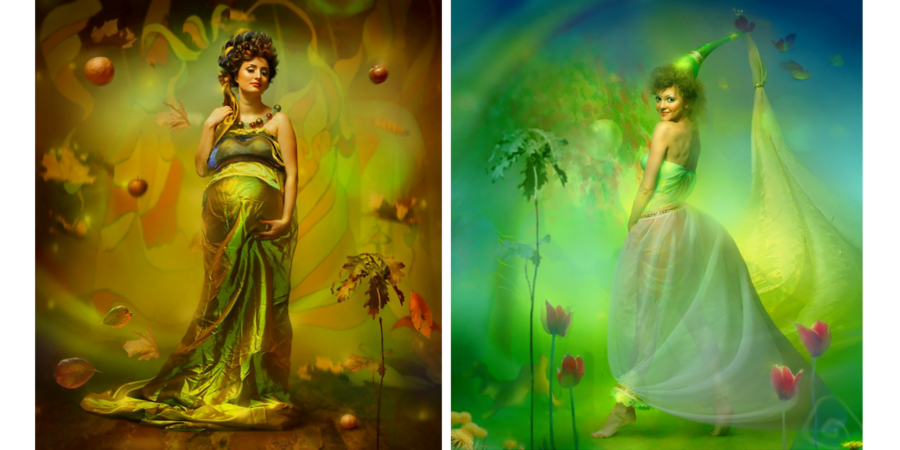
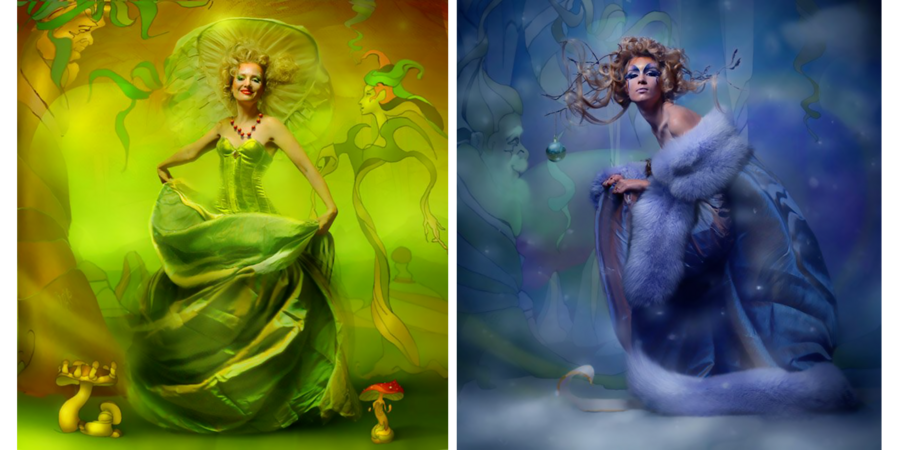
Vladimir Fedotko, Summer, 2009 Vladimir Fedotko, Winter, 2009 Vladimir Fedotko, Autumn, 2009 Vladimir Fedotko, Spring, 2009
Vladimir Fedotko, New Year (coming :), 2008 Vladimir Fedotko, Awaiting a Miracle, 2009 Vladimir Fedotko, Alpine Vacation, 2008
In works dedicated to the seasons, an artificiality is clearly discernible. The aesthetic of excessive theatricality is evident not only in the heroines' costumes but also in the playful manipulation of the image of Peppy Longstocking in various guises—from a young mischievous sprite to a formidable Snow Queen. In her portrayal, the leitmotif of Peppy remains only in the whimsical twists of her hair.