
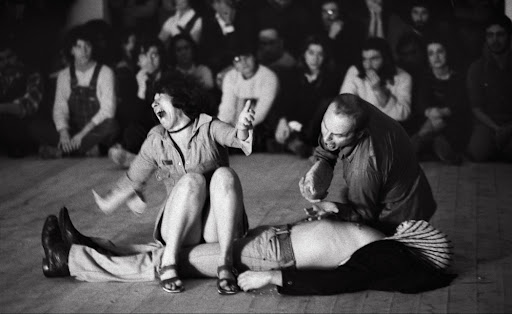
Figure 1 | Director Yezhi Grotovsky. «Apocalypsis cum figuris.» Milan, 1979. Photographer: Maurizio Buscarino
The «black box theater"—a space for theatrical and performative action distinguished by its architectural simplicity—is a place of staging. The stage itself is a room with monochromatic walls, often black, and a flat floor. The invention of this type of stage re-evaluated age-old relationships between actors and audiences. This reduction in distance has brought the interaction between the audience and the performance to a more intimate, physically and psychologically immersive level.
Navigation
Concept
The Past Adolphe Appia and the design of the first flexible stage American theatrical avant-garde of the early 20th century Experiments with space by Jerzy Grotowski
The Present Structure and purpose Efficiency and immersion The black box theater versus orthodox theater
The Future The «black box» and the «white cube» Dance exhibitions
Conclusion
Sources
Concept
In the title, I deliberately use the word «lonely» when referring to people living in our modern era. I avoid the word «contemporary» because that adjective does not encompass the full scope of the problem and pain that the individual truly faces today, in my view. This problem is loneliness, and it is a consequence of our world’s rapid development.
I want to note that I am not an opponent of the internet or AI technologies; I utilize these benefits. However, this does not negate the discomfort I feel, as the oversaturation of gadgets and immersion in the internet isolate me from other people. I believe that the problem of loneliness has become widespread in daily life not only for me but also for representatives of various generations, including Gen Z, Millennials, and Baby Boomers. For instance, even educators from the Baby Boomer generation actively utilize the advantages of the internet.
For this reason, I have noticed that I want to dedicate free time to attending crowded events, but without the large crowds and the hustle and bustle.
One of the first events I attended wasn’t just for passing the time, but to genuinely feel an emotional charge—it was a stand-up comedy show. I wasn’t previously interested in the genre and didn’t grasp its appeal. However, I had gone to his first stand-ups with a sense of awe; I even viewed it as therapy, as I had exclusively seen performances by my favorite comedian, Dmitry Gavrilov. After watching several of his concerts on YouTube recordings, I began waiting for the moment to see his live stand-up. That opportunity arose for me, and I didn’t let it slip by. While attending Dmitry’s shows, I started analyzing how the space influences the performance and the overall impression.
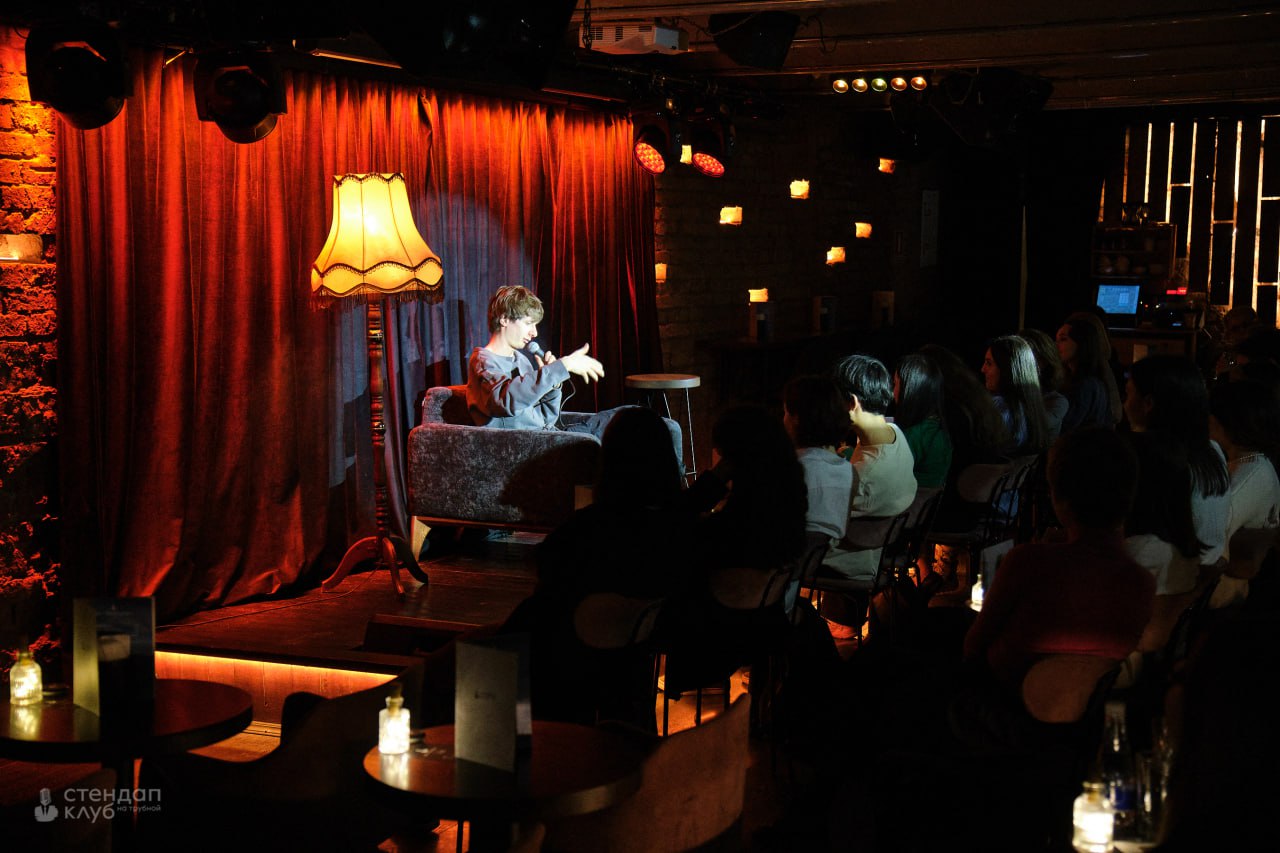
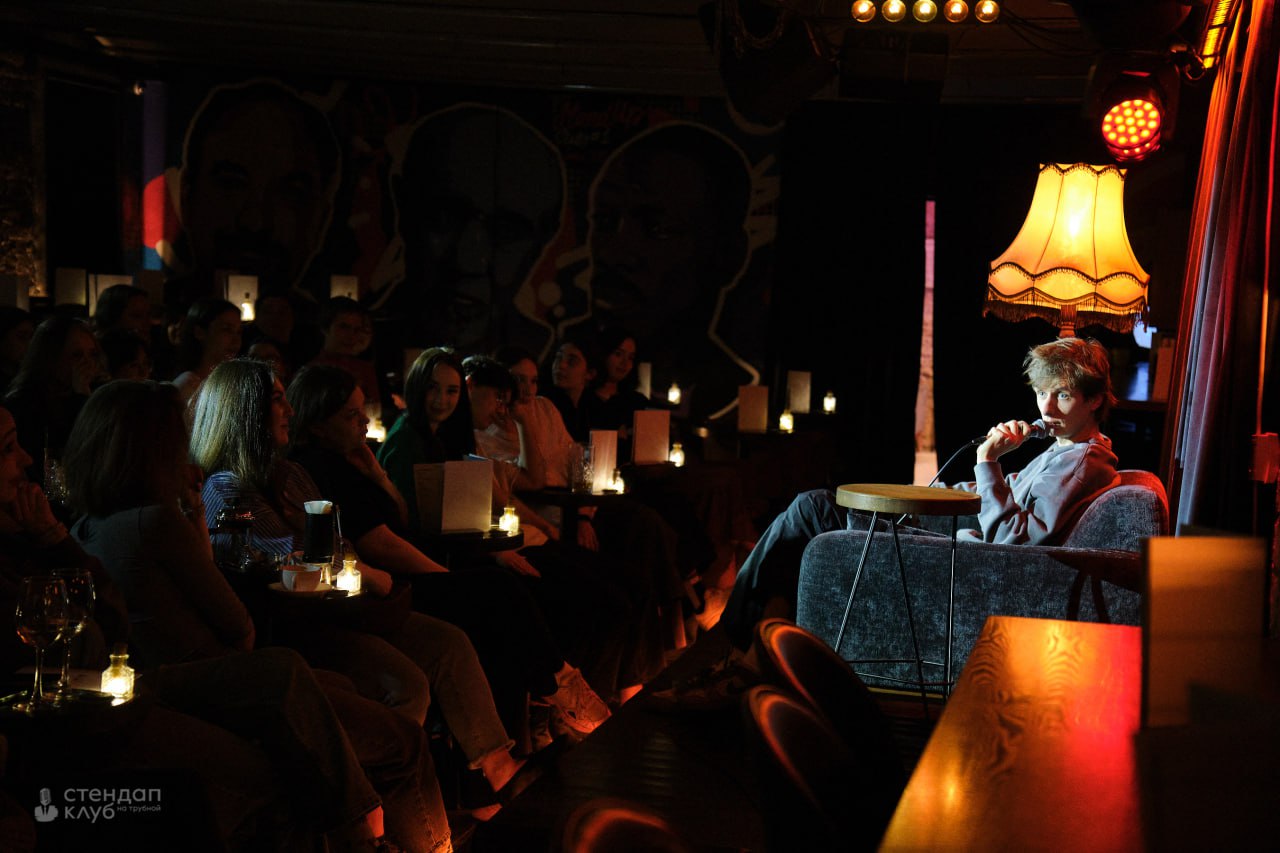
Figs. 2–3 | Dmitriy Gavrilov speaking. «Stand-up Club on Trubnaya, » Moscow, 2024. Photographer: Andrey (@bongo.prod)
While studying the influence of space on performance atmosphere, I noticed the significance of small stand-up clubs, where the audience feels closer to the artist. I have been to small stand-up clubs that typically hold around 50 people and lack balconies. I see the stage space in these clubs as meeting the requirements of a «black box.» I will discuss the functionality of such a stage in my research.
The goal of my visual research is not to devalue classical theater; rather, I aim to emphasize the diversity of choices offered to the audience. If you are looking for festivity—to immerse yourself in a fairytale or Shakespearean times, or to reminisce about the past—classical theater offers that. If you want life as it truly is, without pomp and circumstance—then contemporary theater, with its common use of black box staging, comes into play. Throughout the ages, theater continues to be a place where one can be spiritually nourished and experience a therapeutic effect.
Despite the development of television and the film industry, theater maintains its relevance, helping people understand that real-world communication is incomparable to virtual interactions, and that the true essence of a person is revealed only through genuine engagement.
I have divided the visual research into three parts chronologically. I propose examining the features of the box scene concept and its functional capabilities. I will pay special attention to the social role that the black box stage plays. I will analyze the path from the invention of the box scene to its current relevance and future development prospects in contemporary theater and beyond.
The Past
Adolf Appia and the design of the first box stage
Adolf Appia was a Swiss architect, theatrical theorist, and scenographic musician. He was inspired by the creative work of German composer Richard Wagner from childhood. After visiting the Bayreuth Festival Theatre (the opera house in the Bavarian town of Bayreuth, built under Wagner’s direction) at the age of 20—where he gained new ideas for staging productions—Appia began to develop his concept of flexible theatre, based on Wagner’s music.
Following setbacks in reforming Wagner’s dramas, Appia entered his most productive period, known as the «Dalcroze period.» His acquaintance with the founder of the Institute of Rhythm, Emile Jacques Dalcroze, led Appia to experiment with «the rhythm of space,» which included a series of sketches of stairs, steps, and cubes.
«By abandoning two-dimensional painted backdrops that created only an illusion of reality on stage, Appia dedicated himself to finding ways to transform the stage and the hall into a single theatrical reality.»
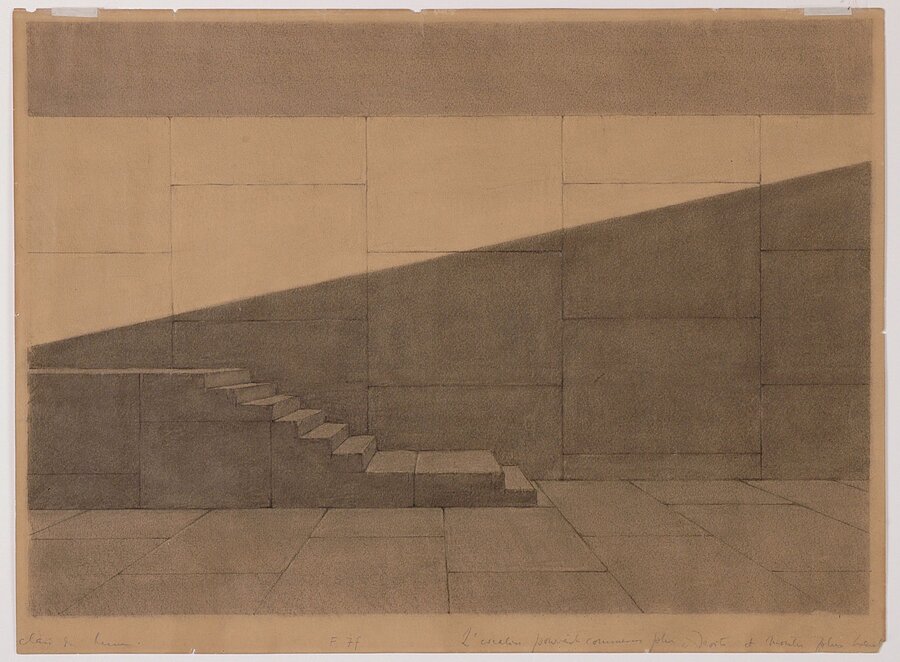
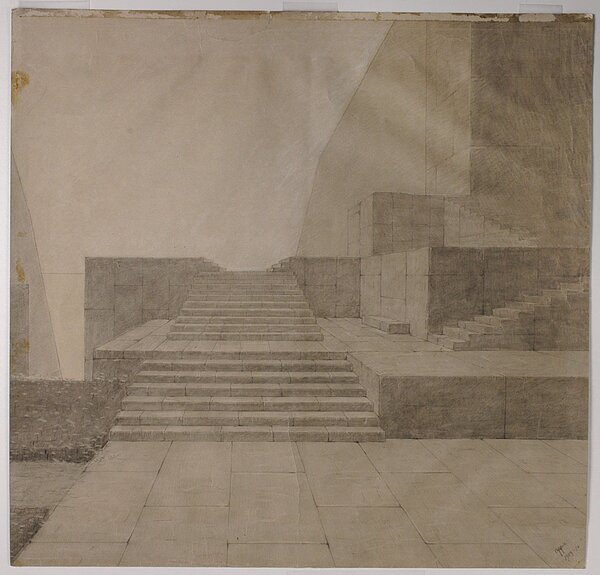
Figure 4 | Adolf Appia. «Rhythmic Space: The Diver», 1909
«Appia advocates for abolishing the classical proscenium, the metaphorical 'fourth wall' of the proscenium arch that faces the audience. Instead, Appia interprets the stage as a 'perspective into an unknown, unlimited space'; therefore, he proposes blurring the boundaries of the hall—the stage—through the abstract design of the pictorial space and the alternative arrangement of the actual dramatic stage levels that contain the production.»
In Appia’s scenography, the staircase was the most versatile element. It conveyed not only the concept of set design but also organized the stage space. The staircase consisted of two parts: one faced the audience in profile, and the other faced the audience frontally down to floor level. It resembled a sculpture. «Appia created a stage space ready to receive the actor for whom it was created. Any stage character could organically fit into these settings—nothing contradicted the appearance on Appian steps, whether it was a single human figure or a rhythmically organized mass of actors.»
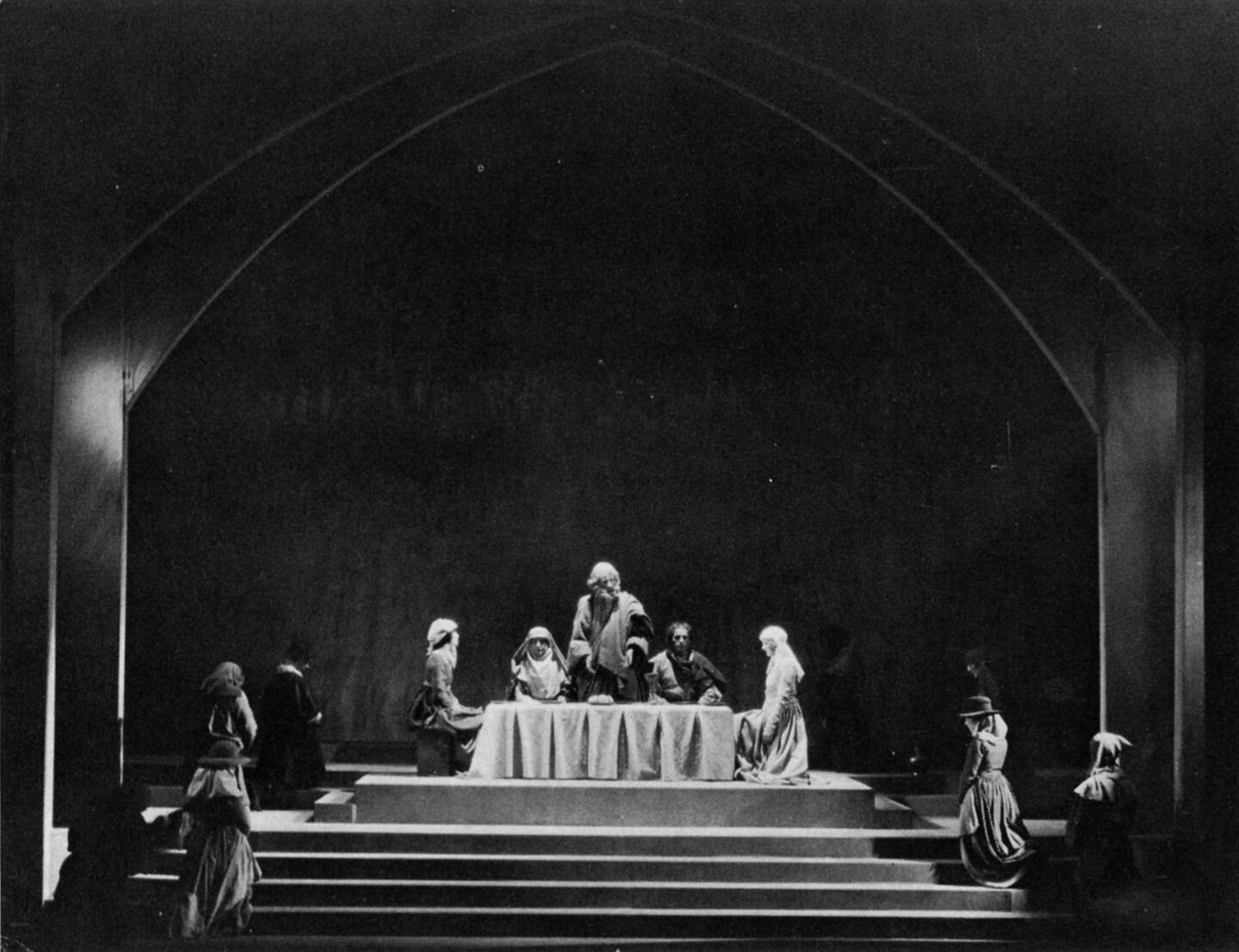
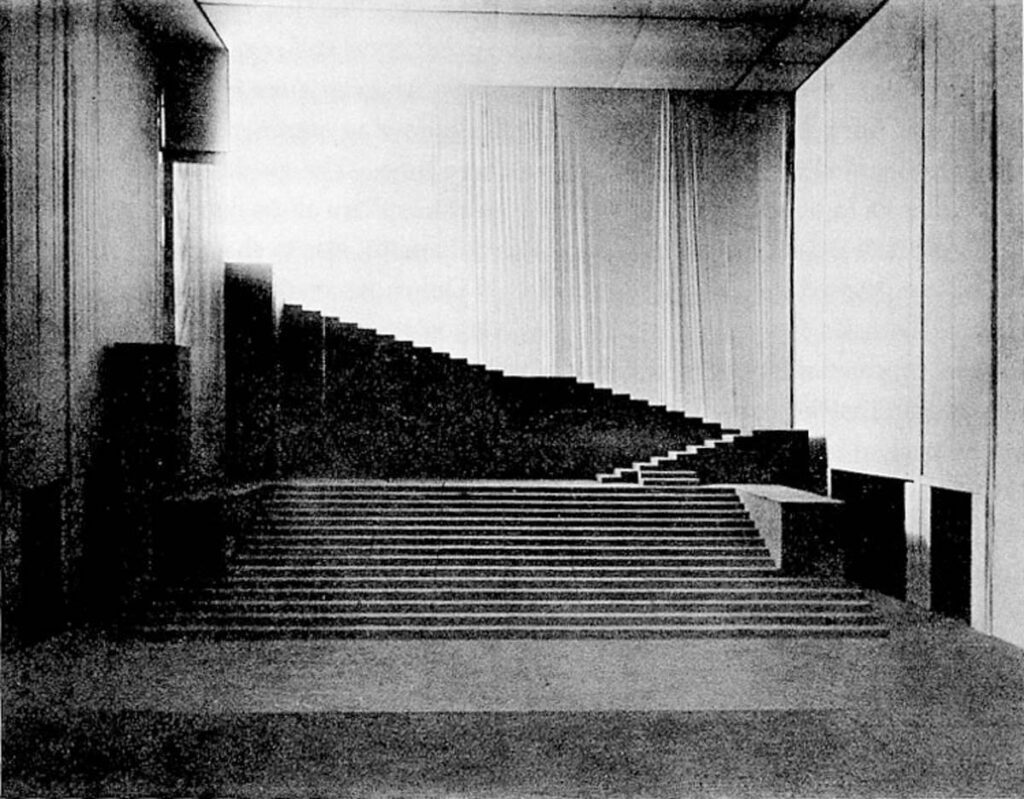
Figure 5 | Adolphe Appia. «Orpheus, Hellerau», 1913
Figure 6 | Adolphe Appia. «Lee Simonson; Saint Joan», 1917
Appia’s experiments in theatrical scenography foreshadowed the concept of the «black box theater, ” even though he did not use that term himself. His idea of flexible space, developed between 1903 and 1923, gained recognition only after his death in 1928.
American theatrical avant-garde of the early 20th century
World War II spurred the development of mass media, with television broadcasting becoming one of them. In the USSR, broadcasting was interrupted, while in America, technological progress gained momentum. The period from the 1950s to the 1960s is known as the «golden age» of American television. By 1945, the number of television sales and operational broadcast stations increased. By 1960, the price of televisions dropped, and soon they became accessible to everyone. The number of television stations in the country grew. Television adopted narrative practices from theater, which meant that theater needed to invent something different.
This led the theater to conceive of involving the audience in the productions. Performances were now created with the audience’s participation. Meanings were shaped not only by the artistic team but also by the viewing public. This new type of theater also altered the space in which the dramatic action takes place, as the traditional theater stage no longer met the new demands.
Physical theatrical spaces were changing form, exploring the theatrical spaces of the Elizabethan era and Greece. Directors and architects deliberately sought to move away from the dominance of the proscenium arch.
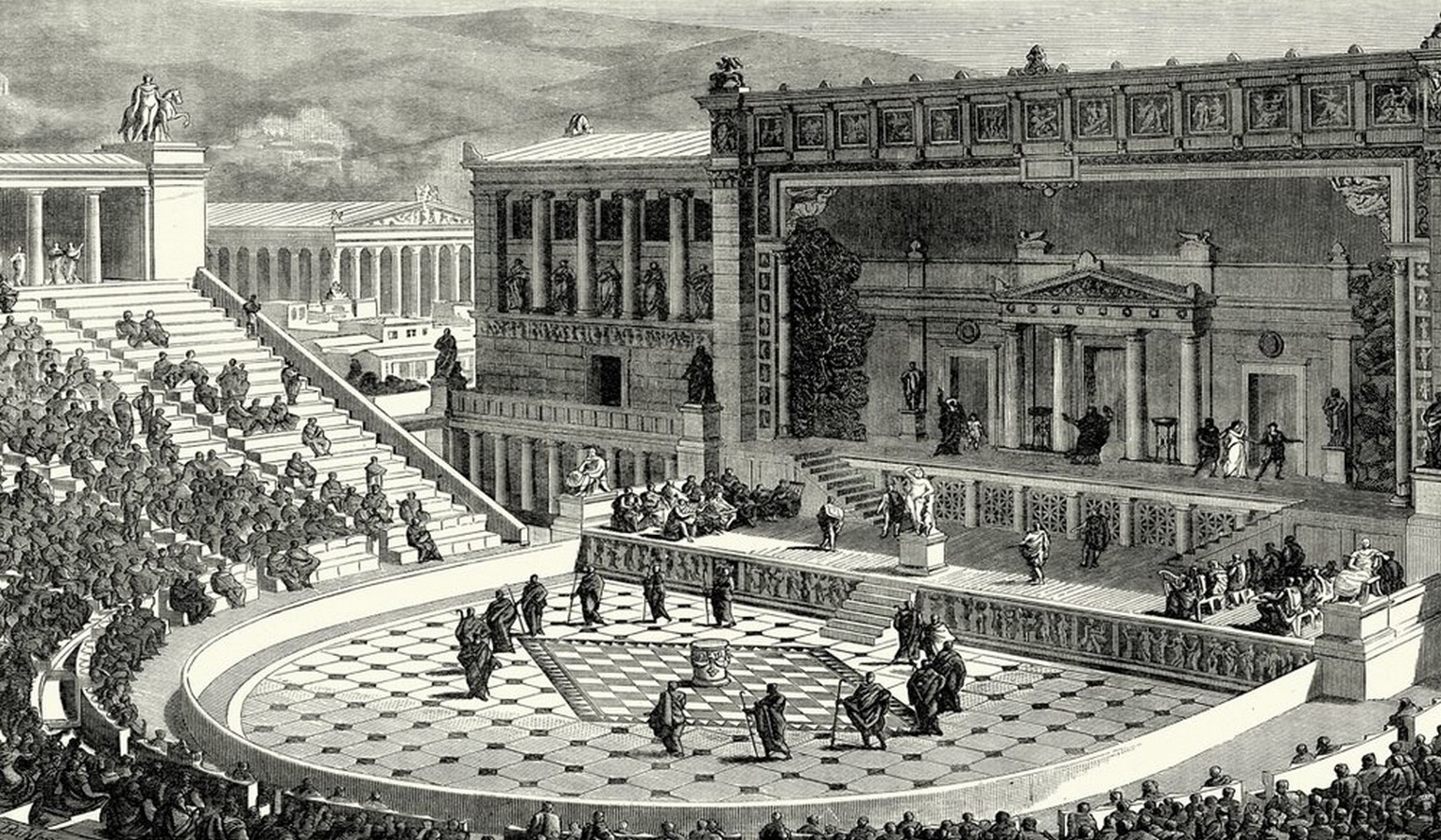
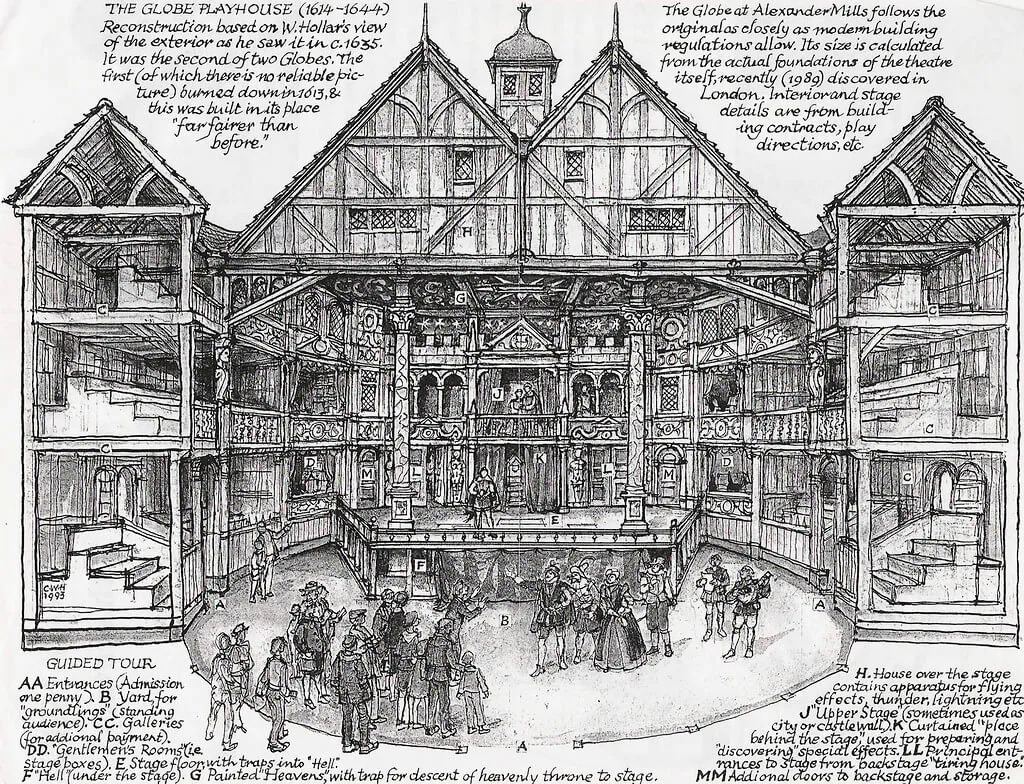
Image 7 | Globe Theatre in Shakespearean times. London
Image 8 | Theatre of Dionysus. Athens
The number of independent experimental theaters hosting performances by young artists increased. Actors and performers grew bolder, interacting directly with the audience. A need arose for a neutral theatrical model that allowed for a quick and seamless transition from one performance to the next. Since the independent theaters had limited commercial backing, they sought to reduce costs related to lighting and stage design. Theater directors focused on acting techniques, referencing Adolphe Appia’s concepts. In doing so, they dismantled the distance between the stage and the viewers, bringing the performance closer to the audience. This became a novel innovation—a theatrical advancement that expanded and contrasted with television and cinema.
In the era of the avant-garde, the rehearsal space stripped of naturalism gained popularity. It fostered diverse interactions between the stage and the audience—a goal sought by theater directors. The minimal set designs are, in many views, the ideal venue for exploring «pure» theater. This type of theatrical model came to be called the black box (English: black box). Unlike traditional proscenium stages, the black box theater is a small, square or rectangular space with walls, floors, and ceilings painted black.
This studio space was flexible enough for theatrical productions—as versatile as a «blank canvas» for an artist—because the room could be transformed for any performance and was on the same level as the audience hall, allowing it to speak to the viewers intimately and immerse them in the theatrical reality.
«The black box came to personify emptiness, an immaterial space from which the concept materialized. Its emptiness, as a spatio-temporal phenomenon, denoted an interval, a pause, silence, and suspension. In its shadow, emptiness represented not a lack, but rather an overwhelming surplus of meaning.»