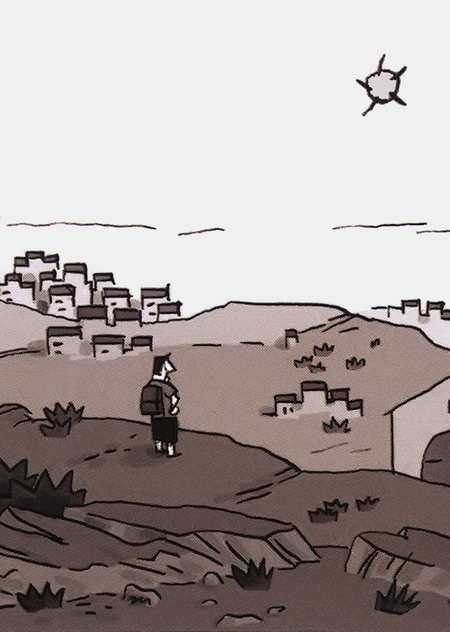
Jerusalem—a city with a rich and complex history, serving as a sacred site for Judaism, Islam, and Christianity. Its cultural and religious diversity, coupled with constant political tension, makes the city a hub of both conflict and coexistence. Delille’s comic offers a unique lens through which to explore this dynamic, inviting readers to look into the lives of those who call Jerusalem home. He is a Canadian caricaturist and animator, best known for his travel narratives, where his skills in visual storytelling merge with a deep attention to cultural and social contexts: «Shenzhen: A Journey from China» (2000), «Pyongyang: A Trip to North Korea» (2003), «Chronicles of Burma» (2007), and, as we will discuss further, «Jerusalem: Sacred City in Comics» (2011), which won the Grand Prize at the 2012 Angoulême International Comics Festival.
In recounting his travels, Guy Delille uses comics because they allow him to convey events without relying on extensive text. It is a powerful communication tool.
Guy Delisle for The Guardian: «The goal is not to over-explain. I didn’t want to write about the Yom Kippur War or anything else. I love comics because they are so effective. If I need to draw a small arrow or a map, I just do it. If you did that in a documentary, it would look like a PowerPoint presentation. But in a comic, I can explain the entire history of the Temple Mount in three pages!»
In his work, he merges personal experience with historical context, making complex and often insular societies more accessible and understandable. The author offers the perspective of an outsider—someone unfamiliar with the culture of Jerusalem. He overcomes the evident difficulties associated with adapting to a Middle Eastern country so different from what is familiar to us. Yet, he does not settle for superficial observations; he digs deeper, engaging with local residents, asking questions, and gradually immersing himself in the history and culture.
Guy Delil demonstrates how seemingly simple or obvious things can carry a deeper, more complex meaning that emerges as one delves into the multinational culture of Jerusalem. This juxtaposition of perspectives enriches the narrative, transforming his graphic novels into studies of cultural diversity and the human experience.
«People say, ‘You have such an frank view of things, ’ but that is the only way to tell a story, ” said Guy Delil in an interview for CBC.
In my visual research, I set several objectives: to analyze the representation of cultures and their intercultural interactions—both conflicts and points of connection; and to trace the author’s encounter, as a tourist and someone newly familiar with the Middle East, with the contrasts between his familiar environment and Jerusalem.
Understanding how various cultural groups are depicted in the comic «Jerusalem: The Holy City in Comics» offers insight into how visual storytelling can bridge cultural divides. Through his perspective, Delil provides a unique view of a city often understood superficially. His comic addresses not only political conflicts but also portrays the relationships of ordinary people who coexist in such a complex place. This testifies to the power of visual narrative and the importance of seeing the world through different eyes.
For sources, I selected interviews with the author in various publications and reviews of his comic.
1. Cultural Group Images
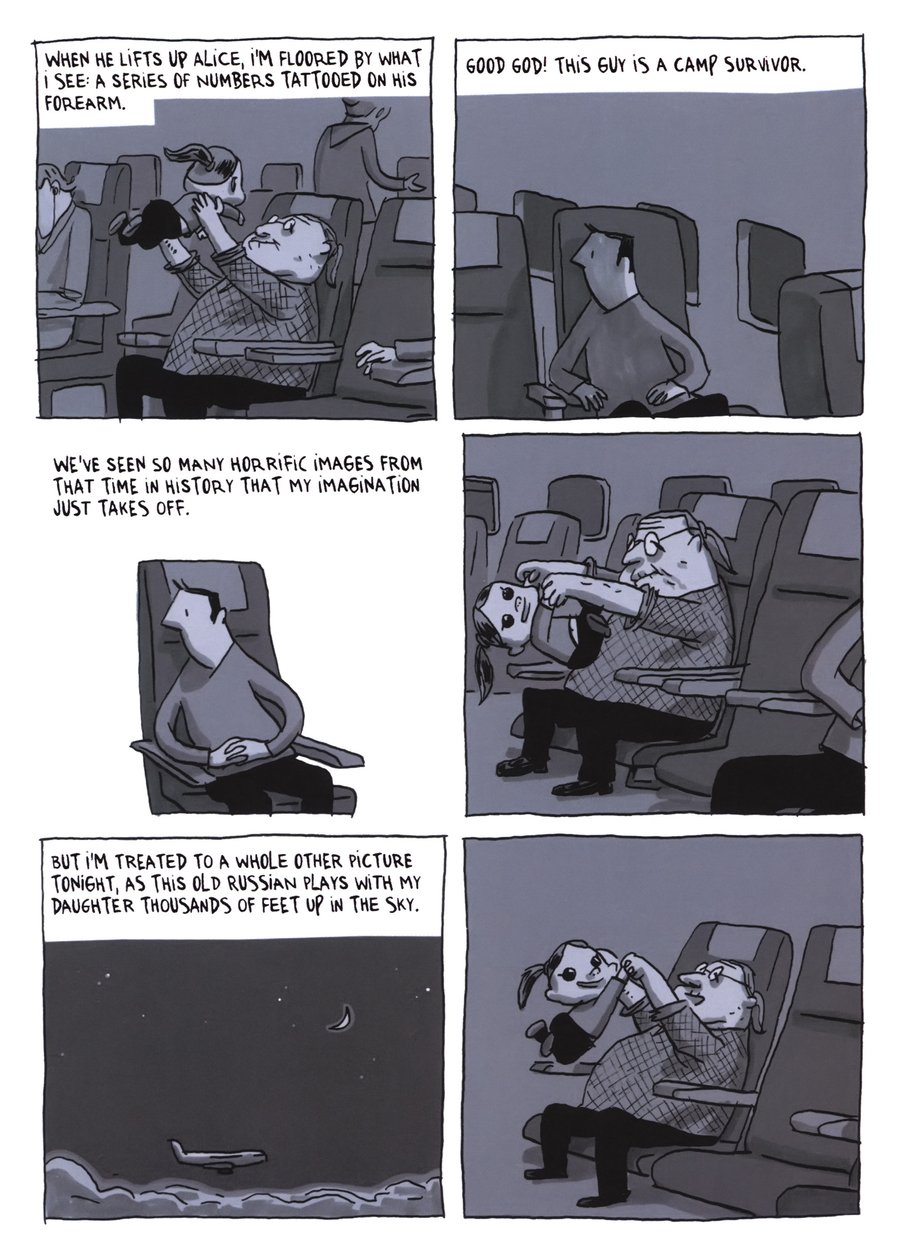
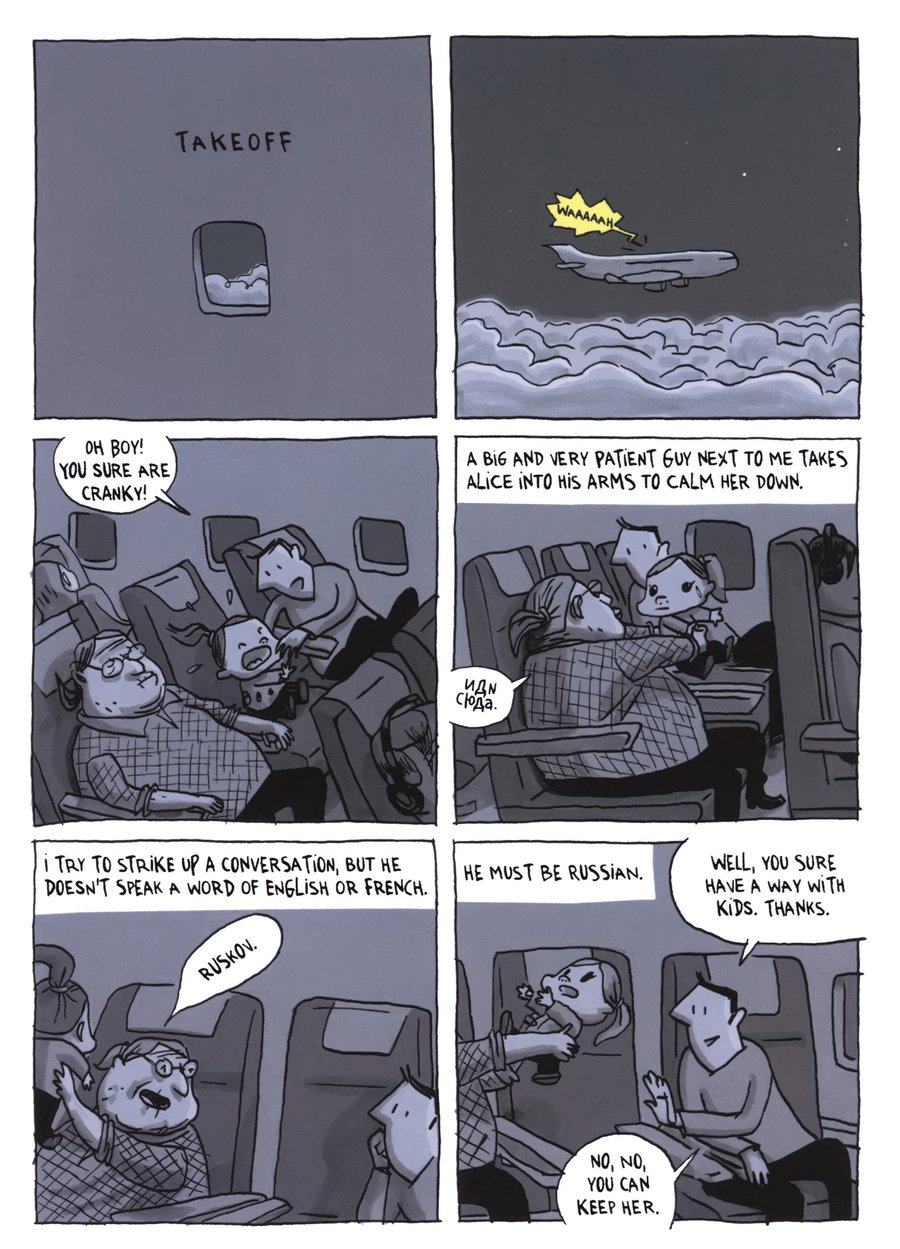
When Guy Delisle opens his comic, «Jerusalem: The Holy City in Comics,» with a scene on an airplane where he meets a Russian survivor of the Holocaust, the author sets the tone of the narrative and establishes the thematic foundation that resonates throughout the work—cultural diversity.
By portraying the Holocaust survivor as a fellow passenger on the airplane, Delisle evokes a sense of shared humanity and commonality, despite the cultural and historical differences between them. By depicting the historical trauma of the Holocaust within the broader narrative of Jerusalem, Guy Delisle acknowledges the complexity of cultural histories and the necessity of a cautious and respectful approach to sensitive subjects.
Guy Delisle, Jerusalem: Chronicles from the Holy City. Drawn & Quarterly, 2015
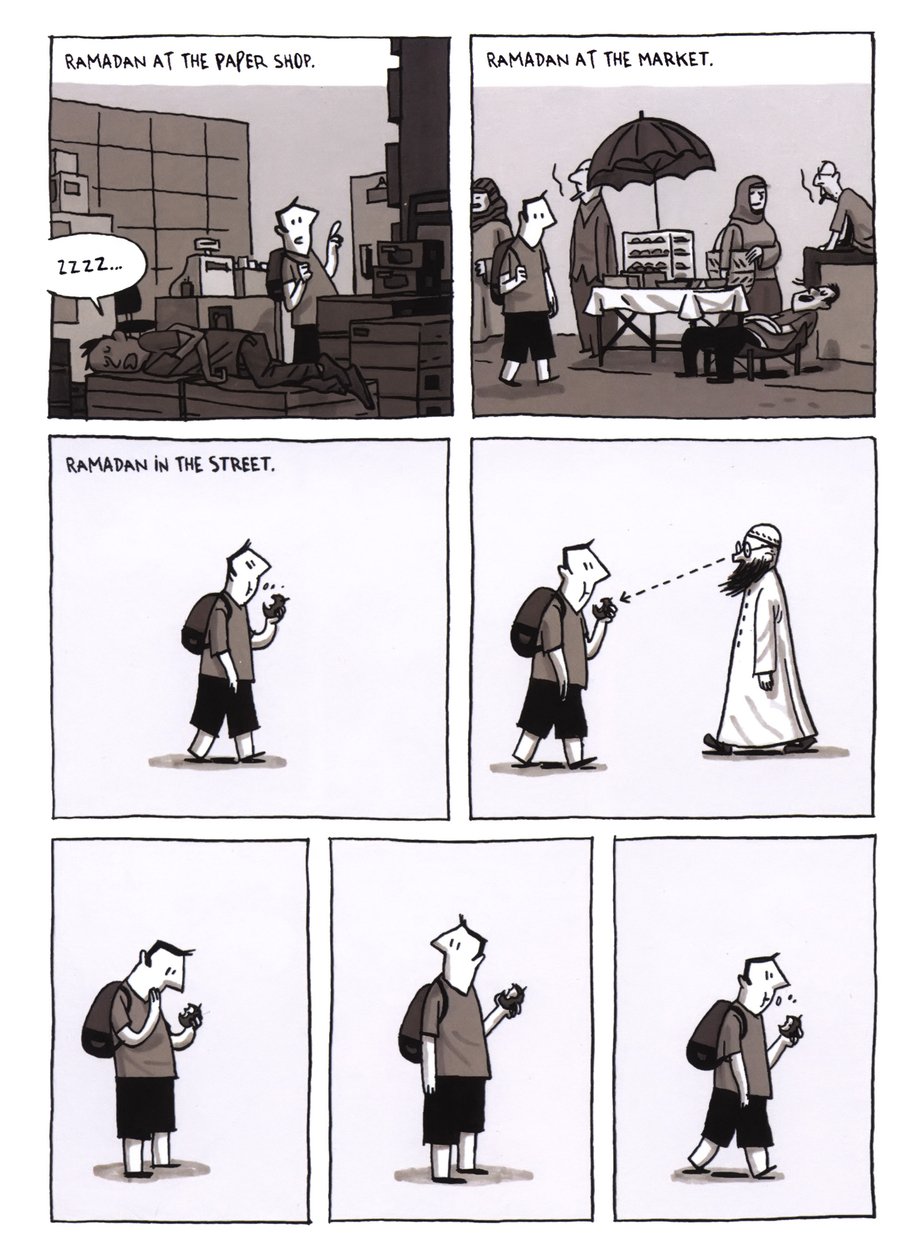
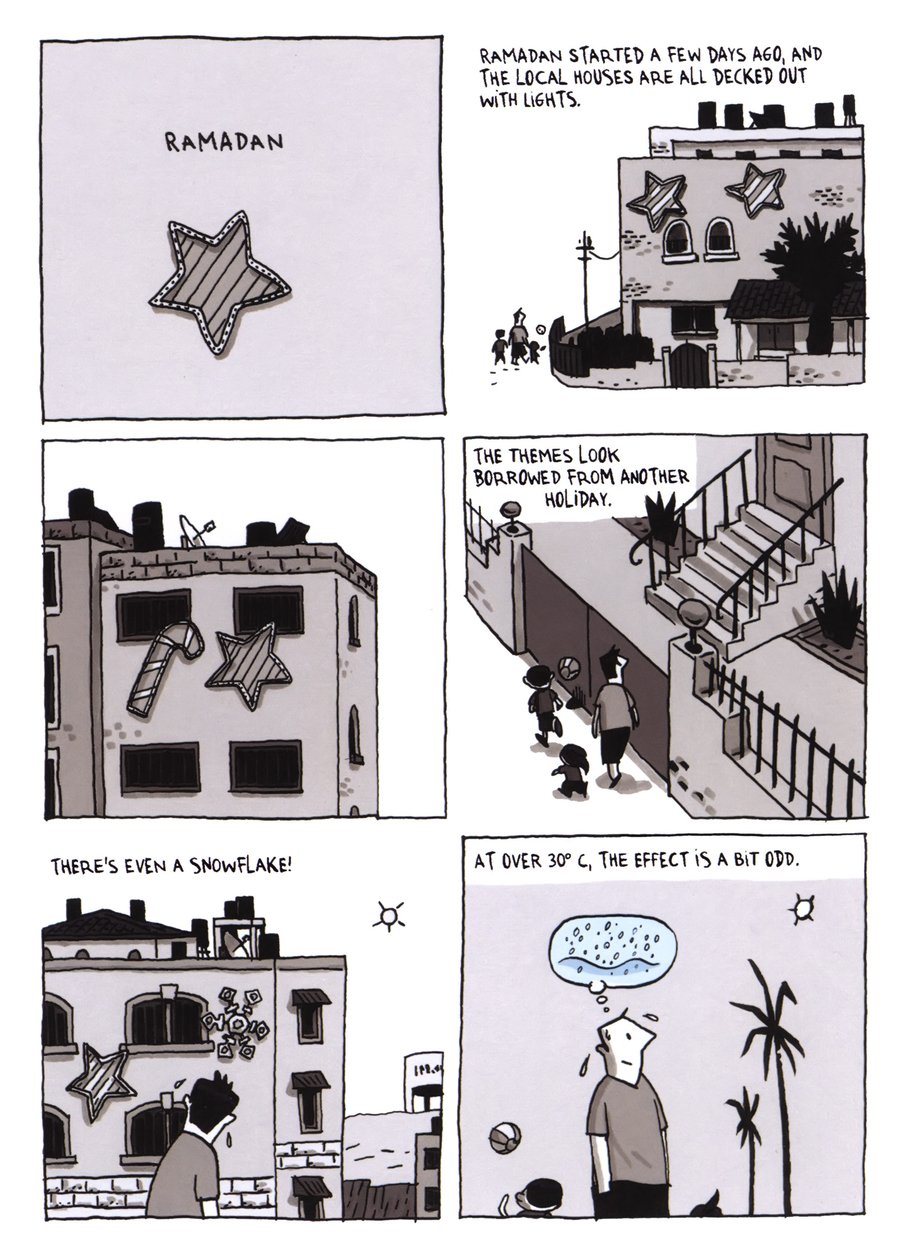
Arriving shortly before Ramadan, the author was fortunate to gain some familiarity with this holy month’s culture for Muslims. Decorating homes not only with traditional motifs—such as festive lanterns, stars, and crescents—but also with New Year’s decorations illustrates how cultures coexist and share a certain kinship—traditions begin to intertwine and borrow elements from one another. Delil, aware of the widespread observance of Ramadan, does not lecture about it, as sometimes happens with other, less recognized traditions.
Gi Delil’s approach to narrative through comics is characterized by meticulous attention to fine details that construct a cohesive picture of the environment and culture he depicts. For instance, illustrating exhausted and hungry passersby shows that these people adhere to traditions. He emphasizes the importance of these momentary observations, which frequently reveal a broader cultural and social context.
Guy Delisle, Jerusalem: Chronicles from the Holy City. Drawn & Quarterly, 2015
«What a strange party,» Delil humorously acknowledges his own cultural biases when observing his neighbor’s wedding celebration. His reaction to the wedding highlights how unfamiliar customs can appear strange to outsiders. The contrast between his humorous portrayal of Passover and his response to the Palestinian wedding underscores the diversity and complexity of cultural experience in Jerusalem. While his lighthearted take on Passover helps bridge cultural differences, his comment on the wedding emphasizes the profound differences that can exist even within a small geographic area. He approaches his narrative about life in Jerusalem with genuine insight.
This episode also shows how traditions (such as prayer breaks) can exist within everyday life (like a wedding celebration).
Guy Delisle, Jerusalem: Chronicles from the Holy City. Drawn & Quarterly, 2015
On another day when the protagonist is about to sketch in the city, the entire street is closed off—Yom Kippur is being celebrated, and naturally, no one warned him.
Yom Kippur is the most significant day in the Jewish calendar. On Yom Kippur, Jews traditionally abstain from eating, drinking, bathing, and working. Primarily on this day, Jews contemplate life, pray, reflect, and commit to improving their lives in the coming year.
Humor is present throughout the narrative, and this humor does not diminish the significance of Yom Kippur; rather, it humanizes Delil’s experience, making it accessible and understandable to readers who may have also felt out of place in an unfamiliar cultural environment. Guy Delil does not aim to provide a detailed explanation of the traditions, and his work is inherently subjective—it reflects his personal experience and perspective. He is not trying to give an exhaustive or balanced account of life in Jerusalem, but rather offers a personal and selective narrative.
«It’s more like everyday life. It’s a diary. And for me, when I do this, I don’t feel like I’m doing journalism. It feels like I’m creating something like a long postcard that I would send to my family to explain things to them because there are explanations needed here and there—like what the situation was, what I saw while I was there, everything that was funny, strange, or interesting to me. I put them into a book according to my notes; of course, it’s just everything I saw there.» — the author told Berghahn Books in an interview.
Guy Delisle, Jerusalem: Chronicles from the Holy City. Drawn & Quarterly, 2015
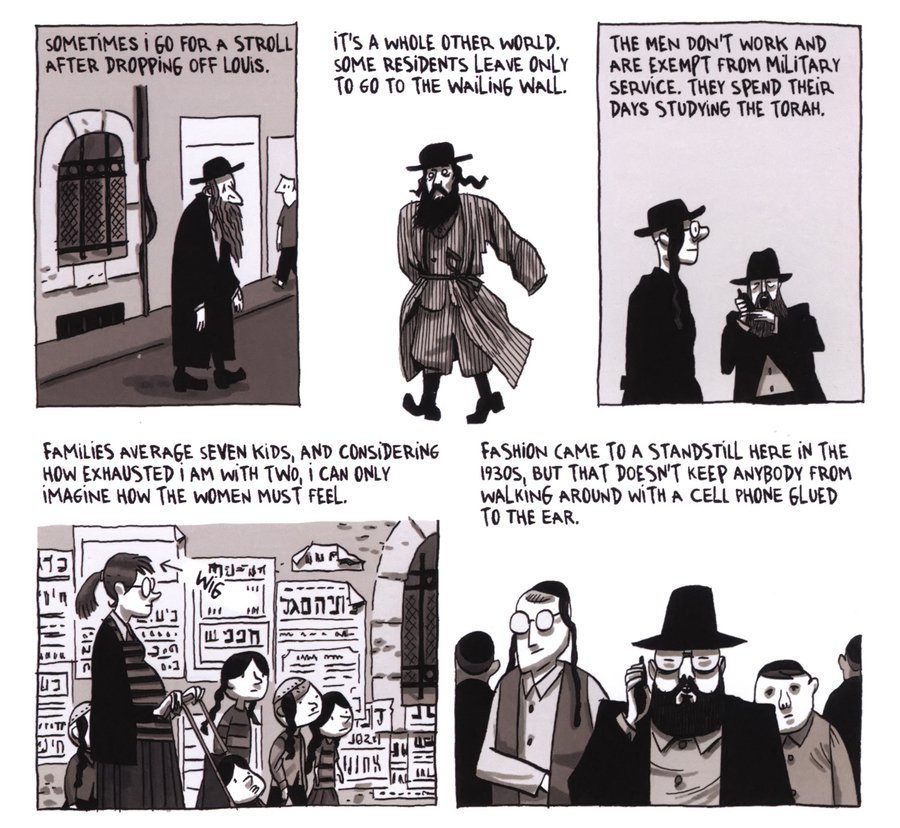
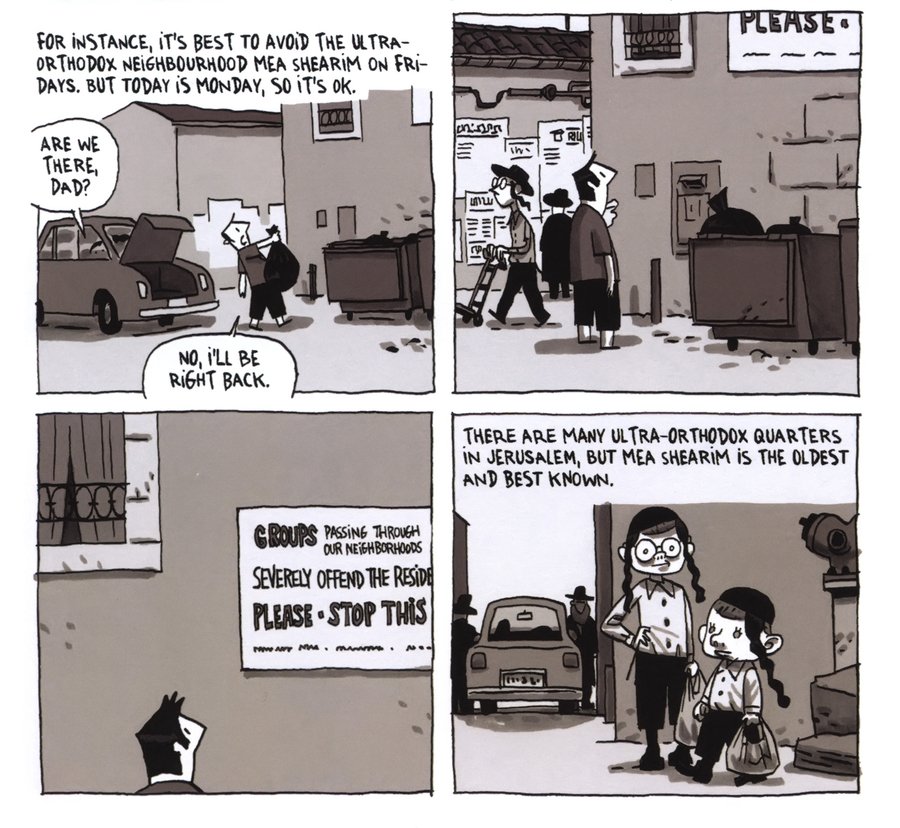
Guy Delil cautiously describes the orthodox Jewish community, portraying the residents of Mea Shearim with an emphasis on their cultural traditions and religious rituals, as these form the foundation of life in the neighborhood. He highlights their distinctive clothing, which serves as a visual marker of their faith and identity. The Orthodox Jews adhere to strict Sabbath laws that prohibit leaving the confines of their neighborhood. Guy Delil curiously narrates this world—(though, obviously, one might want to say many unflattering things about it)—showing empathy for a woman who is clearly exhausted from childbirth.
He says it feels as if he has entered another world—the people seem to have stepped out of the past, yet despite all the traditions, echoes of modernity have reached them. This contrasts sharply with the author’s life (and that of the readers), which is striking—the fact that this neighborhood is located in the heart of Jerusalem and neighbors ordinary contemporary life.
Guy Delisle, Jerusalem: Chronicles from the Holy City. Drawn & Quarterly, 2015
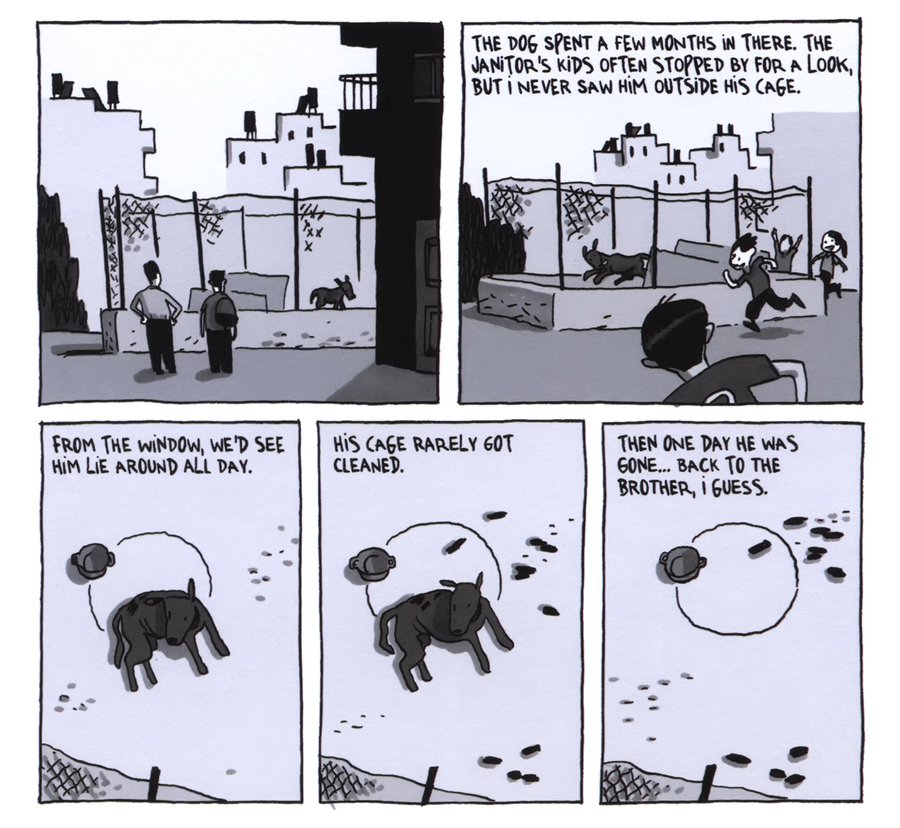
Gi Delil’s depiction of a dog reflects the diversity of Muslim perspectives on canines. While some Muslims may regard dogs positively, keeping them as companions, others may view them with reservations stemming from religious teachings or cultural norms.
Consequently, when the dog began to lose strength and severely waste away, he hoped she had returned to her owner, but it is more likely that the Muslim man simply let her starve to death.
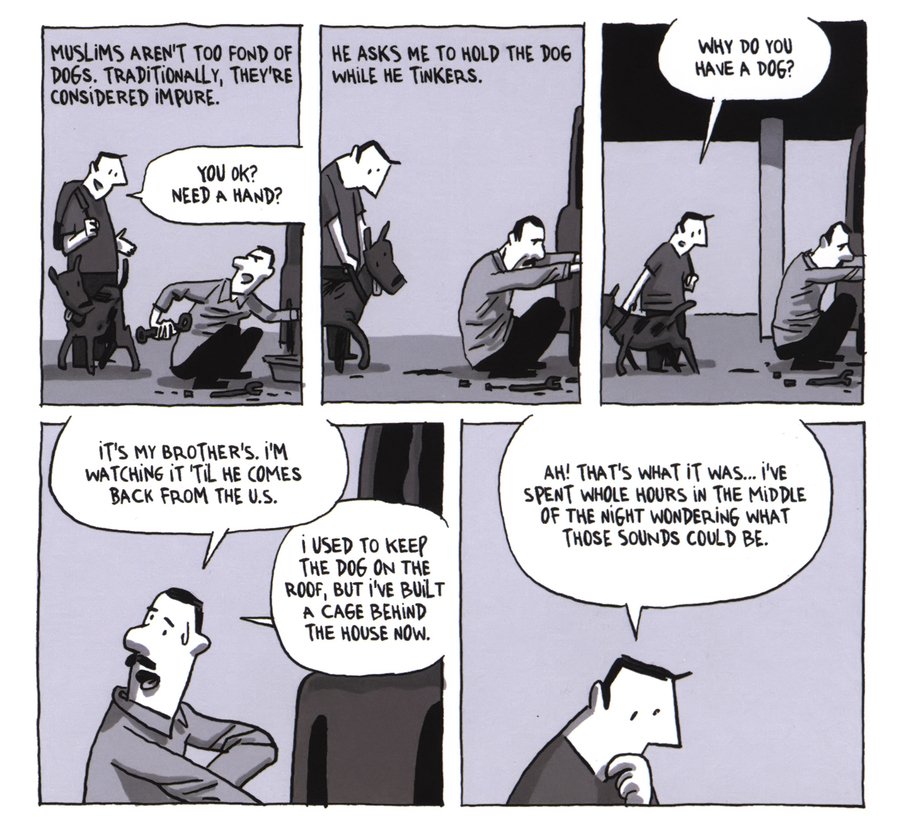
Guy Delisle, Jerusalem: Chronicles from the Holy City. Drawn & Quarterly, 2015
Guy Delille portrays Shabbat with curiosity, respect, and keen observation. His depiction of Shabbat invites readers to explore the rhythms and rituals of Jewish life in Jerusalem, while the author also emphasizes the cultural significance and influence on the city’s daily life, showing reverence for the diversity of religious practices and beliefs that shape Jerusalem’s cultural image. Located at the heart of the celebration’s beginning and moving with the crowd toward the Wailing Wall on the Temple Mount, he illustrates how this tradition unites all the Jews of Jerusalem.
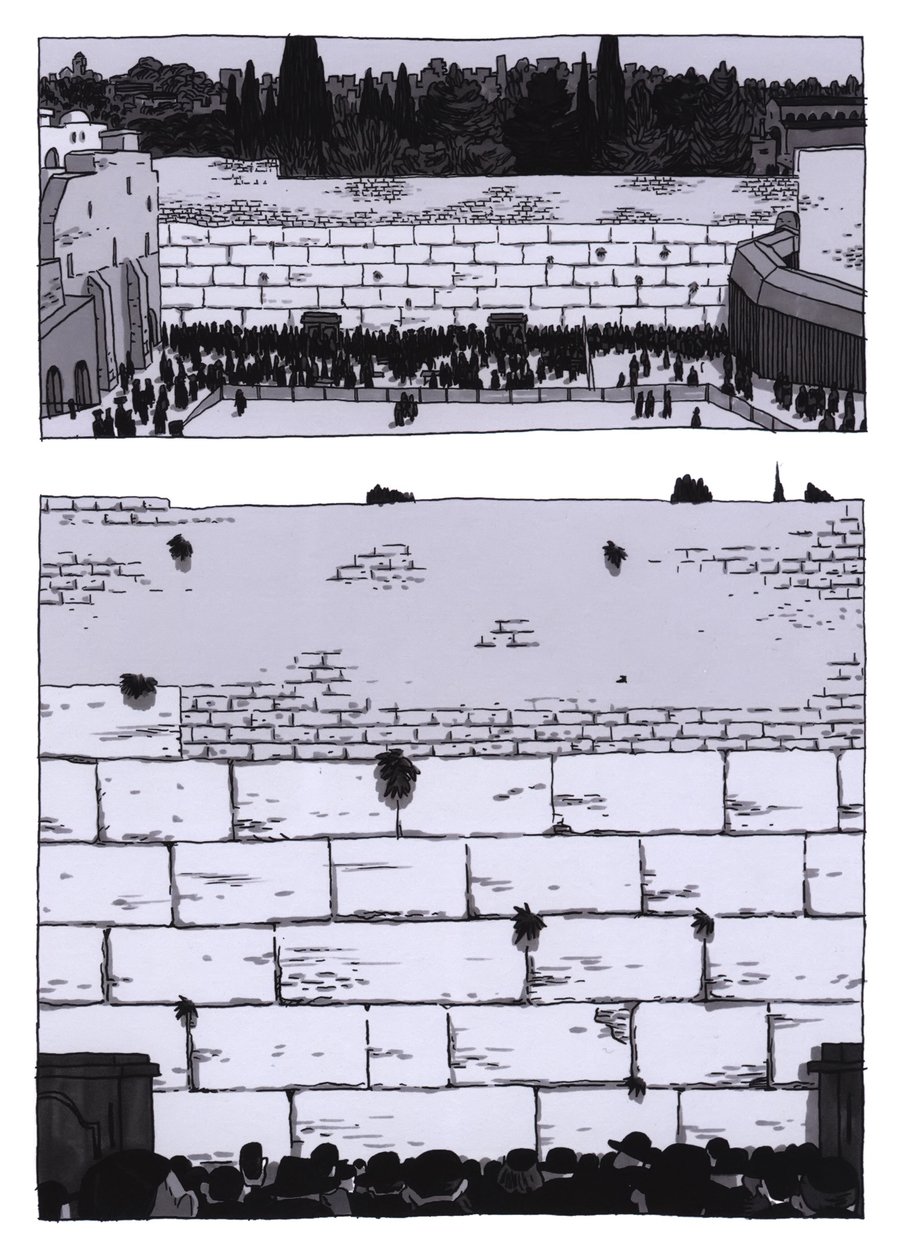
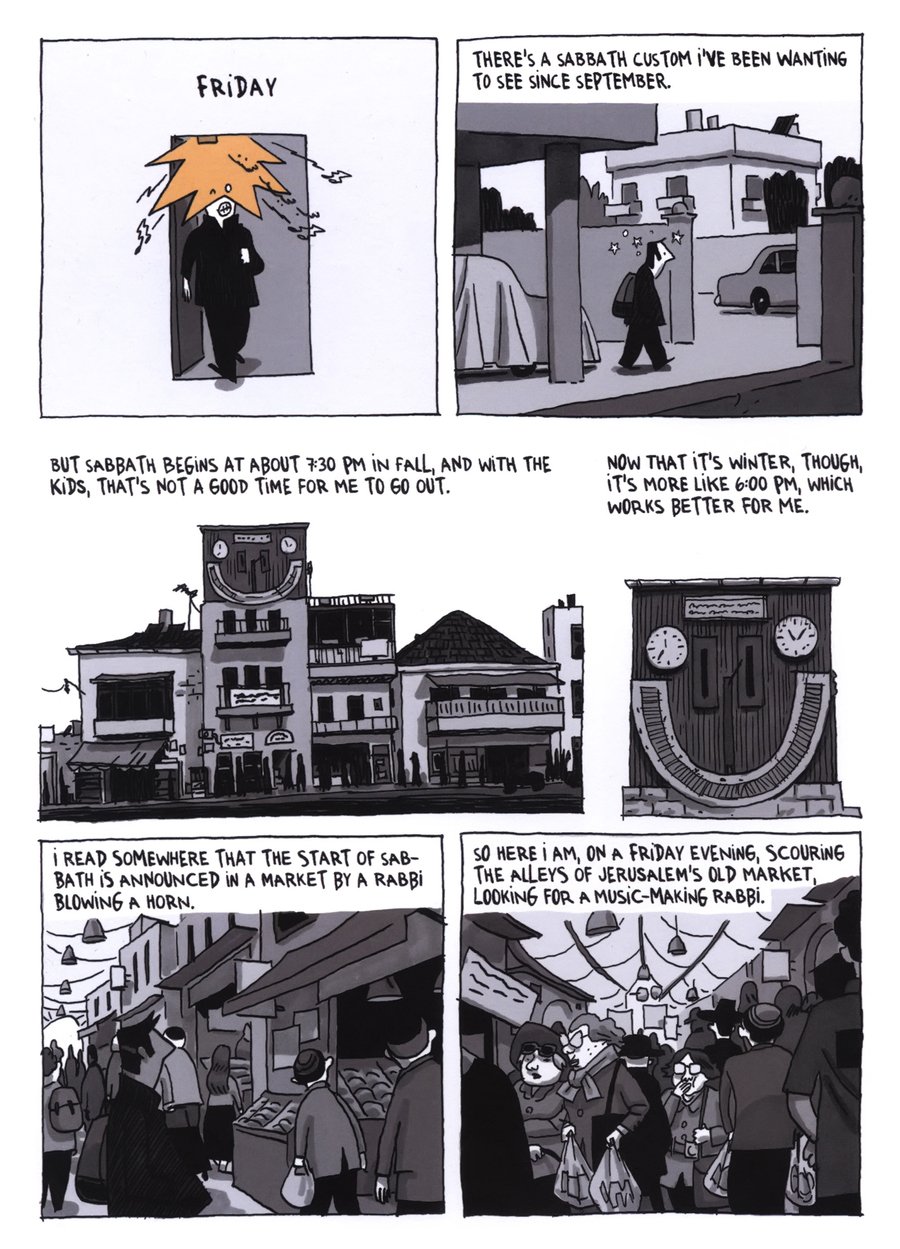
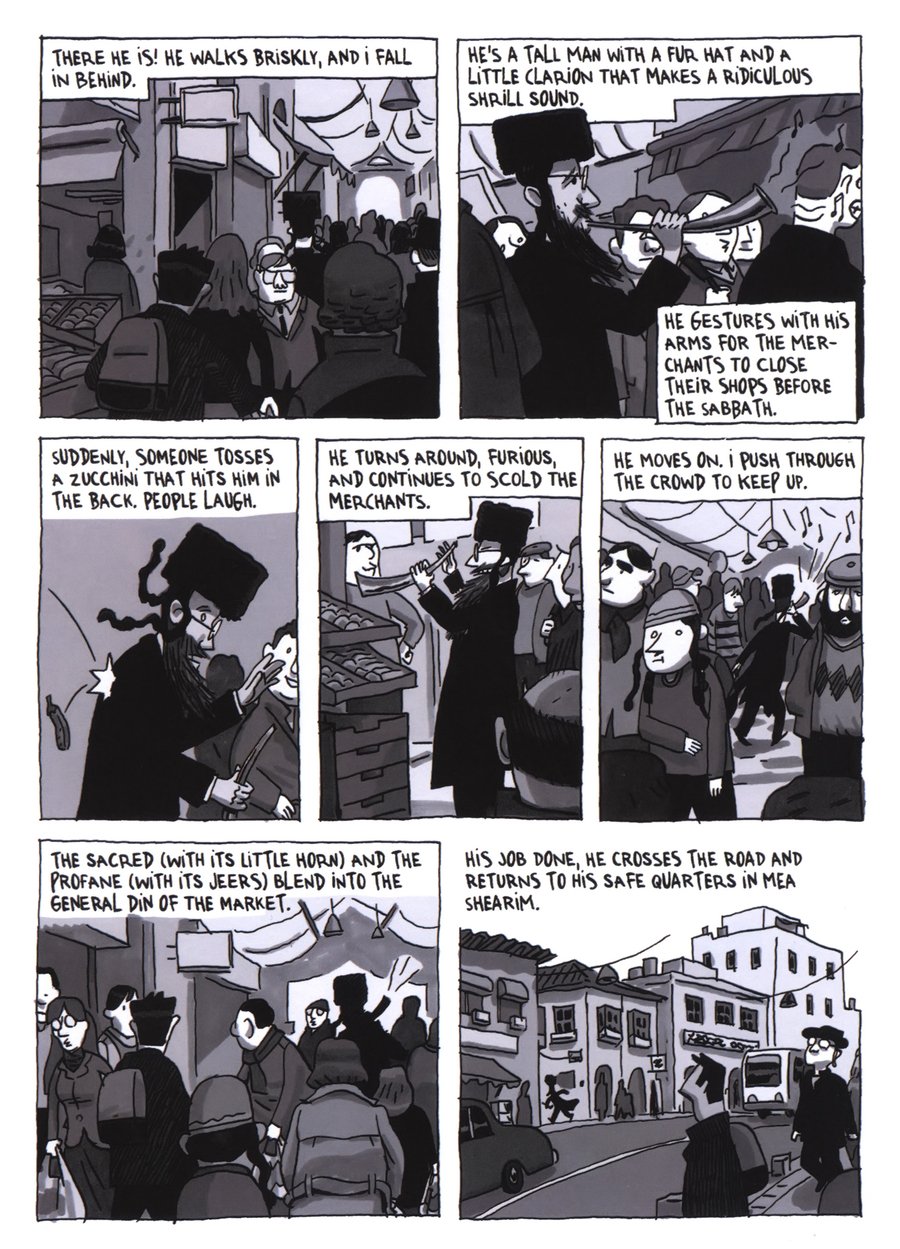
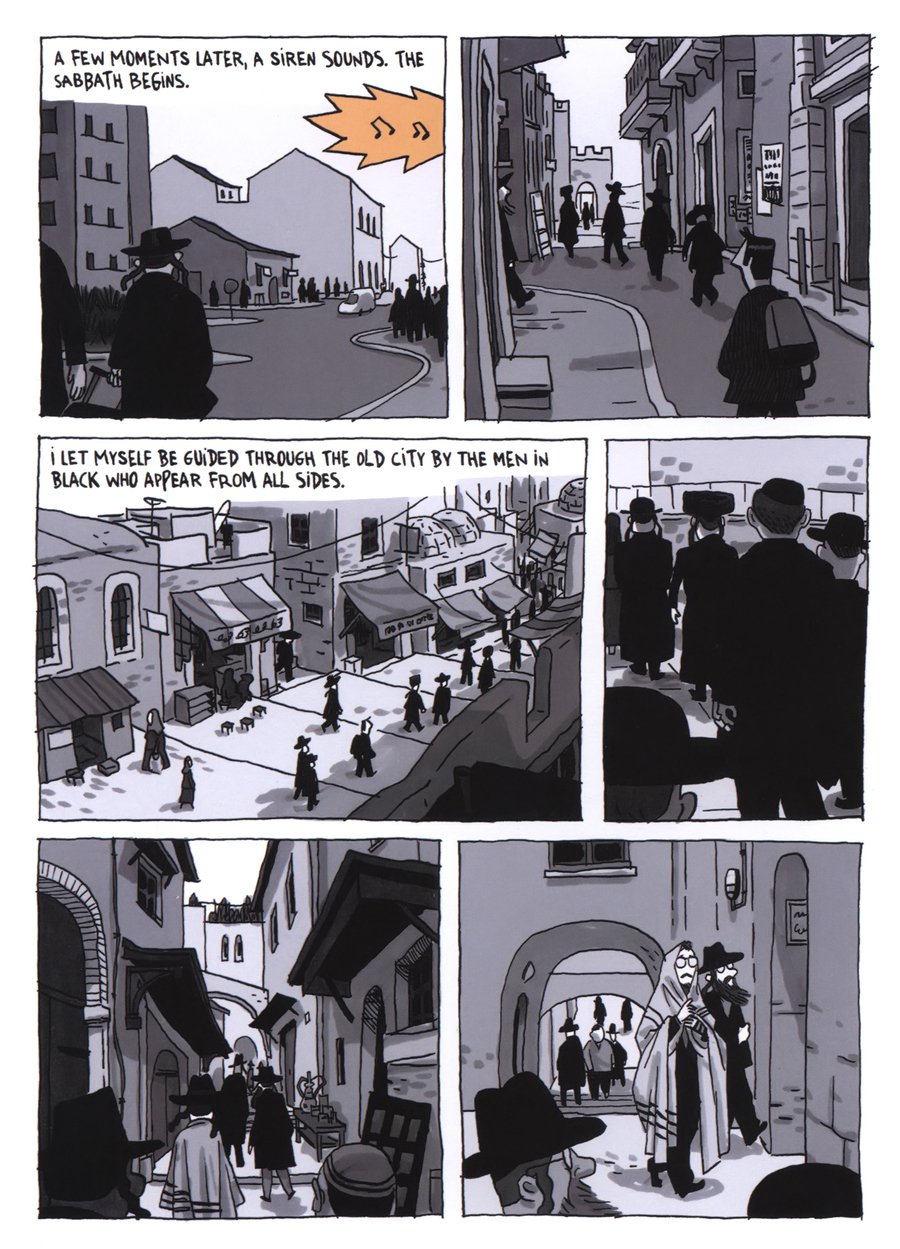
Guy Delisle, Jerusalem: Chronicles from the Holy City. Drawn & Quarterly, 2015
Purim is a joyful Jewish holiday commemorating the salvation of the Jewish people from the Persian Empire, as recounted in the Book of Esther. The artist also depicted Ahasuerus, the king of ancient Persia who sought to exterminate everyone. Without delving into historical detail, but striving to convey both the festive spirit and the cultural significance, Guy Delil portrays children in creative costumes, followed by unrestrained alcohol consumption, because «on Purim, a person is obligated to drink until they can no longer distinguish between the blessed Mordechai and the cursed Haman.»
By telling the story of Purim, Delil offers a cultural understanding of Jewish traditions and how they are celebrated in Jerusalem. His perspective is layered with elements of curiosity and discovery, as he himself is amazed by this culture, even though he could not participate in the celebration due to not owning a kippah—the traditional Jewish head covering for men.
Guy Delisle, Jerusalem: Chronicles from the Holy City. Drawn & Quarterly, 2015
Guy Delisle, Jerusalem: Chronicles from the Holy City. Drawn & Quarterly, 2015
Guy Delisle, Jerusalem: Chronicles from the Holy City. Drawn & Quarterly, 2015
The next episode features Passover—the main Jewish holiday commemorating the liberation of the Israelites from slavery in Ancient Egypt. The author approaches the subject with humor, noting in parentheses that it is the Jewish Passover. He interprets it through his Christian perspective, creating a bridge to engage with traditions that are not his own.
Humor serves as a powerful tool in Delil’s creative work, helping to bridge cultural divides. His lighthearted depiction of Passover does not undermine the tradition; rather, it makes it accessible to those unfamiliar with it. By comparing it to Easter—a holiday well-known in Christian cultures—Delil helps readers better understand Jewish customs by relating them to a familiar celebration. This approach (referring to Passover as the Jewish Passover) ultimately fosters cultural connection. When encountering unfamiliar cultural traditions, he portrays them with curiosity and respect, never with an intent to mock. Although he may not understand every nuance when trying to explain Passover, his engagement and curiosity draw the reader into the narrative, and humor helps make everything easier to grasp.
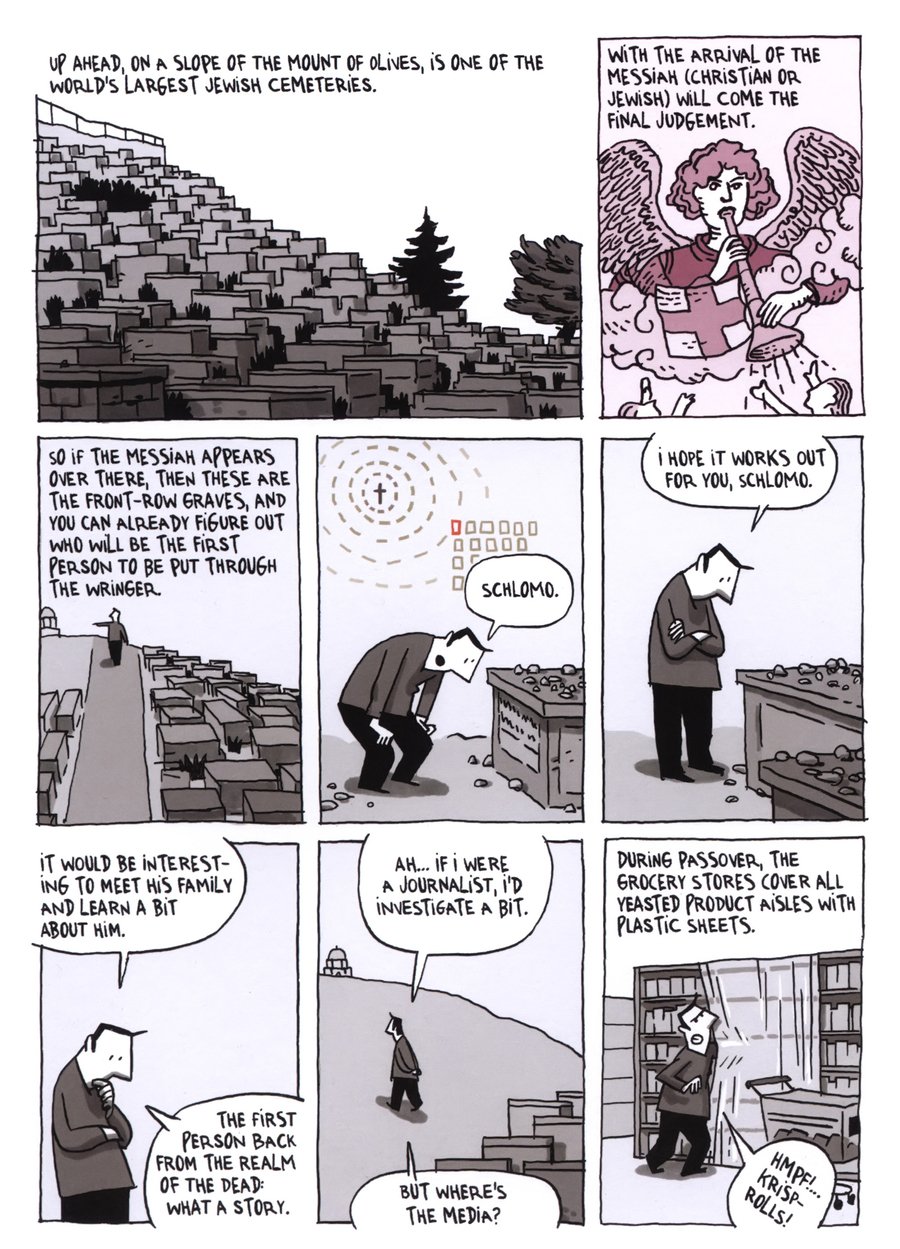
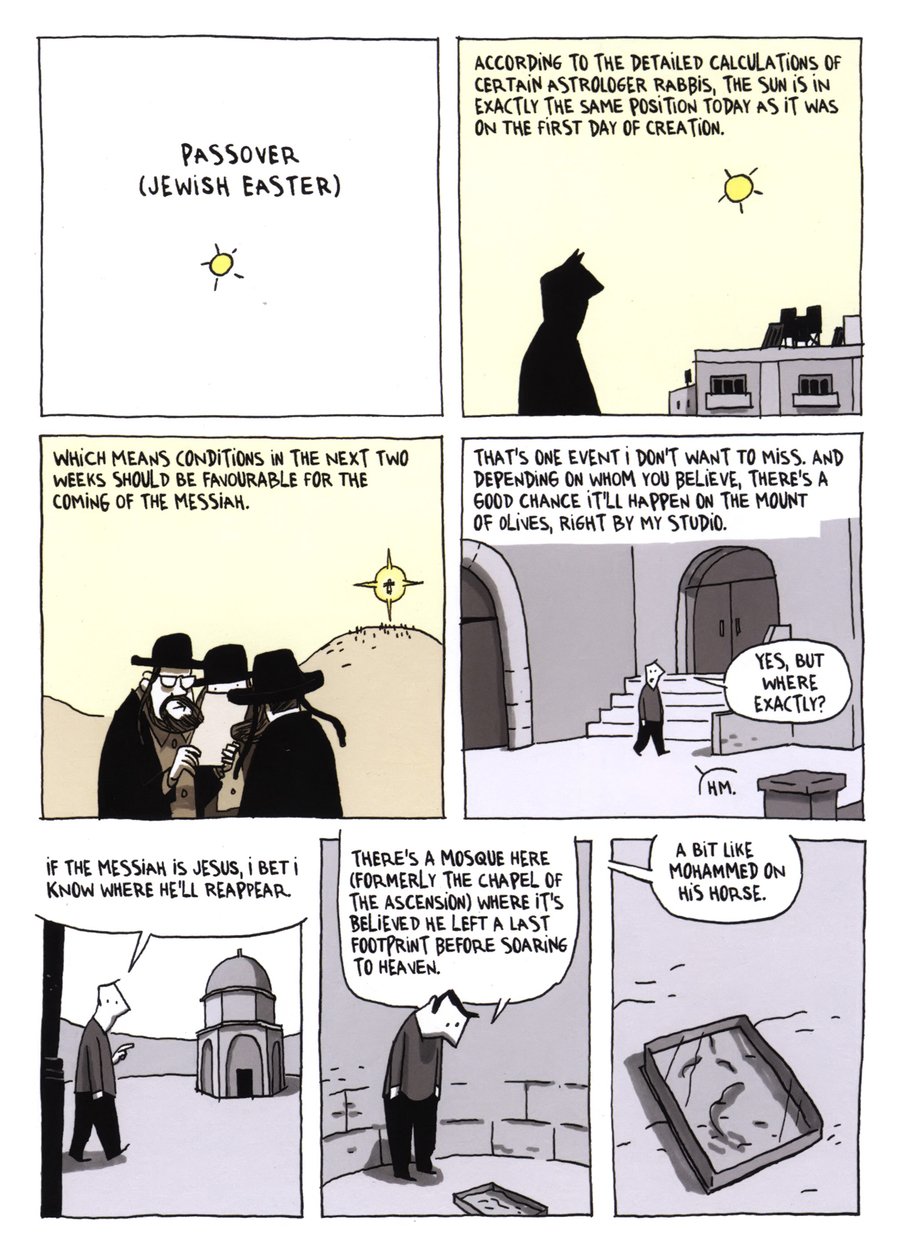
Guy Delisle, Jerusalem: Chronicles from the Holy City. Drawn & Quarterly, 2015
Guy Delille portrays Holocaust Remembrance Day with profound reverence. When he depicts this moment, he illustrates how the entire city around him seems to pause for an instant, held in memory of the tragic events of the Holocaust. This moment becomes a symbol not only of respect for their suffering but also a reminder of the necessity of preserving the memory of past tragedies so they never recur.
And in contrast to the author’s respectful disposition, only a group of tourists who showed no interest in the traditions disturbs the tranquility.
Guy Delisle, Jerusalem: Chronicles from the Holy City. Drawn & Quarterly, 2015
He describes Christianity in Jerusalem in a completely different way—through rare episodes, such as an encounter with a priest dressed in secular attire. This is a familiar world to the author (and readers), so he does not dedicate significant space to Christianity in his comic—in contrast to the remarkable traditions of Muslims and Jews. For him, Christianity in Jerusalem is something commonplace, more part of the everyday cultural backdrop than a subject demanding special focus. Furthermore, the pages dedicated to Christian culture, such as visits to churches and the cafes nearby, add an effect of nostalgia, as if bringing the protagonist home.