Concept
The term «irrational modernism» was coined by Amelia Jones to describe new art movements from the late 19th to the mid-20th century that focused on the human subconscious and subjective experience. These motifs were particularly vividly developed by the movements of Dadaism and Surrealism. In their work, which rejected the cult of reason, they questioned the social and moral norms established by rational thought. Even the manifestos of these movements often became a kind of «anti-manifesto,» rejecting attempts to formulate theory and philosophical ideas in a strict and clear manner. Artists of irrational modernism expanded the boundaries of public perception regarding what constituted «correct» art—its purposes and its means. It completely ceased imitating reality, conforming to canons or public opinion, or seeking interpretation or sacredness. While Impressionists and Post-Impressionists began this journey toward liberation, albeit through a rationalist methodology, Dadaists and Surrealists asserted art’s right to error, absurd chance, and the chaos of thought in the unstable, psychotic 20th century.
Left:
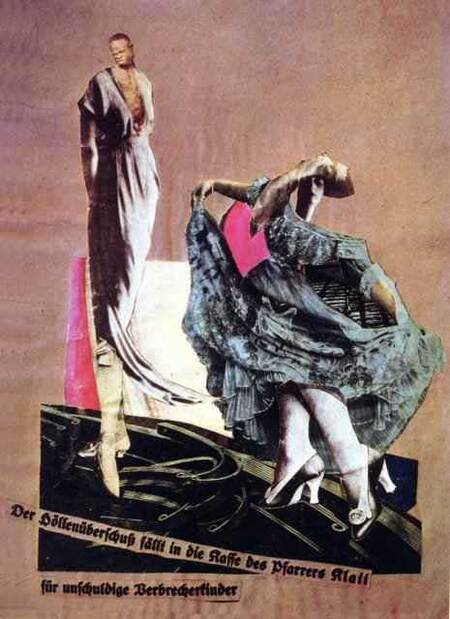
- Hannah Höch — «Dada Dance,» 1922
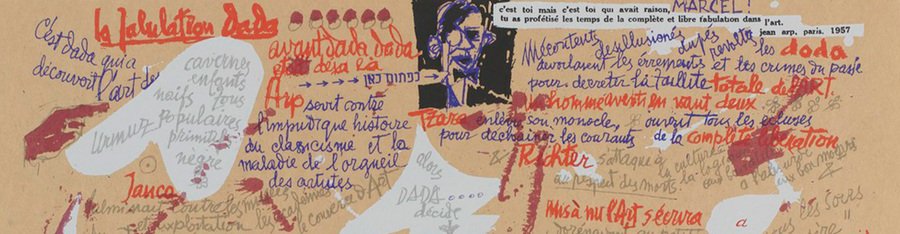
2. Marcel Yanko — «Inventing Dada, ” 1970 (excerpt)
This visual study aims to investigate the formal devices used by Dadaists and Surrealists when addressing the improper, and how they explained this conceptually. In the current context, error is an especially relevant and significant motif. Contemporary art increasingly appeals to imperfect, fragmented images and even digital «glitches.» The ability to err and deviate from norms is now an important characteristic that «humanizes» visual culture—in contrast to generative works involving neural networks that require executing a predefined prompt. A possible hypothesis for this visual study is the assumption that by acknowledging and embracing imperfection in their works, irrational modernism artists liberate art from bourgeois ideals and the dictate of perfection within a thoroughly imperfect and chaotic world.In this study, «error» is understood as any inconsistency with perceptions of reality, its aspects, and everything conventionally considered «correct.» In the works of the Dadaists and Surrealists, intentional discrepancies that contradict accepted norms and exist while being aware of their violation of reality will be sought.The discovered works can be grouped into blocks according to their central conflict. The negation is examined across:
(1) the world as a system;
(2) the physical body and anatomy;
(3) functionality;
(4) linguistic meaning.
(1) Incorrect system
This section showcases works where individual elements and segments are assembled into a contradictory internal artistic world. Taken from disparate contexts, these pieces appear to be «out of place, ” signaling to the viewer a discrepancy that requires deciphering. Often, the key to unlocking this discrete reality is our own real world and its imperfections.
«Reassembling» reality—this is essentially the core technique of photomontage, which the Berlin Dadaists engaged in particularly actively. Raoul Hausmann wrote about the term photomontage, stating that it «…conveys our unwillingness to act as artists; we saw ourselves as engineers (which is why we preferred to wear work overalls) and wanted to construct and assemble our works.» [5]
3. John Hartfield — «Sleeping Reichstag,» 1929
Many fascist political figures were placed in Dadaist works within non-existent scenarios where these people were stripped of their human appearance. For example, in Hartfield’s «Pangermane, ” the figure of a German National Socialist leader is superimposed onto a photograph of a peaceful civilian [1]. The work is perceived as impossible in its inhumanity. However, a lie seeps through the reality of Germany in the 1930s. This was a period when the rhetoric of politicians who promised peace and prosperity began to increasingly echo military and bloody slogans and ideas, which was also reflected in other photo montages by John Hartfield.
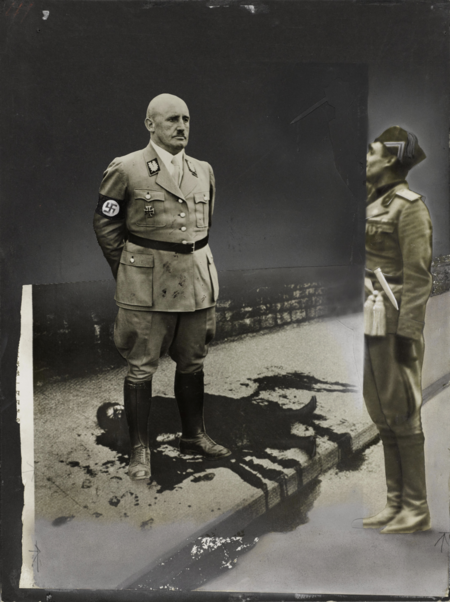
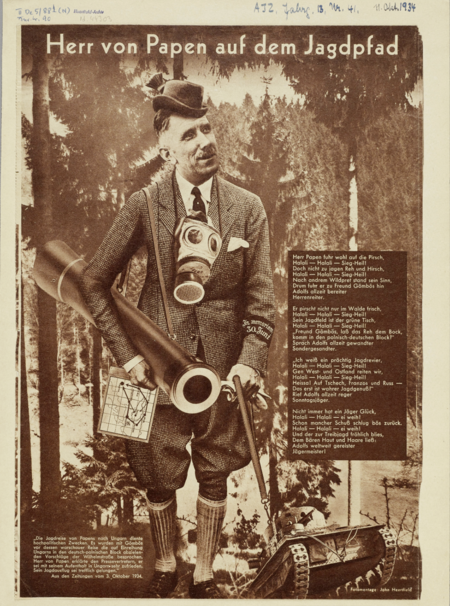
4. John Hartfield — «Pangermain, ” 1933; 5. John Hartfield — „Herr von Papen on a Hunting Trail, ” 1934.
In photo montage, bourgeois lifestyles were subject to critique. Their submission to the regime and oppressive social norms, their attachment to material values rather than spiritual ones, constitute part of the «small» evil that feeds the «greater.» This problem acquires a grotesque resonance in John Hartleyfield’s work, «Hooray, the oil has run out!» It illustrates how the average family adapts to the militarization of the German economy, transforming into something akin to machines, due to a scarcity of food—instead consuming ammunition, spare parts, and weapons. All of this occurs amid Nazi symbolism and slogans, highlighting Hermann Göring’s quote about ore making the nation stronger, and fat making it thicker. This situation is erroneous for the real world (people cannot consume iron as food), yet it results in a grotesque realization of the values dictated by cruel, psychopathic elites. The composition, built from real photographs and supported by an actual quote, attempts to persuade the viewer of the authenticity of an effect that cannot be instantly captured in reality.
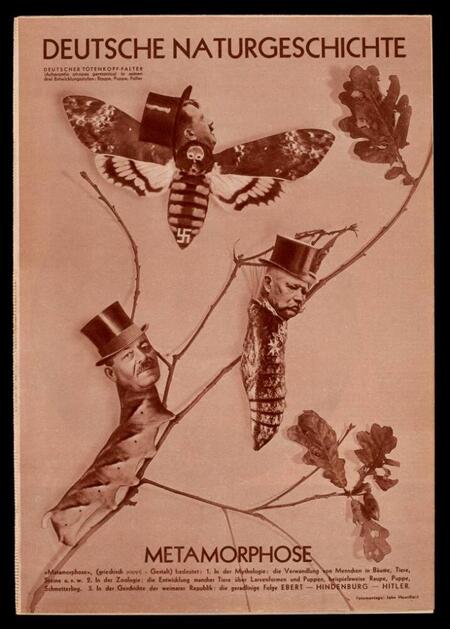
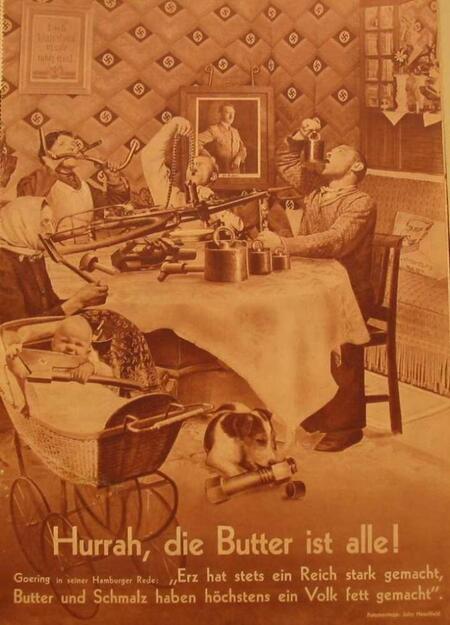
6. John Hartfield — «The Natural History of Germany — Metamorphosis, ” 1934; 7. John Hartfield — „Hurray, the oil is gone!“, 1935
Our mistake was thinking we were involved in art at all… Then we saw the madness that the existing social order had brought about and laughed—We didn’t yet understand that the system was at the heart of this madness. [1]
Photomontage, achieved through an error perceived by the viewer, helps to expose the process of societal spiritual decay. The artists create a «falsehood, ” but these symbolic images reveal the true malevolence at the core of the bourgeois societal structure. Strictly speaking, the photomontage itself contains no invention. The fragments and their components are taken from real photographs; although wrenched from context, they remain elements of captured reality. Raul Hausmann writes: „They (the Dadaists) were the first to use photography as creative material, creating fundamentally different, often anomalous structures with antagonistic meaning, a new unity snatched from the chaos of war and revolution to yield an absolutely new image…“ [6] In this context, the error lies precisely in placing the photographs into the symbolic world of photomontage. The discrepancy with reality actually speaks to that reality far more eloquently than any attempt to meticulously reflect it.
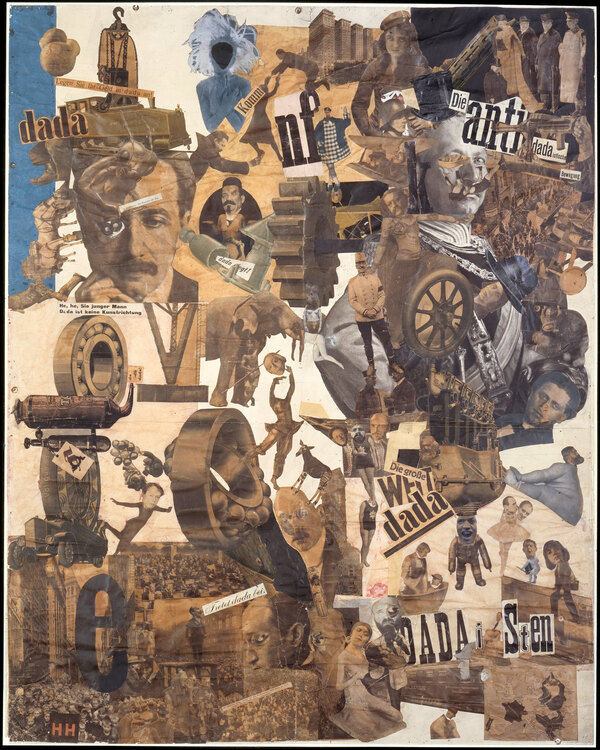
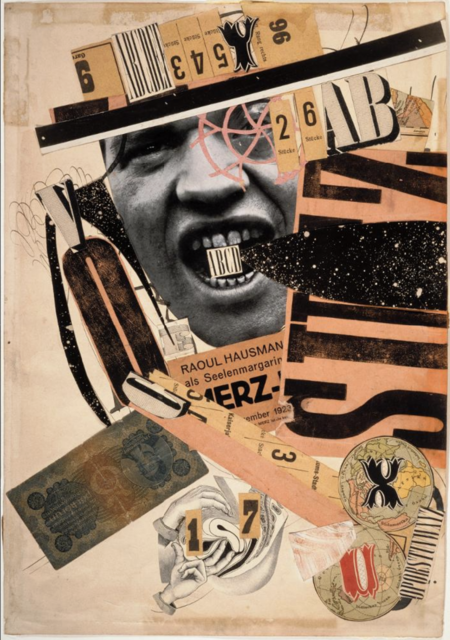
8. Hannah Höch — «Cut with a Kitchen Knife,» 1920; 9. Raoul Hausmann — «ABCD,» 1923–1924
10. Paul Eluard — «The Last Twins,» 1936–1937
The surrealist poet Louis Aragon writes about the works of Max Ernst: «For him, collage becomes a poetic procedure, completely opposed in its aims to Cubist collage, whose tasks are purely realistic» [5]. A key distinction in the approach of irrational modernists from other avant-garde currents in interpreting reality can be drawn from this statement. Dadaists and Surrealists embrace intentional error, acknowledging the inability to rationally comprehend reality. They do not attempt to model it or transmit human perception of it; instead, they construct an alternative world that is deliberately outside the framework of our consciousness. Aragon writes about this very poetics and surrealism.
11. Max Ernst — «Song of Flesh, ” 1920
12. Max Ernst — «Everything is still floating around here, ” 1920
The deceptive system is also realized in other mediums. Man Ray, by naming his object «Isidore Ducasse’s Enigma,» presents the viewer with a problem that has no resolution. The question that may arise is: what exactly is concealed by the fabric? But this is not the content of the «enigma,» meaning any guess or answer will be incorrect.
14. Man Ray — «Isidore Ducasse Mystery, ” 1920 (reproduction 1971)
Marcel Duchamp poses another enigma with his readymade, «Why Not Sneeze, Ross Selavi?». The components of this object, by their very nature, seem misplaced: marble cubes are placed inside a birdcage, a thermometer is affixed to them, and the composition is topped with an octopus bone. Yet, it is noteworthy how all the contents merge into a single hue through the white color. We observe an order on a certain level that we cannot explain. We observe nothing. Just as the meta-context of the work’s title, nestled at the bottom of the readymade, adds precisely no meaning to the piece other than a dialogue with the author’s fictional persona. Given the overall composition of this object, it seems to strive for zero weight and significance to the viewer; it disappears more than it exists, which in itself is paradoxical.
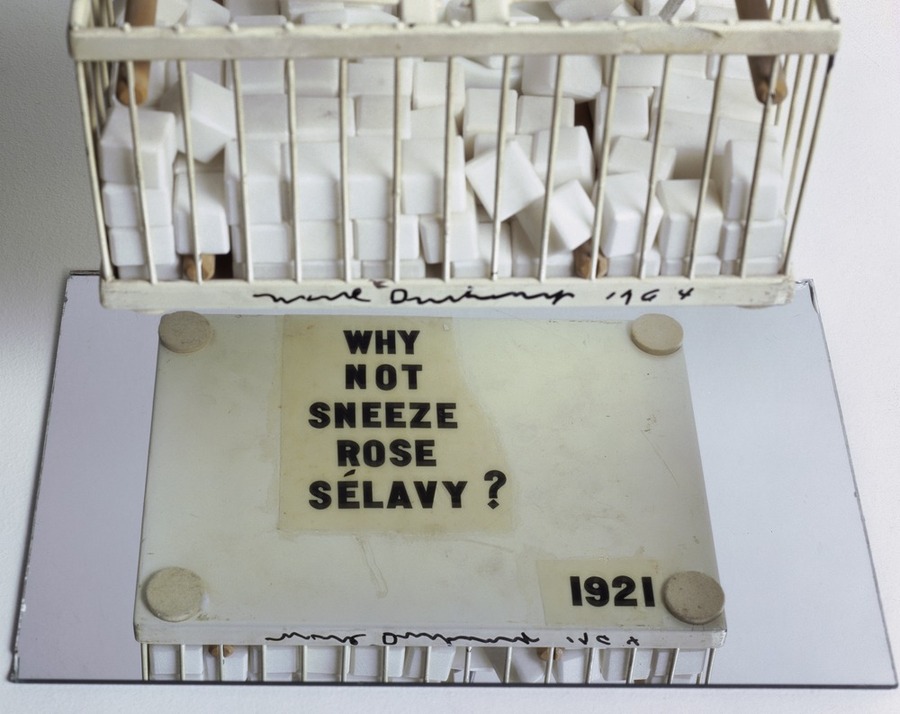
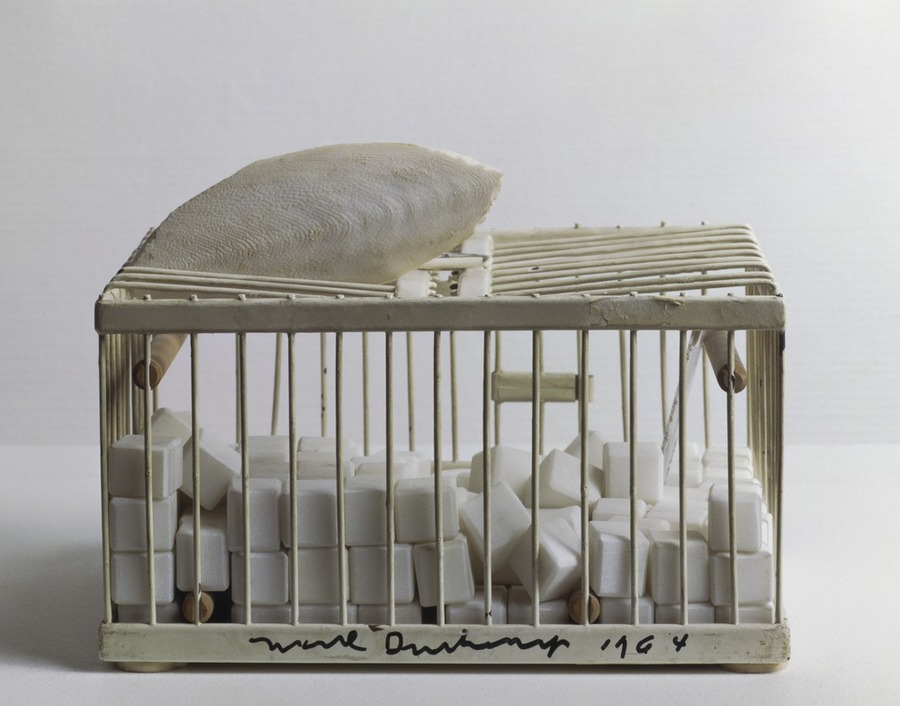
15–16. Marcel Duchamp — «Why not sneeze, Rose Selavy?» (1921, reproduction 1964)
Marcel Duchamp’s «Large Glass» creates a system that disrupts normalcy through the technique of dust accumulation. A material that holds no domestic or artistic value acquires distinct forms on the window, echoing the silhouettes of other actual Duchamp works. Dust, in general, either has no place or occupies it fully in space. The artist, however, assigned it a different application and figurative meaning. It still feels like a departure from the norm. The shapes of the dust seem to attempt to cover vast cracks in the glass, binding the entire object into a singular composition that remains broken and aberrant.
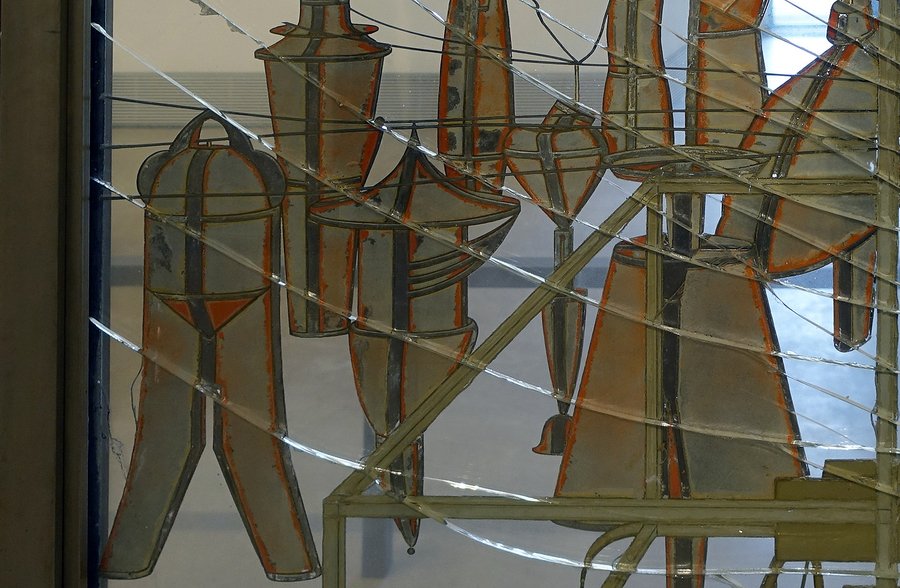
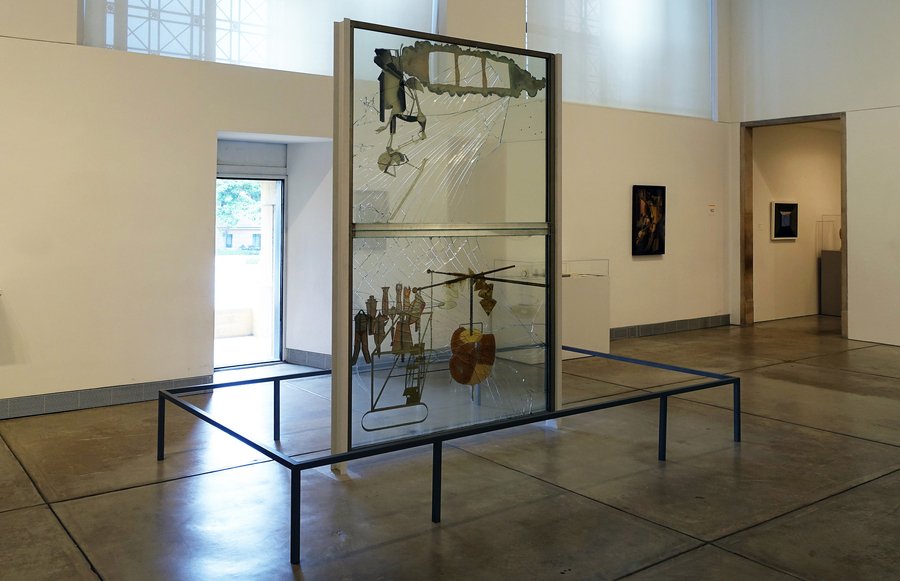
17–18. Marcel Duchamp — «Nude Bride with Her Hoselets Evenly Distributed,» 1915–1923
(2) Incorrect function
Specifically for the Dadaists, a major problem in creativity was its integration into the market system of relations. «Art became a commodity» [4]. To pull it out of this trap, it is necessary to reevaluate, and even devalue, the commodity. This section features works that erase the utility of objects—their purpose, appearance, or any functionality. What might be considered useless and incorrect in everyday life becomes an important creative resource for irrational modernists. [6]
«Matchboxes.» Man Ray defies our conventional notions of this object’s function, both in its exterior form and its contents. These packets feature photographs of bodies and faces that are not intended for any person and possess an intimate significance. Can such boxes be sold? Probably not. And if this is considered an inappropriate move and poor «design,» then Man Ray achieves his intended goals.
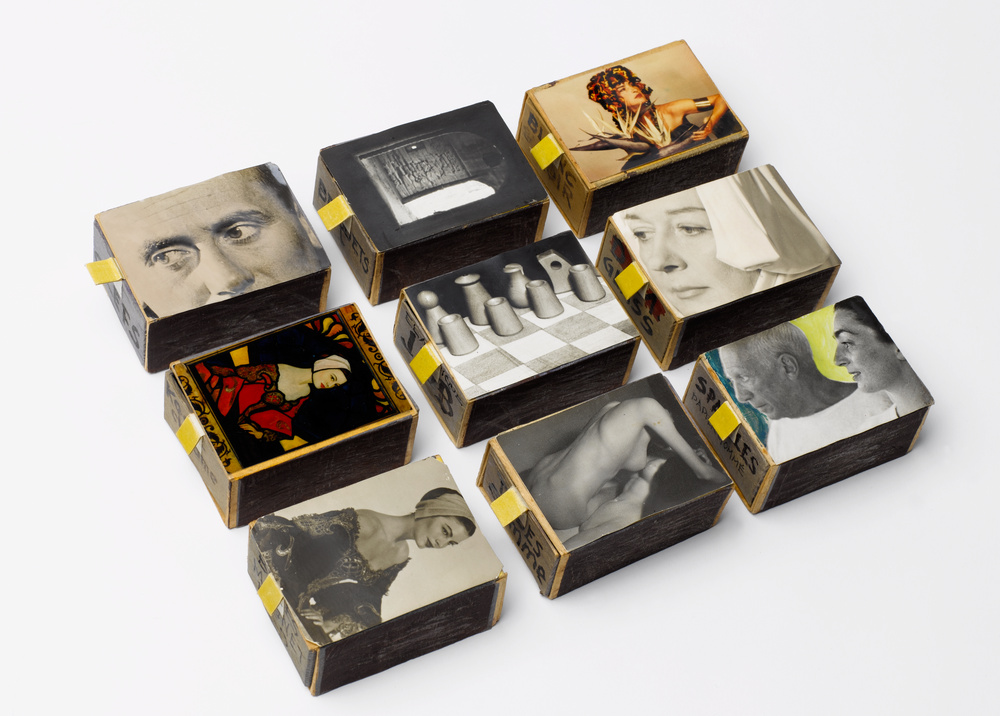
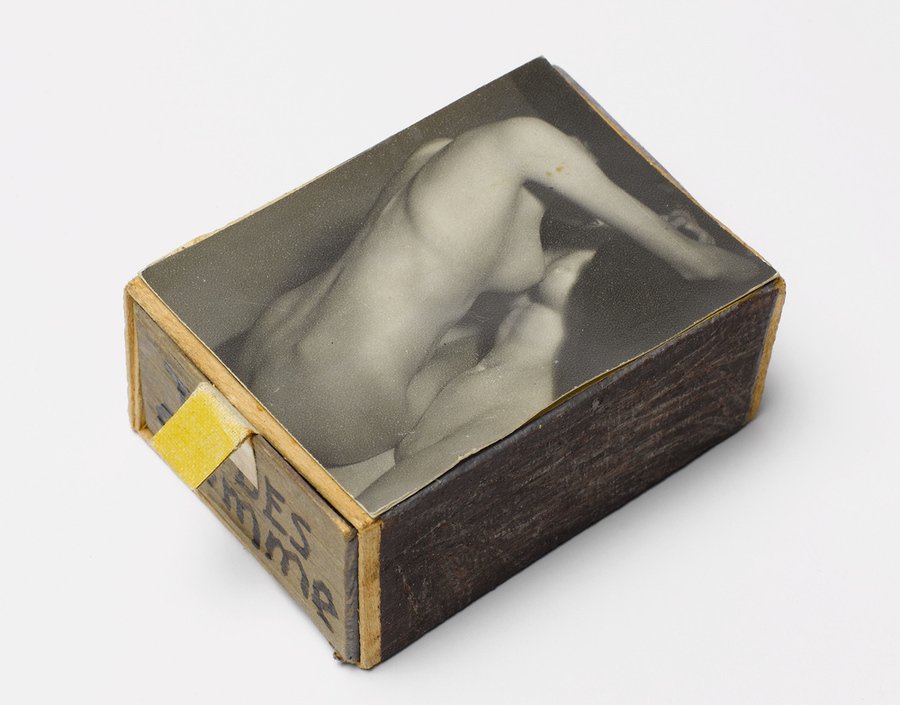
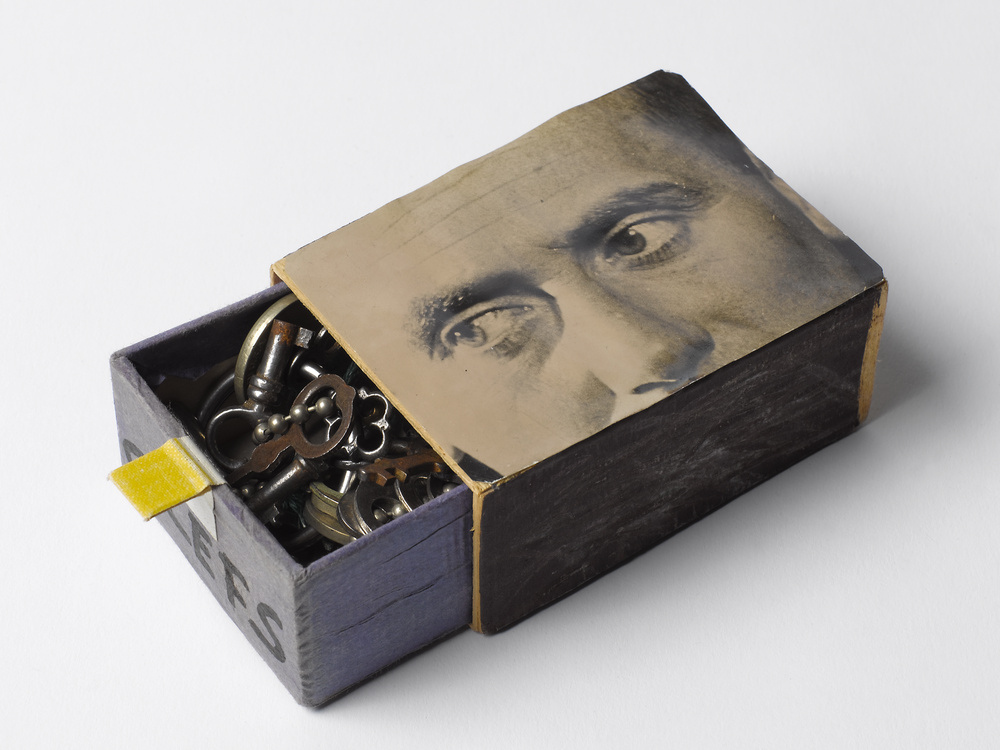
19–21. Man Ray — «9 Matchboxes, ” date unknown
22. Man Ray — «Smoking Apparatus,» 1959