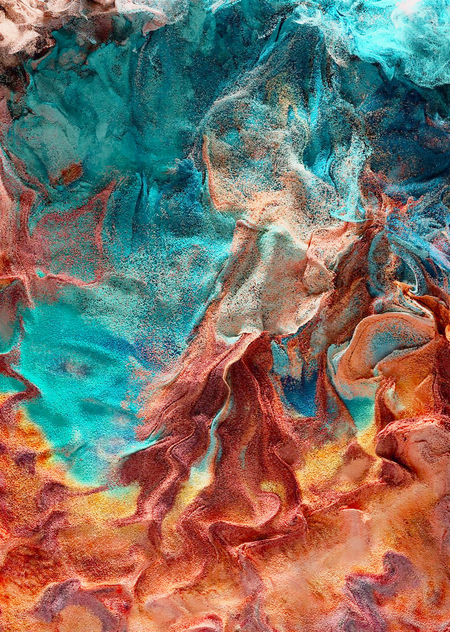
Today, I would like to address the pressing topic of Artificial Intelligence as a handy tool for cultural practitioners. This question is highly complex: humanity is still in shock from the pace of development and learning of the machine «mind"—a pace that no Homo Sapiens in the world can match due to the limitations of cognitive abilities and thought processes. Artificial intelligence excels in areas where human imagination and the capacity to synthesize incompatible concepts or objects end. Initially, it was created with the aim of helping people classify objects of the same or similar origin. Machines were intended to simplify routine work and delegate creativity exclusively to humans, since «creation» is solely our prerogative. However, over time, AI has gathered a sufficient database and a number of neural connections to learn not only to classify photos and paintings that look similar after scanning them, but also to independently grasp the mathematics of an object’s structure and origin.
The machine learned to perceive logic and draw conclusions without prompting. Following such a leap in development, scientists and companies developing neural networks became genuinely concerned and paused improvements to their models for six months.
Artists are concerned: AI chats, such as Leonardo, have studied a massive database compiled from existing digital art, physical paintings, installations, art objects, photographs, and even private correspondence in a short amount of time. They have literally read human history based on the materials provided by the programmers. Humans are not capable of adapting at the speed of neural networks or broadening their perspective enough to always keep up with client preferences. Many clients have opted for subscriptions to image-generating chats or free AI tools instead of commissioning logos or website design from leading specialists in communication design, due to an unwillingness to invest in human labor. This dissonance also excites me, which is why I have decided to research this issue.
We must mention the artists who have managed to integrate into contemporary trends, «taming» Artificial Intelligence to serve their purposes in creating not just masterpieces, but images and living visuals that astonish with their beauty and abstraction.
Can we consider AI artists as artists and adherents of modernism?
The hypothesis of my visual research is that AI artists are also creators, blindly striving to find new material, because humanity is accustomed to seeing such works only in science fiction films like *Interstellar*, but not on a daily basis. Critics of the union of human art and neural networks may vehemently protest that this is not creativity. But what is creativity? Any unconventional approach to life—the embodiment of freedom of thought.
I found an AI artist who creates paintings in the modernist style and analyzed their approach to communicating with machine learning, based on the postulates and criteria of modernism, using the visual evidence from their collections.
REFIK ANADOL — AI ARTIST MODERNIST
Refik Anadolu is a contemporary Turkish artist and media art designer. He was born on November 7, 1985, in Istanbul. He currently lectures at the University of California, Los Angeles. Since 2008, he has been fascinated by the relationship between robots and humans, developing in the field of media communications art. He organizes exhibitions of his modern-style works through interaction with artificial intelligence. His work maintains a balance between science, biology, architecture, and technology.
MACHINE HALLUCINATIONS: CORAL DREAMS
Reef Anatol, Machine Hallucinations: Coral Dreams, 1, 2021
Refik Anadolu, Machine Hallucinations: Coral, 1, 2021
Refik Anadolu, Machine Hallucinations: Coral, 1, 2021
Refik Anadol, Machine Hallucinations: Coral—Generative AI Data Painting, 1, 2021
Refik Anadolu, Machine Hallucinations: Coral — Artificial Reef, 1, 2021
MACHINE HALLUCINATIONS — UNMONITORED
Refik Anadolu, Machine Hallucinations: Unattended 1, 2021
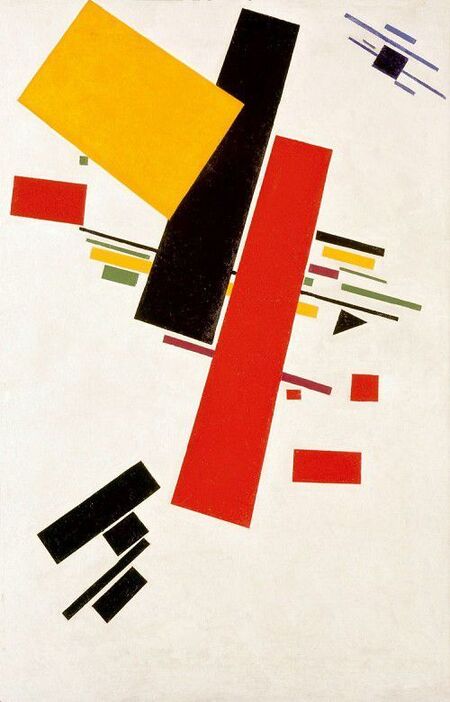
The paintings demonstrate a pursuit of harmonious and free composition of geometric forms. However, in the Suprematist compositions of Kazimir Malevich, a set of distinct shapes is used—circles, squares, rectangles, and triangles—contrasting with Anadol’s approach, which merges fluidity and softness with angles based on entirely abstract subjects.
Kazimir Malevich, Suprematism, 1915
Refik Anadolu, Machine Hallucinations: Unsupervised 1, 2021
Refik Anadolu, Machine Hallucinations: Unsupervised—Dreams of the Museum of Contemporary Art, 2021
Refik Anadol, Machine Hallucinations: Unattended — Dreams of a Museum of Contemporary Art 1, 2021
MACHINE HALLUCINATIONS — COSMOS: DAFA
Refik Anadolu, Machine Hallucinations — Cosmos: Earth is Still, 2021 Refik Anadolu, Machine Hallucinations — Cosmos: Mars is Still, 2021
Refik Anadol, Machine Hallucinations — Cosmos: The Galaxy Unmoving, 2021
MACHINE HALLUCINATIONS — COSMOS: THE METAVERSE
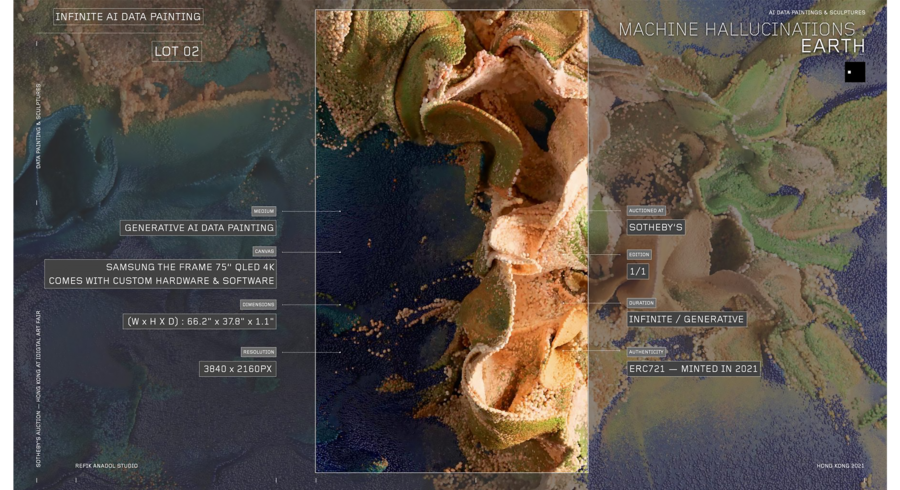
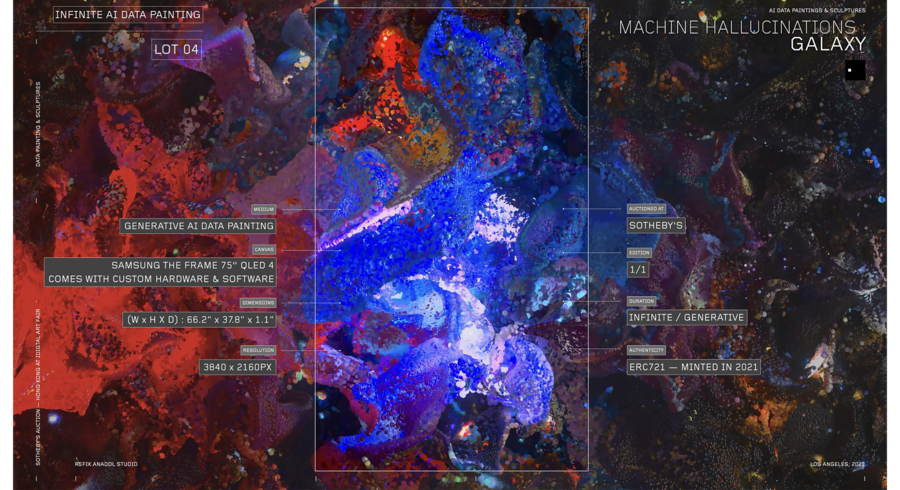
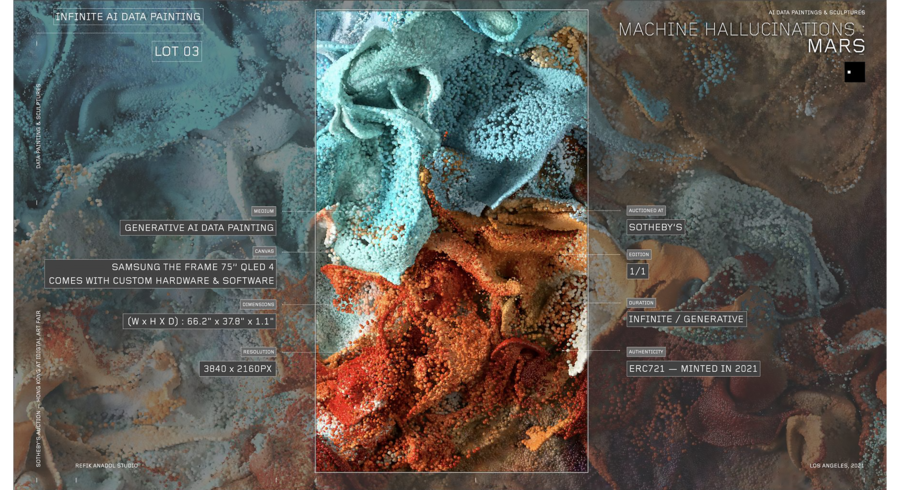
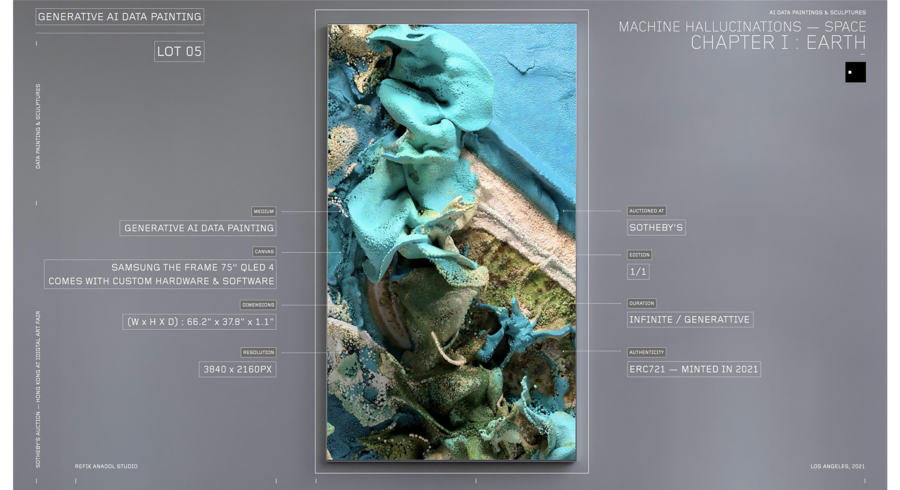
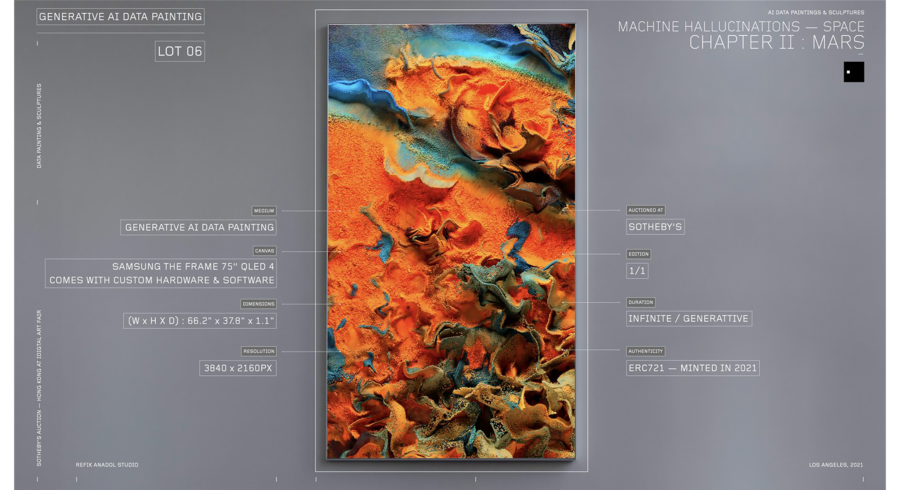
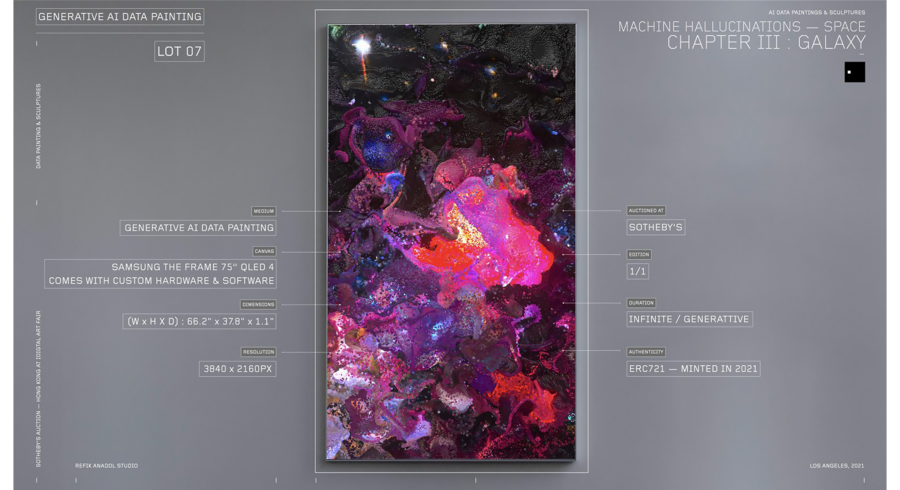
Refik Anadol, Machine Hallucinations: Earth | Mars | Galaxy | Cosmos | Meta Universe (infinite AI data painting), 2021
MACHINE HALLUCINATIONS: MARS LANDSCAPES
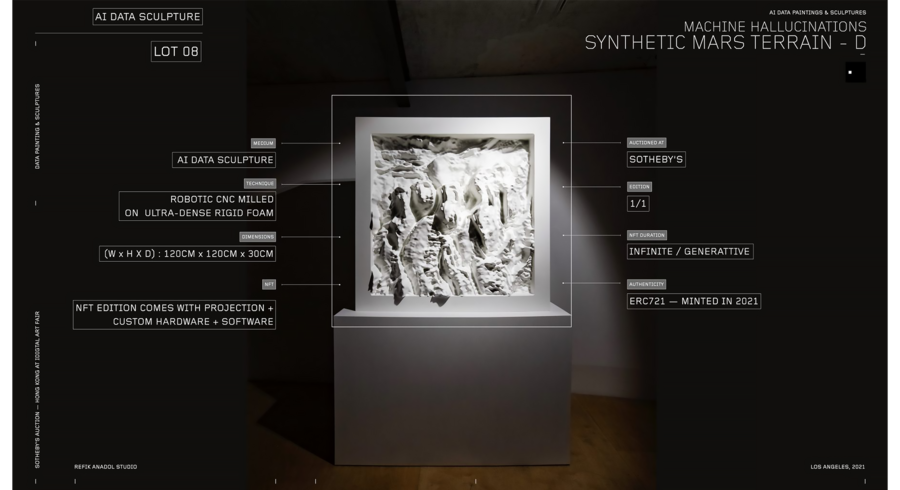
Refik Anadolu, Machine Hallucinations: A Synthetic Landscape of Mars, 2021
Refik Anadol, Machine Hallucinations: The Synthetic Landscape of Mars, 2021