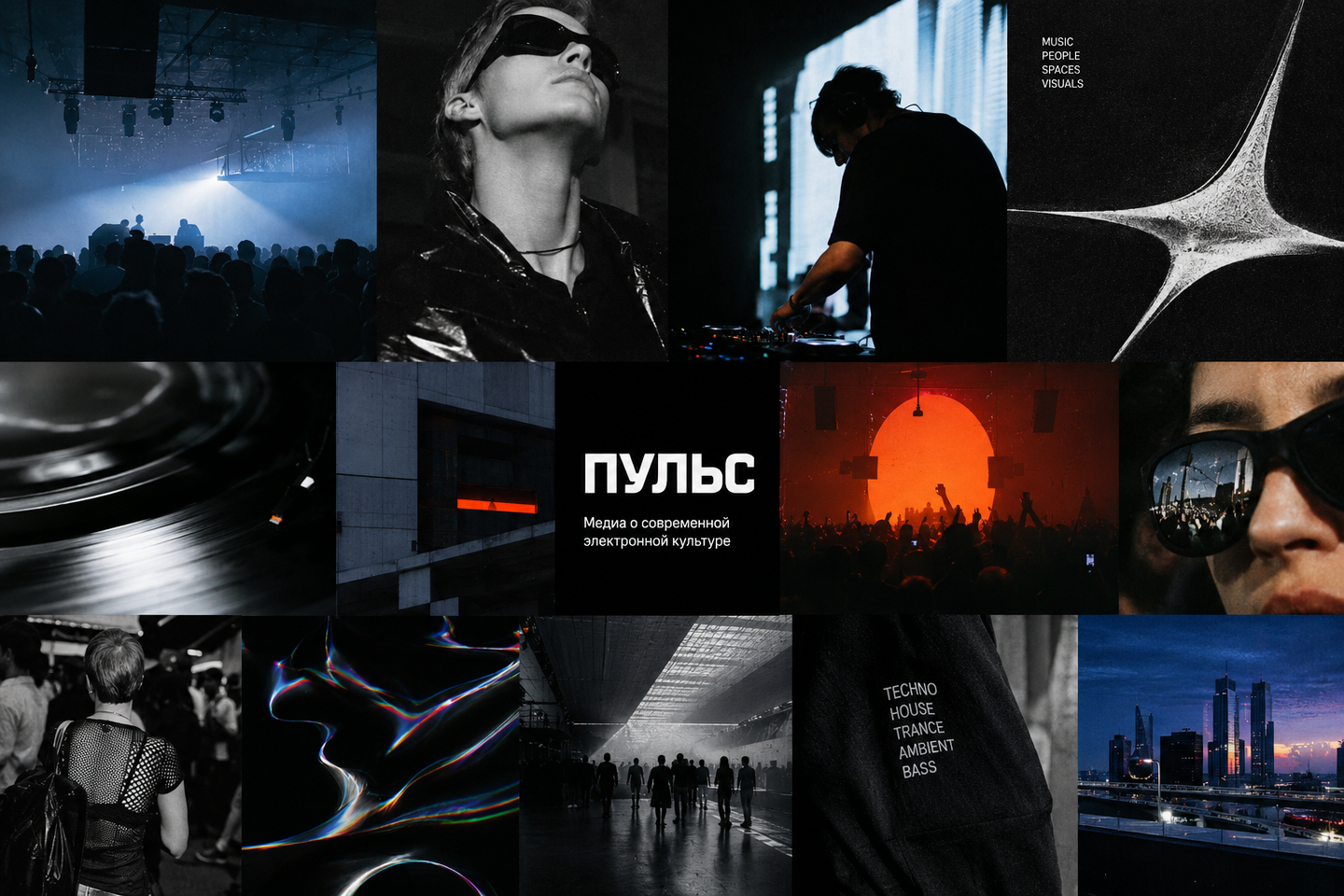
PULSE — a media outlet exploring how electronic music exists beyond tracks and line-ups: through clubs, artists, visual language, technology, urban spaces, and the people on stage.
Format: Telegram + Instagram + YouTube
Core Idea: To show the electronic scene from the inside—without snobbery and without turning it into a mere event poster.
Objective
- Create media that helps the audience understand and feel the contemporary electronic scene, rather than simply learning about the next parties.
Objectives— To discover new artists and local communities; — To tell the story and context of electronic music; — To present club culture through people and spaces; — To explain complex musical and visual phenomena in simple language; — To build a visual archive of the contemporary electronic scene.The Media’s Core QuestionWhat is happening with electronic culture right now—and why does it matter?
Topics and Focus Area
Big Topic
Electronic Music and Contemporary Club Culture
Niche Topic
The New Independent Electronic Scene: Artists, Clubs, Visual Language, and Communities.
Media exists at the intersection of:
Music × Visual Culture × Urban Environment × Technology × Lifestyle
Main Sections
ARTISTS — Interviews and artist profiles SOUNDS — Genre, track, and scene breakdowns PLACES — Clubs, spaces, and parties VISUALS — Lighting, graphics, album art, and stage design PEOPLE — Promoters, VJs, sound designers, and collectors GUIDES — Curated selections and explanatory materials
Competitors
Direct Links1. MixmagAn international media outlet covering electronic music and club culture. It features news, interviews, mixes, videos, and scene materials. In the context of the Russian scene, Mixmag also wrote extensively about ARMA17 and Russian techno.2. The FlowA music media outlet with a large audience. It competes primarily for the attention of musically interested audiences through interview formats, news coverage, curated playlists, and editorial content.3. Afisha DailyA broader cultural media outlet. Electronic music is one component of its coverage of city life, clubs, bars, and entertainment. For instance, Afisha regularly produces roundups of electronic venues in Moscow and names ARMA as one of the key spots for electronic music enthusiasts.
Indirect Competitors
- ARMAIt is not a medium in the classical sense, but it competes for audience attention through its own content, visual style, announcements, videos, and Telegram channel. The ARMA channel has about 31 thousand subscribers and regularly publishes materials about events, artists, and musical concepts.2. Resident AdvisorAn international platform for electronic music: events, artists, news, reviews, and editorial content.3. HÖR BerlinA media platform built around live video streams of DJ sets and a strong visual identity. It primarily competes for viewership of music content and the attention of the electronic music audience.
Potential Competitors
- Boiler Room
Videos and livestreams of performances transform a musical event into a media product. The format is particularly crucial for PULSE as an example of how the performance itself becomes content.
- Artist and Label YouTube Channels
Individual artists, labels, and promoters are gradually becoming independent media entities, capturing audience attention directly.
- Local Scene Telegram Channels
Small, themed channels can compete with PULSE for the most engaged audience: sharing party news, lineups, mixes, recommendations, and insider information.
How competitors operate
Mixmag
Content: news, interviews, premieres, videos, mixes. Visuals: editorial photography + vibrant digital graphics. Tone of voice: expert, international, confident. Strength: authority and scope.
ARMA
Content: announcements, lineups, videos, visual assets, event stories. Visuals: industrial, experimental, rich. Tone of voice: clubby, intellectual, occasionally provocative. Strength: distinct cultural identity.
Afisha
Content: selections, guides, recommendations, events. Visuals: accessible mass-market digital content. Tone of voice: friendly and approachable. Strength: usability and wide reach.
PULSE Formats
Telegram
Primary platform
— short news updates; — recommendations; — behind-the-scenes content; — music collections; — interviews; — polls; — announcements; — exclusive materials.
— adaptation of core content; — music clips; — visual cards; — discussions; — short-form videos.
YouTube
— interviews; — DJ sets; — mini-documentaries; — event backstage footage; — visual essays.
Visual Formats
Reels → acquisition
Telegram → retention
YouTube → deep immersion
Target Audience
Segment 1 — «The Explorer»Ages 18–24Just beginning to delve into electronic music.Jobs to Be Done (JTBD): I want to understand what’s happening in the electronic scene and find music that I truly love.What we offer: simple explanations of genres, curated playlists, new artists, and scene guides.
Segment 2 — «The Club Goer»Ages 20–30Regularly attends parties and keeps up with clubs.Job to Be Done (JTBD): I want to know where to go, who to listen to, and which events are genuinely worth my time.What we offer: recommendations, party reviews, artist interviews, and club guides.
Segment 3 — «The Creator»
Ages 20–35
A DJ, producer, VJ, photographer, designer, promoter, or other stage participant.
Jobs To Be Done (JTBD): I want to be part of a community, find new contacts, and see what’s happening around me.
What we offer: interviews, professional spotlights, behind-the-scenes looks, and fresh names and projects.
Segment 4 — «Cultural Observer»Ages 23–35Interested in contemporary art, fashion, design, music, and urban culture.Jobs to Be Done (JTBD): I want to understand modern cultural phenomena and discover new aesthetic experiences.What we offer: visual research, club histories, scenography, music, and design.
Characters
MAX — «The Researcher»
20 years old, student, listens to Spotify and SoundCloud, attends early club events.
Problem: An overwhelming amount of music, but it’s unclear where to start.
Need: A clear guide.
LERA — «The Social Butterfly»
25 years old, works in the creative industry, attends parties several times a month.
Problem: It’s difficult to track interesting events among a large number of announcements.
Need: High-quality filtering.
DENIS — «Creator»28 years old, DJ and producer.Problem: Local artists often remain within their own circles.Need: A platform to present themselves and their context.
SOFIA — «Cultural Observer»29 years old, designer.Problem: Music media often discuss only music.Need: To see the connection between music, visual culture, and the city.
What the audience likes
What to take from competitors