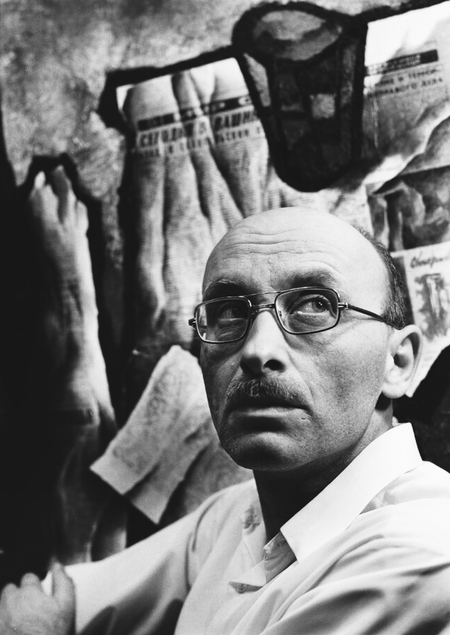
Oscar Yakovlevich Rabin 1928–2018
Oscar Rabin was orphaned at a young age. The boy, left without his mother in a freezing, soot-black room, found a second family not in an orphanage, but in the art studio of Yevgeny Kropivnitsky. This extraordinary man—an artist, poet, and composer who graduated from the Imperial Stroganov School of Arts—became his principal mentor. Kropivnitsky «taught him freedom from all schemes and dogmas.»
Rabin enrolled at the Riga Academy of Arts, where his peers nicknamed him «Our Repin» for his realistic style. Through the patronage of Sergei Gerasimov, he transferred to the Surikov Moscow Art Institute—but was expelled a year later. The official reason sounded like a verdict: «for formalism.» Thus, the young artist first encountered the reality that art in the USSR was required to be not free, but correct. He returned to Kropivnitsky—to the barracks at Dolgoprudnaya station.
In 1978, he was sent to France on a tourist visa, and a few months later, he was stripped of his Soviet citizenship «for activities that brought disgrace to the title of a citizen of the USSR.»
Concept
Oscar Rabin—one of the key artists of Moscow nonconformism, the founder of the Lianozovo Group, and a participant in the legendary «Bulldozer Exhibition» of 1974. I was drawn to the unique perspective on the world captured in his paintings. In one article, I read that the artist was attracted to «the inconspicuousness and tragic simplicity of the reality he was given.» This phrase became the central key for me.
What does «inconspicuousness» mean in Rabin’s painting? It is barracks, vacant lots, scraps of the Pravda newspaper, herring on the table, bottles, the dim light of a lone streetlamp. It is a world without embellishment—a world that official art preferred to ignore. And «tragic simplicity”—that is the absence of pomposity, an honest look at the pain and loneliness that become the main subjects of his canvases.
The artist himself called his style «realism» with a challenge: «I paint what I see,» he would say, even though critics accused him of distorting reality. This paradox—a realism that nobody wanted to acknowledge—is the starting point of my research.
I want to understand how Rabin transforms the meager existence of a Soviet barracks into art that is now housed in the world’s largest museums. Why does its «unremarkable» quality possess such expressive power? How does the sense of tragedy and inner solitude emerge from external simplicity?
The visual research is built upon an analysis of works created from the late 1950s through the 2010s. I examine the artist’s key symbols (the barracks, the newspaper, the herring, the meat grinder, the empty train station), his color and light strategy, and the evolution of his method from early Lianozi landscapes to later Parisian works. The work is grounded in Rabin’s own statements, articles about his exhibitions, and a comparative analysis with his contemporaries.
«Art as life, ” he says. „I don’t invent anything; I draw what I see. I lived in a barracks in Lianozovo, just outside Moscow, and drew barracks, so my style was called barracks-style, sewer-style…“
(1)Place of Power. Lianozovo
Robin’s art is rooted in the real-life experiences of the outskirts, where drabness was everyday life.
Oscar Rabin. Lianozovo. 1960
Oscar Rabin. Barack and Luna. 1959.
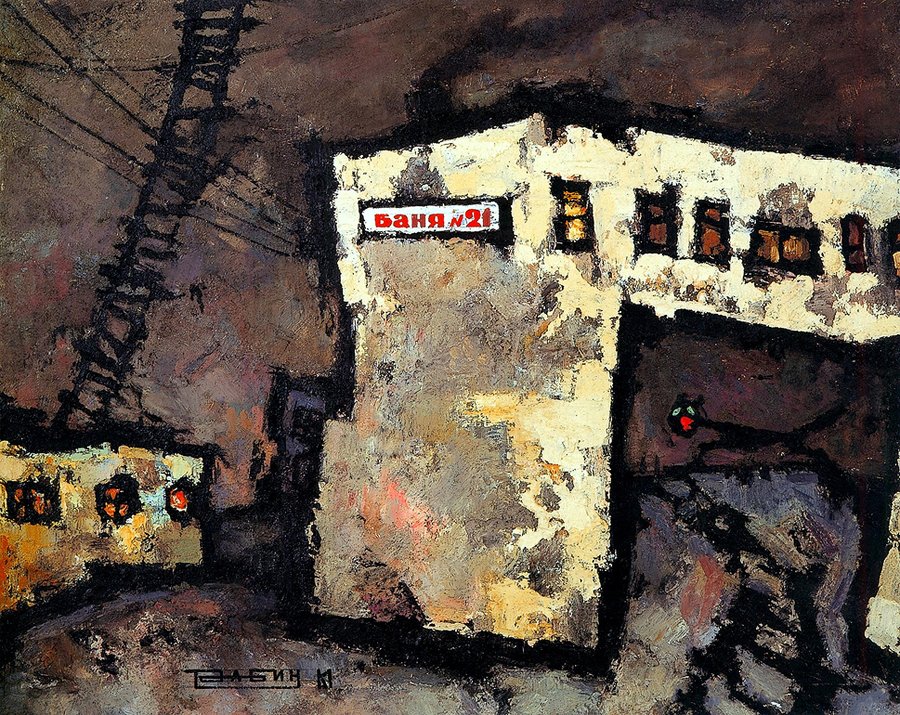
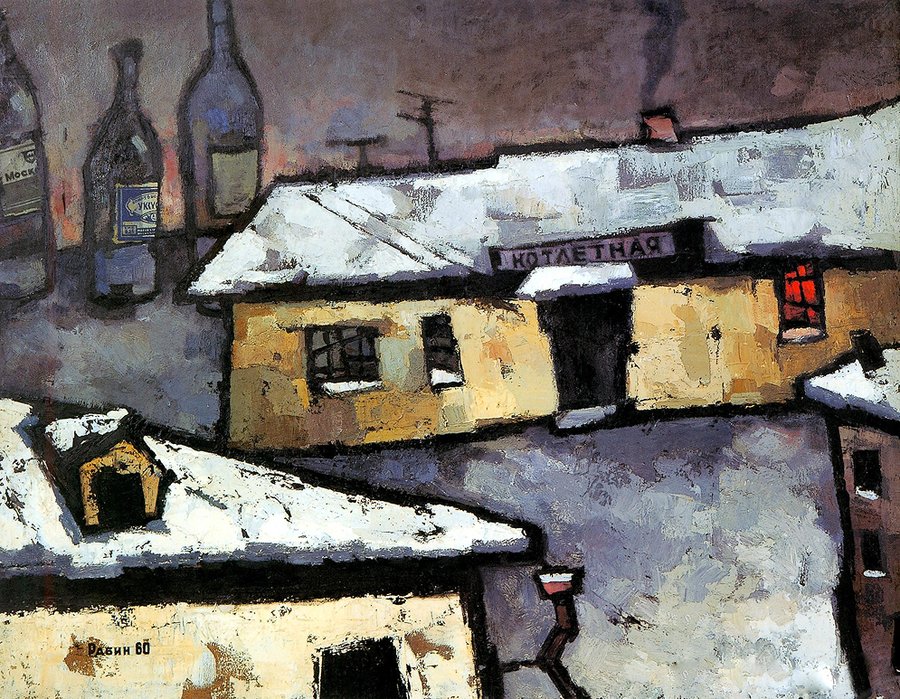
Oskar Rabin. Bathhouse No. 21. 1967 // Oskar Rabin. Optimistic Landscape No. 2 (Cutlet Shop). 1960
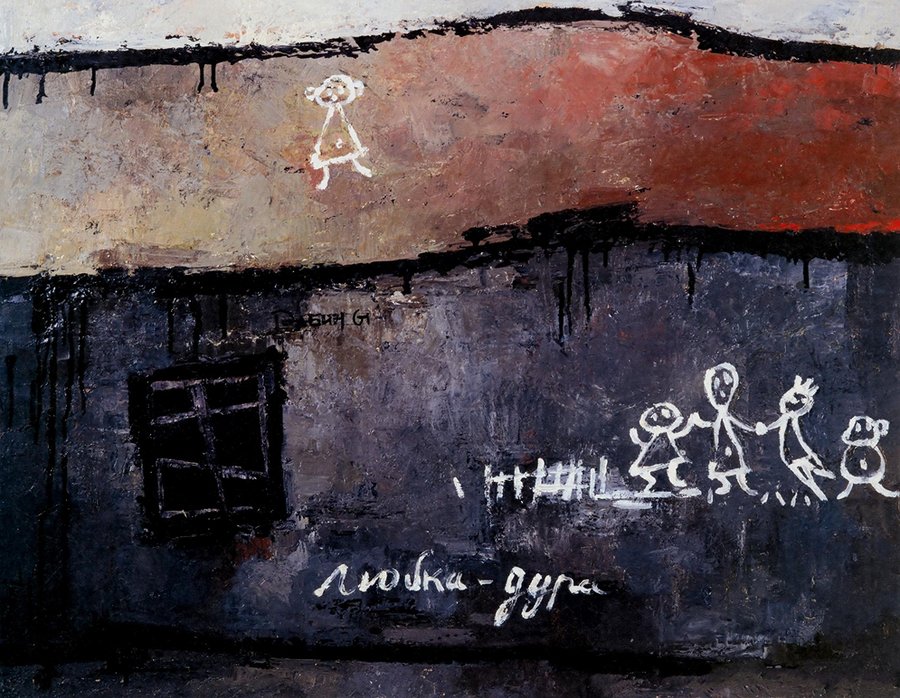
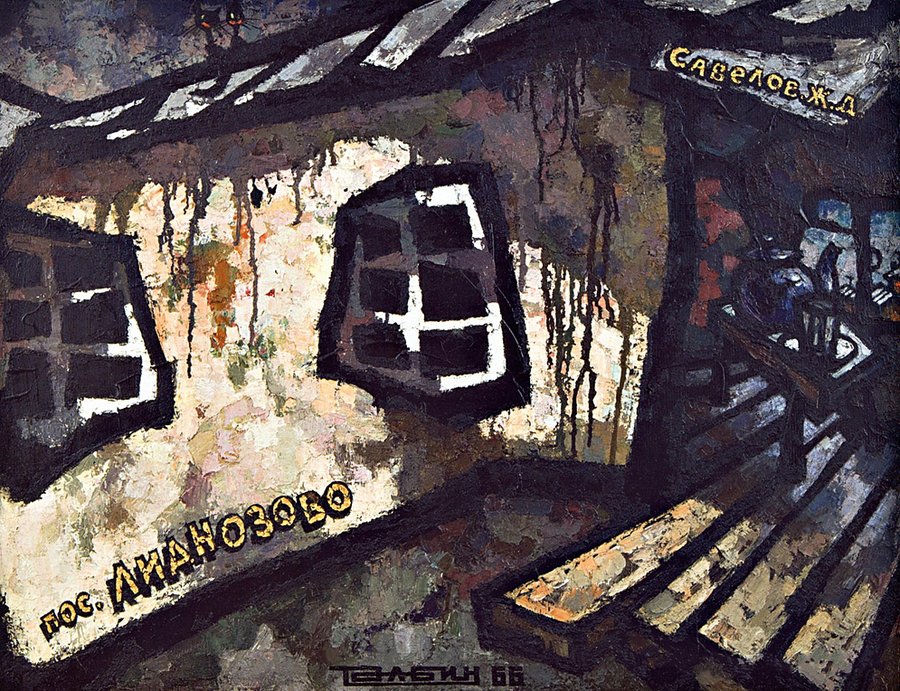
Oskar Rabin. Lyubka-dura. 1961 // Oskar Rabin. Lianozovo Station. 1966
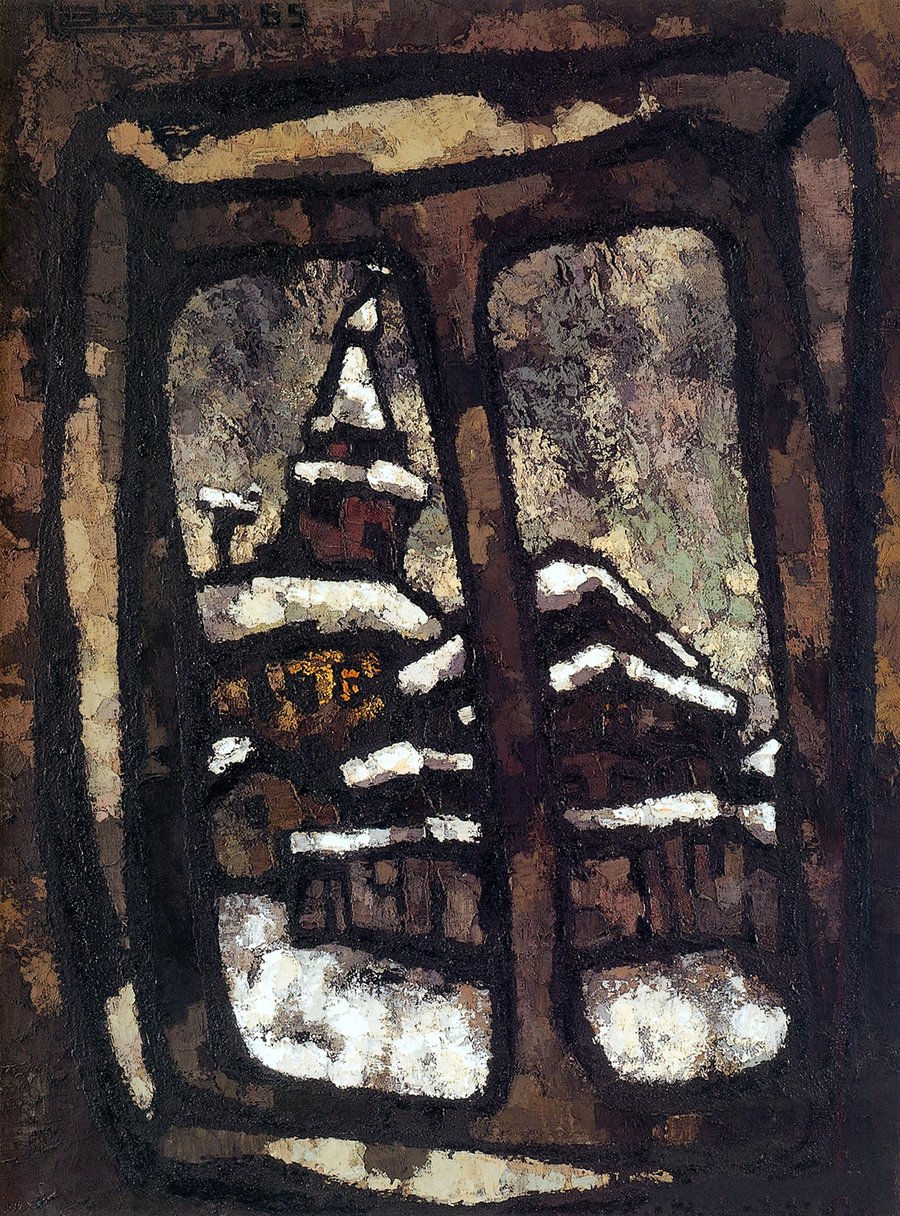
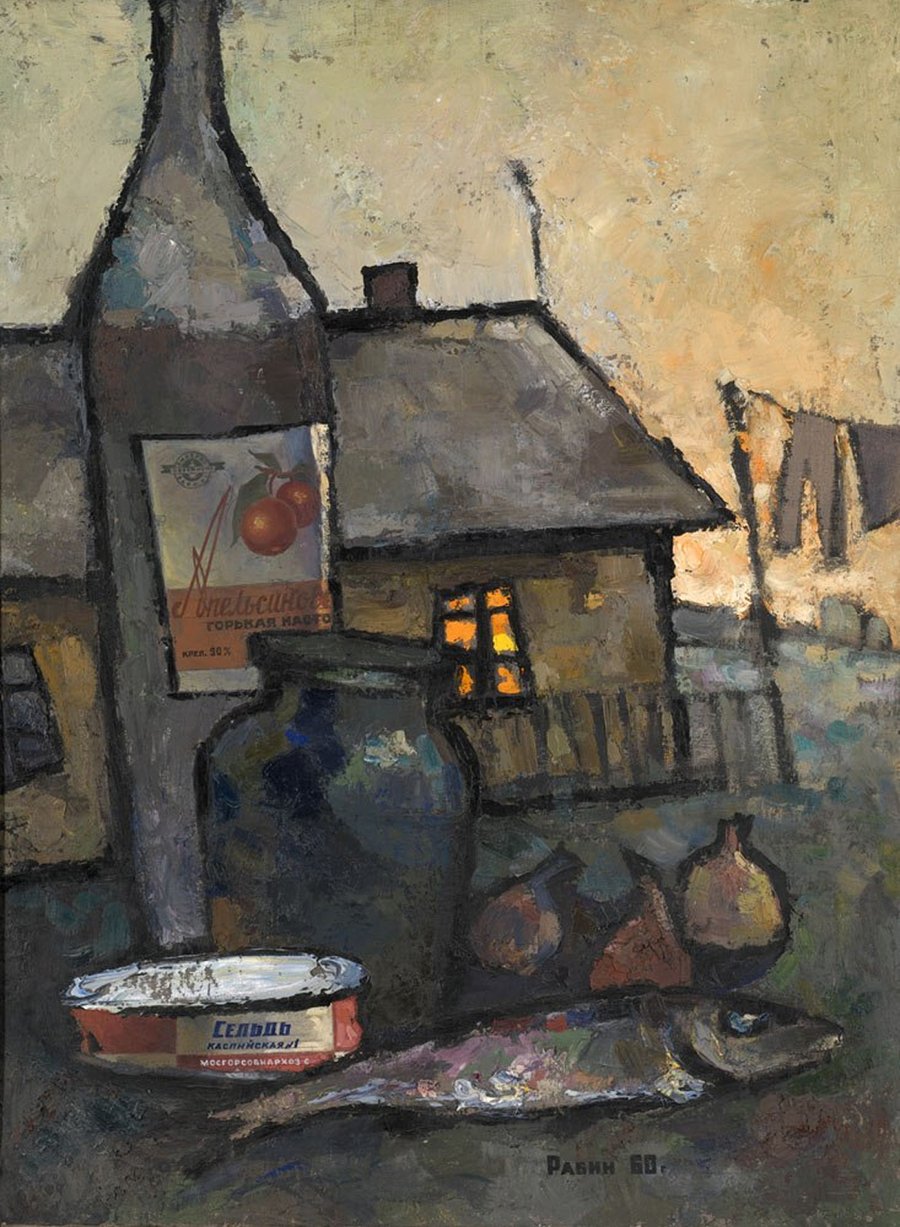
Oskar Rabin. Valentina’s Window. 1965 // Oskar Rabin. Still Life with Orange Vodka. 1960
Oscar Rabin. Dump No. 8. 1958
Rabina was asked why Soviet reality appears to him in such a bleak light.
He replied: «In our country, if I’m not mistaken, realism is constantly praised and encouraged. And my painting is quite realistic.»
Oscar Rabin. Rostov Bells. 1966.
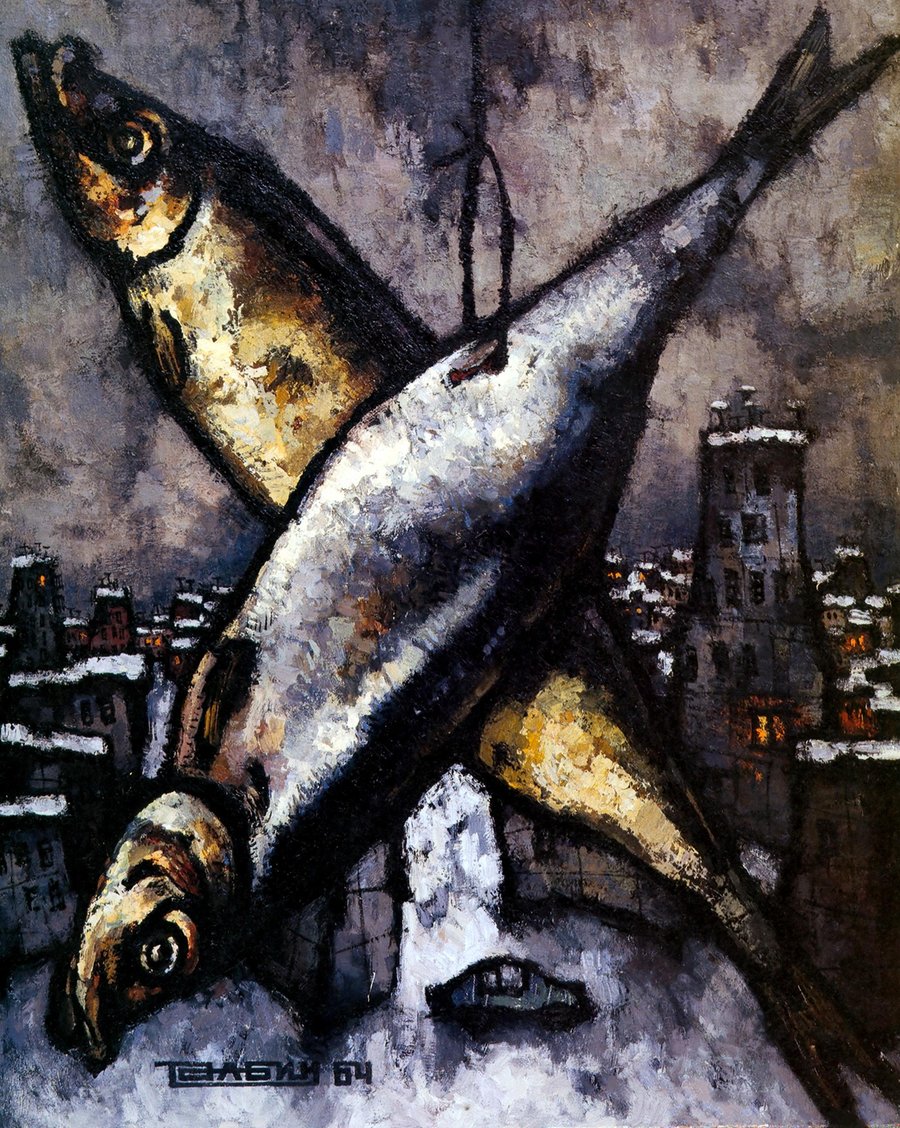
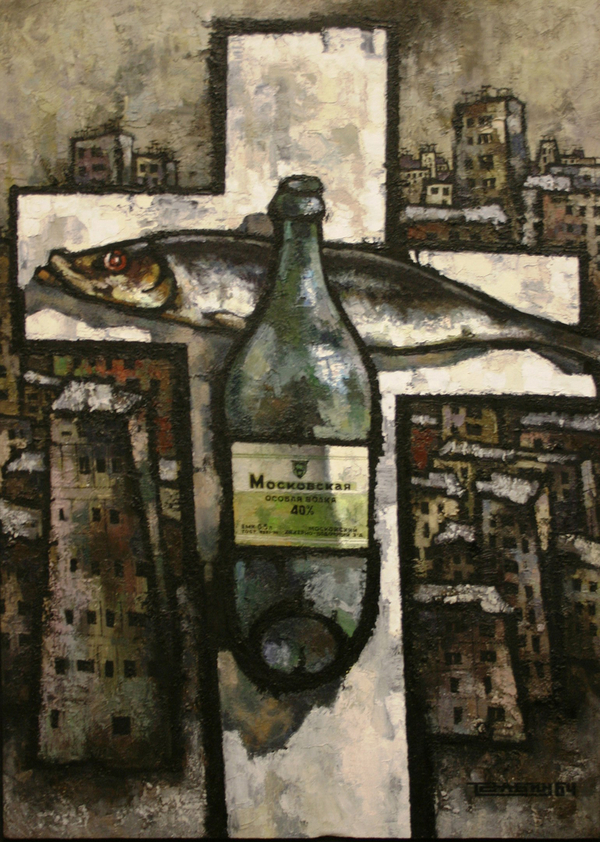
Oscar Rabin. Big Sardines. 1964 // Oscar Rabin. Russian Pop Art No. 3. 1964
Oscar Rabin. Falsehood. 1975
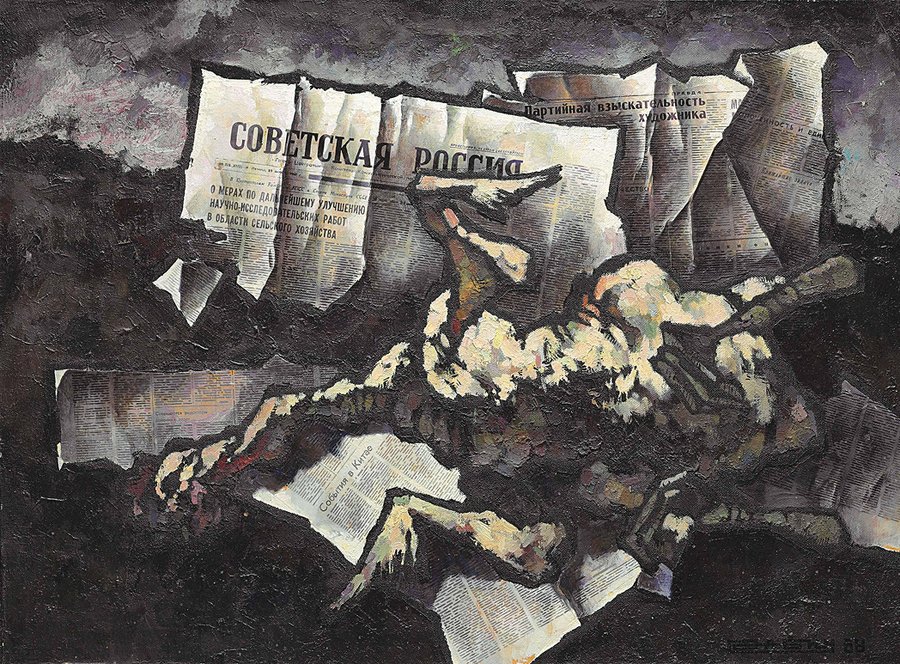
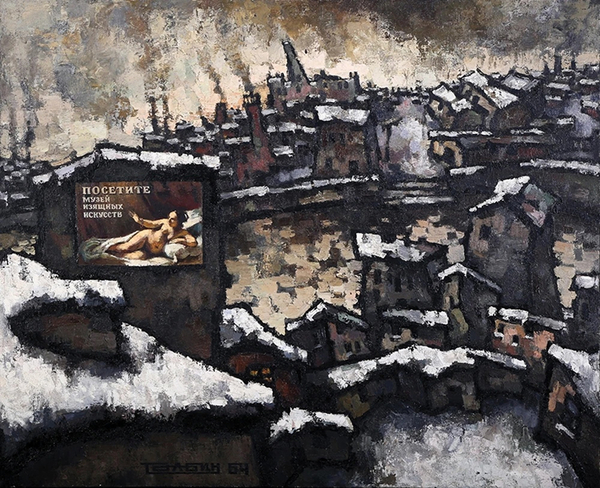
Oskar Rabin. Chicken in Soviet Russia. 1968 // Oskar Rabin. Visit the Museum of Fine Arts (Moscow No. 13). 1964
Oscar Rabin. Queen of Spades. 1973 // Oscar Rabin. Cityscape with Playing Cards. 1973 // Oscar Rabin. Bread in the Cemetery. 1964
Oscar Rabin. HOORAY! 1965
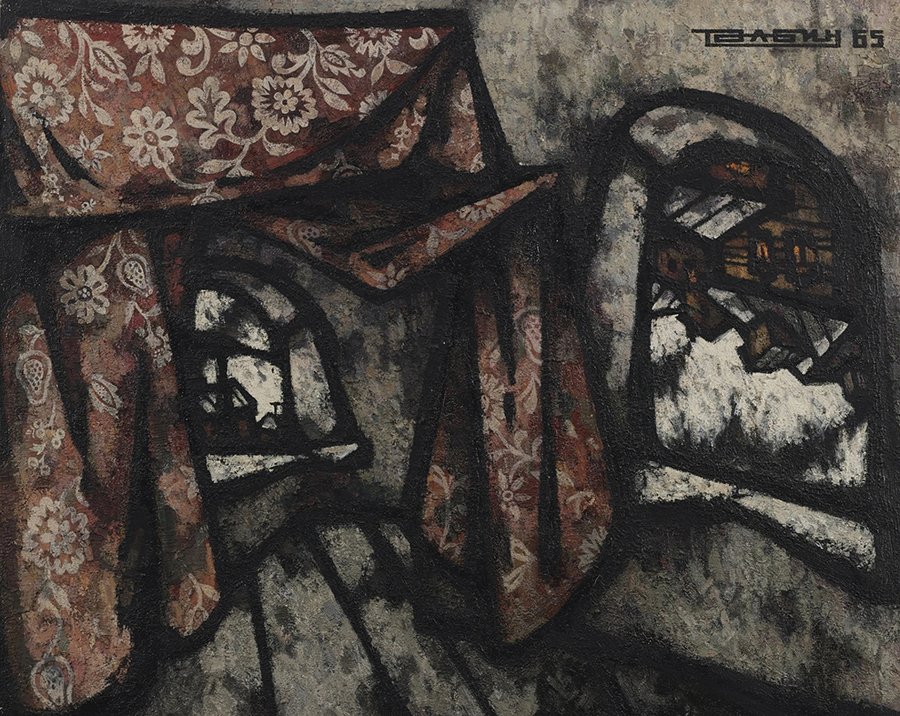
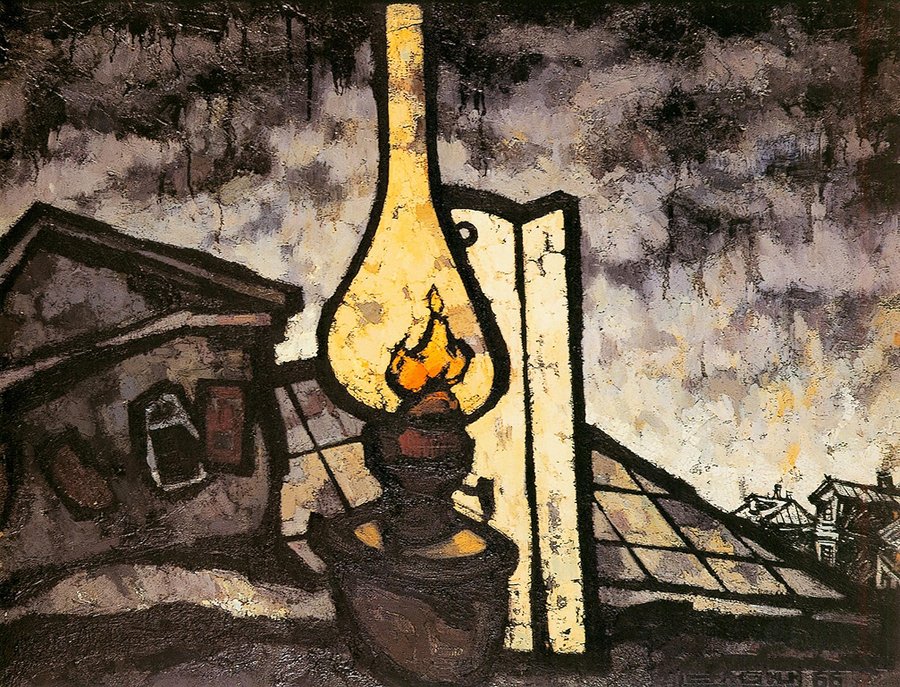
Oscar Rabin. We Live in Priluki. 1965 // Oscar Rabin. Yellow Lamp. 1966
(2)Orthodox Motifs
Oscar Rabin. Flight to Egypt. 1977
Through the juxtaposition of the incongruous, the artist deconstructs both Soviet ideology and Christian taboos. In his work, everyday objects transform into «icons» of mass consumption, acquiring a sacred status.
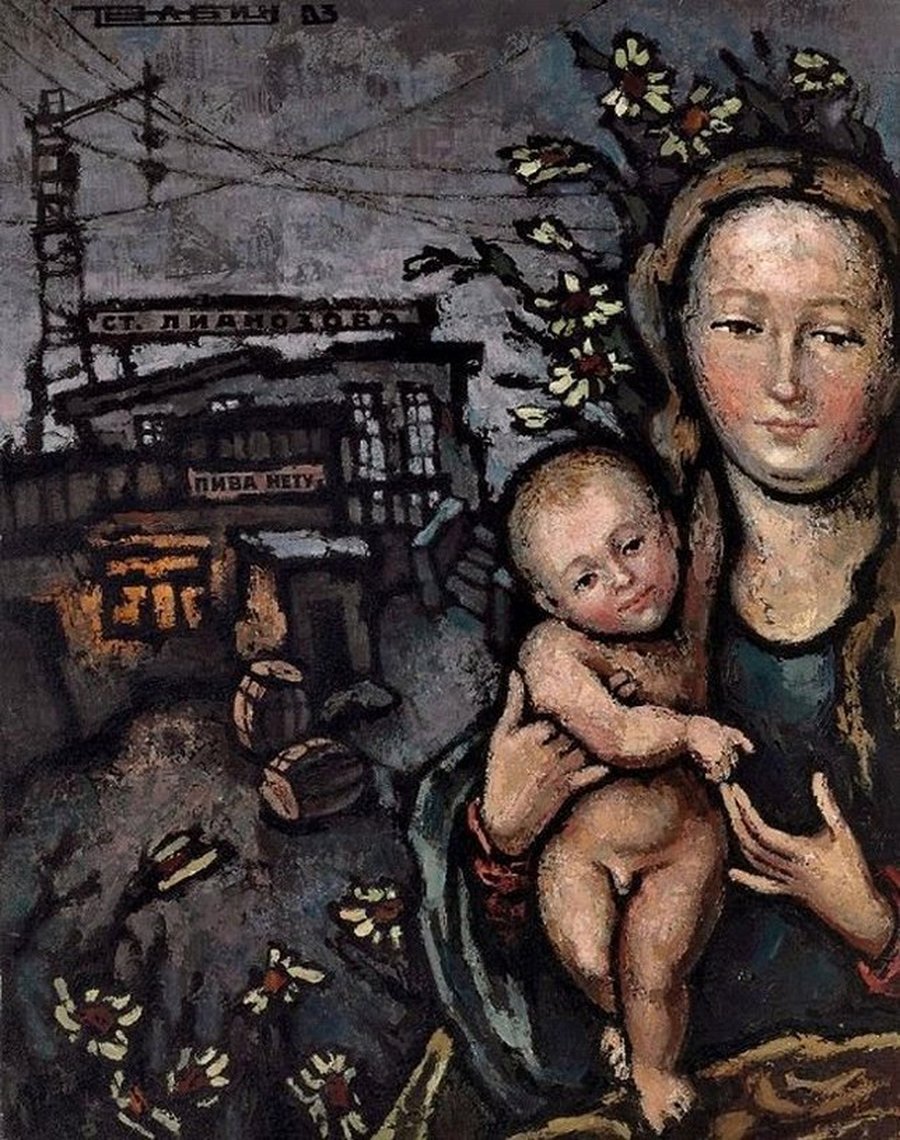
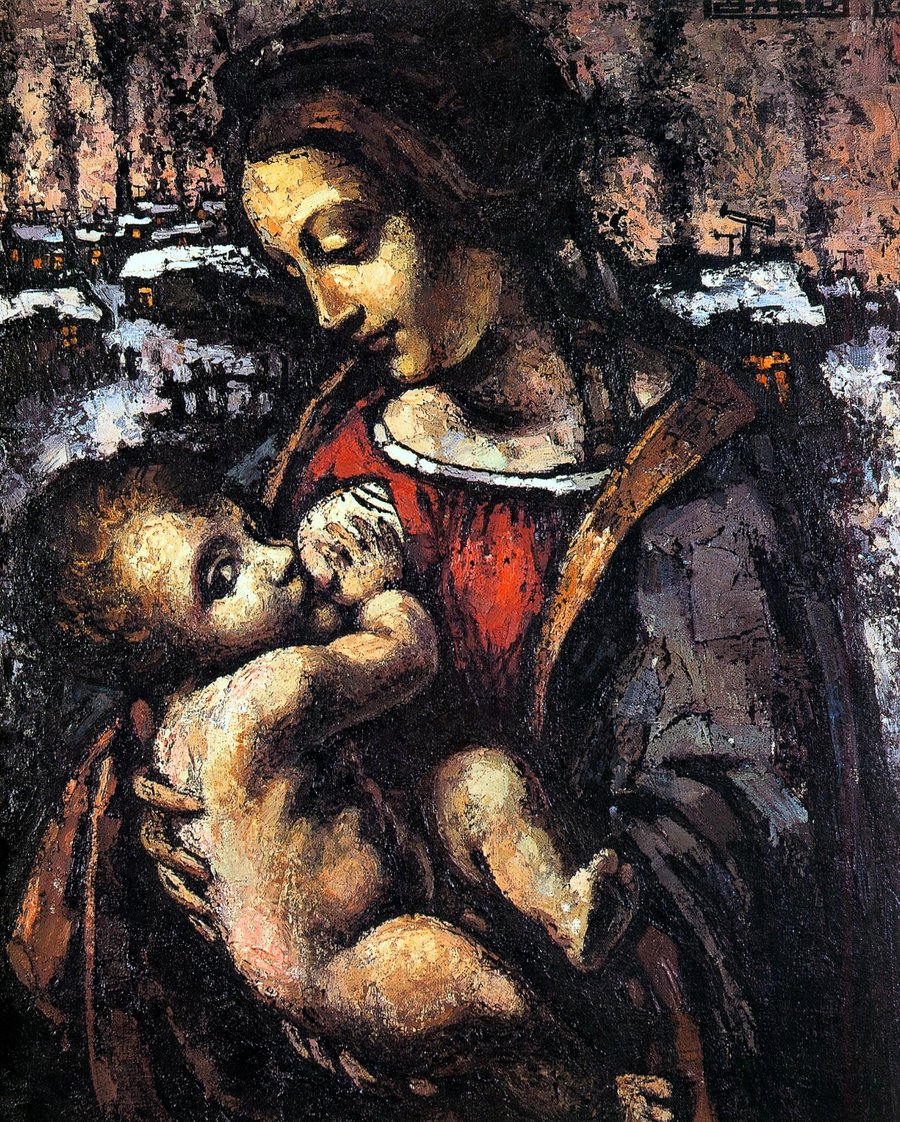
Oscar Rabin. Lianozovskaya Madonna (after Lucas Cranach’s «Madonna and Child,» 1525). 1963. // Oscar Rabin. Lita Lianozovskaya (after Leonardo da Vinci’s «Madonna Litta,» 1490s). 1963.
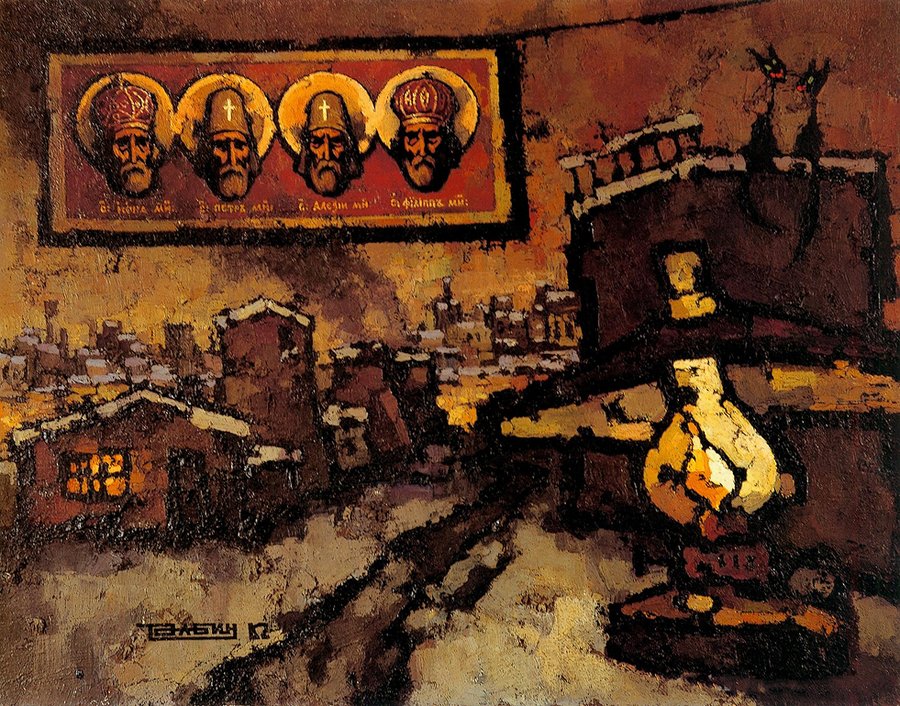
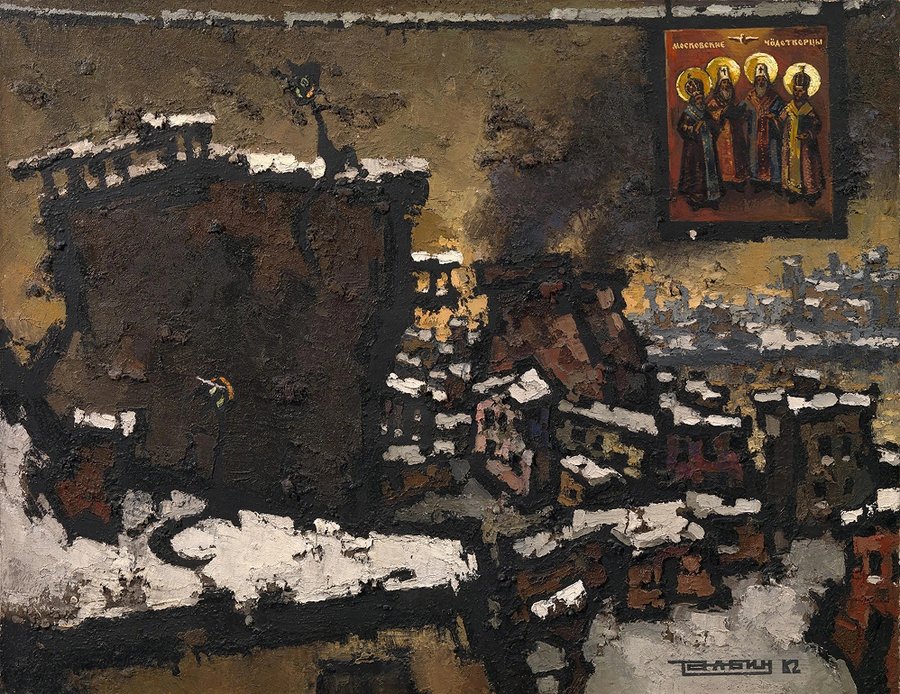
Oscar Rabin. Moscow Wonder Workers No. 2 and Lamp. 1962 // Oscar Rabin. Sapgir’s Poet’s Cafe. 1962
Oscar Rabin. The Jewish King. 2000.
Oscar Rabin. Vine and the Mother and Child. 2008 // Oscar Rabin. Icon and Cat. 1974 // Oscar Rabin. Icon, Newspaper, and Vodka. 2007