Concept
In today’s world, fashion photography plays a crucial role in advertising and brand promotion. It is impossible to imagine a company that does not post content on social media. Through photography, brands convey ideas, maintain status, and influence consumers. It is commonly believed that fashion photography originated in 1856 when the images of the first aristocratic outfits were published. At that time, clothing was disseminated in books and magazines, and later, with the advent of the internet, it became the primary force for distribution. When looking at a brand’s advertisement, the consumer instinctively understands what level it belongs to without consciously thinking about it. They have clear expectations for advertising campaigns and know what is acceptable and what is not.
It is fascinating to study what techniques brands use in advertising photography to meet consumer expectations, convey ideas and status, and avoid crossing the line that could lead to scandal or misunderstanding. What differentiates brands across various categories?
The visual research will begin with a brief description of the techniques employed by fashion brands to help establish context and understand the subsequent variations. Next, we will explore different location categories—studio, nature, street (street photography), and abstraction (absurd avant-garde scenarios)—and examine how brands across various price points interpret these scenes to fit their specific concepts. Within each category, the structure will be organized by: luxury, mass-market, and differentiating factors. Explanations for the photographs will be marked with a slash.
For the material selection for the visual study, the brands BALENCIAGA, PRADA, HM, and UNIQLO were chosen, as they contrast in their positioning: each communicates a distinct idea to the audience, thereby employing different techniques. The second criterion was the brand’s public accessibility—all brands used in the study are well-known and time-tested. Finally, the visual codes must be immediately apparent. The concepts of the selected companies are clear and do not require complex explanation. The sources used included the brands' official websites, public archives of advertising campaigns, and several academic articles selected based on popularity and citation count. Photographs were chosen based on three criteria: quality, clarity, and diversity. The visual study will explore numerous interpretations of the same techniques; repetitions in the photographs will be minimal, and every image will differ by some criterion relevant to the research.
Hypothesis
In the photography of brands across different price segments, techniques appropriate to the level are employed to guide the audience toward a specific idea. Luxury brands adhere to the concept of exclusivity, creating a sense of detachment through static compositions, minimalism, and cool tones. The scenarios are often unrealistic—in these situations, it is either impossible to be present or it is very difficult and uncharacteristic for people. Mass-market brands, conversely, promote their products through movement, emotion, objects, and color, thus maintaining a feeling of closeness with the viewer. This price segment often utilizes warm tones, stages everyday situations, and frequently features numerous models in a single shot. While not all brands employ these techniques, most adhere to them. Exceptional advertising campaigns do occur—for instance, when a luxury brand features a domestic scene with many models, or conversely, when a mass-market brand mimics the techniques of higher-priced brands, yet distinct differences reveal the brand’s belonging to a particular tier.
Studio
BALENCIAGA is known for its exceptional creative approach to advertising campaigns. These campaigns are not aimed at a mass audience, which often makes them incomprehensible to most people. Many consider the brand’s ideas absurd or scandalous. However, their concept is founded on luxury experimentalism—they create art through a deliberate narrative and compelling forms. They often anonymize models, concealing their faces behind masks or glasses, thereby focusing the viewer’s attention on the brand’s concept. The poses are static or unnatural, and there is a minimal amount of detail to distract from the clothing. The image processing is often cool-toned or features a flash effect.
Balenciaga Winter 2023 Campaign
/Narrative — a model in futuristic clothing is set against a backdrop of ordinary workers doing repairs. They are interfering with each other, creating a sense of wrongness—a situation that is unlikely to happen in real life, and that is precisely what makes it absurd.
Balenciaga Fall 2022 Couture Collection / Balenciaga Winter 2023 Campaign / Balenciaga Summer 2024 Campaign
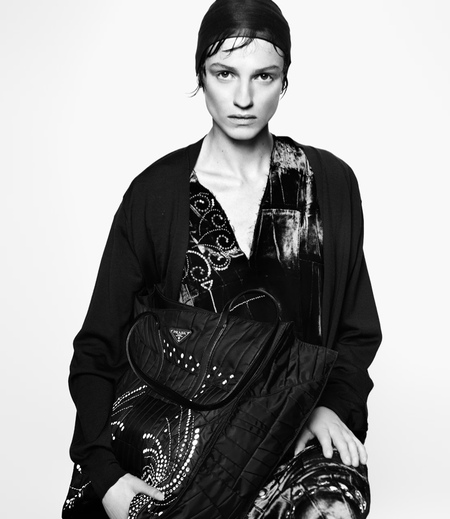
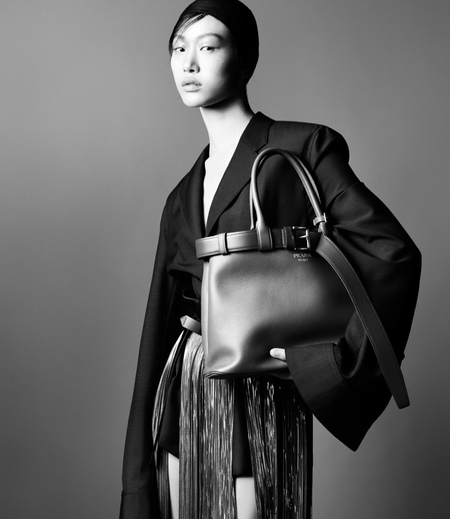
Prada Spring/Summer 2024 Campaign
Prada Fall/Winter 2007 Campaign
PRADA employs more classical techniques in its photography. The models' faces are uncovered, yet their expressions are serious and haughty. Archived advertising campaigns differ from the brand’s contemporary directions. There is a greater presence of color, a warm undertone to the image, and detail, although the concept itself remains consistent. The models maintain serious facial expressions, rigid posing, and unnaturally placed hands.
HM Holiday 2024 Campaign / HM Autumn Winter 2024 Campaign / HM Holiday 2024 Campaign
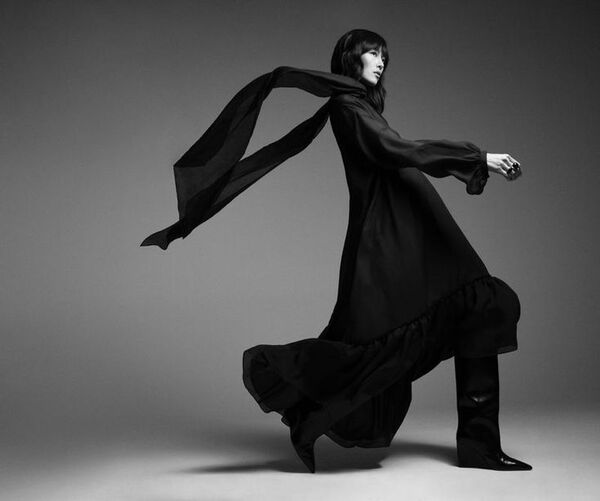
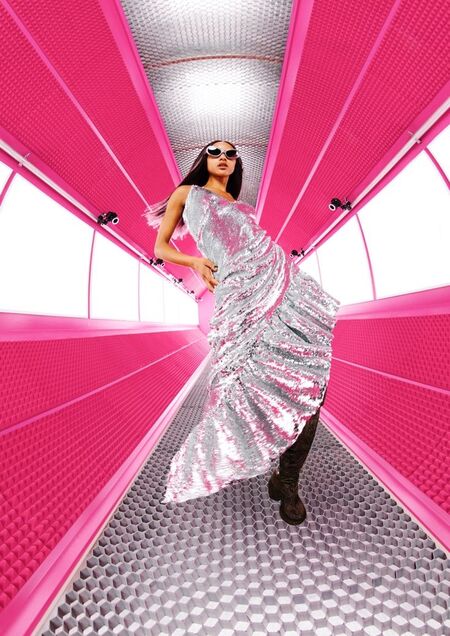
HM Fall 2023 Campaign / HM Fall 2022 Campaign
Uniqlo x Christophe Lemaire Fall Winter 2016 Campaign / Uniqlo U Lookbook 2019 / Uniqlo U 2021 Collection
HM aims for broader reach. The brand prioritizes loyalty among everyday consumers, and consequently employs techniques distinct from luxury—namely, a sense of accessibility to the viewer. This is evident in the dynamism and natural, open poses. The models smile and interact with one another. If emotion and dynamism are lacking, they are compensated for by the vibrancy of the background or details. Like luxury segments, they often utilize cool tones, but thanks to all the aforementioned approaches, the difference becomes apparent. UNIQLO uses warmer tones than HM and places more emphasis on everyday scenes, attributes, and simplicity. Nonetheless, dynamism is present in all cases, manifesting through different ways—through framing, multiplicity, or posing.
Nature
Balenciaga Spring Summer 2018 Campaign / Balenciaga Winter 2022 Campaign / Balenciaga Winter 2022 Campaign
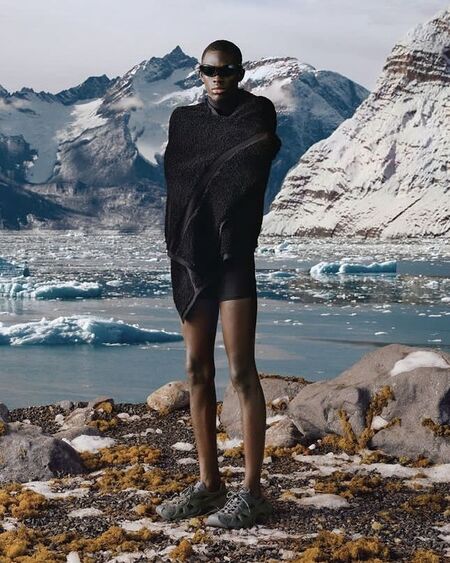
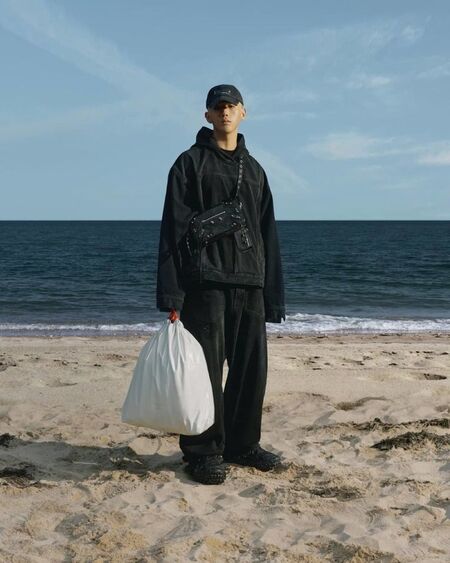
Balenciaga Winter 2022 Campaign
Surreal situations—people in modern clothing situated in a desert, on a beach, or in a flower field. Or conversely, a nude model in a cold climate.
Prada Holiday 2025 Campaign
Prada Linea Rossa Spring Summer 2023 Campaign / Prada Linea Rossa Fall Winter 2023 Campaign / Prada Days Of Summer 2025 Campaign
HM Autumn/Winter 2020 Campaign / HM Peta-Approved 2021 Campaign / HM Fall 2021 Campaign
1/ Warm undertones, open posture, slight smile. 2/ The image aligns with the environment—a simple field and comfortable, simple clothing that ties everything together. 3/ A scene depicting a trip to the woods, featuring an object in hand, also maintaining a warm atmosphere.
Uniqlo x Marimekko Fall/Winter 2019 Campaign / Uniqlo LifeWear Magazine Autumn/Winter 2025 Campaign / Uniqlo x JW Anderson 2021 Campaign
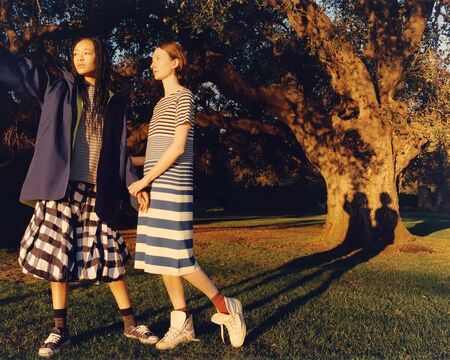
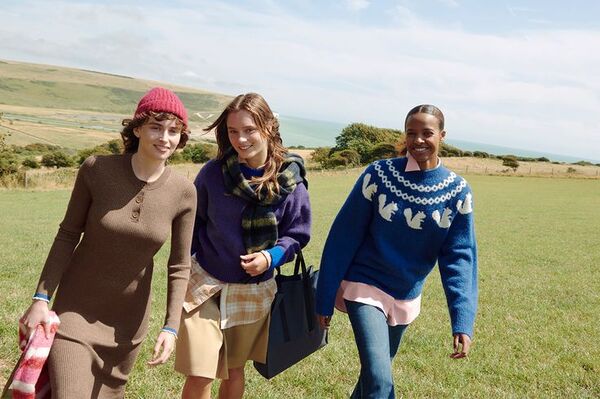
Uniqlo x Marni Spring 2022 Campaign / Uniqlo x JM Anderson Fall Winter 2023 Campaign
Street
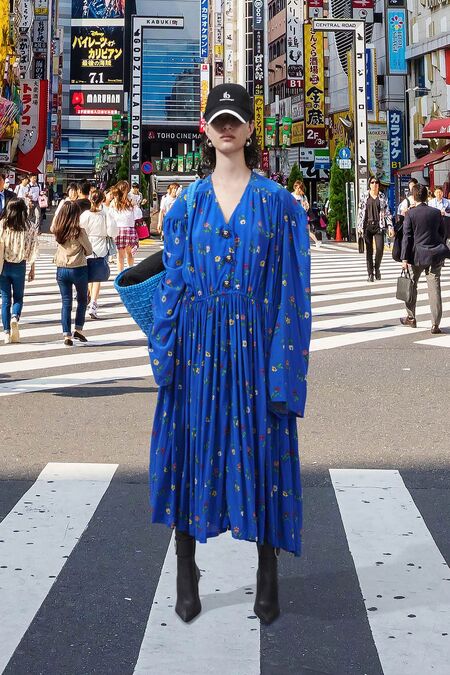
Balenciaga Summer 2019 Campaign