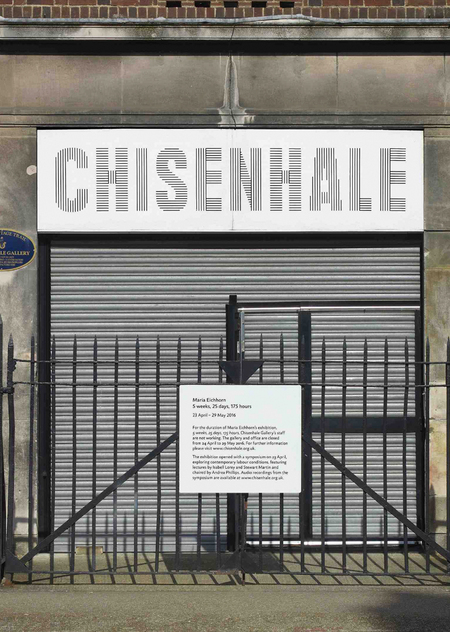
The Negativity of Horizontality. Chisenhale Gallery Between Ritual and Sovereignty
TABLE OF CONTENTS 1. Introduction 2. Mechanisms: — Mechanism 1. The two-year «trust» as protracted guardianship — Mechanism 2. The «critical friend» and the illusion of dialogue — Mechanism 3. Resources as a directing instrument — Mechanism 4. The provision for compensation and economic attachment — Mechanism 5. Authenticity of origin as symbolic capital 3. The Negativity of Horizontality: Limits of Critique and (the Impossibility of) Exit 4. Is it Possible to Exit This Situation?
INTRODUCTION
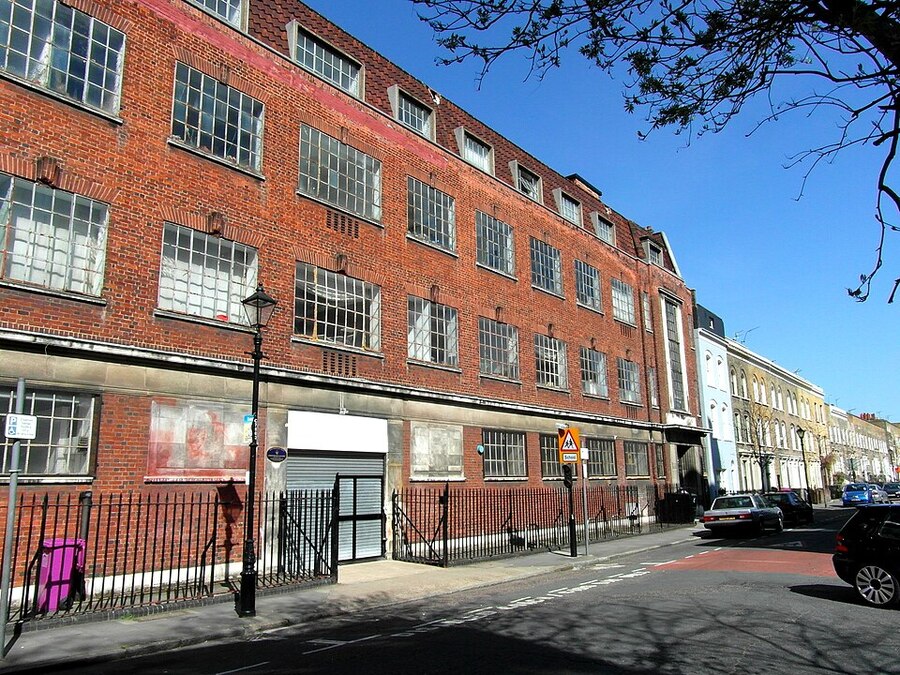
Chisenhale Gallery, Chisenhale Arts Place Trust, London, United Kingdom
In recent years, more and more cultural institutions—museums, galleries, and art centers—have been declaring their «horizontality.» This term generally refers to a rejection of rigid hierarchy, where the curator decides and the artist complies; instead, they imply equal relationships, dialogue, and collaboration.
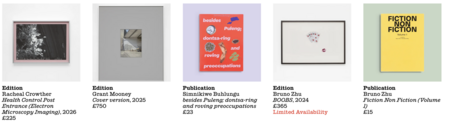
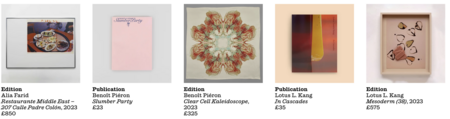
Chisenhale Gallery Shop (Web)
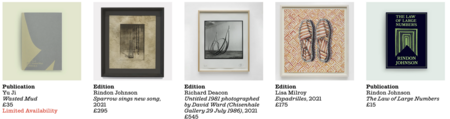
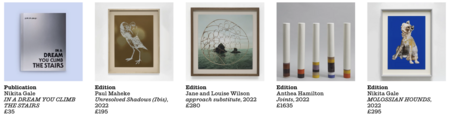
Chisenhale Gallery Shop (Web)
That sounds noble. But the narrative of horizontality risks turning into a ritual. A ritual is an action repeated out of habit because «it is the way things are done, ” without a necessary connection to the actual state of affairs. Its value requires no proof. We believe in horizontality because everyone around us talks about it, and any attempt to ask, „But is it truly there?“ can be perceived as inappropriate, almost sacrilegious. Even if an institution has the most sincere intentions, such declarations require critical testing for resilience.
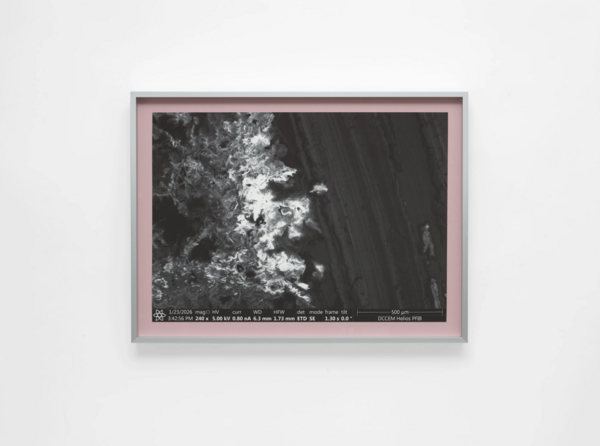
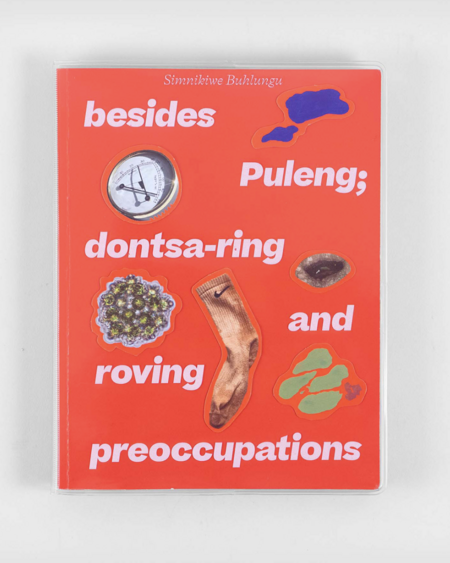
Racheal Crowther Health Control Post Entrance (Electron Microscopy Imaging), 2026 and Simnikiwe Buhlungu besides Puleng; dontsa-ring and roving preoccupations, 2024
This research is a response to this challenge. Using the London-based Chisenhale Gallery—one of the key institutions that emerged from artist squats—I will explore how declared horizontality functions in practice. The central question is: to what extent is the artist sovereign—that is, independent and free in their decisions—in such a contact? Or does horizontality merely represent a new, more sophisticated form of management?
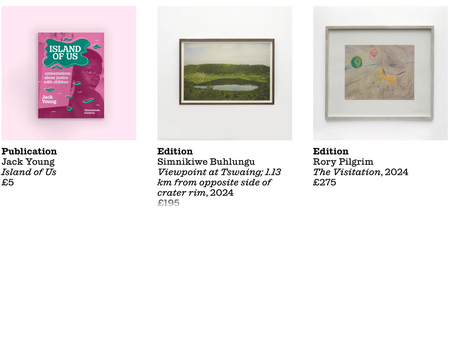
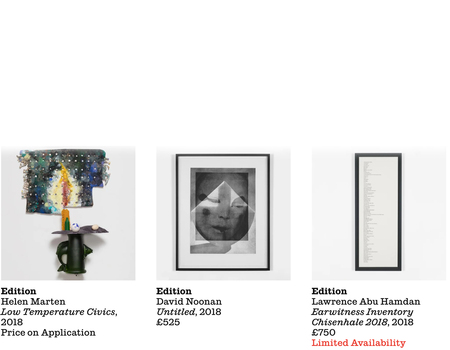
Chisenhale Gallery Shop (Web)
Chisenhale Gallery—the perfect case study to test this hypothesis. It was founded by artists in the early 1980s in a derelict building of a former plywood factory in East London. Today, this history forms the core of its identity. The institution’s current mission is to «support artists at every stage of project development, from concept to completion,» placing «the artist at the center of everything we do.» The annual cycle includes three to four solo exhibitions, with each artist being supported for one and a half to two years.
Chisenhale Gallery Building 1980
But what lies behind these declarations? It is evident that the galleries benefit from lobbying curatorial ideas to the artists. The curator, in this case, is a certain translation of the gallery’s own ideas, because a gallery always has visitors and buyers at the top who often follow the path of contemporary art in tandem with current art trends. Therefore, it is perfectly logical for galleries, in an era that encourages velvet methods of power, to construct this specific principle of curatorship and call it «horizontal.»
My hypothesis is that the horizontality of Chisenhale is not an absence of power, but rather its new, more nuanced form. It operates on a model I call the «knowing-unknowing,» following my analysis of Lars von Trier’s film The House That Jack Built. In this film, the character Verge asks questions and appears interested, as if trying to understand the serial killer Jack. Jack feels like a mystery, an object of study, something significant. But gradually, the viewer realizes that Verge already knows everything. He is simply guiding Jack, making him believe he controls the dialogue, even though Verge knows everything that will happen and how it should unfold. The «knowing-unknowing» is a stance that masks power as interest and ignorance.
Comparison of «The House that Jack Built» and «Dante and Virgil in Hell (Dante’s Boat)» by Eugène Delacroix, 1822
Lars von Trier intentionally compares Verja to Virgil, and by comparing Verja to the curators, I am essentially reconstructing the enthymeme. My hypothesis is that the curator did not transition into the role of a friend or collaborator to the artist, but rather into the category of a personal Virgil—one who guides you along a specific path, precisely the one necessary for him. However, the artist always retains the right to step outside that circle. Just as the main character in the film has the choice at the end to descend into hell or attempt to climb into heaven, the artist has this choice: to deviate from the curator’s script. Yet, no one ever knows where that path will lead—neither Jack nor the artist.
The film «The House That Jack Built» final scene
The institution, holding such a position, acts as if it knows nothing about the artist or their trajectory. It poses questions, creating the illusion of a shared discovery. But in reality, it possesses complete knowledge—about the market, the audience, and what the world needs—and directs the process. The artist feels sovereign. They are asked things; they are trusted with a two-year process, but in reality, they are being guided. That is my hypothesis. Next, I will examine five specific mechanisms through which this model operates at Chisenhale.
Note: The proposed analysis is based on public narratives of the institution, interviews with staff, and one artistic case study. A systematic exploration of the experiences of artists who have «dropped out» of the process or experienced it as traumatic remains outside the scope of this text. I do not consider this a methodological flaw, but rather a conscious boundary.
Mechanism 1. Two-year «trust» as extended guardianship
The first thing that strikes you is the timeframe. One and a half to two years to develop a single exhibition. At first glance, this approach could be characterized as a bold act of trust, even a luxury. Curator Olivia Ahren of Chisenhale describes it this way: «For an institution and an artist to be able to deeply explore the work’s content and relevance, they must build enormous relationships of trust. Two years is exactly the space needed to give the artist the time to drop their guard, experiment, make mistakes, and reveal their vulnerability.»
The key concept here is «vulnerability.» As the artist engages in this two-year process, they gradually unfold before the institution. They present drafts, uncertainties, and failed iterations—material that would typically remain confined to the studio. However, within the Chisenhale model, the institution gains access to this internal, unrefined material.
This is where the «knowing unknowing» mechanism comes into play. The institution says: We trust you; we give you time; we provide support. The artist feels like the sovereign owner of their process. But during this time, the institution gathers knowledge about how the artist thinks, where they are vulnerable, what decisions they make under pressure, and how they react to criticism. By the time the exhibition opens, the institution knows more about the artist than the artist knows about themselves in the context of this project.
Let’s look at Grant Moon’s work, «Sphere of Music,» which was exhibited at the Chisenhale Gallery. In this piece, Grant explores the spheres of music and how sounds pass through everyday objects. The artist is interested in the tactility and connection of sound to material, but he adds a second layer: studio craft. Moon developed the piece specifically for the exhibition rather than showing a finished version, so the gallery curator worked with him throughout the process.
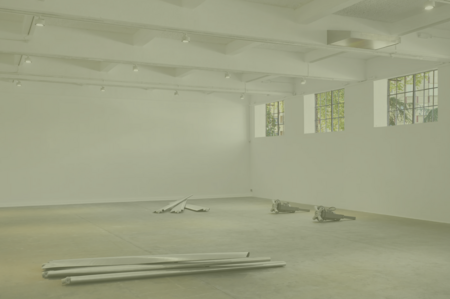
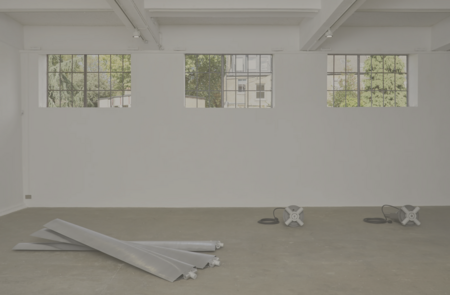
Grant Mooney «Sphere Music» 2025
Muni uses a model of the human nervous system to visualize vibrational sound signals and explore the nature of the building itself through them. During mentorship discussions, it is important to understand what a contemporary art curator does. According to the Chisenhale Gallery, the curator guides the artist—but in what sense does the word «guides» mean?
What was Grant Moon’s original concept: perhaps, like his other works that explore sound and solid material objects, did he intend to uncover the relationship between sound and the external world? What assurances can we have that Grant Moon was not steered toward examining the building using the principles of the human nervous system?
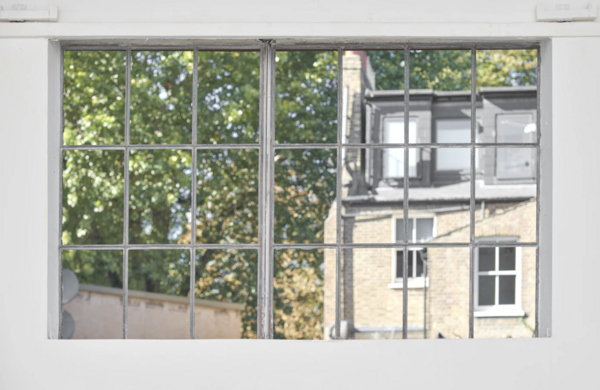
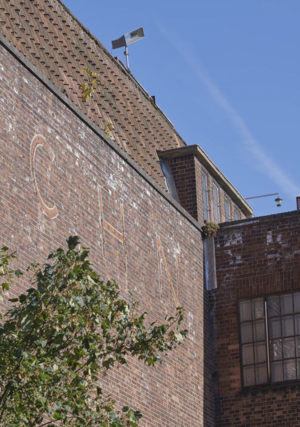
Grant Mooney «Sphere Music» 2025
«Instead of directly amplifying the sound, Muni translated these vibrations into a visual spectrogram displayed in the gallery, ” states the Gallery itself, yet we can never know the extent of that supposed curatorial „direction”—it is obvious that the gallery benefits more when the artwork is exhibited within its own walls rather than being part of a contingent performance under its purview.