The Evolution of Sea Imagery in Painting, 14th–19th Centuries
Navigation
- Concept
- 14th–16th Centuries. Depictions of the Sea in Renaissance Paintings
- 17th–18th Centuries. Emergence of the Marine Genre
- 19th Century. The Peak of «Marine Genre» Development
- Conclusion
Concept
The sea has been an integral part of human life throughout the history of humankind. It often embodies the image of a captivating force of nature. This is precisely why it has found its reflection in visual arts. Artists of different eras have frequently engaged with the motif of the sea for various purposes. Initially, creators depicted it merely as a standard backdrop for the key events within a painting. Renaissance artists perceived seascapes only as a tool to elaborate upon the painting’s central narrative. Often, the depiction of the sea was not detailed but rather conventional, because the artist considered the precise conveyance of the painting’s core subject to be the primary task.
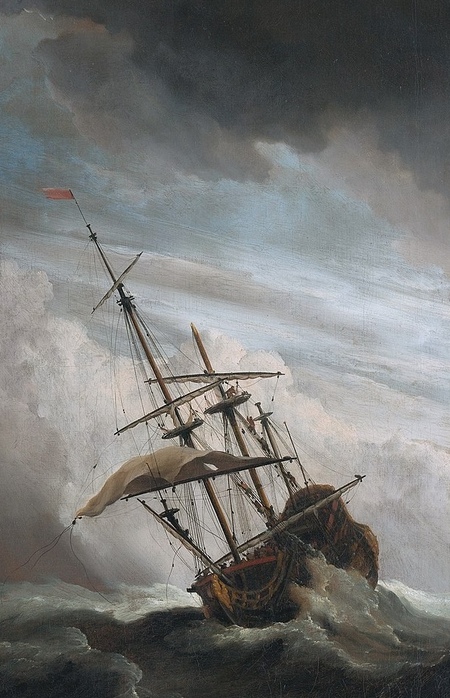
In the seventeenth century, the sea gradually transforms from a backdrop in a painting to one of its most essential components. The new genre of marine painting—marinism—begins to take shape, in which artists strive to explore the «character» of the sea in the deepest possible way, accurately rendering the movement of the waves, the color of the water, and its specific qualities. Drawing from its definition, the term marina originates from the Latin word marinus, meaning «maritime, ” and is characterized by depictions of marine expanses, scenes of shipwrecks, storms, natural disasters, and naval battles. The genre of marinism reaches its peak in the nineteenth century, when many artists dedicate their entire creative output to the „study“ of water as an element, conveying all the beauty and danger of „the sea’s power.“ It is important to note that it is during this period that the sea completely ceases to be a background element; it becomes the „main protagonist“ of the canvas, and artists endeavor to reveal the full complexity and depth of the water.
The decision to choose this specific topic for a visual exploration stems from a profound interest in the sea as an element. This image has always captivated my attention, both in paintings and in literature, because it is often dark and mysterious. This is why I believe a detailed study of the marine theme is both important and fascinating.
Key questions guiding this visual study are: «How did artists represent the sea in their paintings? Into what major stages can the evolution of maritime imagery be divided? What are the fundamental differences between these stages?»
This visual study examines the evolution of sea imagery in painting from the 14th to the 19th centuries and is divided into three main chronological periods:
- 14th–16th centuries. Depictions of the sea in Renaissance painting.
- 17th–18th centuries. The emergence of the marine genre.
- 19th century. The peak development of the «maritime genre.»
The goal of this visual study is to trace the evolution of the seascape across different eras in art, to define the specific characteristics of maritime depiction, and to understand the aspirations and focal points of artists when portraying this element.
Sea Imagery in the Renaissance Era
Sandro Botticelli, «The Birth of Venus,» 1482–1485.
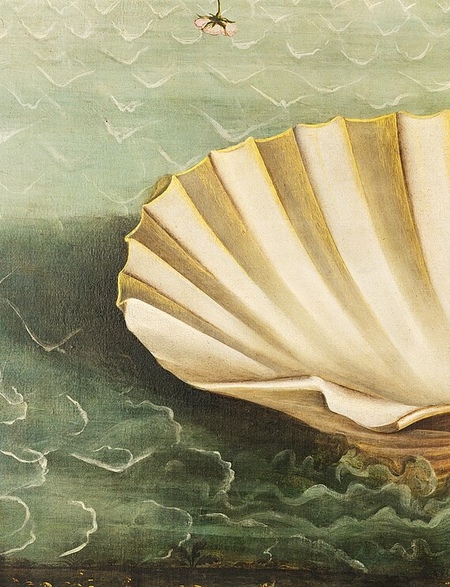
In Botticelli’s painting, the sea is depicted figuratively, without precise detailing, because the artist’s primary goal was to illustrate the mythological subject of Venus’s birth from sea foam.
Titian Vecelli, «Bacchus and Ariadne,» 1520–1523
Titian Vecellio, «The Rape of Europa,» 1560–1562
In the works of Titian shown, the sea does not play a key role in the painting; it serves merely as a backdrop for the main mythological subjects.
Raphael Santi, «The Crossing of the Red Sea, ” 1519
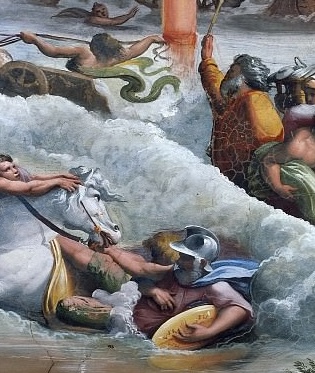
In Raphael’s painting, the sea is not the main subject, but here the artist seeks to depict the turbulent waters of the Red Sea, in which the Egyptian soldiers pursuing the Israelites drowned, according to the Biblical narrative.
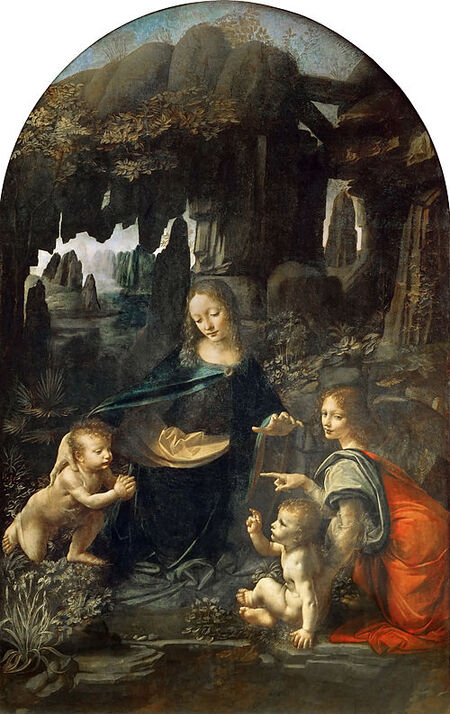
Leonardo da Vinci, «Madonna in the Rocks,» 1483–1486.
Thus, during the Renaissance, artists did not aim to depict the sea in meticulous detail and realism. The central mythological narrative of the painting held far greater importance, with the sea merely serving as a backdrop for the main events.
17th–18th Centuries. The Emergence of the Marine Genre
In the 17th century, an increasing number of artists began to turn to the image of the sea in their paintings.
Claude Lorrain, «Seascape with the Departure of Queen of Sheba, ” 1648.
Claude Lorrain, «Morning in the Harbor,» circa 1634.
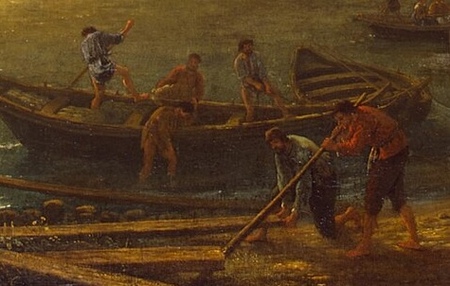
Claude Lorrain focused on the daily lives of ordinary people who worked by the sea. His seascapes often depict scenes from the lives of port and harbor workers.
Claude Lorrain, «Seascape,» 1660s.
Claude Lorrain, «Aeneas on the Island of Delos,» 1671–1672.
The genre of marine painting began to develop actively in the 17th century.
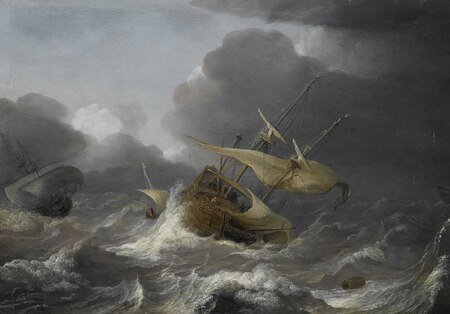
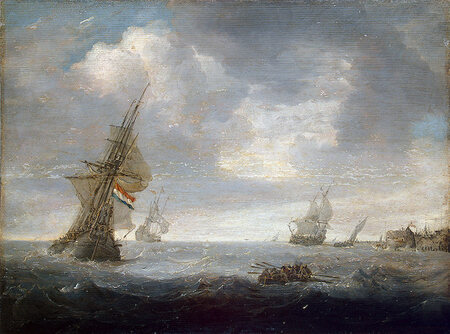
Jan Porsellis, 1. «Dutch Ships in a Storm,» circa 1620; 2. «Sea on a Cloudy Day,» 1630.
Jan Poticelli is considered the founder of marinescapes. He established the traditions of realistic Dutch landscape painting. «In his landscapes, the artist does not make ships the main subject, but the sea. The massive ships are replaced by smaller sailing vessels, and the water and sky begin to occupy the main space of the painting.»
Jan Persellis, «Single-Masted Dhow and Pleasure Boat on a Windy Day,» 1650.