Index
- Concept
- Religious Subjects
- Vanitas
- Social Life and Daily Routine
- History
- Conclusion
- Bibliography
Concept
Death is the inevitable conclusion of all life on the planet. Ever since humanity realized this, it has strived to understand its meaning and causes. Even the earliest cave paintings depict scenes of demise. Despite this, the theme of death remains, and will remain, relevant because it holds a different meaning and unique significance for everyone. A person’s perception of this process varies depending on upbringing, culture, personal experience, and the historical period—for nature, death is merely a part of the life cycle. Therefore, it is crucial to examine this theme from all possible angles. I chose the theme «The Motive of Death in 18th-Century Painting» because it is deeply personal and interesting to me, and I feel it has not been explored sufficiently before. The selected time period is largely transitional, which presents enormous potential for study. The divergence of styles popular in the 18th century (Baroque, Rococo, Romanticism), the genres, the variability of subject matter, and the compositional solutions create an artistic palette of the era, where every artist could express an individual vision, emotional tone, and philosophical idea through form, color, and composition.
The principle for selecting material for visual research lies in its diversity. For me, it was important to select works of varying styles, genres, compositions, meanings, and storylines that are unified by the motif of death. This helps conduct a deep analysis of the theme and illustrate its multifaceted nature.
I selected textual sources based on the principle of thematic similarity to the theme of my visual research. This allowed me to learn from and analyze existing data and conclusions on the issues I was interested in.
Structure
The visual investigation comprises four thematic sections: religious motifs, vanitas, social life and daily routines, and historical painting. This sequence was chosen to illustrate the evolution of the perception of death across different contexts—from the spiritual and symbolic (religious motifs, vanitas) to the more personal and social (scenes of daily life, historical painting). This structure allows us to trace how artists of the 18th century interpreted death through various approaches—ranging from theological and philosophical to everyday and historical—demonstrating its multifaceted nature and the influence of cultural and social context.
Key Question: How did 18th-century painters explore the motif of death in their works? Hypothesis: 18th-century artists approached the motif of death differently depending on the context—religious, philosophical, everyday, or historical. Diverse approaches and genres allowed them to convey the emotional, social, and cultural significance of death, presenting it as an inevitable yet meaningful phenomenon.
Religious Subjects
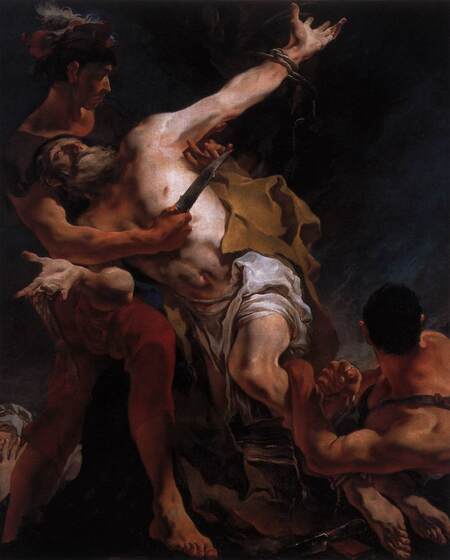
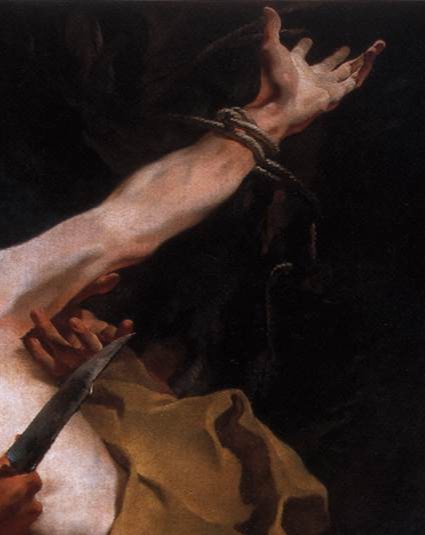
Giovanni Battista Tiepolo (1722) «The Martyrdom of Saint Bartholomew»
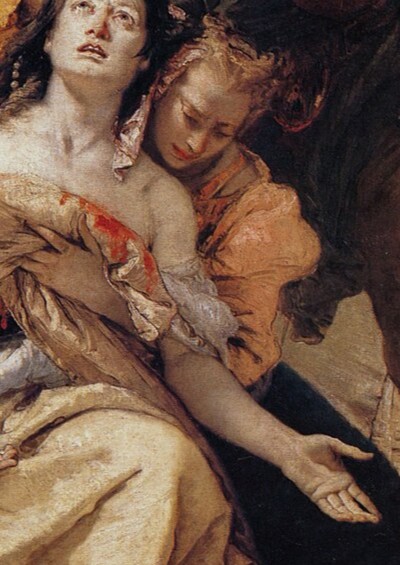
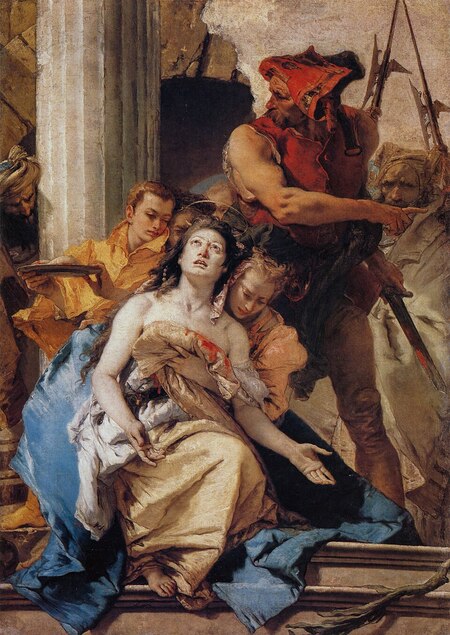
Giovanni Battista Tiepolo (1755) «Martyrdom of Saint Agatha»
Both paintings by Giovanni Battista Tiepolo depict the martyrdoms of saints. The painting «The Martyrdom of Saint Bartholomew» is based on the legend of how the apostle Bartholomew was seized and executed—his skin flayed—for preaching Christianity. «The Martyrdom of Saint Agatha”—Saint Agatha, after rejecting the advances of the governor and remaining faithful to the Christian faith, was subjected to torture, including the brutal removal of her breasts. In their final moments, both figures raise their gazes to the heavens, addressing God, a gesture further indicated by their hands. Yet, despite their similarities, the paintings are executed in vastly different styles. In the 1722 painting, Tiepolo creates a stark contrast using brilliant heavenly light, which separates Bartholomew’s figure from the thugs and the dark, somber background. The apostle’s posture is tense, and his gaze is desperate. These elements classify the painting as Late Baroque. The work portrays death as a tragic event. The 1755 painting reveals distinct Rococo characteristics: a restrained color palette, a light and airy brushwork, and Agatha’s posture is not tense—her gaze conveys a plea rather than despair. The motif of death in this painting is presented more as something sorrowful and frightening.
Jacques Stella (~1656) «The Death of Saint Joseph»
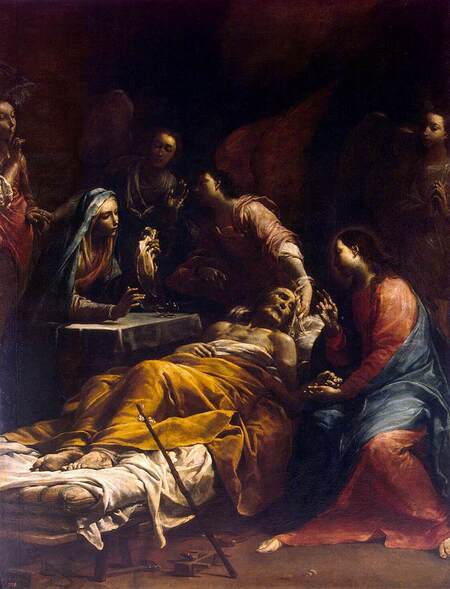
- Giuseppe Maria Crespi (~1712) «Death of Saint Joseph»
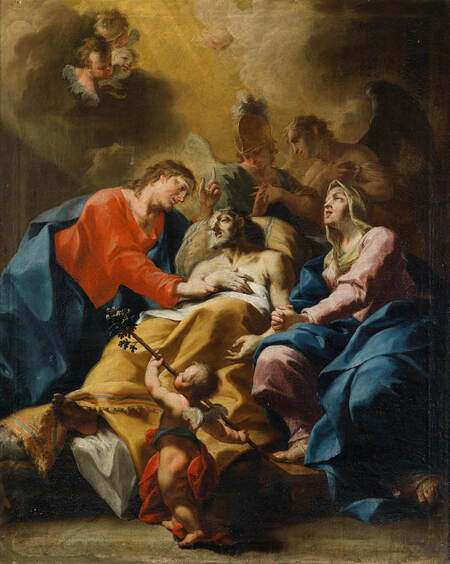
- Bartolommeo Almonte (18th century) «Death of Saint Joseph»
The death of Saint Joseph was depicted by creators many times, which allows for a clear tracing of trends in the art of different centuries. In the 18th century, despite the lingering theatricality, the scene of Saint Joseph’s death began to be portrayed more sensitively than before. Stylistic changes are also noticeable. In the paintings of Francisco Goya, the viewer sees delicate color tones and soft, light brushwork, indicative of the Rococo style popular in the late 18th century.
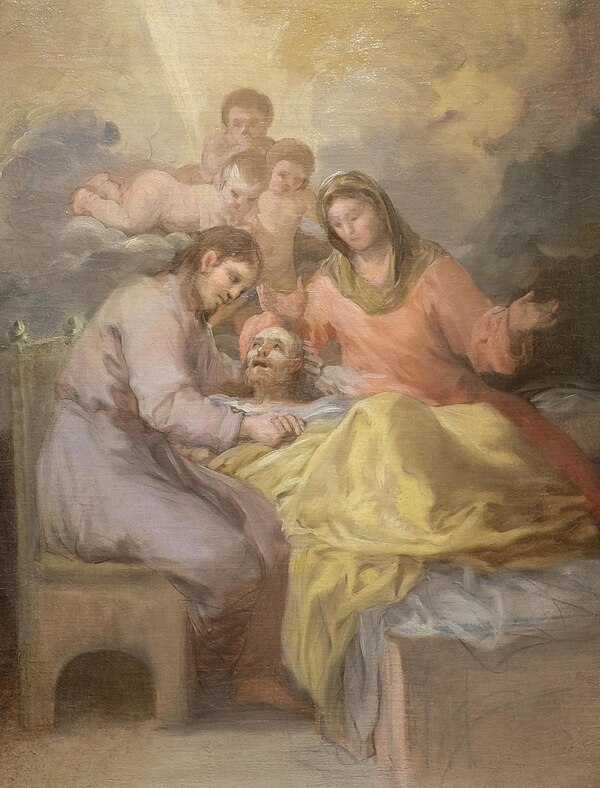
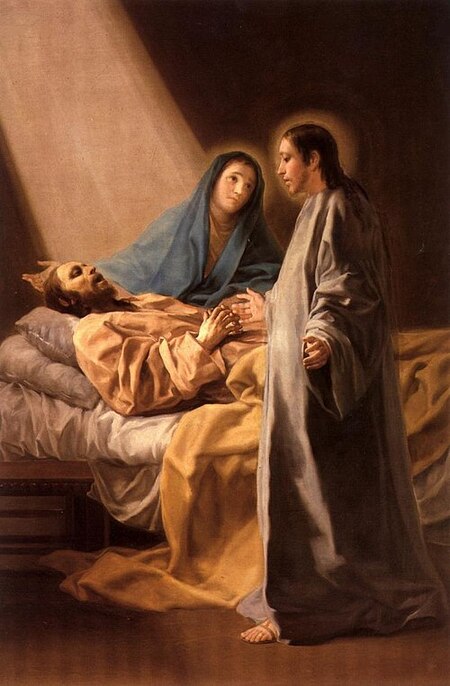
Francisco Goya (1787)
- «Death of Saint Joseph»
- «Death of Saint Joseph»
Vanitas
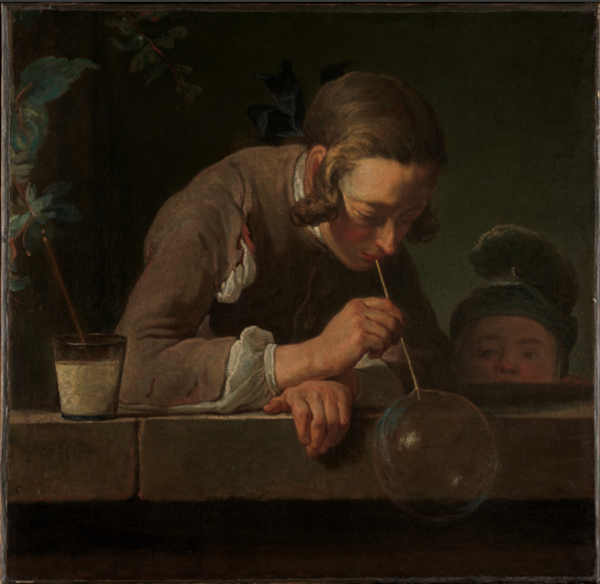
Vanitas is associated with the motif of death because, through the symbolism of fragile and fleeting things, it reminds us of the transience of life and the inevitability of death. In 18th-century painting, it becomes less morbid than before, moving away from the frequent depiction of skulls. It also becomes more contemplative: artists illustrate the fragility of the world not through terror, but through a quiet, almost poetic awareness of life’s delicacy [2].
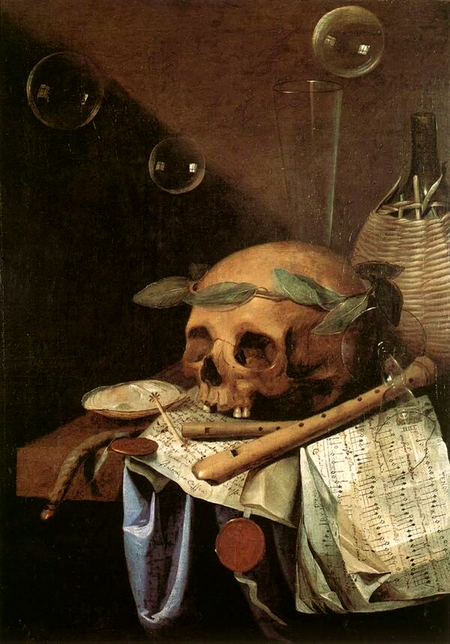
- Simon Renard de Saint-André (~1650) «Vanitas»
- Jean-Baptiste Chardin (~1733) «Soap Bubbles»
The soap bubble in traditional vanitas iconography is a metaphor for the fragility and fleeting nature of life. It is bright and beautiful, but it exists only for a moment before bursting. Unlike the moralizing and strict character of 17th-century vanitas [2], as seen in the painting by Simon Renard de Saint-André, Scharden reveals a more domestic scene where a young man blows a soap bubble. The subdued color palette and a certain softness in the details help convey this. The message becomes more observant and human.
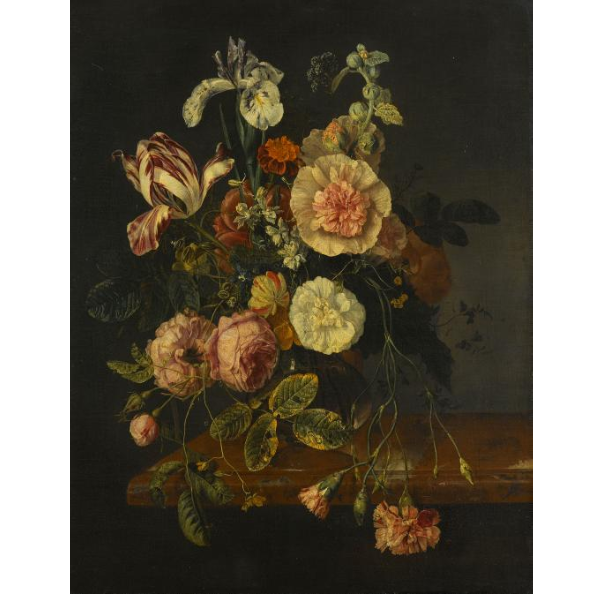
- Attributed to Jacob van Ruisdael (1670–1727), «Still Life with Flowers»
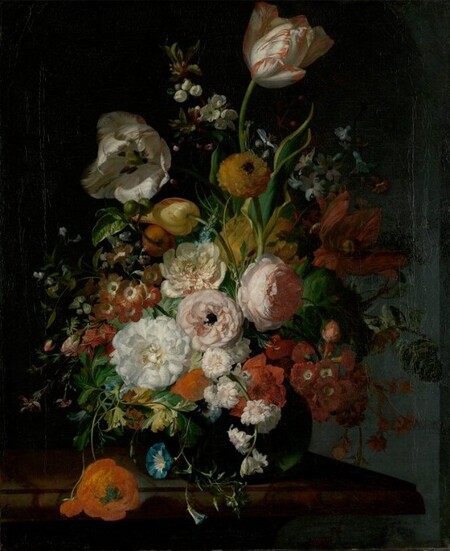
- Rachel Reis (1690–1720), «Still Life with Flowers in a Glass Vase»
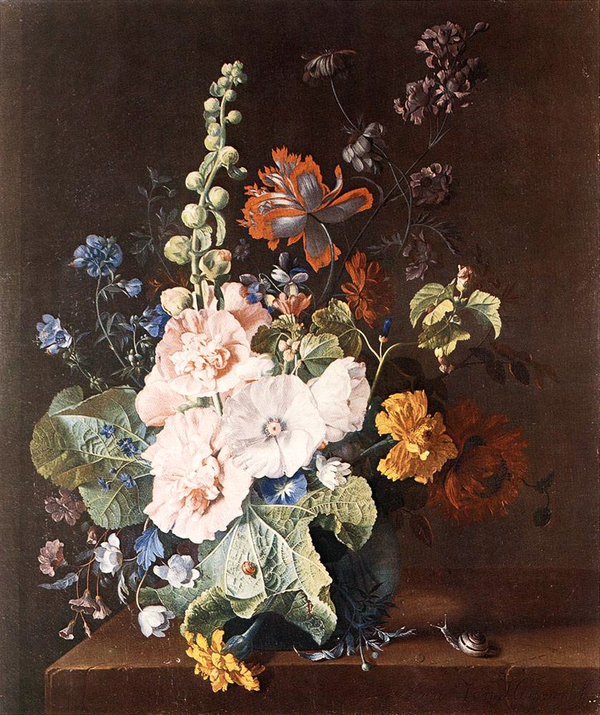
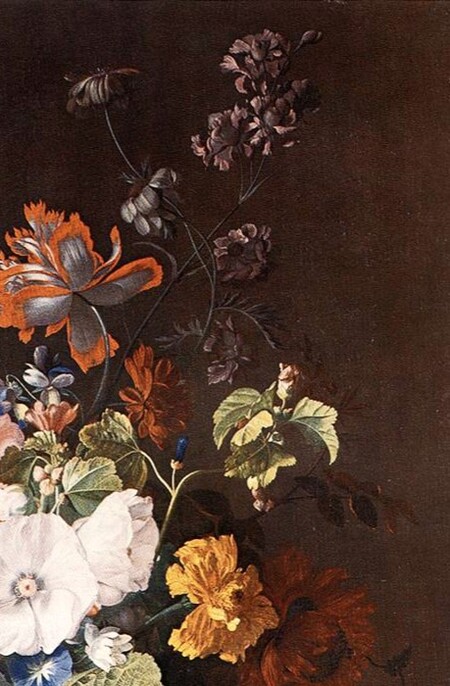
Jan van Huysum (~1710) «Mallows and Other Flowers in a Vase»
The wilting flowers in the still life symbolize the transience of life and the inevitability of death, reminding us of the fleeting nature of beauty and earthly pleasures. At first glance, the flowers may appear fresh, but as one looks longer, it becomes apparent that some of them have already begun to wilt. The painters structure the composition so that the viewer first observes a delicate still life of vibrant flowers, only later noticing the motif of decay. The fresh, bright flowers are grouped together in the center, while the dry and wilting ones are situated closer to the edges and individually. Death is revealed as something inevitable, though not always immediately apparent.
Sociality and Daily Life
The eighteenth century brought significant changes to art. Human emotions and experiences, along with domestic and everyday scenes, began to take center stage. This undeniably affected the perception and depiction of death.
Jean-Baptiste Greuze (1765) «Girl with a Dead Canary»
Dreams depicts an intimate and melancholic scene. A young woman, leaning her head on her hand, gazes mournfully at a dead canary. Death is revealed not through tragic spectacle, but through the protagonist’s emotions and inner world. The viewer seems to experience this loss alongside the girl. To achieve this effect, the artist creates a compositional triangle that locks the viewer’s gaze.