Categories
- Concept 1.1 Topic Selection 1.2 Definition 1.3 Hypothesis 1.4 Research Principles and Analysis 1.5 Material Selection
- Visual Research 2.1 The Emergence of Cinema 2.2 The Development of Film Editing (By Stages)
- Conclusion
- Bibliography
- Image Sources
Concept
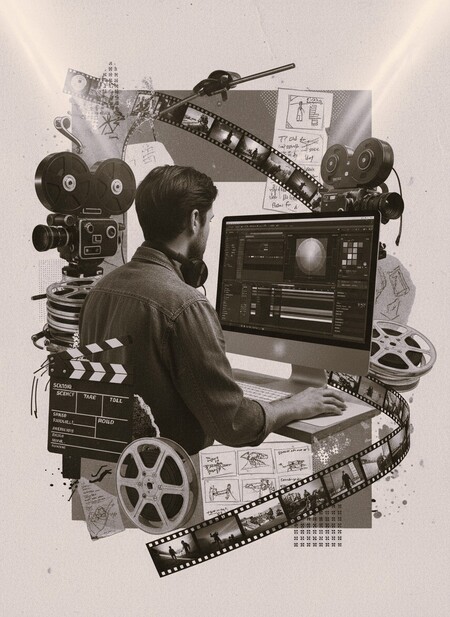
For over a century—since the advent of cinema—the profession of editor has become popular. To capture the audience’s attention, it was crucial not only to plan the script well and perform it effectively but also to execute the correct shot composition and incorporate special effects. As time progressed, technologies improved, and with them, the level of filmmaking rose. In our time, we rarely see black-and-white silent films—only in specific instances. Now, progress has reached a level where films can often be shot against a green screen (chromakey), into which characters or locations are later inserted during editing. I found it interesting to examine all stages of editing’s development because it is constantly evolving. New video editing tools emerged every decade, significantly impacting the industry. Today, the development of cinema has not stopped, and video editing is far removed from what it once was.
Montage (French: montage — «assembly») is a term in cinematography that refers to the technical process of joining individual shots or frames of a film or television program into a cohesive whole. Montage can also refer to one of the fundamental formative elements of cinematic art—a system of expressive tools employed when transitioning from one shot to the next, as well as a method of using these tools characteristic of a specific film, director, genre, or era.
I assume that the evolution of cinema was directly dependent on editing tools. The advent of computers and special effects completely transformed the industry. Now, editing is not merely trimming video; it is the central stage of filmmaking.
Video editing has also changed due to shifting generations and the maturation of the target audience. People’s needs have changed, introducing new trends and ideas. For instance, the contemporary younger generation struggles to engage with long videos. Many also find it difficult to watch feature-length films where the editing rhythm is not as dynamic as they prefer. Because of the infinite content available online, people have developed «clip mentality.» The younger generation is accustomed to receiving information quickly. If the imagery on screen doesn’t change frequently, the brain loses interest. Today, editing is not just assembling a film—it is a battle for the viewer’s attention. Cinema has become faster and more dynamic because directors fear that the audience will become bored and switch to something else.
In this visual study, we will examine: 1. The emergence of film and montage 2. A comparative analysis across decades.
The first phase of the research will involve studying the origins of cinematography. The main body of the research is built upon an analysis of a selection of films, starting from the 1900s to the present day. For each developmental stage of editing, one film is selected that holds the highest rating and critical acclaim.
This study emphasizes adherence to the following material selection principles:
- Chronological Scope Scenes and fragments that reflect key milestones in the development of editing.
- Illustration of Specific Techniques For each stage, scenes are chosen where editing plays a pivotal role.
- Contextualization A brief explanation for each example: the director, the film, and the purpose for which a particular technique was used.
- Comparative Analysis Juxtaposing similar scenes from different eras or styles to visually demonstrate shifts in editing approaches.
The Emergence of Cinema
The history of cinema traces its origins back to 1685 with the invention of the camera obscura. The camera obscura is an opaque box with a small pinhole (0.1–5 mm) on one wall and a screen on the opposite. The traditional version operates without lenses or mirrors, but later, a lens was added to increase brightness and clarity, and a mirror was incorporated to flip the image.
Camera Obscura
The next significant milestone in history was the invention of the Kinetoscope by the Lumière brothers in 1894. This device allowed for the viewing of sequential moving images. However, a major drawback was that only one person could watch the film at a time.
The Kinetoscope was a wooden box equipped with an eyepiece, inside of which photographs moved along a strip. The viewer had to look into the eyepiece and, by turning the handle, start the motion of the frames.
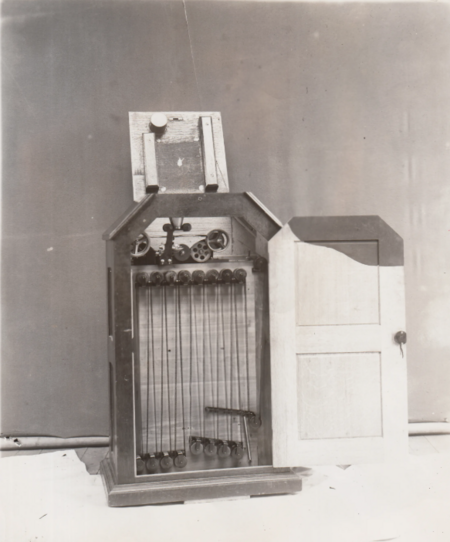
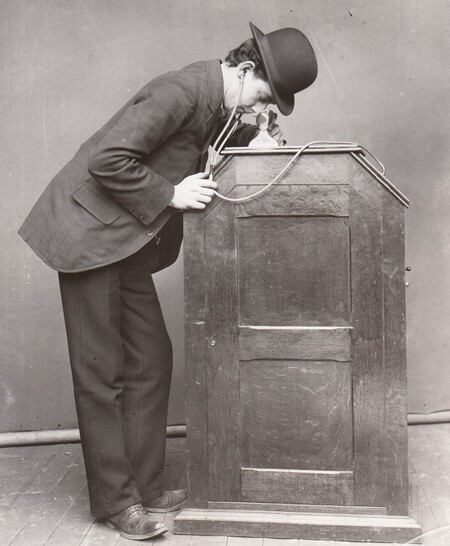
Kinetoscope
The genesis of cinema can be traced back to 1895, a year that saw the release of several significant projects. One of these was the Lumière brothers' film, «Arrival of a Train at La Ciotat Station,» which astounded audiences despite its visual simplicity.
The short film presented a simple scene: a train approaching, emitting smoke and noise, seemingly on the verge of bursting past the screen’s edges. Seeing the advancing locomotive on screen, the audience experienced the sense of presence for the first time—as if the event were unfolding right there in the hall. Some people even ran out of the theater, fearing the train was heading directly for them. At that time, cinematography was not yet aware of phenomena like editing. Such technologies capable of reshaping frames did not yet exist. Nobody could have imagined then that very soon films would consist of individual shots that could be edited, connected, and augmented with diverse special effects.
The Beginning of Film Editing History
Alfred Clark is considered one of the first to utilize montage in cinema. He applied this technique in his film, «The Execution of Mary of Scotland» (1895).
The camera operator spun the film camera knob, capturing the scene right up to the moment the protagonist swung the axe. At this critical moment, filming stopped. A mannequin replaced the actor in the frame. The operator then resumed turning the camera knob, but this time, they were «working» with a doll rather than a live person. This technique allowed for the illusion of danger and drama without putting the performer at real risk. It greatly surprised people.
1900s — 1910s
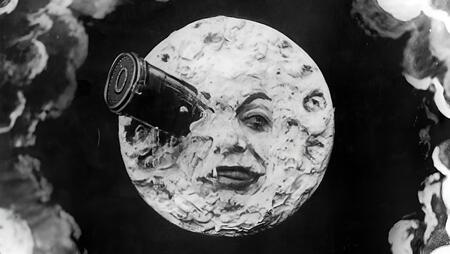
One of the earliest films to showcase transitions is George Méliès’s cinematic work, «A Trip to the Moon» (1902). The film—comprising 30 scenes, 260 meters of film, and filmed over a month—drew the public with its scale.
The director filmed in stylized sets, often against black velvet. Although his camera barely moved, and he disliked close-ups (instead opting to simply make objects appear large), Méliès is nonetheless considered the founder of spectacle and staged cinema.
Excerpt from the film «Journey to the Moon» 1902
1920s
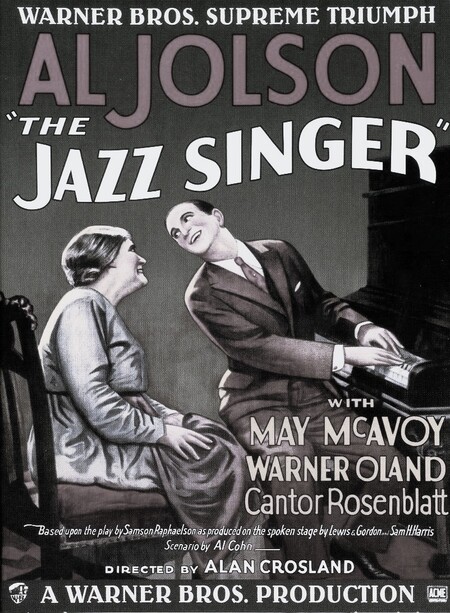
The era of silent film ended on October 6, 1927, when a film that would become a genuine revolution in cinema history premiered. The film The Jazz Singer not only was the first to combine visuals with synchronized sound but also marked the beginning of a new era—the era of sound film.
The editing of films was already a more complex undertaking. Creators had to work with two crucial mediums simultaneously: video and sound. The production team had to record everything separately and then edit both films together to combine the segments. The film itself ran for more than a minute—it was a full 88 minutes, which cost $422,000.
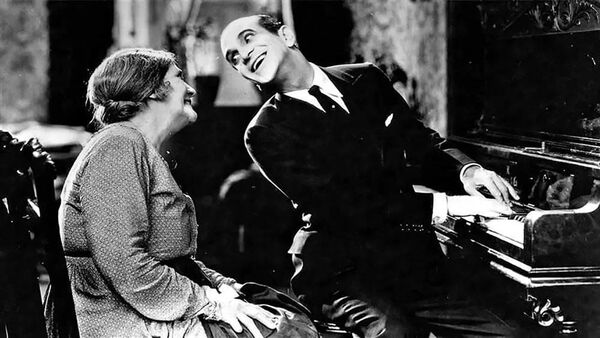
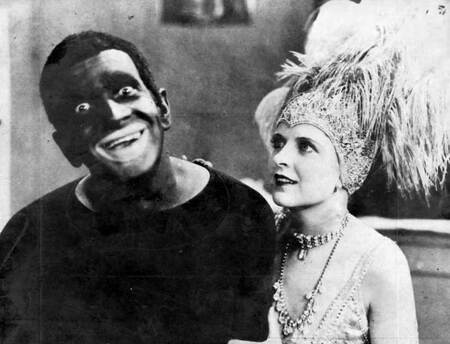
Stills from the 1927 film «The Jazz Singer»
In the same decade, the book «The Art of Cinema» (1929) by director and theorist Lev Kuleshov was published, which became a phenomenon in the world of film editing.
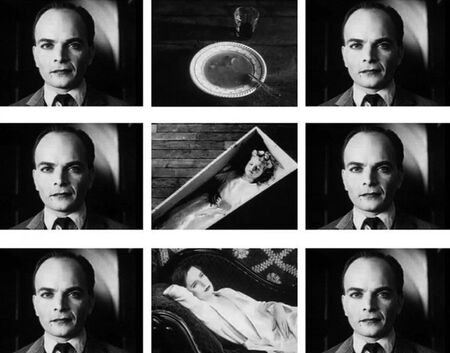
The essence of the experiment is that the same shots, when sequenced in a particular order, begin to be perceived differently. Thanks to the editing connection, the viewer experiences new emotions and interpretations regarding the on-screen character.
(With soup) the emotions were perceived as hunger. (With the child) the character feels sorrow. (With the girl) the audience perceived the character’s love.
1930s–1940s
From this point onward, film editing began to reach a new level. Special terms, such as «close-up,» «panorama,» «dolly shot,» and others, emerged in the professional field, and new filming technologies began to develop. At the same time, audiences wanted to see something unusual. Black-and-white film no longer evoked surprise, so directors started looking for new ways to interest and draw in the public.