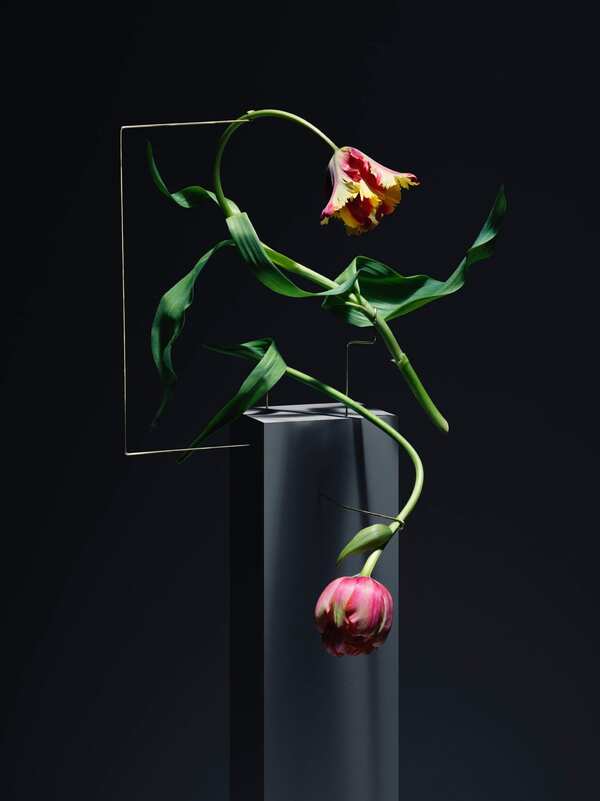
The tulip, known as «lale» in Turkish, held profound significance within the artistic and architectural landscape of the Ottoman Empire. Its introduction from Central Asia in the 16th century ignited a cultural revolution, leading to the flower’s integration into various facets of Ottoman life—especially in art and architecture, particularly in tile work.
In Ottoman art, the tulip symbolized beauty, prosperity, and opulence. Artists, captivated by its elegant form and vibrant colors, incorporated tulips into their works, capturing its essence in paintings, textiles, manuscripts, and most notably, in tile art. Tulip motifs adorned the walls, ceilings, and facades of palaces, mosques, and other significant structures throughout the empire.
Tile art, or «çini» in Turkish, became a quintessential element of Ottoman artistic identity, with tulip patterns ranking among the most pervasive designs. Skilled artisans meticulously crafted intricate tile compositions featuring tulips, employing vivid colors and precise detailing to portray the flower’s natural grace and charm.
These tiles graced the interiors and exteriors of architectural masterpieces, lending a sense of wealth and sophistication to the structures.
A prime example of the tulip’s prominence in tile art is found in Iznik tiles. These exquisite ceramics, which originated in the town of Iznik in Anatolia, were celebrated for their intricate designs and rich color palette. Tulip motifs, alongside other floral and geometric patterns, were meticulously hand-painted onto these tiles, adorning mosques, palaces, and tombs throughout the empire. The Iznik tiles, with their depiction of tulips, served not only as decorative elements but also held deeper symbolism, reflecting the Ottoman appreciation for nature’s beauty and the transient nature of life.
Moreover, architects integrated tulip motifs into structural elements such as domes, minarets, and facades, further underscoring the flower’s significance in Ottoman aesthetics. Employing tulip-inspired designs in architectural ornamentation did more than just enhance visual appeal—it conveyed a powerful sense of cultural identity and sophistication.
The tulip’s significance in Ottoman art and architecture extended beyond mere decoration; it symbolized the empire’s cultural richness, prosperity, and refined taste. Despite the passage of time, the legacy of tulip-inspired artistry and architectural ornamentation continues to captivate enthusiasts and serves as a testament to this graceful flower’s enduring influence on Ottoman artistic expression.
Comparing this to modern-day Ottoman lands, which is Turkey, the importance attached to the tulip has diminished. This is due to the evolution of artistic disciplines and a transformation in how people perceive beauty, though interest in tulips persists in Turkey, albeit to a lesser degree.
My conclusion from this investigation is that while artistic forms may change and evolve, the symbols of art that become part of culture do not disappear. Initially, the tulip served to decorate people’s perception of beauty as merely a type of flower. Subsequently, this magnificent flower began to carry deeper, hidden meanings. Even though the Ottoman Empire is gone, its art continues to resonate.
Table of Contents
- Introduction
- Ottoman Sultans
- Tulip Species
- Iznik Tile in Architecture
- Iznik Tile in Porcelain
- Iznik Tile on the Wall
- Tulip Symbol on Fabric
- Tulip Ebru (Marbling)
- Conclusion
- Reference List
Ottoman Sultans
Ottoman miniature art is an art form that reflects Ottoman palace culture and decorates luxury items such as hand-written manuscripts, which were usually presented to the Sultan and other high-ranking individuals. When the tulip arrived in the Ottoman Empire, it captured the attention of miniature artists. They incorporated the tulip motif into portraits of important figures of that era. In some portraits, the tulip dominated the foreground, while in others, it was rendered with subtle details in the background.
Portrait of Mehmet II by Bellini, 1480, 15th century
Ottoman women enjoying coffee in a harem by Jean-Baptiste Vanmour, 16th century
Mehmed I with his dignitaries, by an unknown artist, early 15th century
Ottoman soldier holding a tulip by Abdulcelil Levni, late 17th century
Tulip Species
The most significant feature that distinguishes the tulip from other flowers is its great variety. Although there are numerous cultivars, I have selected ten vividly colored and charming varieties that artists paint most frequently.
Tulip Foxtrot
Tulip Affaire Triumph—Tulip Grand Perfection
Tulip Rems Favorite
Tulip Virichic — Tulip Marilyn
Tulip Gavota — Tulip Kingsblood
Iznik tile in architecture
Iznik tile first appeared in the 15th century, influenced by blue and white ceramics from China. The first examples are found in the Bursa Green Mosque and its tomb (1421) and the Bursa Muradiye Mosque (1426). In the 16th century, as the Ottoman Empire strengthened and new structures emerged, Iznik tile experienced its most glorious period. Works such as the Süleymaniye Mosque and the Selimiye Mosque, built during this time, were decorated with Iznik tiles. By the 17th century, Iznik tiles began to disappear, vanishing completely in the early 18th century.
Bursa Green Mosque and its tomb, 1421, 14th century
Bursa Muradiye Mosque 1426, 14th century
Selimiye Mosque, 16th century
Rustem Mosque, 16th century
Fountain of Separation, 17th Century
Suleimaniyah Mosque, 17th century
Uskudar Ahmed III Fountain Stone Ornament, 18th Century
Fountain of Sultan Ahmed III, 18th Century
Iznik tile in porcelain
The tulip pattern wasn’t limited to mosques or historical buildings. The fascination and admiration for this flower were so profound that it became a motif frequently used in porcelain and other decorative arts.