We are accustomed to the everyday dictating to us: «Stop, ” „Go, ” „Do.“ But what if we stopped obeying and started asking questions?
Relevance
Amid visual overload and the algorithmic structuring of the urban environment, there is a growing demand for «slow» formats that provoke independent thought
We are accustomed to consuming these signals rather than questioning what lies behind them. Design has long operated within the logic of «solving a problem, ” but now the demand for interrogative practices is growing louder—a practice where the designer creates space for questioning.
The Problem
Urban visual messaging is often unequivocal and fails to provoke doubt, leading design towards pre-packaged solutions. Consequently, the skill of asking questions and perceiving alternative meanings is lost.
Classroom Capacity
Designers, students, and researchers are tired of quick answers and desire participation, but lack convenient tools for critical thinking. They need a space where the question is valued over the answer, and where they can think without the fear of making a mistake.
Solving the Problem
Create a question book without answers and an online platform for discussing and continuing those questions. Together, they transform urban statements into a catalyst for personal and collective reflection.
Product Goal
The project returns to people the right to question and teaches them how to challenge the familiar. It cultivates a new perspective on the city, culture, and language while fostering a community around the practice of inquiry.
Publication Structure
Book: Introduction to interrogative thinking (what it is, why to ask questions, how to doubt). Subsequent sections with questions are still under development.
Website: A feed of questions; users can add their own, discuss, and filter by categories. Categories will appear once the book’s sections are defined. There is a section titled «No Answers.»
Integration: QR codes in the book link to the website, where users can order the book.
Project Character
• A critical, reflective media project at the intersection of design, urbanism, and semiotics.
• The tone is professional, academic, and philosophical, yet uncluttered.
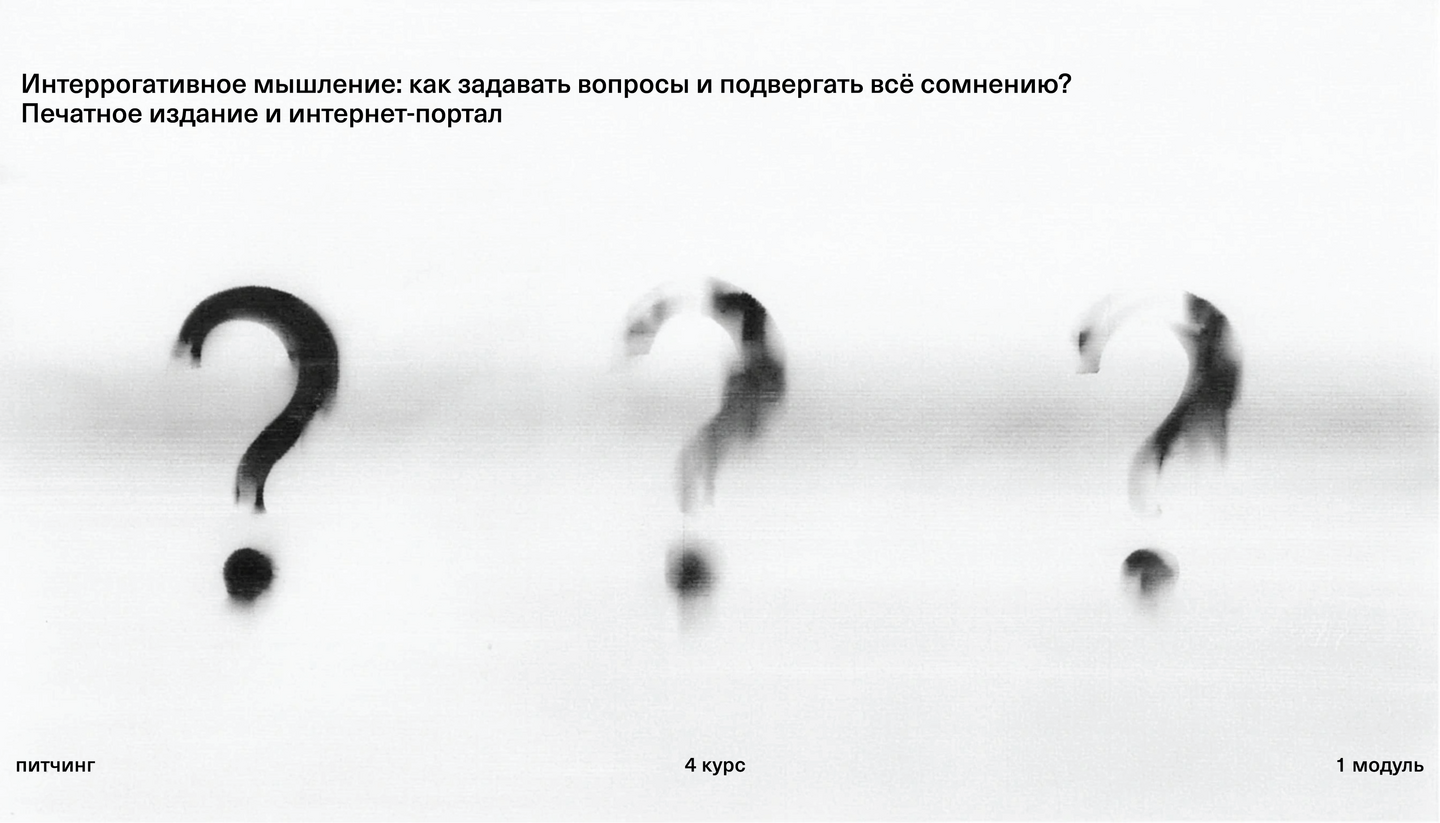
• Visual language: documentary photography, fine typography, minimalism, contrast, and negative space as a space for contemplation.
• Philosophy: Ignorance as a resource. The project resists the logic of quick reactions and prepackaged answers.