It all started with a question… what does something invisible look like?
We constantly exist within physical processes. Gravity holds us to the surface. Friction slows movement. Energy changes form. Heat transfers from one body to another. We don’t notice these processes—but they are what shape the world around us.
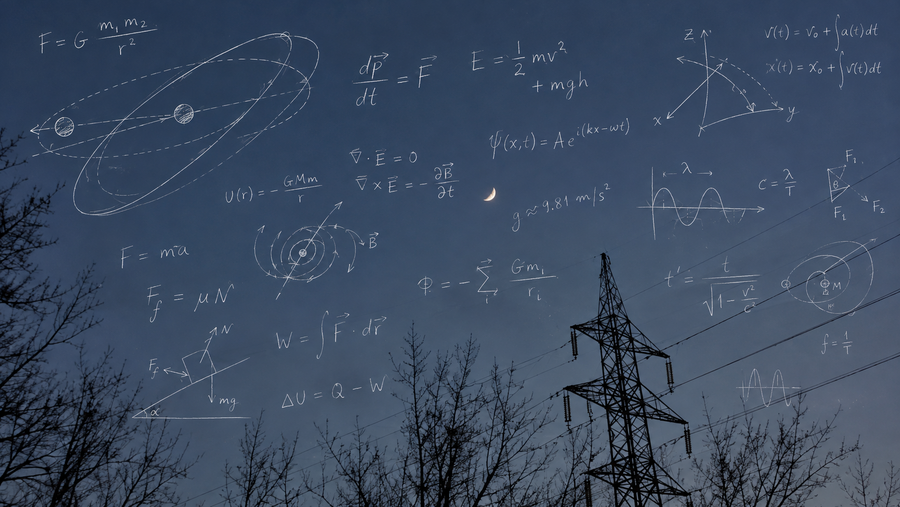

In reality, physics is everywhere; it just isn’t usually a direct subject of art.
do not print the formula on the t-shirt. use the principle of the law itself as a design tool.
If it is gravity—the object must feel like attraction. If it is energy—it must transform. If it is pressure—the form must compress and expand. If it is entropy—the structure can gradually transition from order to chaos.
(Conceptual Idea)
Perhaps we too are carrion
But the earth will not yield further to birds
Whoever can live outside cages is welcome, but
Rising entropy is terrifying to any particle
E=ART² — energy transformed into art.
To make invisible processes tangible through design. To connect scientific thinking, contemporary art, and material culture.
Collectibles
Every project is built around a physical phenomenon. Form, material, construction, and interaction with the human being adhere to the chosen law. Physics becomes a design system.
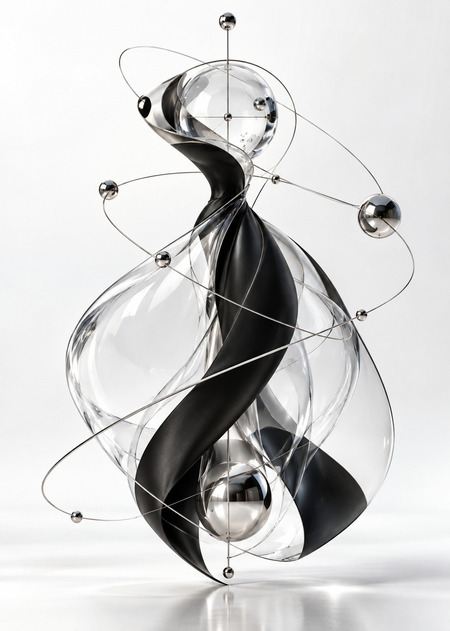
Conceptual AI visualization of a vase demonstrating Archimedes' Principle (an upward buoyant force, or Archimedes' force, acts on a body submerged in a fluid or gas, equal to the weight of the fluid or gas displaced by that body).
for those who buy an idea, not just a thing, that they can take with them.
E=ART² exists at the intersection of: contemporary art collectible design experimental fashion digital culture
This is for the person who values: concept, rarity, material, object history, and the artist’s perspective.
DESIGN GENERATED BY SCIENCE.
Formulas, graphs, and scientific symbols are not the primary visual language here. A physical law becomes a design method. The object’s form emerges from the action of force. Material is chosen based on its physical properties. The structure responds to motion, pressure, temperature, gravity, or state change.