1. Media Goal
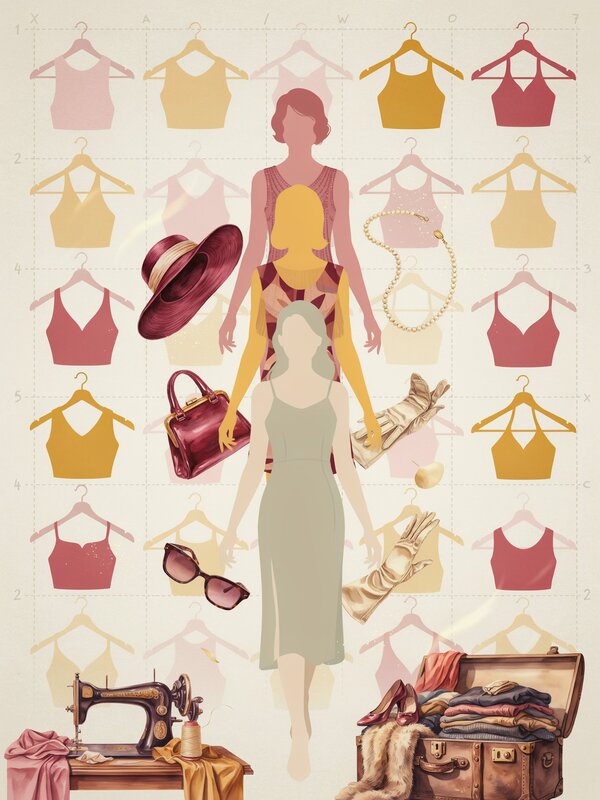
«It Was Fashionable» is a media platform that explores the origins of familiar wardrobe staples and how they have evolved over time.
We are accustomed to perceiving clothing as something self-evident: jeans, heels, mini-skirts, trenches, corsets, sneakers. Yet, almost every item had a different original purpose.
Media tells these stories briefly and clearly, using familiar items to illustrate shifts in culture, society, and fashion itself.Project Goal: to make the history of fashion engaging for someone who has never deliberately studied it.
2. Themes
Segment: culture / education / fashion
Niche Topic: the history of clothing items and fashion trends.
Core Principle: one familiar item → its origin → change in function → contemporary appearance.
For example:1. Why did men initially wear high heels?
2. Why was a small pocket added to jeans?
3. Why did the trench coat become part of the everyday wardrobe?
4. Why were bustles necessary in clothing previously?
5. How did sportswear move beyond sports?
6. How did workwear become fashionable?
Potential Topics
«Where Did It Come From?»
The history of a specific item’s origins.
«Why Was It Needed?»
Unusual clothing details and their original function.
«How Did It Become Trendy?»
How a workwear, military, or athletic item entered everyday wardrobes.
«Fashion Flash»
A very brief history of an object or phenomenon.
3. Competitors
For «Fashion History, ” competition isn’t limited to media outlets that directly narrate clothing history. The audience can satisfy the same interest through fashion magazines, educational projects, museums, YouTube, and Telegram channels. For the analysis, I selected projects that intersect with „Fashion History“ in theme, audience, or method of presentation. I sought competitors through internet searches, websites of media and educational projects, as well as social media and Telegram.
The following criteria were considered during the comparison: platform, content format, visual presentation, communication tone, depth of material, archive work, and methods of audience engagement.
For «What Was In Style, ” the competition doesn’t just come from media that directly tell the story of clothing. The audience can satisfy the same interest through fashion magazines, educational projects, museums, YouTube, and Telegram channels.
a. Direct Competitors
- «Fashion Theory: Clothing, Body, Culture» — main direct competitor«Fashion Theory» is a Russian scientific and theoretical journal dedicated to fashion as a cultural phenomenon. It examines the history of costume and design, fashion and art, photography, film, urban culture, corporeality, and other related topics. The journal has existed since 2006 and is aimed, in part, at professionals who are seriously interested in fashion.Strengths:
a large archive of fashion history materials;
deep historical and cultural context;
expert authors;
the connection between fashion, society, and culture;
suitable for serious study of the topic.«Was Fashionable» will not compete with the journal in terms of research depth. On the contrary, its goal is to make fashion history more accessible to people who do not study it professionally. While «Fashion Theory» uses fashion history and theory as its starting point, «Was Fashionable» uses an everyday item that the person already knows.
2. «Archive of Russian Fashion» / ARM«Archive of Russian Fashion» is a project dedicated to the history of Russian fashion and working with archival materials. We publish content from old Russian magazines, photographs, interviews with designers, stylists, photographers, and other participants in the fashion scene, as well as materials about exhibitions and global fashion archives in Telegram. The project works particularly actively with magazine archives: materials are grouped by publication, year, brand, photographer, and model.Strengths:
a large quantity of unique archival materials;
photographs and scans from old magazines;
interviews with industry participants;
engagement with historical context;
visually compelling material.ARM primarily functions as an archive and a research project. «What Was Fashionable» could harness a similar passion for archival imagery, but structure its posts around a specific question.
For example, instead of simply showing a photo of a 1960s dress, it could ask:«Why did skirts suddenly become so short in the 1960s?»And then, through several images, tell the story of the mini-skirt.
In this way, the archive becomes a storytelling tool rather than the primary content of the media.
- Vogue / Vogue Russia — a direct competitor for audience attentionVogue is a major fashion media outlet that engages not only with contemporary trends but also with the history of fashion, archives, designers, and the evolution of specific styles. Fashion history is only one piece of the publication’s vast amount of content.Strengths:
recognizable visual style;
high-quality photography;
wide range of formats;
work with archives;
combination of history and modern fashion;
high audience interest in fashion content.«Was it fashionable» may occupy a more niche space: focusing not on «what is happening in fashion now, ” but on „why contemporary fashion looks the way it does.“
b. Indirect Competitors
- Arzamas — an educational project focused on culture and the humanities. It approaches history through lectures, articles, courses, and various other formats.Strengths:
It can explain complex humanities topics accessibly;
It utilizes short-form content;
It integrates text, imagery, video, and lectures;
It structures materials around a specific question.What to take away:
From Arzamas, you can borrow the entire presentation principle: instead of covering a topic comprehensively, find an interesting question within it.
Instead of «The History of Women’s Costume in the 19th Century, „
ask, „Why did women in the 19th century wear such enormous skirts?“This approach makes history more understandable and engaging for someone who wasn’t initially planning to study it.
- Fashion Museums and Their Digital Collections
Museums like the Victoria and Albert Museum and other major collections are competing for the attention of individuals who wish to examine historical clothing and learn its history.Strengths:
original historical artifacts;
professional photography;
detailed descriptions;
the ability to view items otherwise inaccessible to the public.What to Take Away:
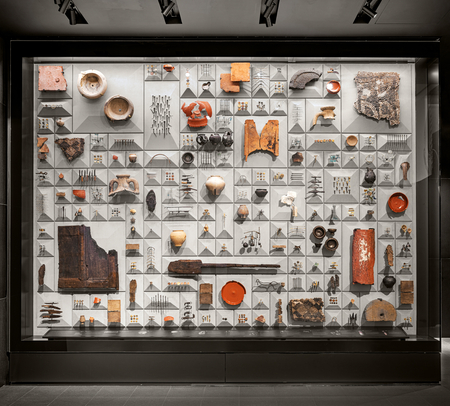
The main advantage of such projects is visual authenticity.Therefore, in «What Was Fashionable, ” you should maximize the use of real photographs of clothing, archival images, vintage magazines, and illustrations, rather than rendering the entire media package using only modern illustrations.
- YouTube / TikTok / Shorts Blogs on Fashion HistoryIndividual creators recount the history of clothing and costume through short videos.Strengths:
fast format;
simple language;
personal delivery;
ability to show clothing on a model;
short facts are well-suited for social media.A video can capture attention with one unexpected fact, but a complete post must tell a small, cohesive story.
Insights
Competitive analysis showed that «fashion history» is too broad a concept on its own. It already exists across academic journals, museum archives, fashion media, and educational projects. Therefore, the unique selling proposition of «What Was Fashionable» should not be that it tells the history of fashion, but rather in how it selects its topics.
- Fashion history is often presented as too complex and academic.
2. Archival photos and clothing images are highly engaging.
3. It is easier to interest someone with a specific item than with an entire era.
4. Short-form content makes historical material more accessible.
5. It is more interesting to explain not just what was worn, but why it emerged.
6. This presents a valuable opportunity for «What Was Trendy”—to connect history + visuals + simple language.
4. Distribution Channel
The main channel is Telegram. Telegram is suitable for the project because it allows for the combination of short text, images, videos, and links to sources.
Main Content:
2–3 posts per week.For example:Monday — The story of one item«Why is the trench coat called a trench?»Wednesday — A quick fact«Heels weren’t invented for women»Saturday — Interactive challenge«What do you think these pockets were originally for?»
Additional Channels:VK — adapted cards and posts.
Shorts / Reels — short videos featuring a single historical fact.It is important to note that content doesn’t necessarily need to be copied across all platforms. The main, detailed version might be released on Telegram, while short videos would be adapted for a vertical format.
5. Target Audience
Segment 1 — «The Curious»
JTBD: «I want to learn interesting things to better understand the world around me.»
Persona — Masha, 22
Masha isn’t specifically interested in fashion history. She simply loves learning unusual facts and often shares interesting posts with her friends. She doesn’t want to read long articles.
What media gives her: a short story that she can read in a few minutes and then retell to someone else.
Segment 2 — «Fashion Enthusiasts»
JTBD: «I want to better understand the origins of the items I see and wear.»