INDEX
- Concept
- Relevance
- About the Artist
- Paintings and Sculptures of Tevon Ana
- Exhibition «PPURI» 2024
- Conclusion
- Sources
CONCEPT
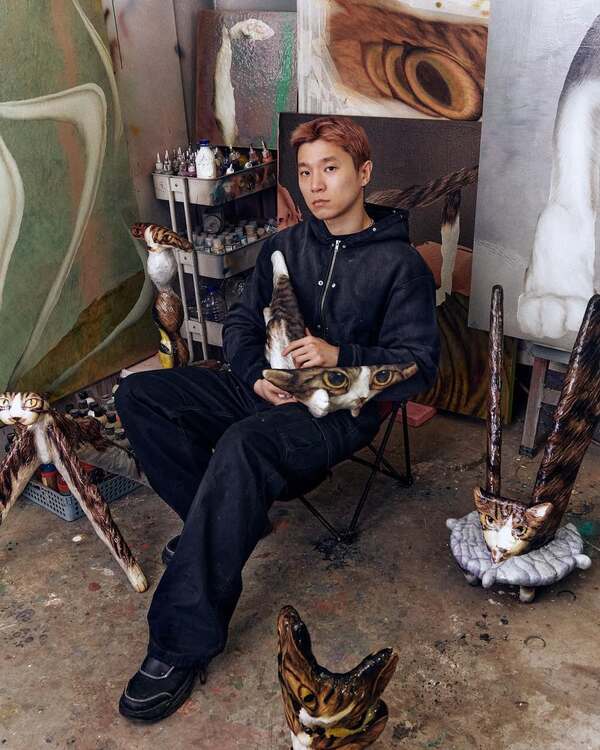
In today’s world, where an increasing amount of information is conveyed through screens and images, animals are increasingly perceived not as living beings, but as part of visual content. This work explores how the digital environment is changing our relationship with animals and how this is reflected in art. Special attention is given to the works of South Korean artist Taewon Ahn, who frequently depicts a cat named Hiro. This character seems to bridge two worlds—the real and the digital—illustrating how the boundary between a living body and its virtual representation is blurred.
Tevon Ahn, known by the pseudonym @pupuri_, uses his art to express the untamed, overwhelming elements of the Internet age. He strives to blur the line between the digital world and reality, creating images that belong to both realms simultaneously. His works are visual spectacles where eccentricity merges with surrealist elements, evoking a sense of strangeness and immersion. The cat on the internet—it is a meme, a sticker, a GIF, a 3D model, an NFT, an AR filter. It serves functions of entertainment, aesthetic decoration, and social irony, even as its physical nature remains unseen. This makes artistic intervention especially crucial—intervention capable of returning the viewer to question the nature of the image, its origins, and its implications.
In Tevon Ana’s work, the cat Hiro is not merely depicted; it is subjected to deformation, glitches, and stylistic manipulation. His form is simultaneously a familiar image and a distorted copy—like a broken texture from digital space. This representation of the animal calls into question the stability of the digital image and points to the disconnect between visual form and physical essence. Hiro is a reflection of the digital age—its obsession with visuality and its inability to grasp the fullness of lived experience. In this context, art serves a vital function—it becomes a space where one can reconsider the boundaries between the real and the virtual, and what it means to be «alive» in a world of simulations. Rather than amplifying the illusion of life in a digital image, the artist exposes its insufficiency, its incompleteness, and its fracture.
Art—it is not just a mirror of the era, but also a means of resistance against it.
This work aims to explore this visual shift. Through the analysis of Ana’s artistic practice, strategies of representation are revealed, in which digital aesthetics expose their boundaries. Rather than amplifying illusion, the artist demonstrates glitches, cracks, and fragmentation between image and object. The cat in her work is not cute and simplified, but rather fragmented and anxious—as if not entirely assimilated into the media environment.
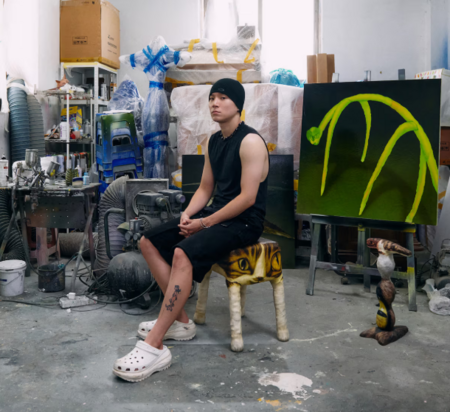
«The world is full of rules, but in the hearts of artists, there must be a space where laws and rules do not exist.» — Taewon Ahn
RELEVANCE
Cats have become unofficial symbols of internet culture. From the first viral platforms, like I Can Has Cheezburger? , to modern digital phenomena—NFTs, AR pets, and GIFs—the image of the cat has established itself as one of the primary visual elements of online communication. It has long surpassed the realm of a biological creature, transforming into a media meme, an emotional marker, a vehicle for irony, self-expression, and visual citation. The relevance of this topic stems precisely from this collision: mass visualization erases the boundaries between reality and simulation, while art can become a space for awareness and critical perspective. Analyzing the cat image within digital culture through artistic practice—such as in the works of Tevon Ana—not only allows us to understand cultural transformations but also reveals the mechanisms of visual simplification, alienation, and standardization to which the animal is subjected as an icon.
About the Artist
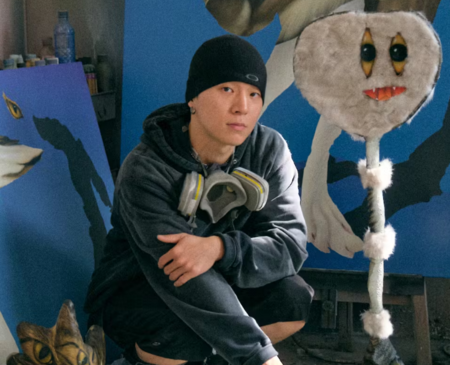
Taewon Ahn was born in Seoul in 1993 and studied art at Chung-Ang University. Taewon Ahn began his artistic journey in 2015, creating psychedelic canvases and experimental grids influenced by science fiction. Later, he began collaborating with digital artists, exploring new formats and techniques. In his work, he boldly incorporates internet memes, reflecting how the visual codes of online culture are becoming the language of modern communication.
For a long time, his primary sources of inspiration were the cat Hiro and digital imagery from the internet. However, over time, he experienced visual saturation, which prompted him to rethink his relationship with digital visuality and turn toward motifs from everyday life. Despite this shift, Ahn continues to seek a balance between the material and the virtual, striving to connect lived experience with digital aesthetics.
For the artist, the digital environment is an integral part of reality, which he investigates using diverse materials and expressive media. Beyond painting and sculpture, he actively works with young creators, organizing collaborative projects and exhibitions that explore the language of imagery and the dynamics of contemporary art.
PAINTINGS AND SCULPTURES BY TEVON ANA
Your style often combines elements of realism and surrealism. Could you walk us through your creative process, from the initial idea to the finished piece?
«The depiction of my cat, Hiro, in my work is structured in such a way that it forms memes: cutting and pasting, distortion, exaggeration, omission, and much more. It can be easily reformed and vanish in the digital world, but that does not happen in the real world. A physical support—a canvas or a sculpture—captures these ephemeral images and forcibly anchors them in reality. I think that the way digitally manipulated images come alive in the material world evokes a feeling of incompatibility in the viewer. My workflow is similar. I create digitally edited images and then paint them onto a custom-made canvas or sculpture using an airbrush. It is like the 'texture mapping' in 3D programs—it is akin to overlaying a 2D image onto a 3D model.» — Tevon Ahn
Taewon Ahn, from the «Morning» series, 2023
Analyzing this series, its title, «Morning,» is more than just a time of day. It is a threshold—a state existing between sleep and wakefulness, between the unconscious and the conscious. It seems to materialize that moment of awakening when we have not yet separated reality from dream, and perception wavers between the corporeal and the digital, the real and the imagined. Here, morning is a metaphor for transition: between states, between worlds, between identities.
The cat, conversely, acts as a guide into postreality. The recurring image of the cat—including Ana’s own pet, Hiro—functions as a totemic animal, simultaneously semi-real and semi-mythical. In the cultural landscape of the internet, the cat has long become a symbol of visual communication, mass memes, and trivialized attachment. However, for Ana, the cat ceases to be merely cute or commonplace—it transforms into a figure observing us from within a digital void, a form that reflects our own gaze back to us.
The cat is a «different, ” living being to whom we attribute emotions and meanings based on our own projections. In the digital age, it functions like a media mirror, reflecting and distorting our desires.
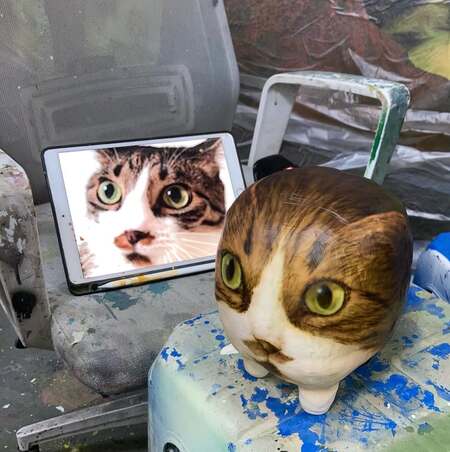
«I love my cat, Hiro, but he doesn’t always look cute or charming in my work. Often, he is distorted, strange, and even grotesque. I’m not interested in creating images that will appeal to everyone or be conventionally pleasing. I think this reflects how I see and perceive the world. There is a certain beauty in subtle distortion or a touch of strangeness hidden within what appears beautiful. That is the feeling I try to express.» — Tevon Ahn
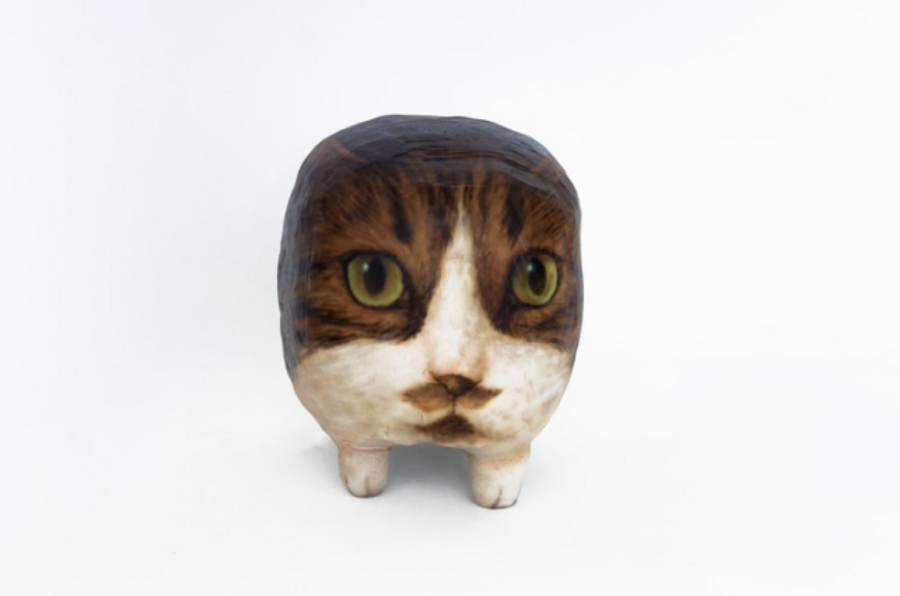
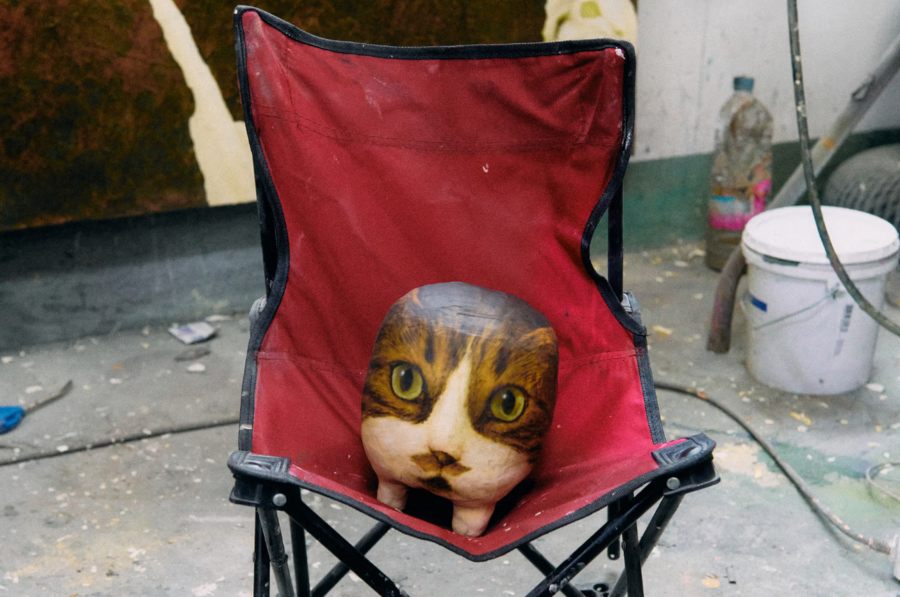
Taewon Ahn, «Hiro is everywhere, ” 2023
Taewon Ahn, «Hiro is Everywhere, ” 2023
Taewon Ahn, from the series «Hiro is everywhere, ” 2023
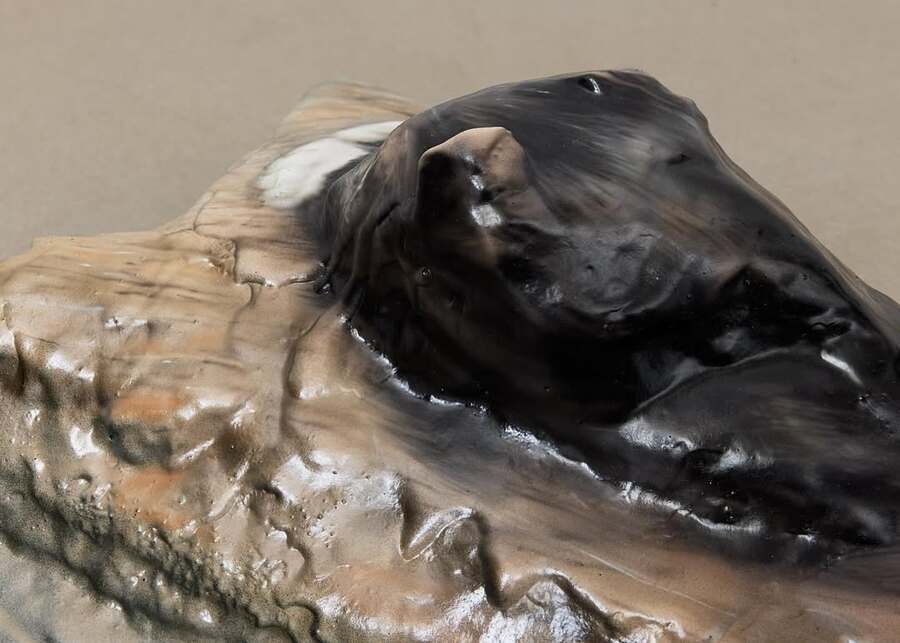
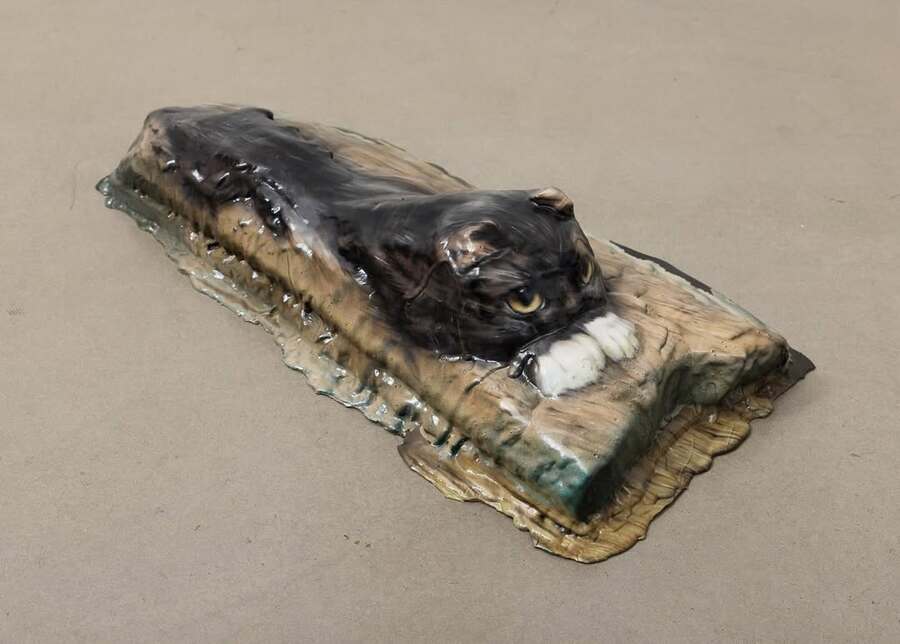
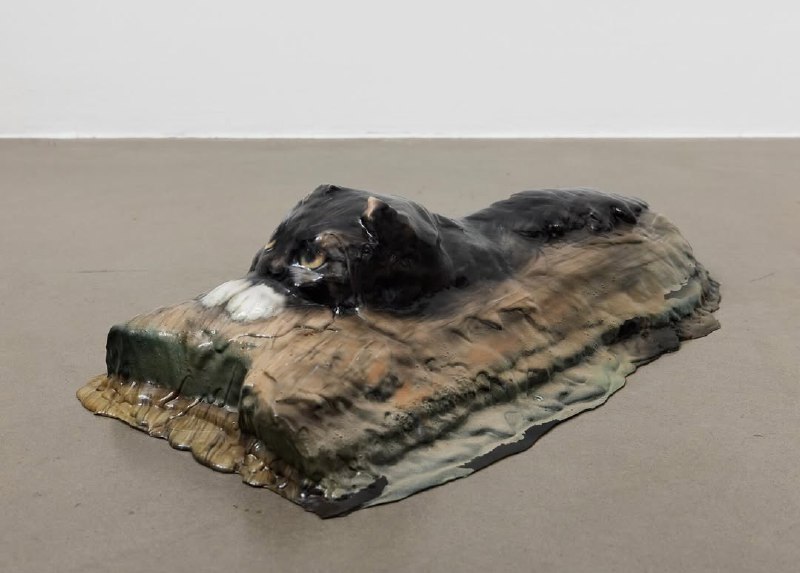
Taewon Ahn, «Mako is Out of Control, ” 2024 Photo taken from the artist’s Instagram account © (banned in the Russian Federation)
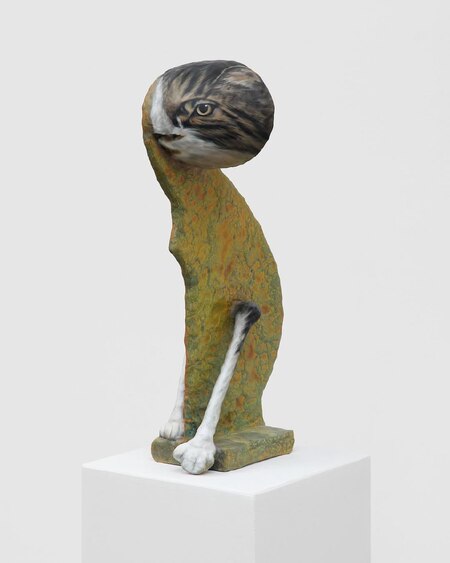
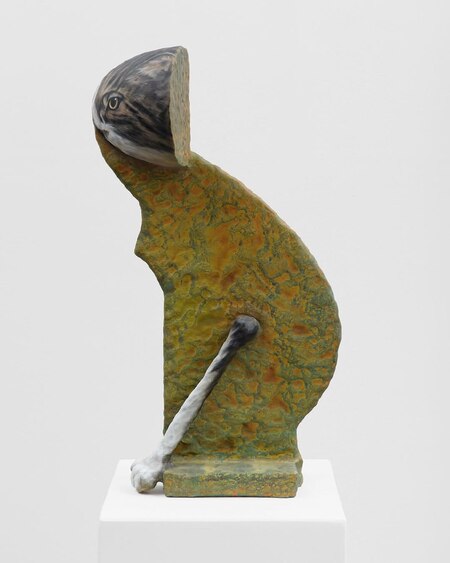
Photo taken from the artist’s Instagram account © (banned in the Russian Federation)
This sculptural style alludes to the aesthetics of digital distortion, underscoring the constructed, mediatized nature of the image. The deformed form recalls reflections in funhouse mirrors, heightening the sense of grotesque and hidden irony.
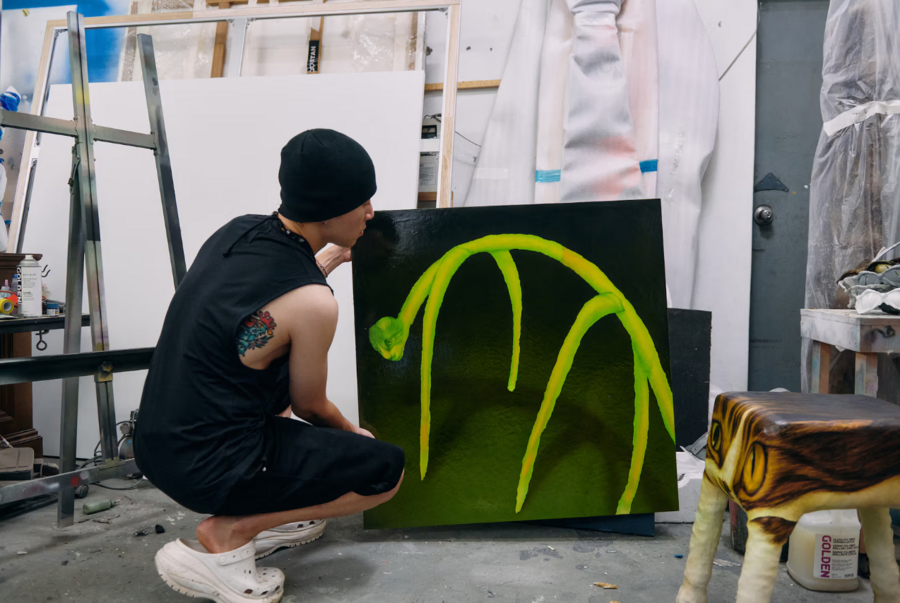
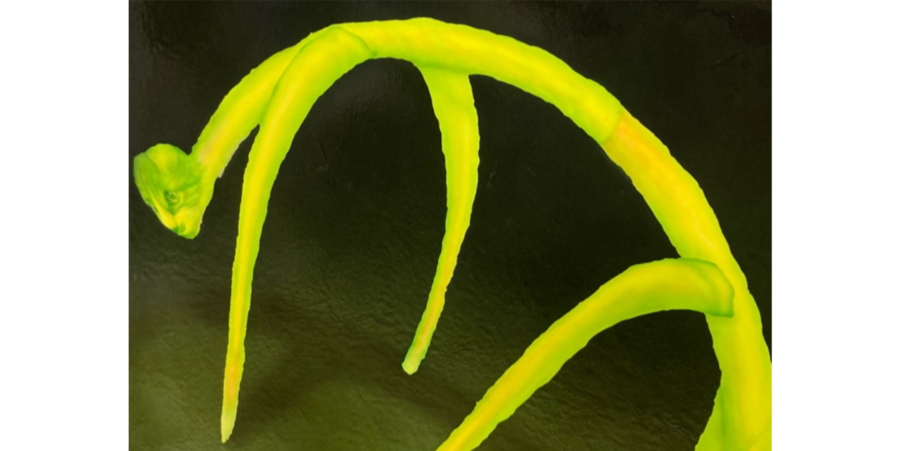
Taewon Ahn, «King of Flexibility,» 2023
Taewon Ahn, «The Ball,» 2023
Taewon Ahn, «Sync, ” 2025