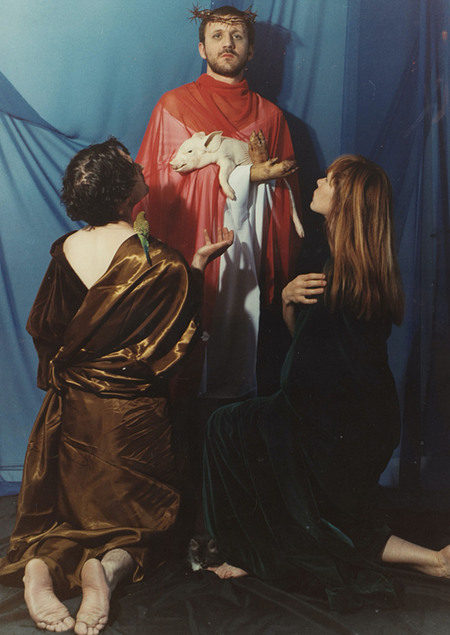
The Christian theme has held a dominant role in the subject matter of artworks for many centuries. The 20th century introduced new discourses and forms of expression to the art world, including actionism. This visual study examines how and in what contexts Russian artists integrated a «young,» provocative medium with established sacred motifs and symbols.
In this study, the definition of an «action» is applied broadly as any act by an artist that does not result in a material outcome: an «action» may also refer to a performance, a happening, or a curatorial decision related to the stated theme.
NB: This research is for educational purposes and is not intended to offend or discredit anyone.
1991–2000: Post-Soviet Liberalization
Following the collapse of the USSR, artists gained the freedom to engage with contemporary art. As the cultural market was just beginning to take shape, actionism became the most sought-after form of expression. In post-Soviet society, there was a sharp increase in interest in religion and mysticism, which naturally became a subject of reflection.
«New Sermon» Event Author: Oleg Kulik Date: September 15, 1994 Location: Danilovsky Market, Moscow
Kulik, wearing a thorny wreath and with hooves instead of hands, walked through the market stalls, climbed up to a high spot used for butchering carcasses, and mooed there for a long time.
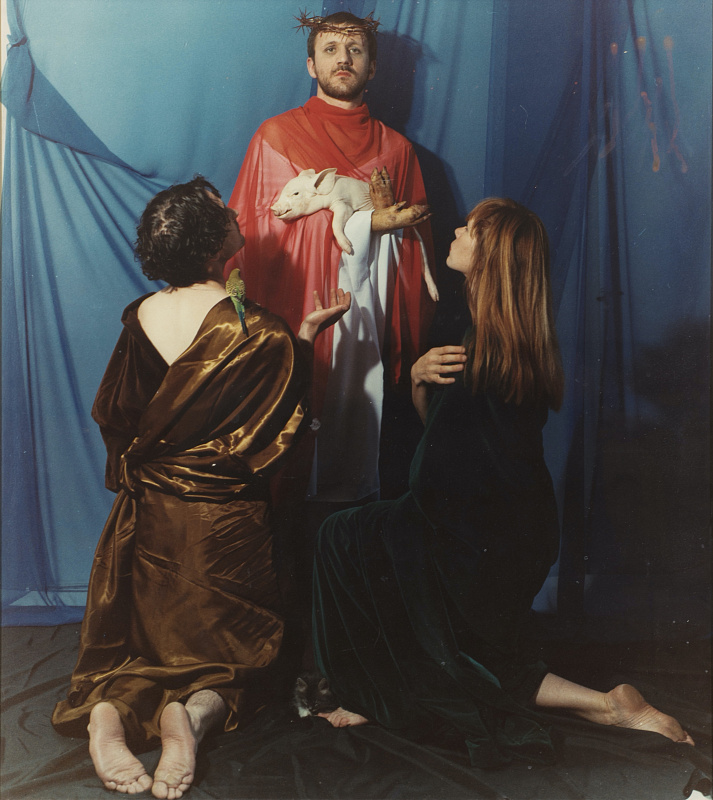
Oleg Kulik, «Untitled,» 1991
Nudity, paradoxical behavior, self-abnegation—all these qualities are inherent to Oleg Kulik. The artist’s visual language strongly aligns with an important figure in Russian Orthodox culture—the holy fool. Concerning the Palestinian monk Simeon, it is mentioned: «…honest Simeon, upon seeing a dead dog lying before the city walls, took off his rope belt, tied it to the dog’s paw, and ran, dragging the dog behind him, entering the city through the gates near the school.» Kulik performs a similar act, but within the consumerist space of the marketplace.
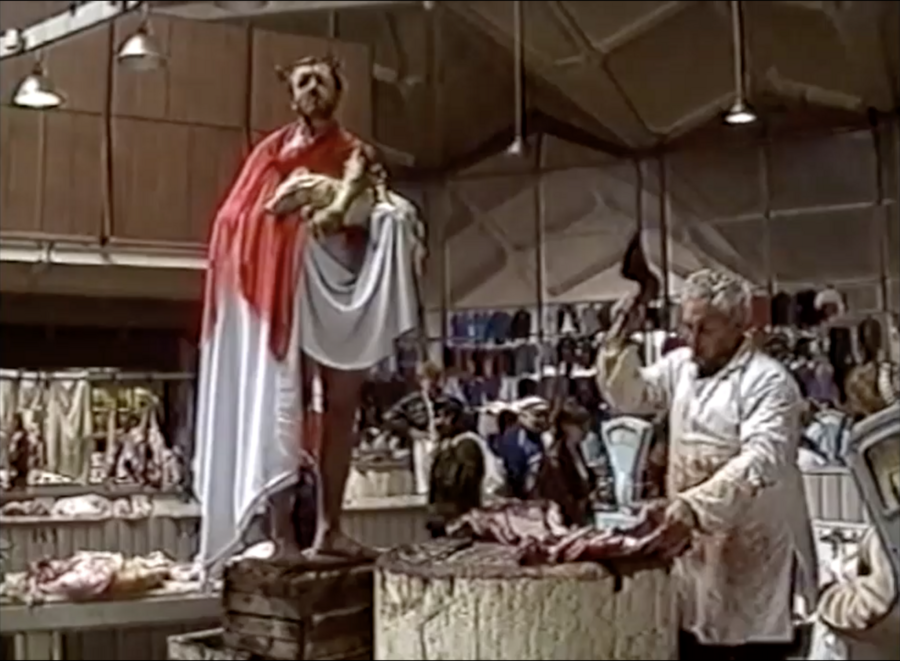
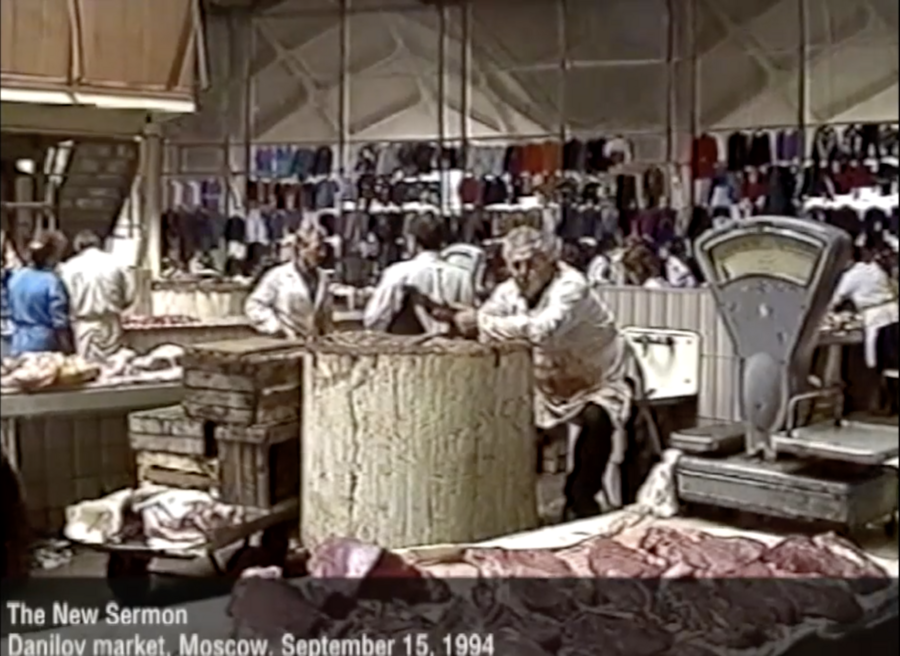
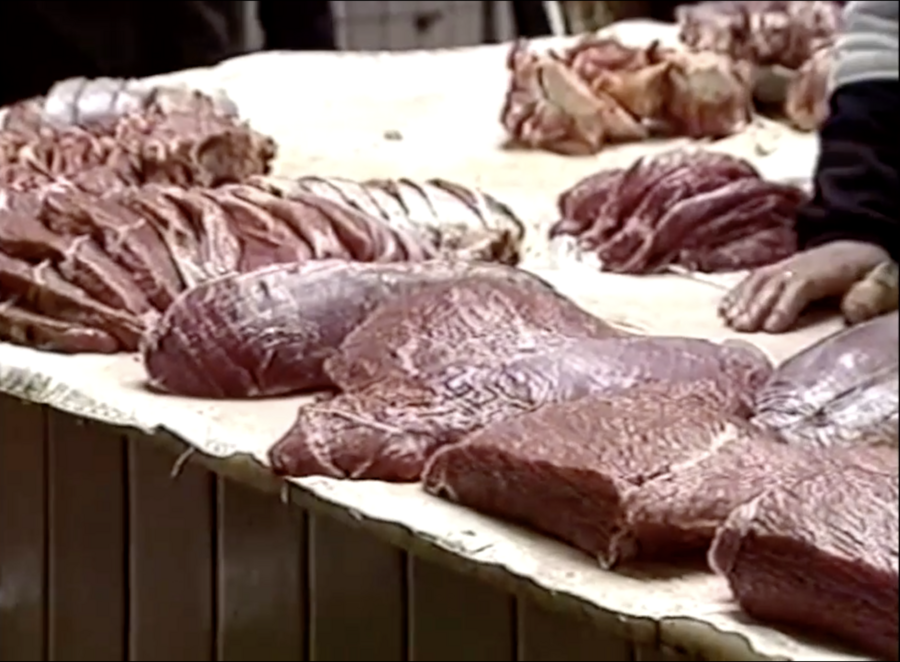
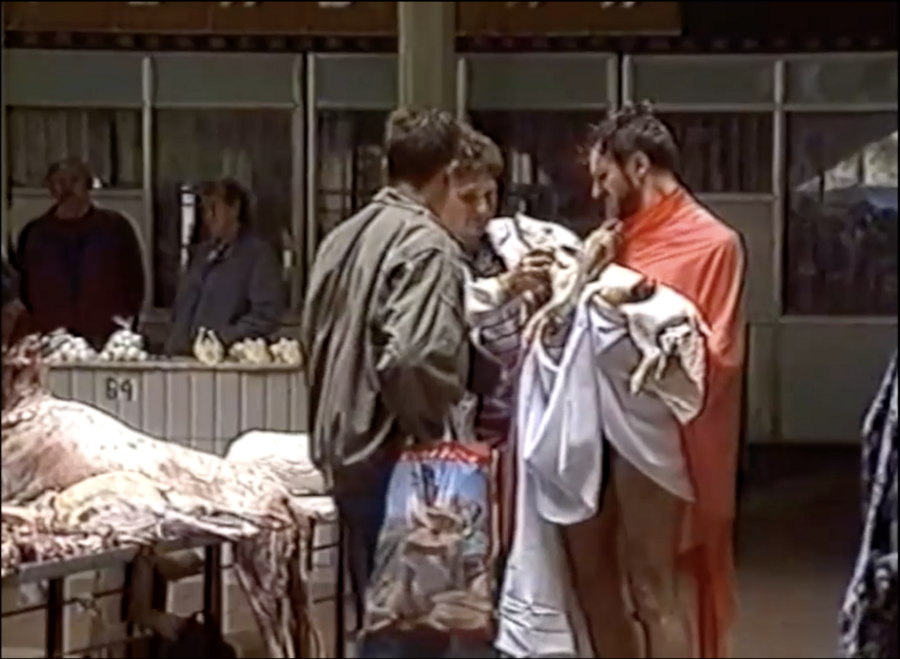
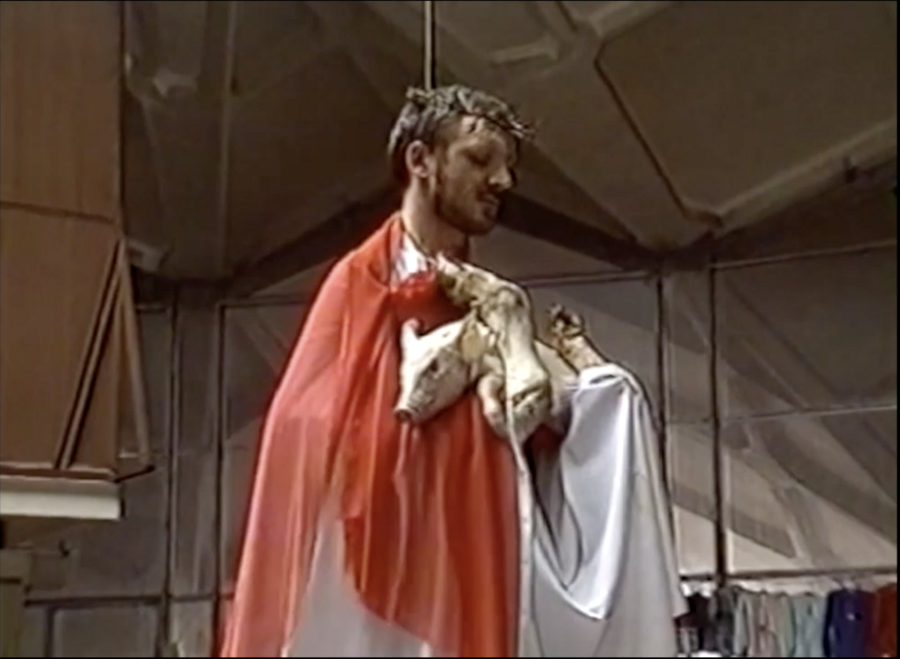
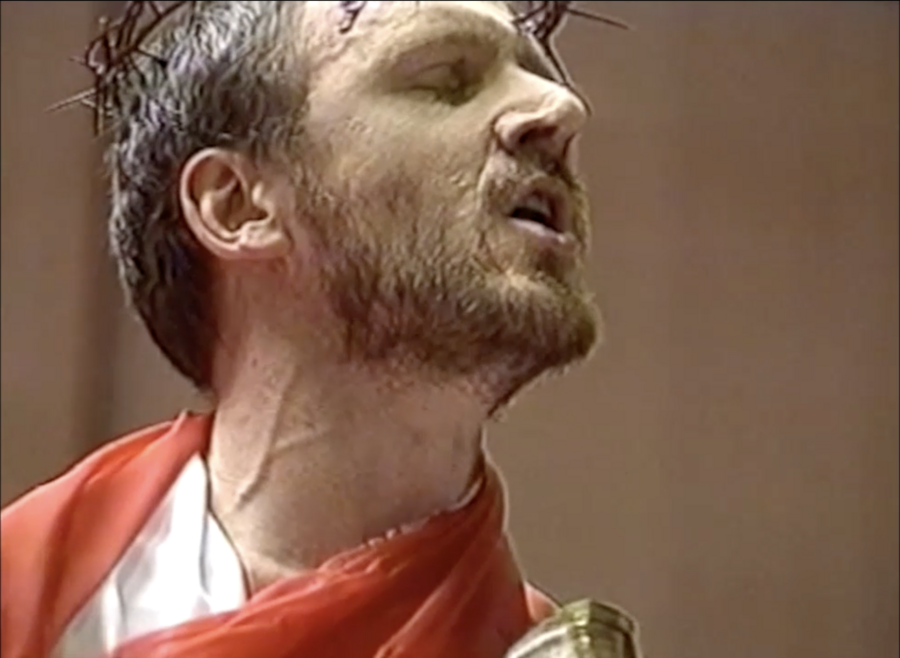
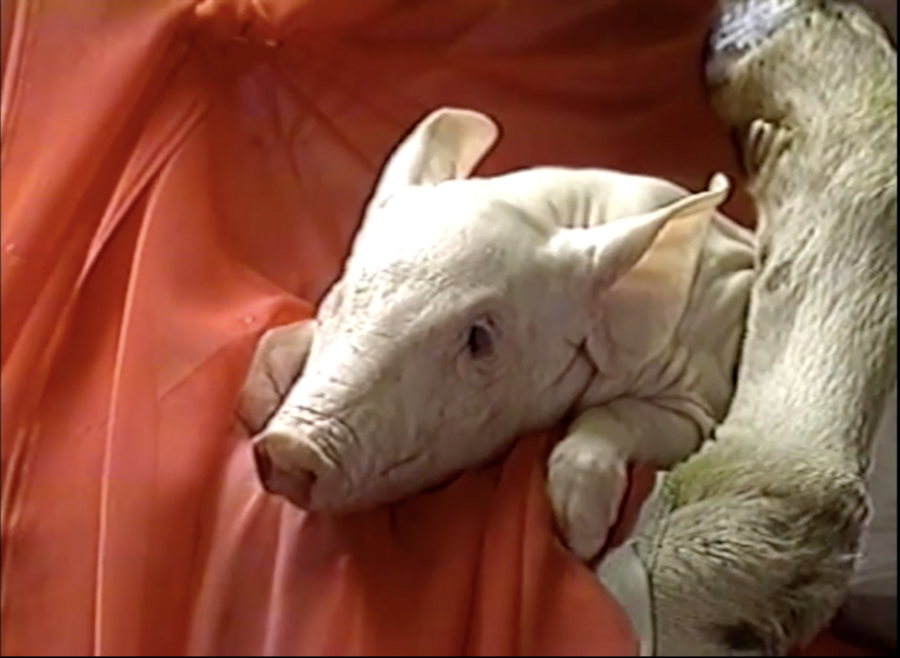
Oleg Kulik, «New Sermon,» 1994
«Missionary» Action Author: Oleg Kulik Date: October 30, 1995 Location: Moscow, Peschannaya Street
For half an hour, Kulik spent time in a glass aquarium filled with icy water and live carp, giving them sermons. After the action, the carp were returned to the store.
Oleg Kulik, «Missionary,» 1995
This time, Kulik once again embodies the image of the Christian ascetic ideal—St. Francis of Assisi, who once preached to the birds. Despite the provocative language, the artist set out to address one of Christianity’s fundamental missions: the cessation of violence and the redemption of humanity’s sins.
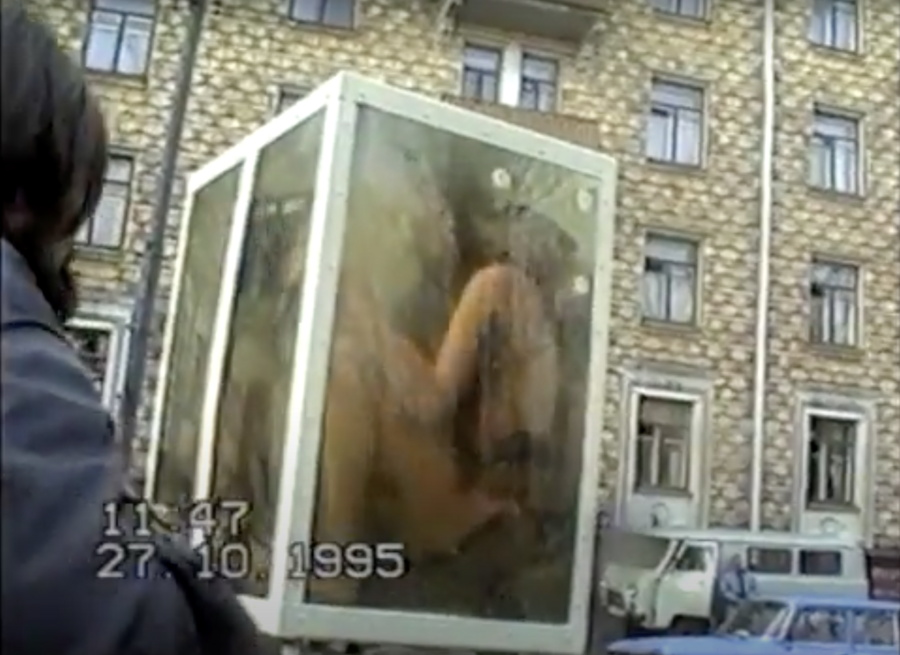
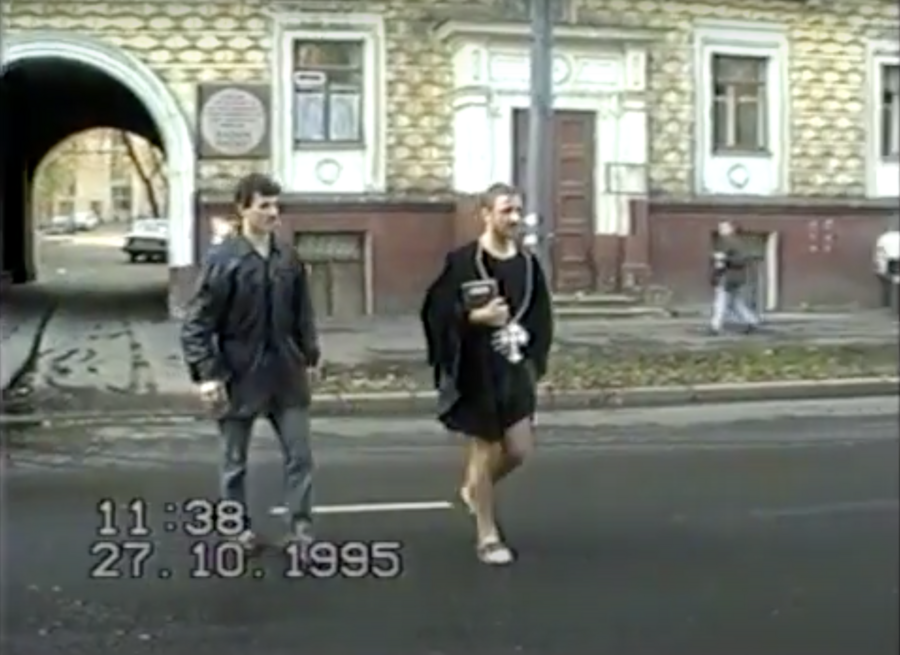
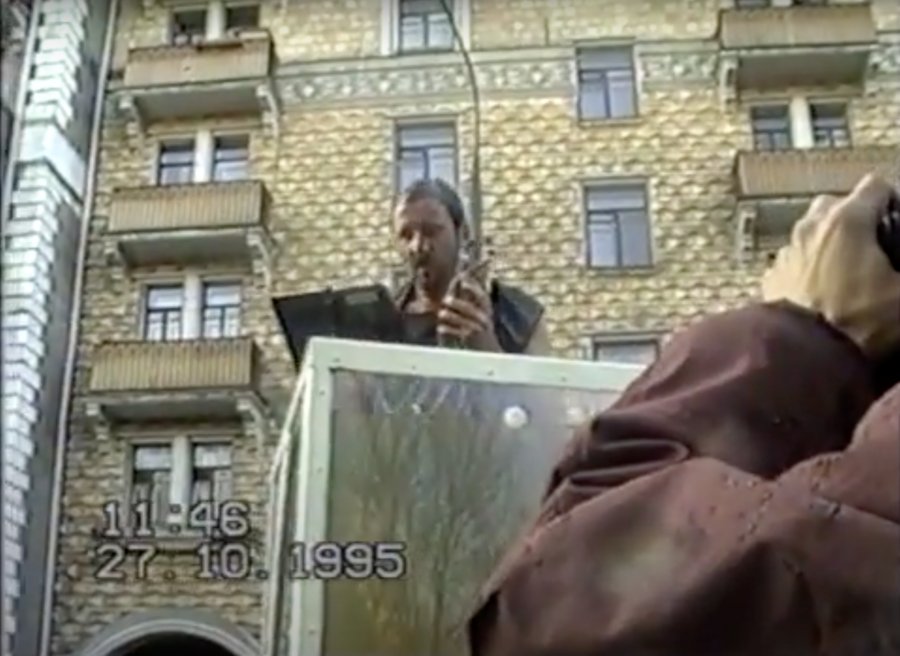
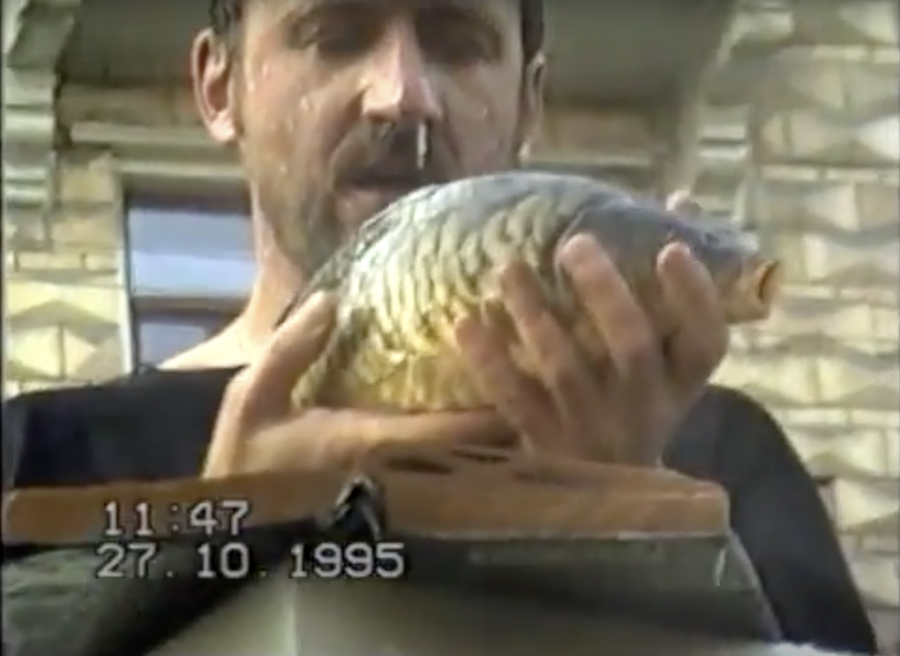
Oleg Kulik, «Missionary, ” 1995
Action «Chechnya!» Author: Alexander Brener Date: February 11, 1995 Location: Moscow, Bogoyavlensky Cathedral
Brener ran to the altar during the service and began to shout, «Chechnya! Chechnya!» He was distributing flyers stating that, as a citizen of Israel, he was taking responsibility for all the sins of Russia.
Invading sacred space, the artist draws attention to political issues, anticipating the louder action of «Pussy Riot.»
Alexander Brener, left to right: «Chechnya!», «Yeltsin, Get Out!», 1995
«The Funny and Sad Adventures of the Foolish Pastor» Author: Vadim Zakharov Date: 1996–1998 Location: Russia, Germany, Spain, Japan, Crimea
Vadim Zakharov travels across continents in a pastoral robe, commits follies, and documents every event as a separate «adventure.»
Vadim Zakharov, «Funny and Sad Adventures of the Silly Shepherd, ” 1996–1998
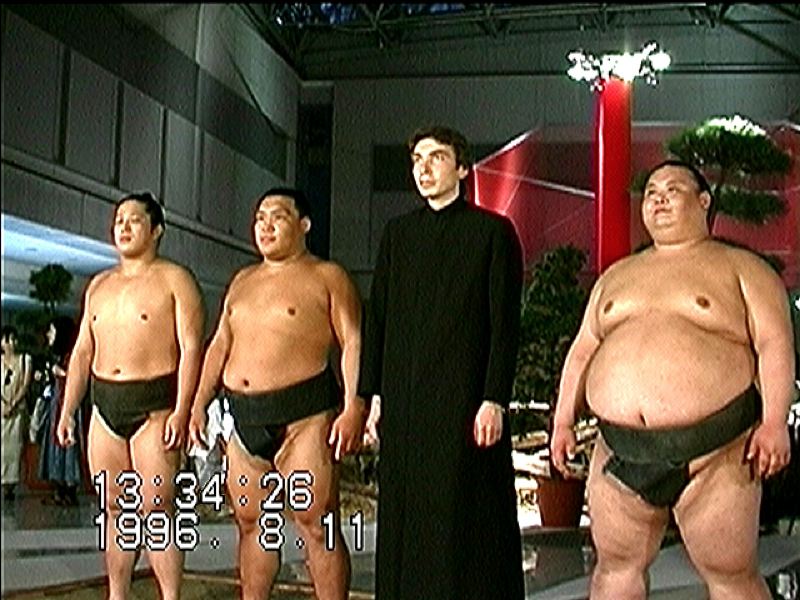
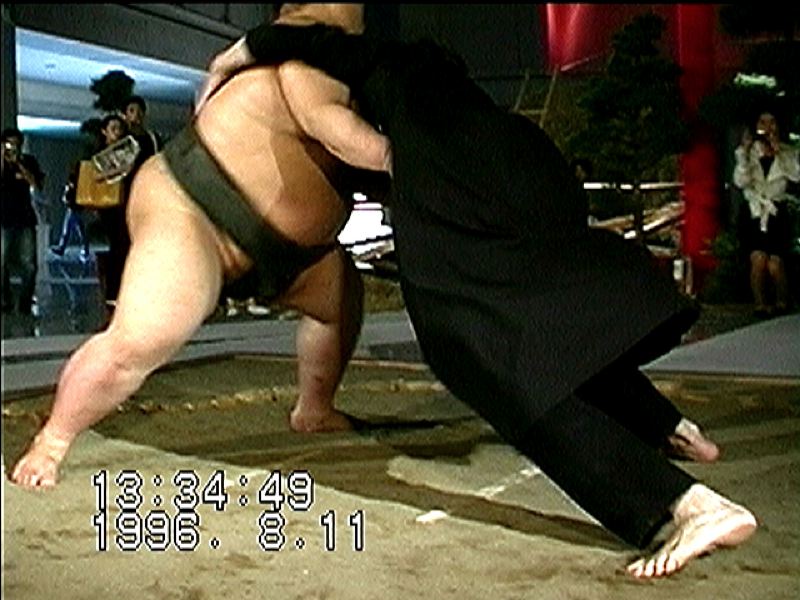
Vadim Zakharov, «The Funny and Sad Adventures of the Foolish Pastor. Adventure No. 7. Theological Conversations. Tokyo, ” 1996
«Young Atheist» Campaign Author: Avdey Ter-Oganyan Date: December 1998 Location: Moscow, Manege Exhibition Center, School of Avant-Garde
At the exhibition featuring Ter-Oganyan’s icons, he offered viewers the option to commission the defilement of an icon for 50 rubles.
political persecution Vasily the Blessed also mocked sacred things
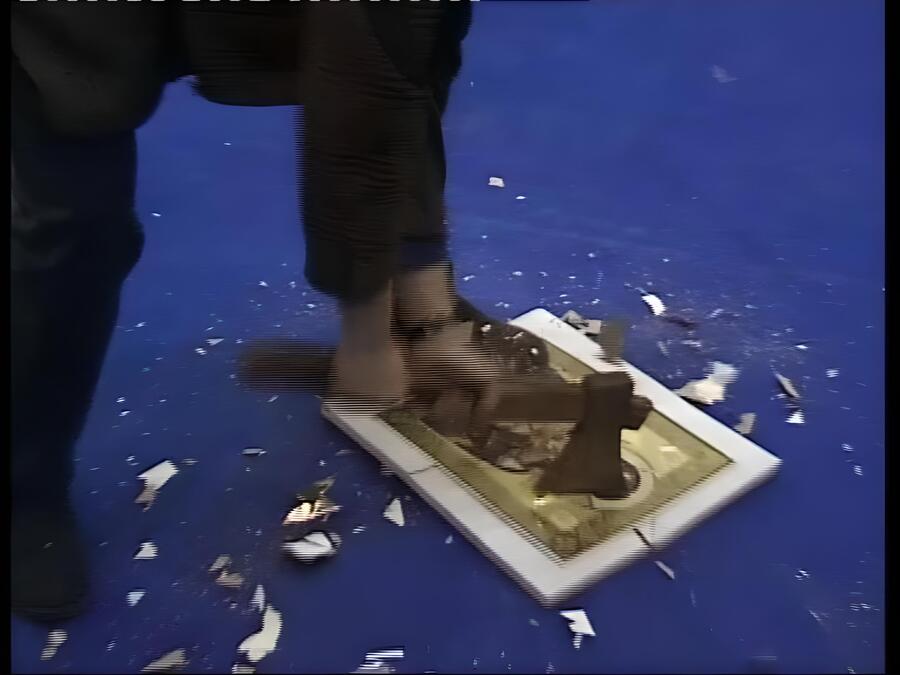
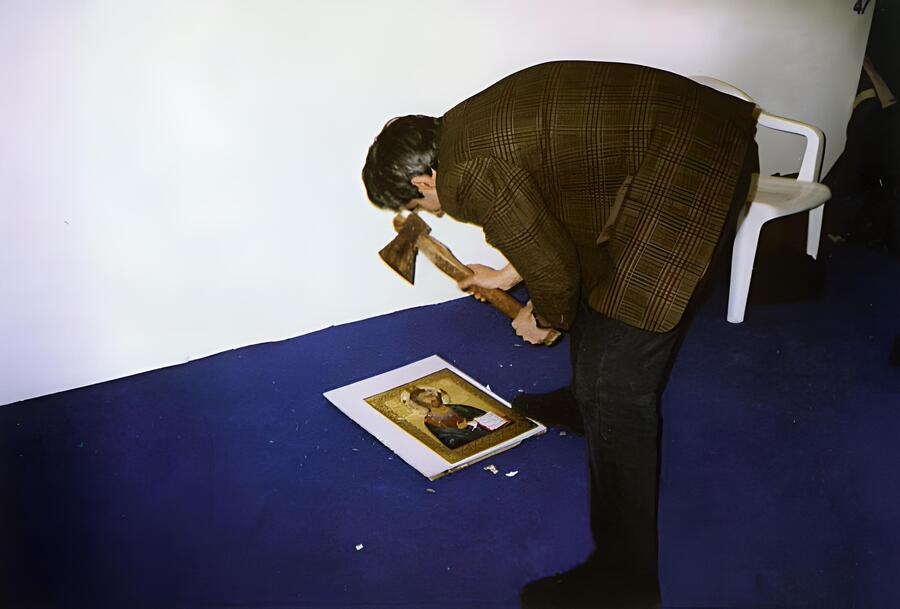
Avdey Ter-Oganyan, «The Young Atheist,» 1998
«New Madmen» Event Artists: «Blue Noses» art group Date: November 1999 Location: Moscow
For the exhibition «New Madmen, or the Pathology of Performance» at the Zverevsky Center, participants undressed to portray madmen against the backdrop of all Moscow’s churches.
«Blue Noses» Group, «New Holy Fools,» 1999
«Don’t Believe Your Eyes» Action Author: Oleg Mavromatti Date: April 1, 2000 Location: Moscow, Institute of Culturology grounds
Mavromatti, bearing a pre-cut inscription on his back reading «I am not the son of God, ” was crucified on a T-shaped structure against the backdrop of the Saint Nicholas Church in Bersenyevka.
The impetus for this performance stemmed from three points:
- The attempt to create an ideal liminal event-situation.
- Reflections on pain as an aesthetic category, and consequently, the impossibility of quoting it.
- The search for a gesture that equally combines the profane and the sacred. The crucifixion itself was intentionally staged on the boundary—the fence separating the profane (secular) Institute of Culturology and the sacred St. Nicholas Church on Bersenyevka. The date of the performance—April 1st—was also chosen intentionally as a liminal date (April Fools' Day/the start of the penitential week). All of this presented itself to the author as an opportunity—through a boundary-crossing, superlative gesture—to physically connect art, which had lost faith, with religion, which had lost intellect and craftsmanship.
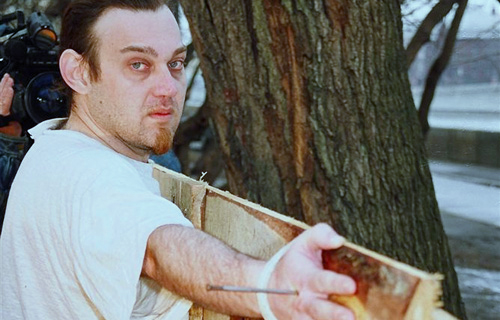
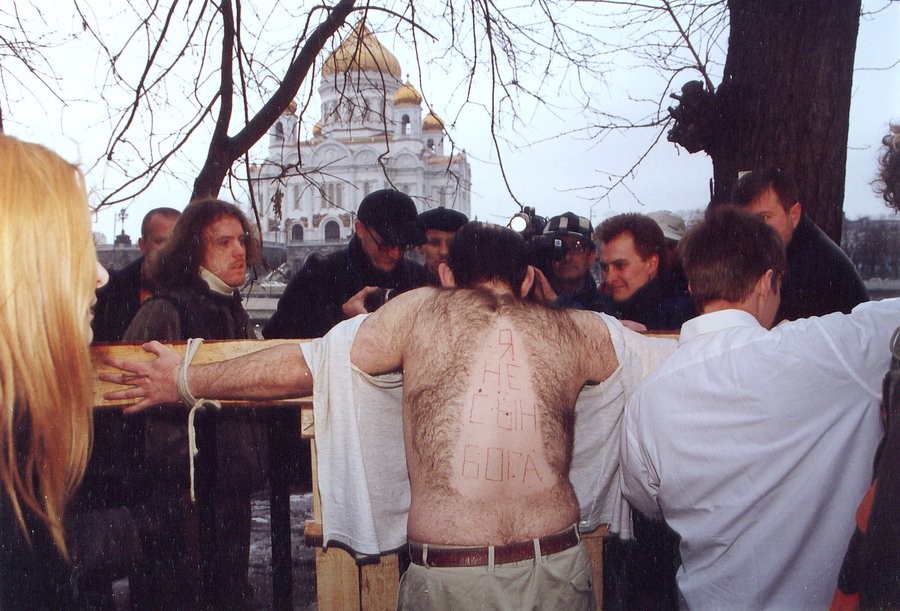
Oleg Mavromatti, «Don’t Trust Your Eyes,» 2000
Exhibition «Forbidden Art—2006» Artist: Andrey Erofeev Date: March 7–31, 2007 Location: Moscow, Andrei Sakharov Public Center.
The exhibition featured works that were prohibited from being displayed in Moscow museums and galleries in 2006. The exhibition pieces were shielded from the viewers by a partition and were viewable through small openings in that partition.
The exhibition can be viewed as a curatorial act that incorporates the viewer and raises the issue of interaction between two communities—the artistic and the religious.
«Forbidden Art—2006» Exhibition, curated by Andrey Yerofeev, 2007