Description
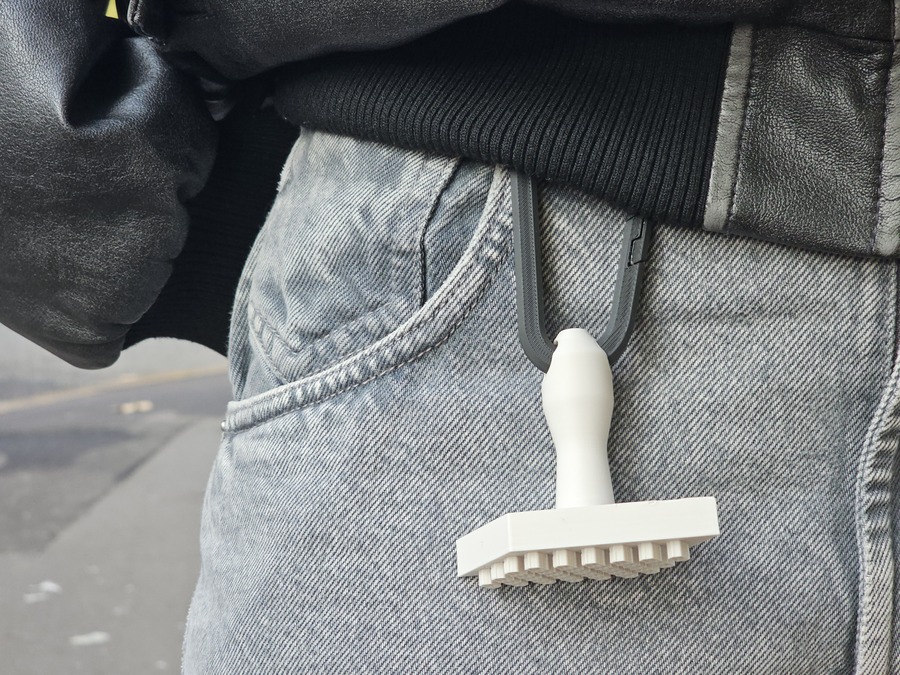
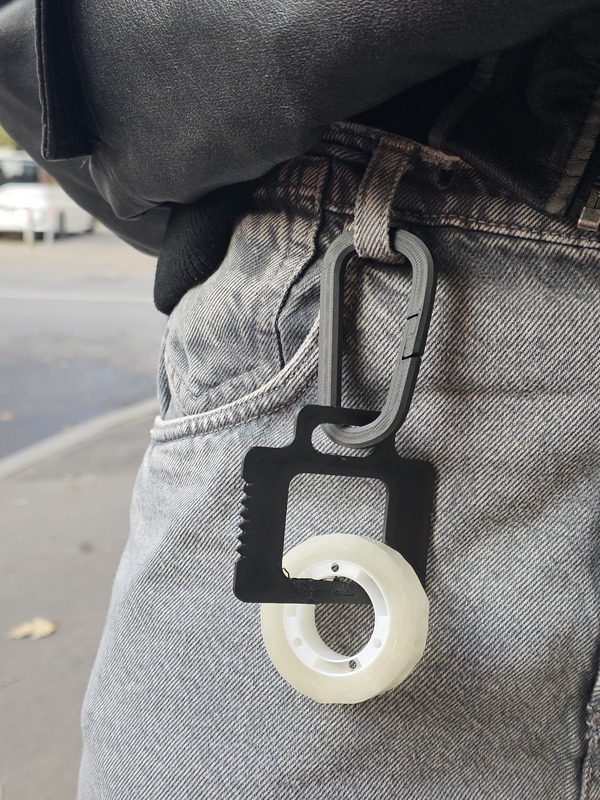
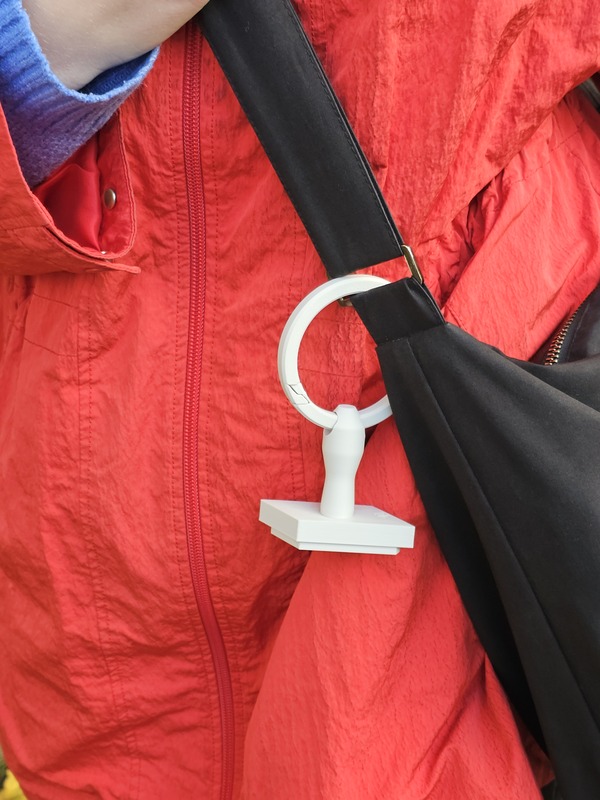
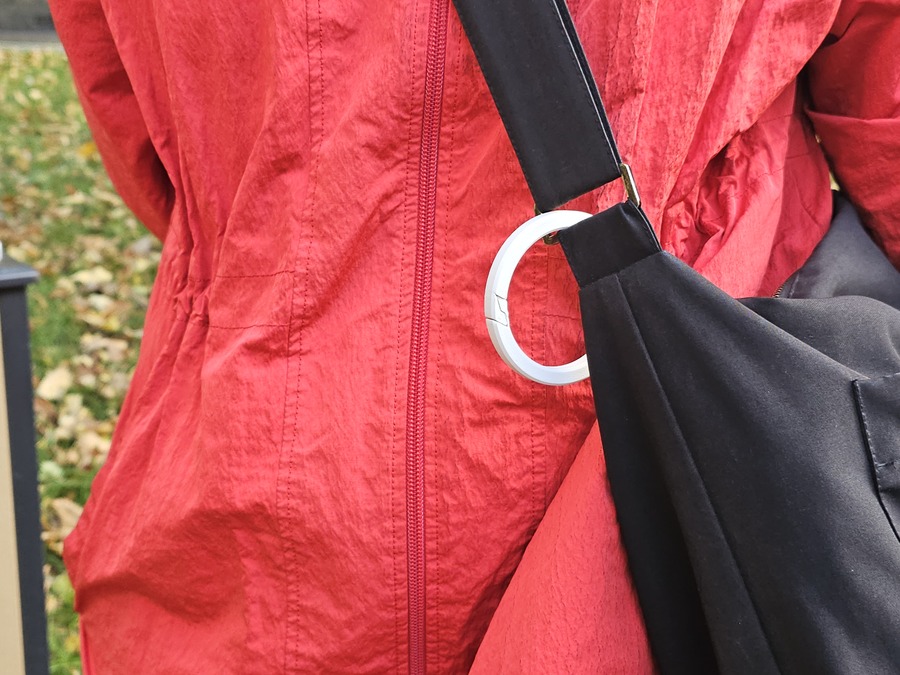
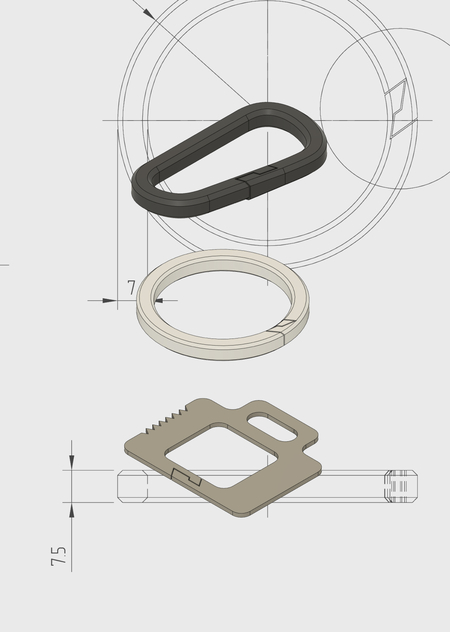
A series of carabiners designed for desk organization and everyday carry. The models are engineered for monolithic printing without complex assembly. Their flat geometry, reinforced with structural ribs, ensures strength under load and prevents delamination.
These items are intended for light domestic use and are not mountaineering gear!

Context
As part of my diploma project, alongside my classmate Nastya Bedina, I am working on creating the visual identity and website for the creative studio W1. Carabiners are the starting point for considering the employees' forms. For us, the factory project is an opportunity within the diploma to explore object design and learn 3D printing techniques.
How It Works?
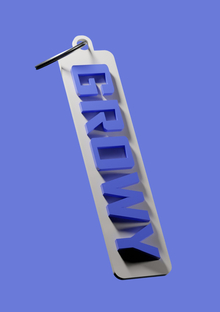
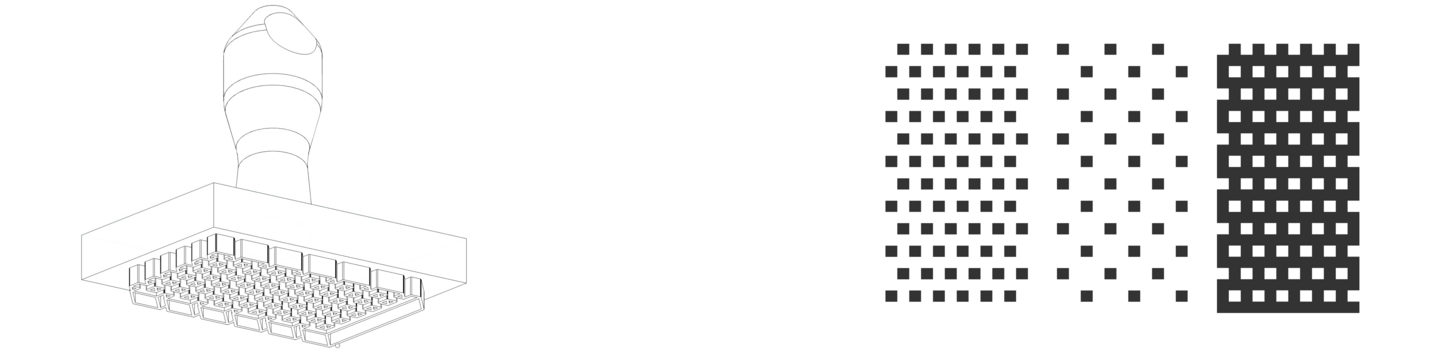
In addition to the carabiners serving as a tool for organizing work on set, we envisioned that they could also function as a literal carrier for branding elements. Nastya is developing custom stamps featuring project graphics that will attach to the carabiners.
Technical Specifications
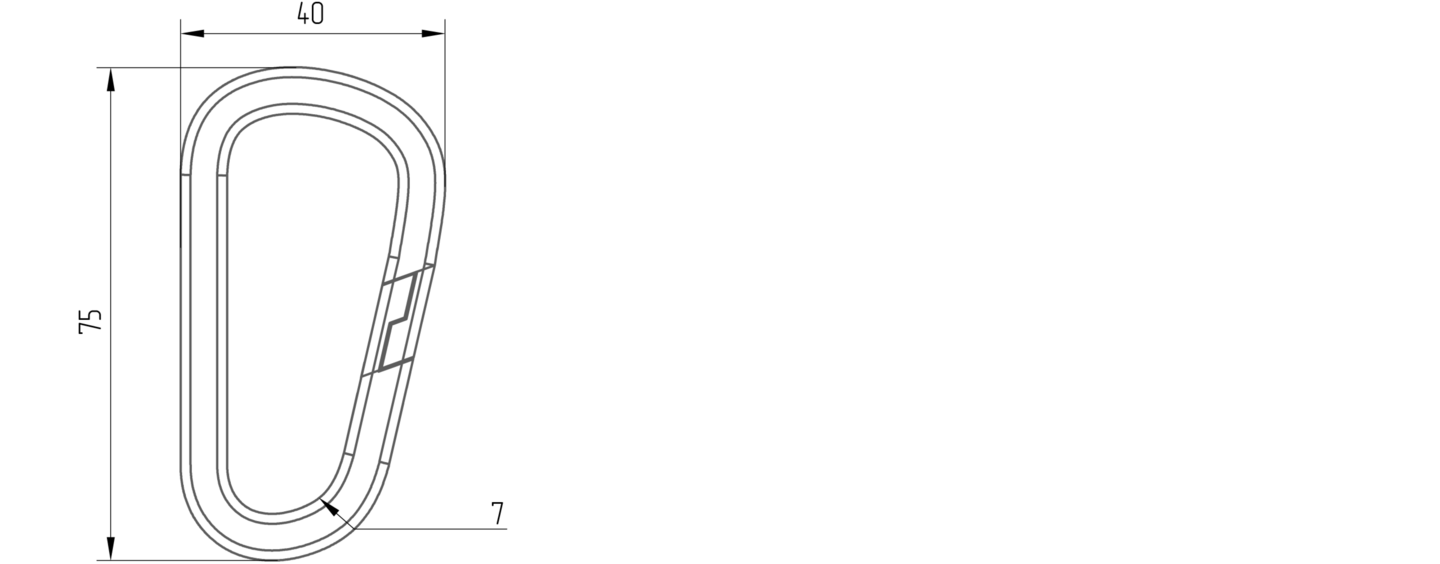
Carabine_v1
Description: classic carbine without a spring-loaded latch (monolithic).
Size: 75×40 mm
Thickness: 7 mm
Latch slot: 0.32 mm
Carabine_v2
Description: solid carabiner ring without a spring-loaded latch (monolithic).
Outer radius: 35 mm
Thickness: 7.5 mm
Latch slot: 0.32 mm
Carabine_v3
Description: Flat body with a serrated edge for tearing tape.
Size: 70×64 mm
Thickness: 2 mm
Radius: R5 mm
Serrated edge: 60° mm
Clasp groove: 0.32 mm
Production
3D printer printing. 1. Model Check and Orientation: In the slicer, position the rifle along the axis of stress, layer by layer, to prevent delamination under tension. 2. Print Settings: Set 4–6 perimeters (walls) and 40–100% infill for strength. 3. Post-processing: Remove supports and clean mounting points. 4. Testing: A durable latch must be designed, and a static load test must be performed.
Material
Nylon
Prototyping and Usage