Concept
Segment: Professional development for emerging specialists in design and visual industries.Niche topic: Accessible career and creative opportunities for students, recent graduates, and early-career professionals.
Half-Year Thematic Plan
Overall Logic
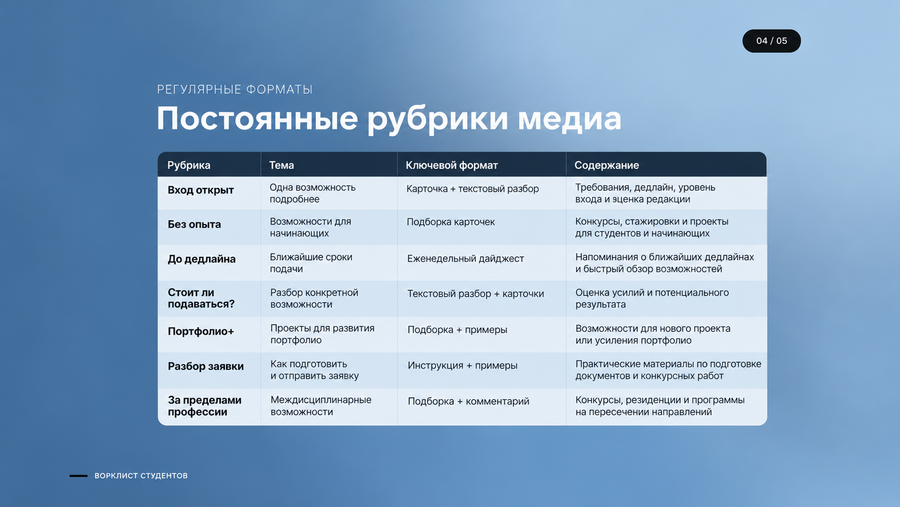
In the initial months, the media introduces students to the system for identifying opportunities and explains how to assess their own skill level. The focus then gradually shifts toward practice: searching for first projects, internships, competitions, and creative programs.In the second half of the semester, more attention is dedicated to preparing applications, refining portfolios, and selecting opportunities aligned with individual professional goals.
Month 1. Introduction to Media and the Selection System
Goals for the First Month
To introduce the audience to the project, explain the principle of editorial selection, and demonstrate how to use the opportunity cards. At this stage, it is important for the user to understand that the platform helps not just in finding opportunities, but also in evaluating them in relation to their own experience.Week 1. Why is the «Student Worklist» necessary? Section: «The Door is Open» Topic: «Why We Decided to Gather Opportunities for Aspiring Designers» Format: Introductory post with a cover image. The publication explains why the project was created and what problem it solves. Using a typical scenario, it is demonstrated why a large volume of listings does not always help a person make a decision.
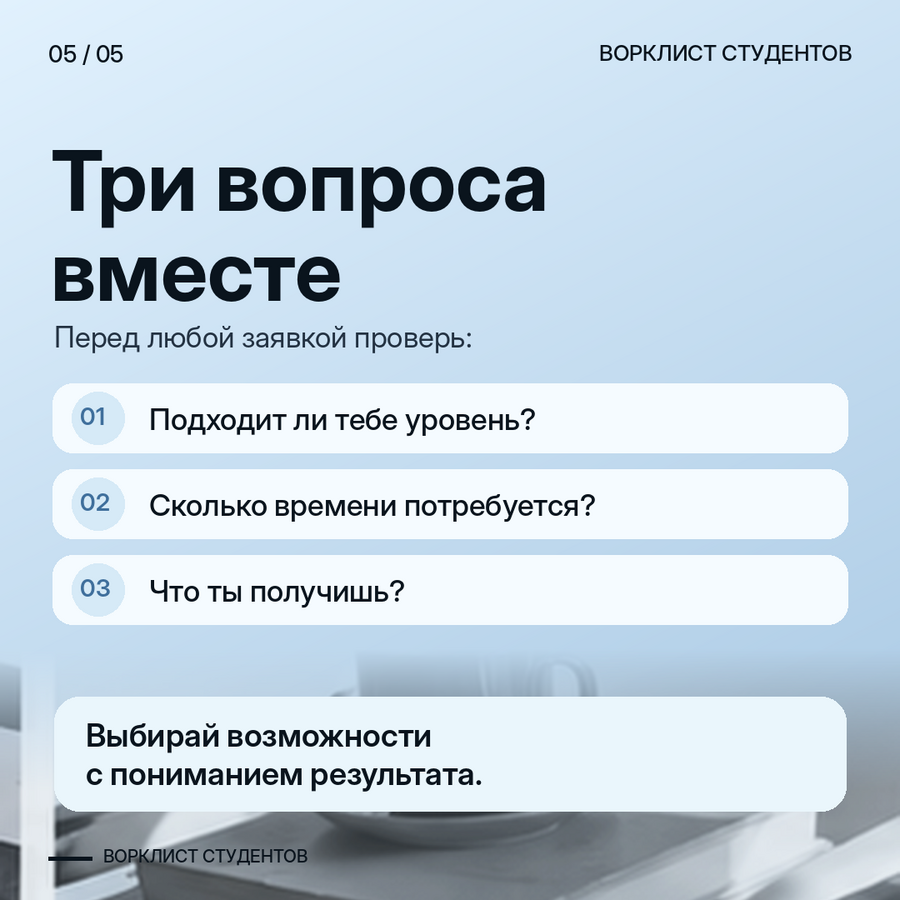
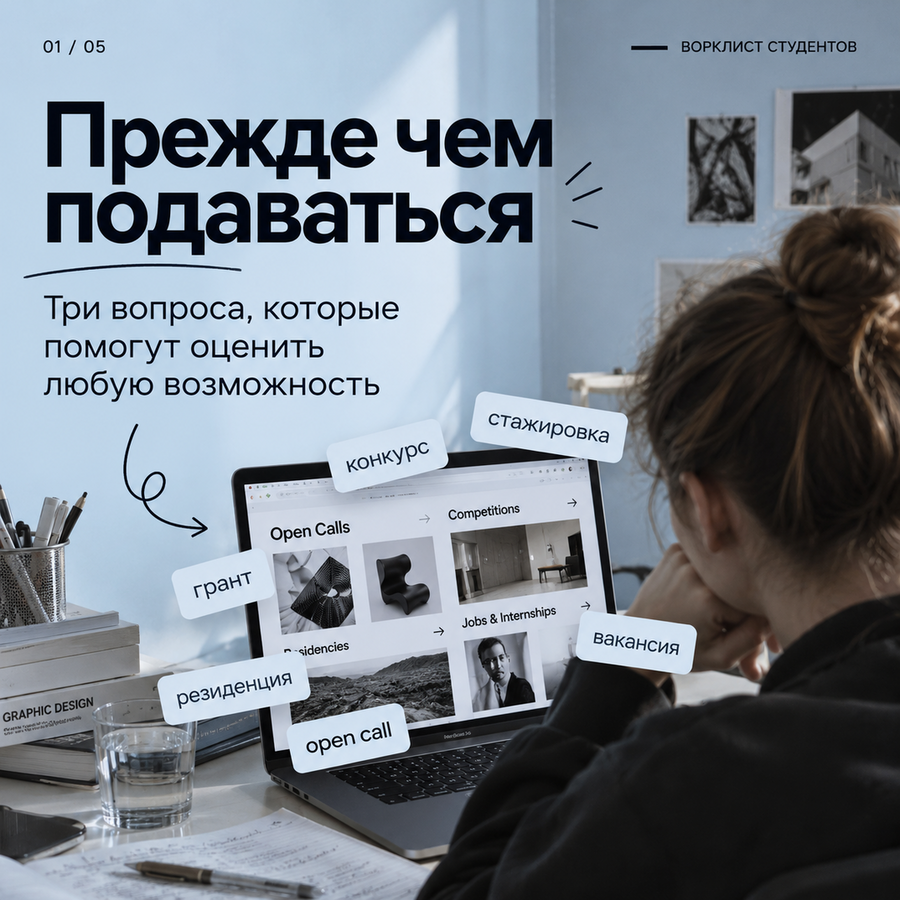
Week 2. How to determine if an opportunity is right for you? Section: «Application Review» Topic: «Three Things to Check Before Applying» Format: A carousel of four cards. This material introduces the audience to the three main criteria of the platform: entry level, application costs, and potential outcome.
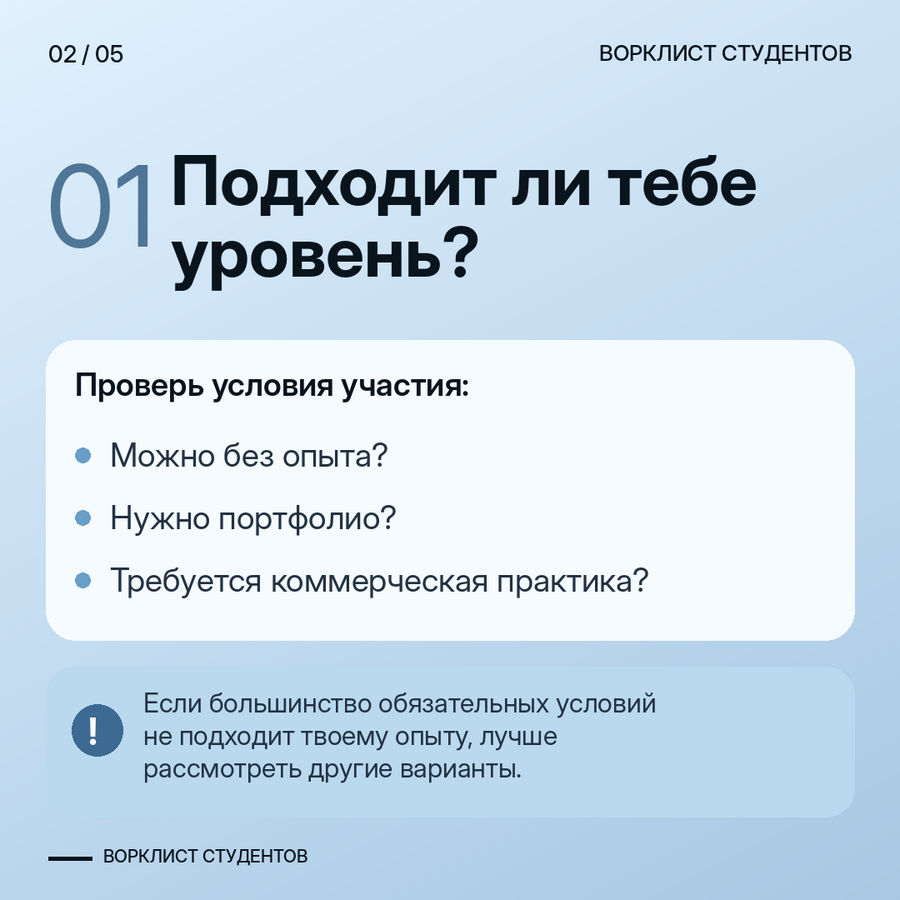
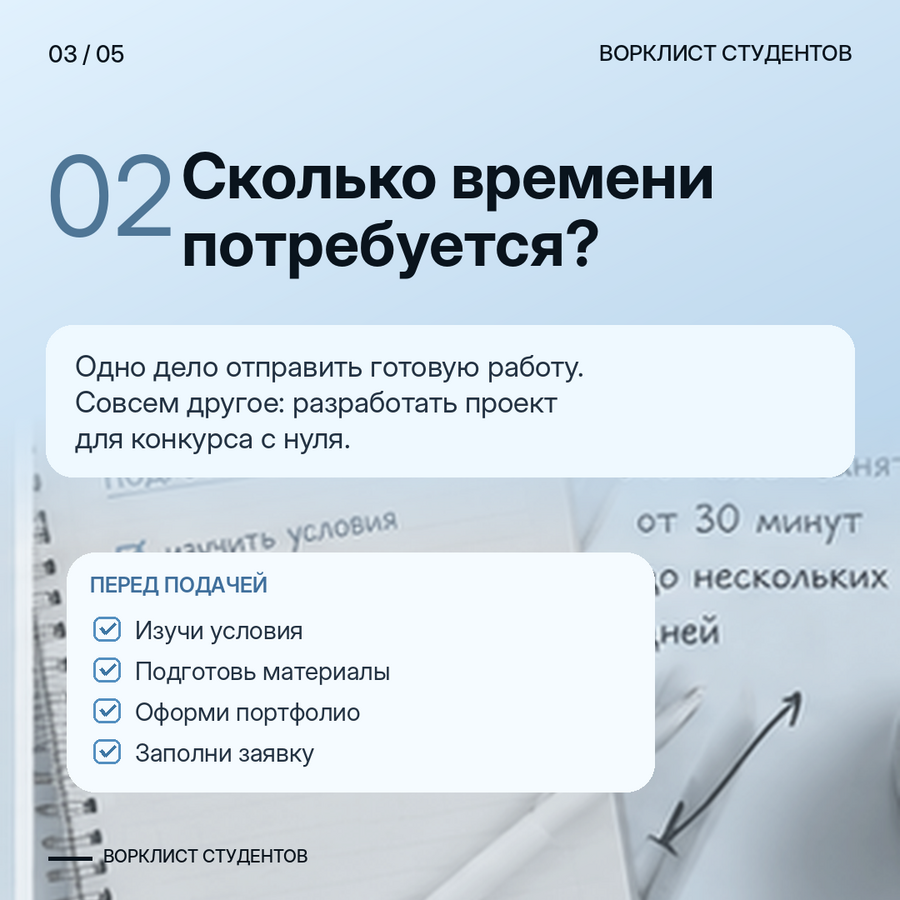
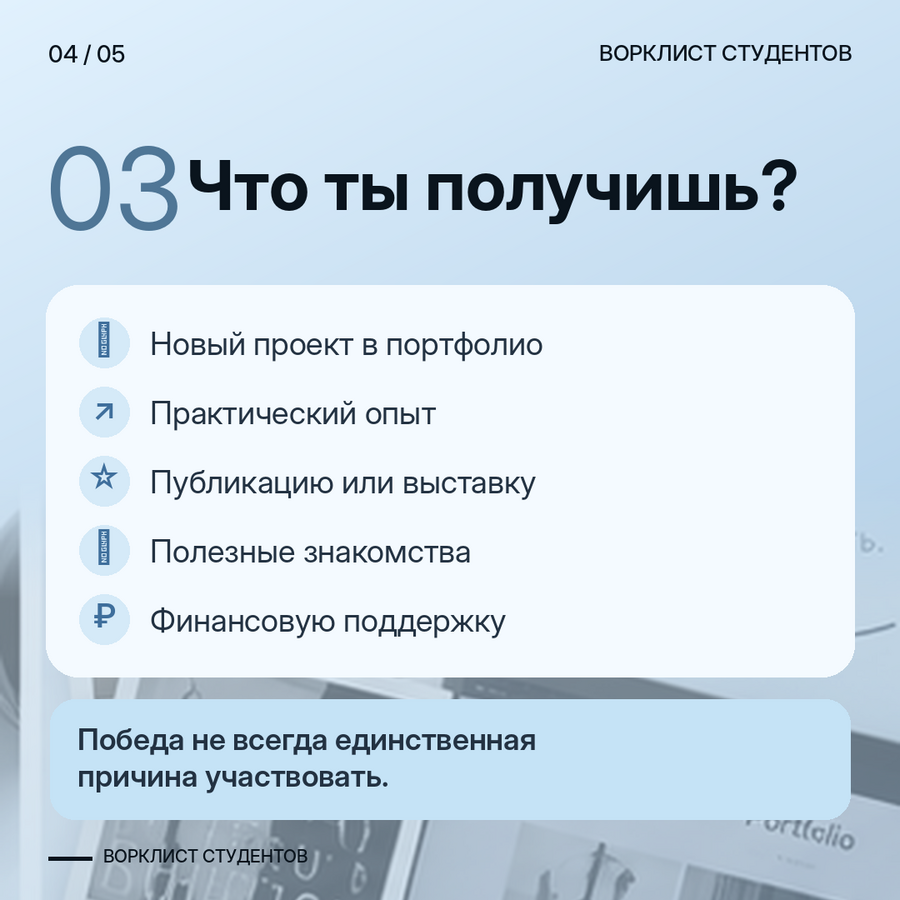
Week 3. Should you wait until you gain experience?
Feature: «No Experience»
Topic: «Where to apply with academic projects»
Format: Informational post with examples of available participation formats.
We explain the difference between competitions that accept finished student work and programs that require developing a new project.Week 4. What does editorial evaluation look like?
Feature: «Is it worth applying?»
Topic: «One competition, three evaluation criteria»
Format: A detailed analysis of a real opportunity.
The editorial team shows how a complex competition entry is condensed into a short, clear card.
Month 2. First Projects and Opportunities Without Experience
Goal for the Second Month
To show students and recent graduates that professional development doesn’t necessarily start with a full-time job.
The first step can be a competition, an open brief, a small project, an internship, or another opportunity that doesn’t require significant commercial experience.
Week 1. Your First Project Outside of University Section: «No Experience» Topic: «Where to find real assignments if you don’t have clients yet» Format: Thematic roundup. We will explain what formats allow you to gain experience with external assignments. We will also separately review contests based on real briefs and student programs.
Week 2. Academic Project as Portfolio Foundation Section: «Portfolio+» Topic: «Can I apply to competitions using academic work?» Format: Carousel with practical advice. We will discuss why academic work itself is not a disadvantage, but how important it is to carefully read the contest guidelines and present your results correctly.
Week 3. Small competition or large project? Feature: «Is it worth applying?» Topic: «When participation is genuinely beneficial for a portfolio» Format: comparative post. We compare two typical scenarios: a short application with a finished piece versus a competition requiring a project developed from scratch. We show how to consider not only the potential prize but also the time commitment.
Week 4. Opportunities for the first step Feature: «No Experience» Topic: «A selection of opportunities for those with limited experience» Format: weekly digest. The editorial team selects several relevant opportunities with clear conditions for beginning professionals.
Monthly summary: Students gain an understanding of how to search for their first external project and select opportunities that match their current skill level.
Month 3. Internships and First Career Steps
Third Month Goals
Transitioning from creative competitions to career-launch opportunities. The primary focus is on internships, junior positions, and employer expectations.Week 1. How to read junior job postings? Category: «Application Review» Topic: «Which requirements are truly important when searching for a first job» Format: A post analyzing a typical job listing. We explain how to distinguish between mandatory and desired skills, and why the title «junior» doesn’t always mean a lack of experience requirements. Visual: A snippet of a hypothetical job posting with highlighted requirements and explanations.
Week 2. Internship or first job? Category: «Should I Apply?» Topic: «What to choose if you want to gain professional experience» Format: Comparative carousel. We examine the differences between an internship and a junior role in terms of tasks, requirements, working conditions, and future development opportunities.
Week 3. What to write to an employer? Category: «Application Review» Topic: «The first response without a long personal narrative» Format: A guide featuring an example of a concise cover letter. This material helps students understand how to present their skills and articulate interest in a specific role.
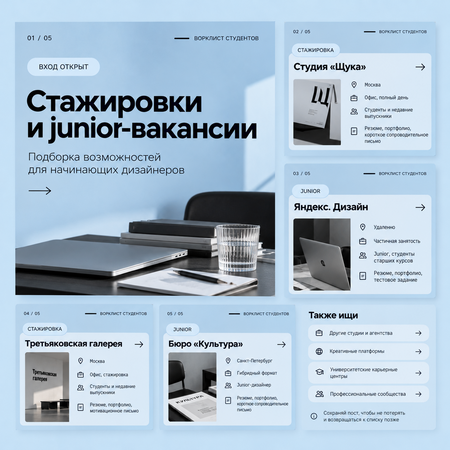
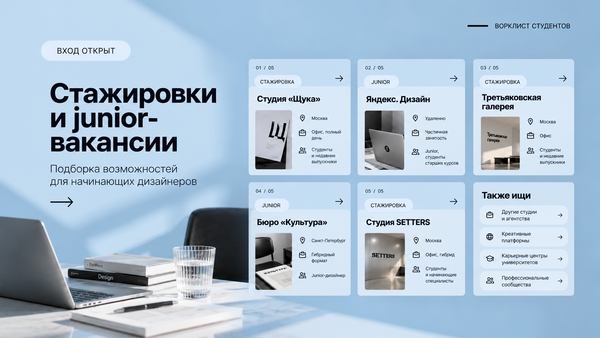
Week 4. Where should a novice designer look for work? Category: «The Door is Open» Topic: «A collection of internships and junior positions» Format: A digest of current openings. For each position, the main requirements, work format, and necessary materials for applying are provided.
Month Summary: Readers will gain a better understanding of entry-level career requirements and acquire the tools needed to find their first internship or job.
Month 4. Competitions, Grants, and Creative Programs
Objective for the Fourth Month
To broaden the audience’s understanding of professional development and showcase alternative ways to gain experience and recognition.Week 1. What is an open call? Section: «Application Review» Topic: «How Open Calls for Creative Artists Work» Format: Explanatory Post. We will break down how an open call differs from a regular competition, what materials might be needed, and what to look out for in the guidelines.
Week 2. Grants for Emerging Artists Section: «Open Enrollment» Topic: «What to Look For in a Grant Program» Format: Carousel. We explain why it’s important not only to consider the funding amount but also the requirements for the project, budget, reporting, and outcomes.
Week 3. Art Residencies Section: «Beyond the Profession» Topic: «What Participation in a Residency Offers an Artist» Format: Informational Post. We discuss the various types of residencies available and why applicants must verify accommodation, funding, timelines, and expected results before applying.
Week 4. How to Evaluate a Competition Before Applying Section: «Should I Apply?» Topic: «Five Questions to Ask Before Submitting a Project» Format: Checklist. Special attention is given to paid competitions, copyrights, terms of use for the work, and the balance between costs and potential benefits.
Month Summary: The audience will learn about opportunities outside of traditional employment and how to evaluate creative program terms.

Month 5. Preparing applications without extra errors

Goal for the Fifth Month
To help students transition from merely viewing opportunities to taking concrete action. The focus will be on document preparation, work organization, and the errors that can cause even a suitable opportunity to be missed.Week 1. Portfolio for Application Section: «Application Breakdown» Topic: «What to include in your portfolio when you have limited work» Format: Step-by-step guide. We will explain how to select relevant projects and present them so the organizer clearly understands the author’s skills.
Week 2. Motivation Letter Section: «Application Breakdown» Topic: «How to explain why you want to participate» Format: Post with a text example. We will show how to connect your personal experience, interest in the program, and expected outcomes without resorting to generic phrases.
Week 3. How to Avoid Missing the Deadline? Section: «Before the Deadline» Topic: «Why it’s better to prepare your application in advance» Format: Short video and checklist. We will explain how to allocate time for reviewing requirements, preparing materials, and technical verification.
Week 4. Final Application Review Section: «Application Breakdown» Topic: «What to check before clicking 'Submit'» Format: Seven-point checklist. This material covers common mistakes: incorrect file formats, missing documents, broken links, and failing to meet requirements.
Monthly Outcome: Students will gain a practical toolkit that helps them prepare applications more confidently and avoid common errors.
Month 6. Conscious Choice and Further Development
Goal for the Sixth Month
To integrate the themes from previous months and demonstrate how to leverage opportunities to build one’s own professional trajectory.At this stage, the media shifts toward more conscious decision-making. The focus moves from the sheer number of applications sent to understanding why a specific experience is necessary for an individual.Week 1. Opportunities Beyond SpecializationCategory: «Beyond the Profession»
Topic: «Where a Designer’s Skills Can Be Unexpectedly Useful»
Format: Thematic Collection.
We will explore interdisciplinary projects where designers, illustrators, 3D specialists, and new media creators can participate.Week 2. How to Choose Opportunities Aligned with Your Goals?
Category: «Should I Apply?»
Topic: «One Opportunity Can Benefit One Specialist While Being Useless to Another»
Format: Comparative Carousel.
Using various career scenarios, we explain why a competition featuring an exhibition might be more valuable to one creator than a paid project, yet unsuitable for another.Week 3. What to Do After Participating?
Category: «Portfolio+»
Topic: «How to Transform a Competition Project into a Full Case Study»
Format: Practical Post.
We break down how to describe the task, showcase the development process, articulate your personal role, and present the result in your portfolio.Week 4. Opportunities for the Next Month
Category: «Before the Deadline»
Topic: «Choosing the Next Professional Step»
Format: Final Collection with an Interactive Poll.
The audience is invited to select the most relevant goal: a first case study, an internship, a job, a competition, or a creative program.
The poll results can be used to prepare the next thematic period.Monthly Summary: The audience gains insight into how to connect individual competitions, internships, and projects with long-term professional aspirations.
Thematic Plan Summary
Over a period of six months, the topics progress sequentially from exploring the landscape of opportunities to preparing actual applications and choosing a future development path. Each month has its own specific objective, yet it does not exist in isolation from the others.
In the first month, the user learns how to evaluate opportunities. In the second, they become familiar with formats for gaining initial experience. The third month examines internships and employment. The fourth introduces contests and creative programs. The fifth provides practical instructions for submitting applications. The sixth focuses on aligning various opportunities with personal professional goals.
Thus, the thematic plan is not limited to periodic compilations. It forms a cohesive system of resources that guides the reader from mere information gathering to taking independent action.
Ten Content Samples
For this section, I have prepared 10 posts that could be featured on the «Worklist of Students» Telegram channel. Here, it is important to illustrate how the concept of media itself functions. Therefore, the samples include introductory posts, real competitions, practical tutorials, editorial analyses, a selection of deadlines, and a short video script.
Example 1. Post-Introduction