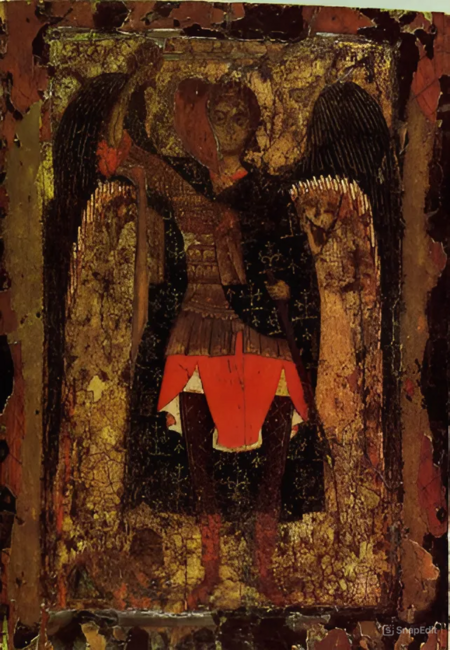
Icon painting of the 10th–17th centuries and the Russian avant-garde.
Navigation
1. Concept 2. Marc Chagall 3. Kazimir Malevich 4. Natalia Goncharova 5. Mikhail Larionov 6. Pavel Filonov 7. Conclusion 8. Sources
CONCEPT
Icon painting served as the foundation of Rus' culture from the Christianization of Russia in the 10th century until the globalization of culture in the 17th century, leaving an enormous mark on the development of Russian artistic culture and the people’s consciousness. Icons not only fulfilled religious functions but also possessed a profound symbolism that inspired artists throughout the ages. This pictorial heritage drew attention even in the early 20th century, an era of radical change when Russia stood on the threshold of new ideological and artistic explorations. Russian avant-garde, as a movement striving to dismantle old canons and create new forms of expression, was searching for inspiring sources. Icon painting was one such source.
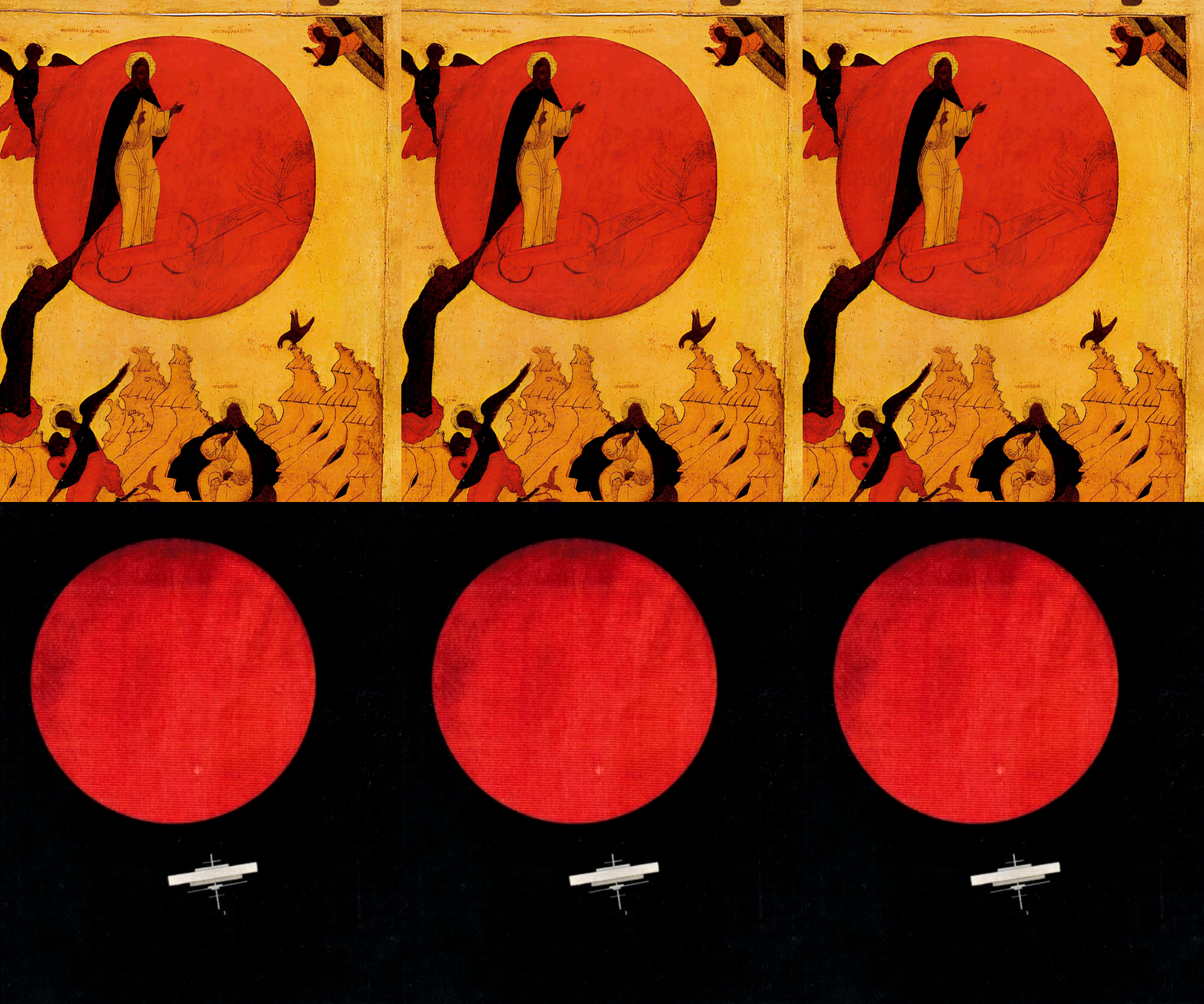
«The Fiery Ascent of Elijah the Prophet, ” 16th Century / I. G. Chashnik „Red Circle on a Black Surface, ” 1925
At the «primitivist» stage, avant-garde artists showed interest in icon painting as a unique artistic system, viewing it as a «pictorial primitive» because it allowed them to move away from academic imitation toward «pure painting.» For instance, Henri Matisse, after visiting the I. S. Ostroukhov Museum in 1911, was impressed by the beauty of ancient Russian icons and called them true «primitives» or «primary sources of artistic exploration.»
A significant role in the avant-garde’s discovery of the icon was played by the exhibition «Ancient Russian Art, ” held in Moscow in 1913. Here, collectors (Ryabushinsky, Morozov, Ostroukhov) exhibited ancient Russian icons from the 14th–16th centuries that had not been known to anyone before. After the exhibition, A. N. Benoit said that ten years earlier, „Pompeii of Icons“ would not have impressed the art world.
Back then, it never occurred to anyone to study icons. Now, the situation appears completely different, and it seems one must be blind not to believe in the salvific power of artistic impressions from icons—their immense influence on contemporary art and their surprising relevance to our time.
Avant-garde artists were fascinated by the structure of the ancient Russian iconographic art world—including reverse perspective, sharp angles and gesture dynamism, color and line, and the combination of multiple viewpoints.
Leading figures of the Russian avant-garde, such as Kazimir Malevich, Natalia Goncharova, Vasily Kandinsky, and Mikhail Larionov, drew inspiration from icon painting traditions, utilizing their elements to develop new styles and directions.
These explorations into a new artistic language demonstrate the Russian avant-garde’s drive to unite ancient traditions with innovative concepts, finding in them the foundation for their own creative expression.
The research objective is to trace the influence of icon painting on the Russian Avant-garde and to identify what aspects each Avant-garde artist drew from ancient Russian icons.
I analyzed the works of five avant-garde artists: Marc Chagall, Kazimir Malevich, Kuzma Petrov-Vodkin, Natalia Goncharova, and Mikhail Larionov. These artists were chosen as some of the most prominent representatives of their era.
Within each artist’s section, the paintings are arranged chronologically to trace their development and stylistic evolution.
As bibliographic sources, I selected books on icon painting and gallery materials.
Marc Chagall
«From a young age, I was fascinated by the Bible. It has always seemed to me, and continues to seem to me, that this book is the greatest source of poetry of all time. I have long searched for its reflection in life and art. The Bible is like nature, and I try to convey that mystery.»
— Marc Chagall
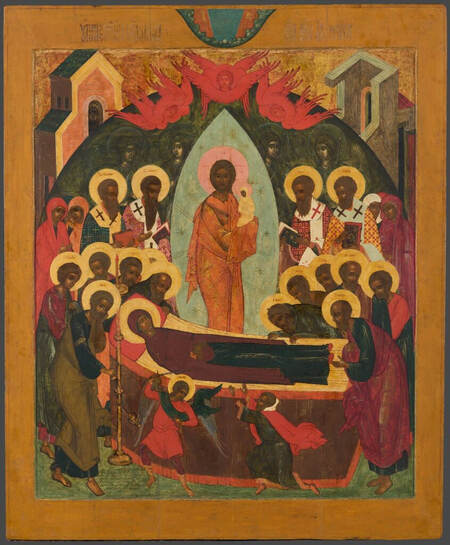
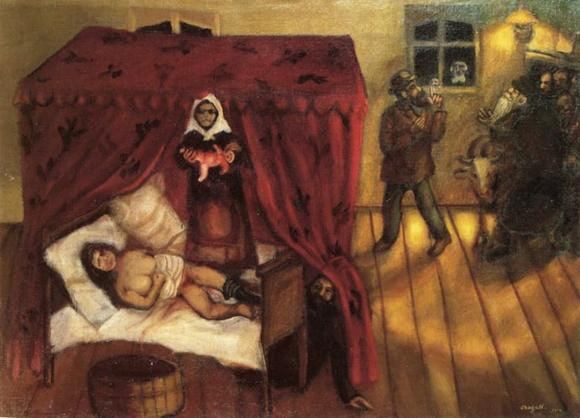
«The Dormition of the Mother of God, ” 1663 / M. Chagall, „Birth, ” 1910
«I don’t remember who, but my mother probably told me that right when I was born—in a small house by the road, behind the prison on the outskirts of Vitebsk—a fire broke out. The flames engulfed the entire city, including the poor Jewish quarter. My mother held the infant in her lap, along with the crib, and moved us to a safe place on the other side of the city.
But the main thing is, I was born dead. I didn’t want to live. Imagine, such a pale bundle who didn’t want to live. As if he had seen Chagall’s pictures. He was pierced with pins, dipped in a bucket of water. And finally, he let out a weak meow.»
— Marc Chagall, quoted from the book «My Life»
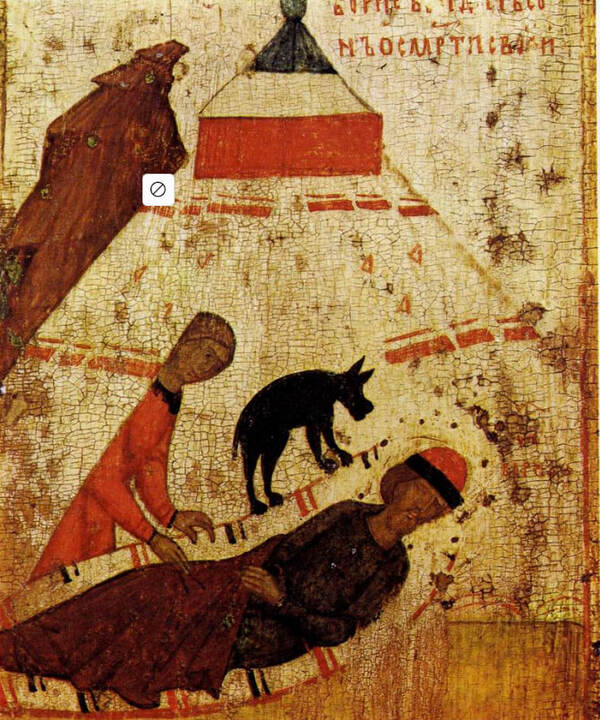
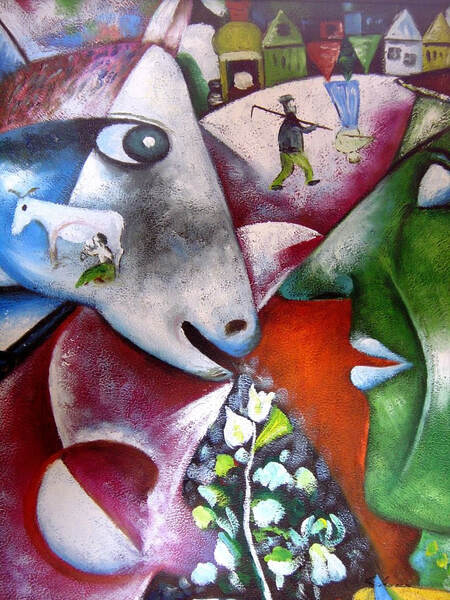
«Boris and Gleb with a Residence, ” 14th Century / M. Shagal, „Me and the Village, ” 1911
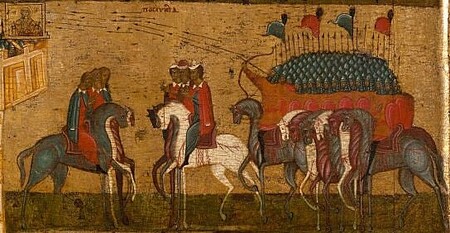
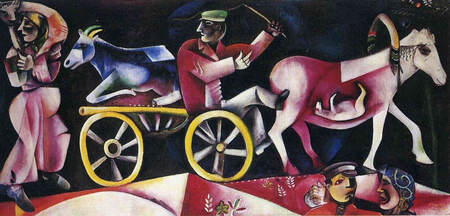
«Wonder from the Icon of the Mother of God, Sign, ” mid-15th century / M. Chagall, „Cattle Dealer, ” 1912
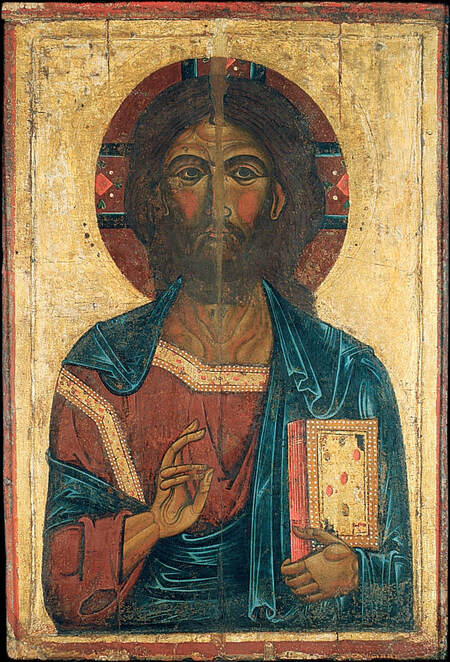
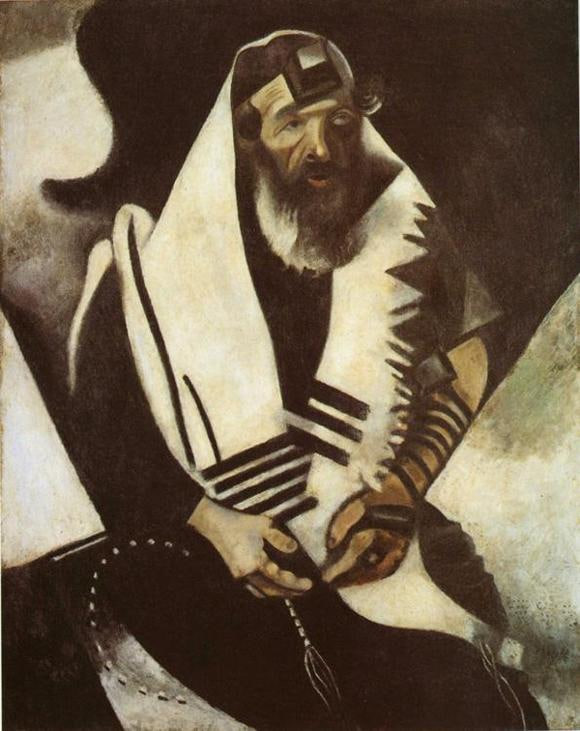
«Almighty Lord, ” early 13th century / M. Shagal, „Praying Jew (Rabbis of Vitebsk), ” 1914
Before prayer, Jews don robes (tallitot) and attach phylacteries—small boxes containing excerpts from the Holy Scriptures—and pray while swaying. This scene captivated Chagall. In his work, he sought to convey not only the harmony of black and white but also to emphasize the internal state: the interconnectedness between God and humanity, life and death.
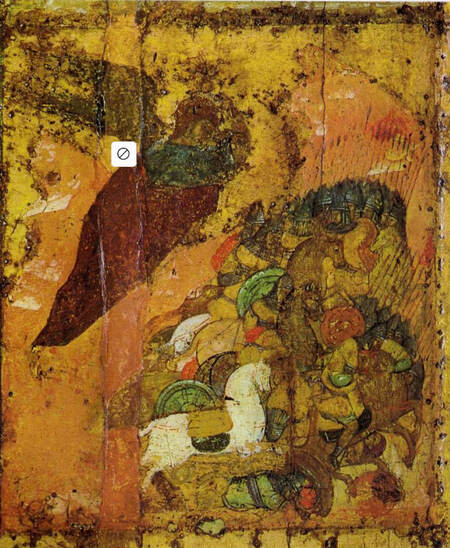
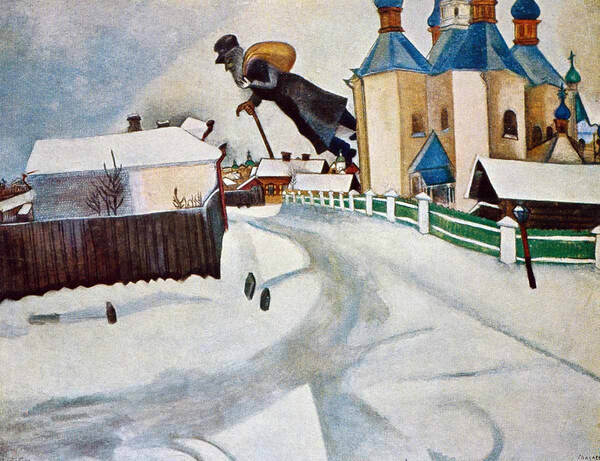
«Archangel Michael with Life» (early 15th century) / M. Chagall, «Over Vitebsk, ” 1915
Shagala possesses a special, spherical perspective. He views the world from an aerial or angelic vantage point, wishing to encompass it all.
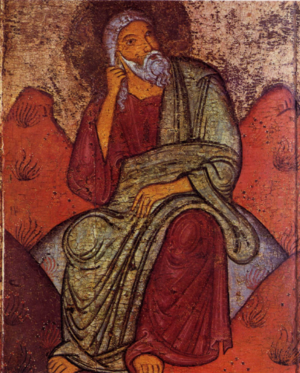
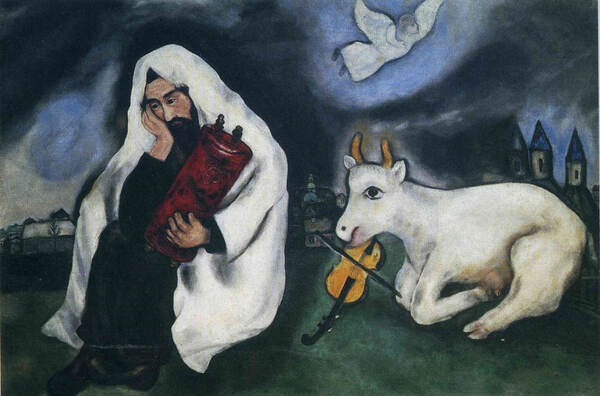
«Elias the Prophet in the Desert with Life and Deesis, ” 13th century, / M. Chagall, „Loneliness, ” 1933
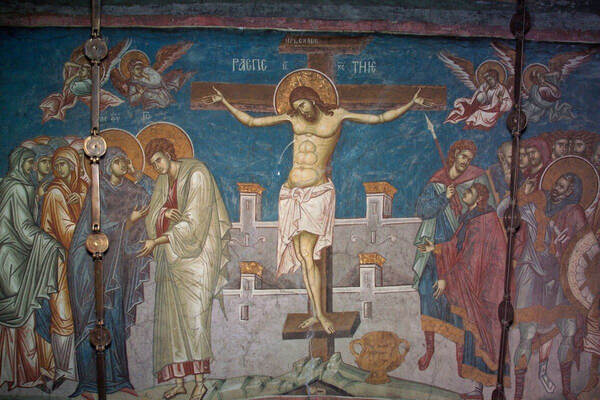
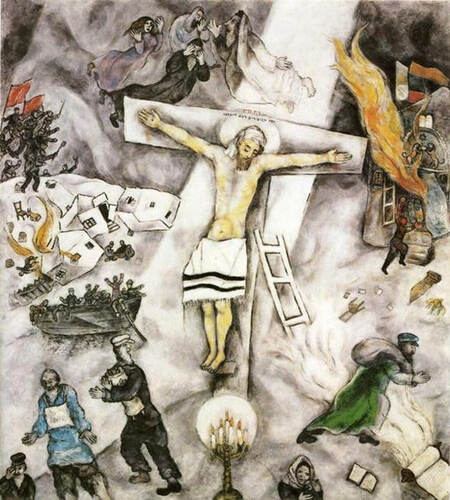
Crucifixion Scene in Vysokie Dechany Monastery, 14th Century / M. Chagall, «White Crucifixion,» 1938
This painting is Chagall’s response to «Crystal Night, ” which essentially marked the beginning of the Holocaust.
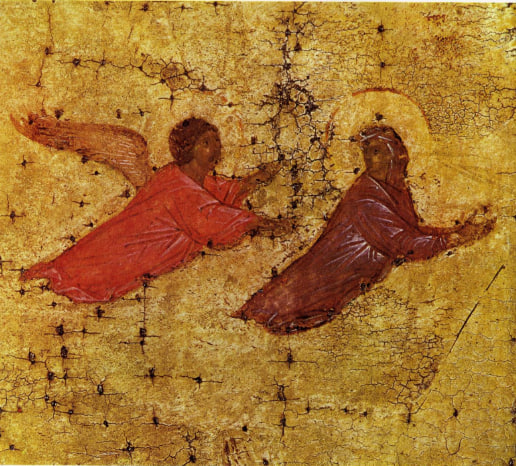
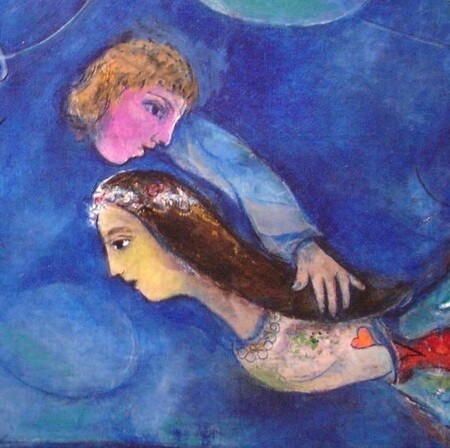
Dionysius, «Crucifixion» (fragment), 1500 / M. Shaghal, «Red Rooster at Night»
Marc Chagall frequently draws upon iconographic subjects, depicting angels and Jesus in his paintings, and his work strives to embrace the entirety of the divine world.
Kazimir Malevich
Kazimir Malevich drew inspiration from the techniques of icon painting in his early works. Elements of the iconographic language can be observed in his pieces—such as the glow above the head resembling halos, hands posed in a prayerful gesture, and the general manner in which human figures are depicted.
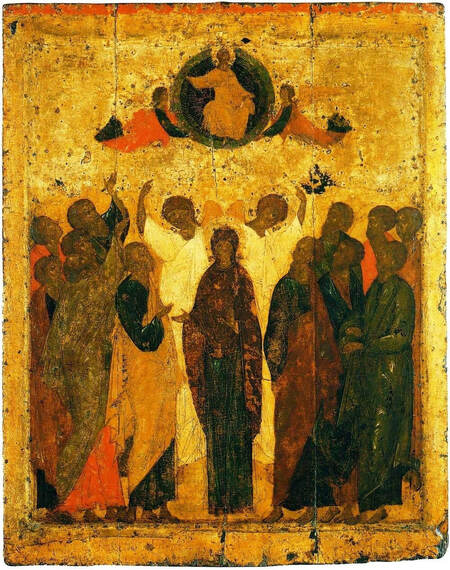
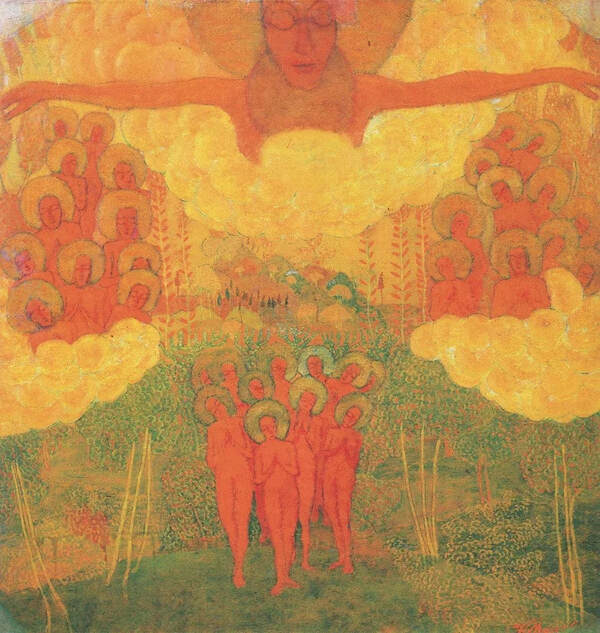
«Ascension» from the celebratory service of the Assumption Cathedral at Simonov Monastery, 1405 / Kazimir Malevich «Ascension, ” 1907
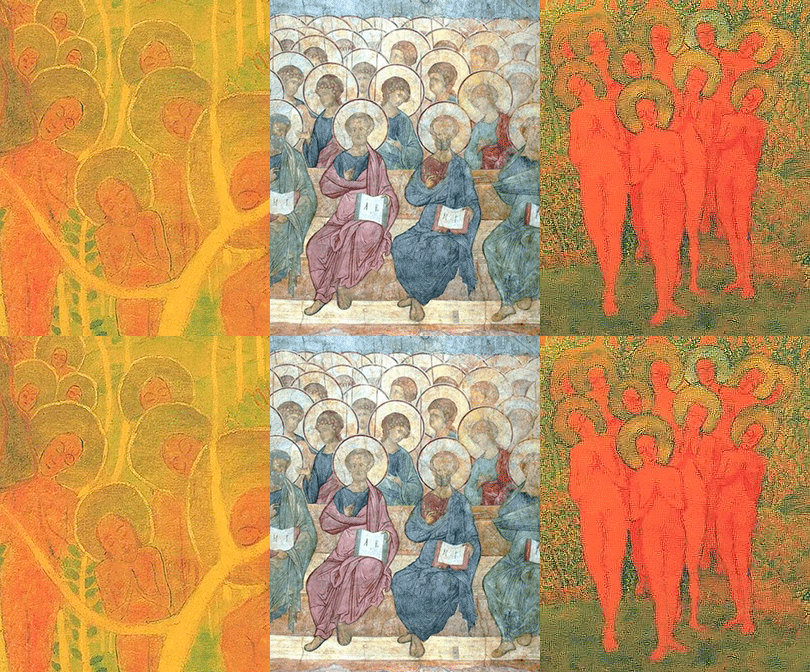
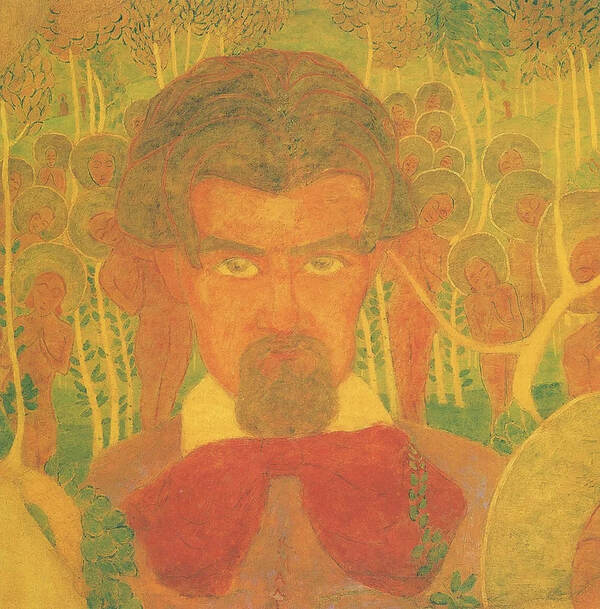
Andrei Rublev, Fresco of the Dormition Cathedral in Vladimir, 1408 / Kazimir Malevich, «The Ascension» and «Self-Portrait, ” 1907