Objectification and Colonialism in Museum Spaces: A History of the Phenomenon and Its Evolution
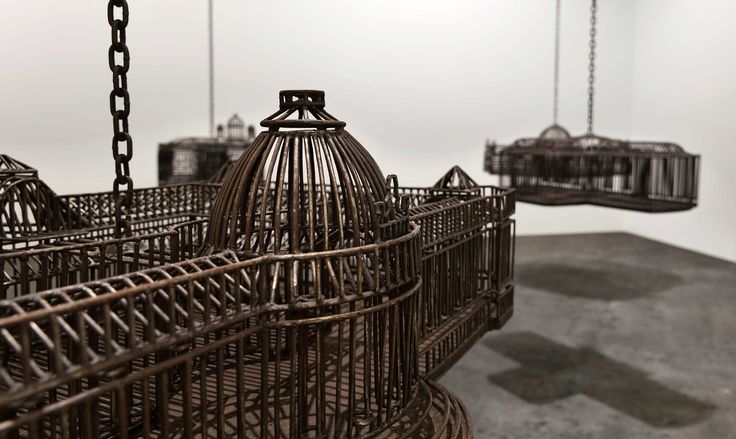
Romeo Mivekaninin’s museum sculptures, resembling cages, reinterpreting colonial history
Navigation
- Concept
- Objective
- Hypothesis
- History of Colonialism
- Coloniality in Museums
- Objectification
- Contemporary Reflection
- Conclusions
Concept
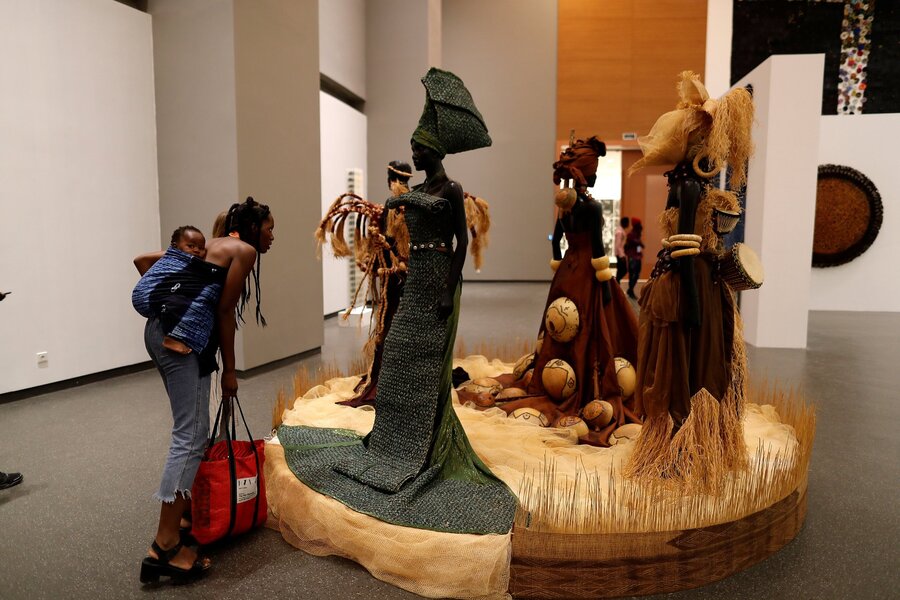
Museum of Dark-Skinned Civilizations in Senegal
Colonization impacts every aspect of identity, for both the colonized and the colonizer. Corporeality—from how one relates to their own body to how they perceive others and their expressions—is an extremely crucial aspect of identity that has been corrupted by coloniality. Colonial policy within the cultural sphere functions by establishing rigid norms that police identities. A person’s identity often depends on their corporeality and how it is perceived, a perception that can be shaped and altered by representation. In the modern world, bodies and the corporeality of people who do not conform to the Eurocentric standard are often perceived as abnormal, subjected to objectification, and frequently judged as aesthetically lacking and undeserving of respect. This perception stems from colonialism and the norms it established—norms designed to control people and normalize the cruelty inflicted upon victims of imperial ambitions as if it were morally acceptable. These views were solidified through various institutions, including museums. Ethnographic museums, particularly during the colonial period, are a stark example of such propaganda. Meanwhile, European art and the representation of corporeality existed within the context of the fine art museum. This created a dichotomy between European art and corporeality on one hand, and the fine art museum on the other, where Western culture and bodies became the aesthetic standard—something worthy of respect and protection—a standard that would not encounter the same objectification that previously colonized peoples experienced, nor the way their bodies and corporeality were represented within art institutions. This trend has not changed significantly. In many museums, we can still observe certain representations of corporeality that do not fit the Eurocentric norm. This topic is important because of what has been described—the perception of human corporeality affects that person’s access to basic respect and empathy.
Task
Analyze how colossality and objectification are related and how they manifest within museum spaces. Additionally, find various examples of this phenomenon and discuss new projects that challenge and critique objectification.
Hypothesis
Decolonization globally, and specifically within museum spaces, requires an understanding of the core mechanisms of colonization, including its cultural dimensions. Therefore, it is crucial to critically examine the objectification of formerly colonized cultures and move away from these colonial practices within the context of cultural institutions.
The History of Colonialism
Julien Sinzogan — «Home»
The colonial era was a historical period spanning the 15th through the 20th centuries. During this historical span, colonial and imperial powers—such as Great Britain, France, the Netherlands, the Russian Empire, and other European powers—were formed. These entities colonized foreign territories for subsequent exploitation, from local resources to people. It was a brutal process during which a vast number of people died, ethnic cleansing took place, and many cultures were deprived of their former wealth.
Cover of the annual report on the movement for colonial freedom, 1960/1; MCF archive
This era concluded due to a series of anti-colonial revolutions worldwide.
Yet, colonialism remains deeply embedded in contemporary society. It continues to rely on cultural propaganda to normalize the horrific acts once committed by the colonial machine; these acts persist today, albeit in a less overt form.
Coloniality in Museums
«Berber Bride» by Josep Tapiró, 1896
«Coloniality» is a concept that describes the persistence of colonialism’s consequences after its formal end, manifesting in power structures, ways of thinking, and daily life.
Coloniality persists within museums and cultural institutions as such. Some elements represent remnants of a history that curators are unwilling to revise, while other examples constitute direct and deliberate propaganda. Coloniality manifests not only in the fact that many objects in museums of former colonial nations were stolen but also in the refusal of these institutions to acknowledge or condemn that history. Furthermore, the refusal of many museums to facilitate repatriation can also be considered a colonial practice. In the context of this research, it is important to note that the coloniality and normalization of this within the museum environment—often supported through the objectification and even fetishization of colonized peoples and cultures—is itself a pervasive and colonial practice. Thus, colonized peoples, their cultures, and their physicality are presented within cultural institutions as something aberrant and primitive, which is a continuation of coloniality.
Objectification
«In the Harem» by Vincent Stepovich
Objectification is the process through which a person is perceived as a tool to achieve someone else’s goals, rather than as a complete individual with feelings and thoughts.
Objectification, within the context of coloniality and within the museum environment, can manifest in highly diverse ways. Objectification has become a principal mechanism of influence and power for neocolonialism in the cultural sphere, secretly propagating ideas steeped in hatred and leading to real acts of violence around the world. Due to objectification, vast groups of people are stripped of their «humanity» and reduced to a set of simplified characteristics, becoming hyperbole of themselves. Objectification normalizes real violence because objectified people are deprived of their humanity, meaning that in the eyes of the masses, violence against them becomes acceptable, justified, and in some cases even necessary. This tactic was used during the colonial era to normalize slavery, genocide, and exploitation, becoming entrenched through cultural institutions. In contemporary reality, the same violence continues to exist, but in a different, more covert form; therefore, colonial propaganda based on objectification continues to exist and be sustained in some museums to this day.
«Eastern Dancer» by Cesare Bissio 1843–1909.
Orientalism is a Western worldview that constructs the «Orient» as an exotic, romanticized, and largely conventional image, positioning it in opposition to the West.
The most striking examples of objectification can be seen concerning women from the East and South, whose lives and images were fetishized for Western audiences. Artists such as J.B. Vanmura, J.E. Liotar, and A. de Favre depicted women from other cultures as sexualized objects devoid of autonomy, often perpetuating myths about Eastern and Southern women that catered to the fantasies of European colonizers. In reality, women from these countries suffered violence at the hands of the very people who fetishized them in art.
Also during the era of colonialism, many people brought into slavery—primarily children and women—were displayed for European audiences. Their ethnic features were presented as something exotic, and they were treated as animals, often exhibited in cages. Concurrently, Western artists created horrific racist caricatures of real people, thereby objectifying individuals from colonized nations. One of the most appalling examples of this colonial past was the tragic fate of Sarati Bartman. This woman was abducted from her homeland and brought to Europe under the moniker «Dark-Skinned Venus.» She was displayed and treated like an exotic animal. Even after her death, her organs were exhibited in museums until 1974. Her life was a nightmare shaped by colonialism and objectification; her body did not fit the Eurocentric standard of beauty, subjecting her to inhumane treatment, and even in death, she remained objectified.
Saarti Baartman