Navigation
[1] Concept [2] Silence and Sonic Contrasts [3] Visitor Impact on the Sound Environment [4] Conclusion [5] Bibliography
Concept
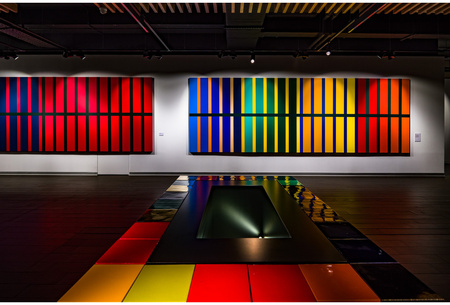
I recently visited the art and photography exhibition «Contour» in Nizhny Novgorod. The choice of this theme stems from a gap in contemporary art studies: both researchers and visitors tend to focus on the visual elements, while the auditory component of cultural events often remains overlooked. However, the perception of any space is always multisensory. Sound actively shapes visuals, capable of enhancing the artistic impression or, conversely, disrupting it. The goal of my work is to demonstrate that the «Contour» exhibition is not merely a collection of art objects but a complex acoustic territory where sound is a full participant in the event.
Hypothesis: During an exhibition, not only the visuals but also the soundscape is important.
The theoretical foundation for this research is built upon two key concepts. The first is the concept of «soundscape, ” developed by the Canadian composer and sound ecologist R. Murray Schafer in the 1960s and 1970s. Schafer proposed analyzing the sonic environment as a composition possessing its own structure, rhythm, keynotes—ambient sounds that are not always consciously perceived, such as the hum of ventilation or echo—figures—elements that draw attention, such as a dog’s bark—and unique soundmarks—sounds that make a space recognizable, like a sharp noise. The second concept belongs to cultural theorist Brandon Labell, who, in his work „Acoustic Territories, ” describes how sound divides public and private spaces, how different communities (visitors, organizers, passersby) assert themselves through sound, and how the street becomes a stage where public presence gains a voice. I will utilize this theoretical foundation throughout my research.
The research methodology is built upon qualitative field analysis. Initially, I hadn’t intended to use this event for research, but while there, I realized it provided rich material. I acted as an embedded observer: I documented not only the visual elements (photographs of drawings, photos of the architecture, exhibits, visitors, and organizers) but also the auditory impressions. For this, I kept field notes, noting the time, location, nature of the sound, and my subjective reaction (calmness, irritation, surprise, fear). Additionally, I made short video recordings with sound to capture phenomena such as echoes in large halls and on the staircase, the rustling of paper when lifting «hidden paintings, ” the sharp sound of tape during a presentation, the rare bark of a dog, background music, and the noise from the coffee break area.
The principle for selecting visual material is governed by the logic of sequential immersion into the soundscape. I present several auditory moments: the general architectural acoustics (high ceilings, empty halls, echo), contrasts (the silence of vacant blocks against sharp everyday sounds), the social dimension (conversations, organizer activity), and the intrusion of the external world (the street, coffee breaks). This organization follows my actual path during the exhibition.
The principle of analyzing textual sources involves using the theories of Schafer and Labell as my working framework. I correlate each segment of field notes with a specific theoretical concept (keynote, soundmark, acoustic territory, private/public sound), demonstrating how abstract theory functions within a real exhibition space.
Silence and sonic contrast
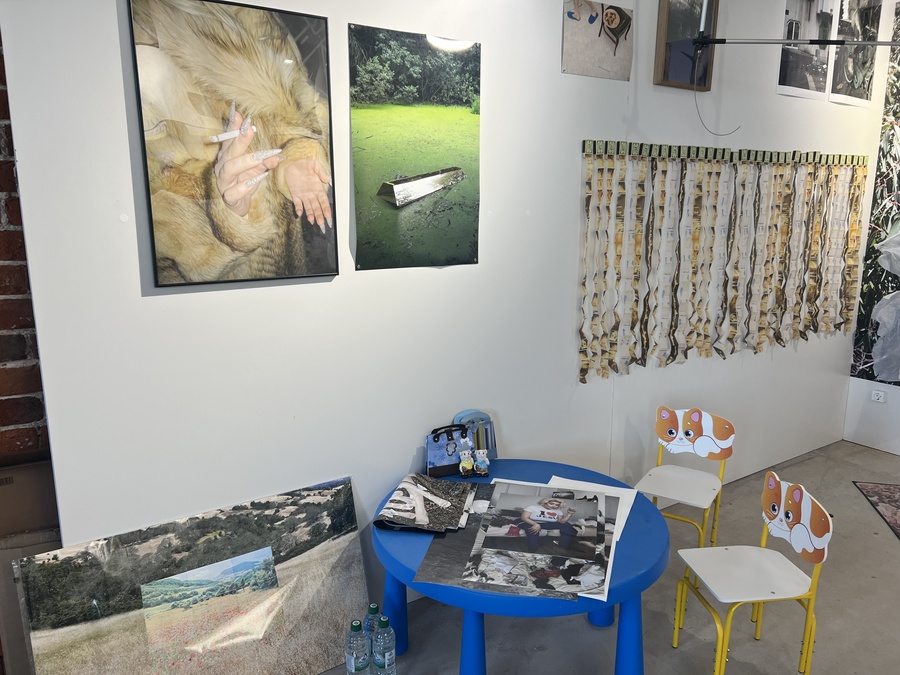
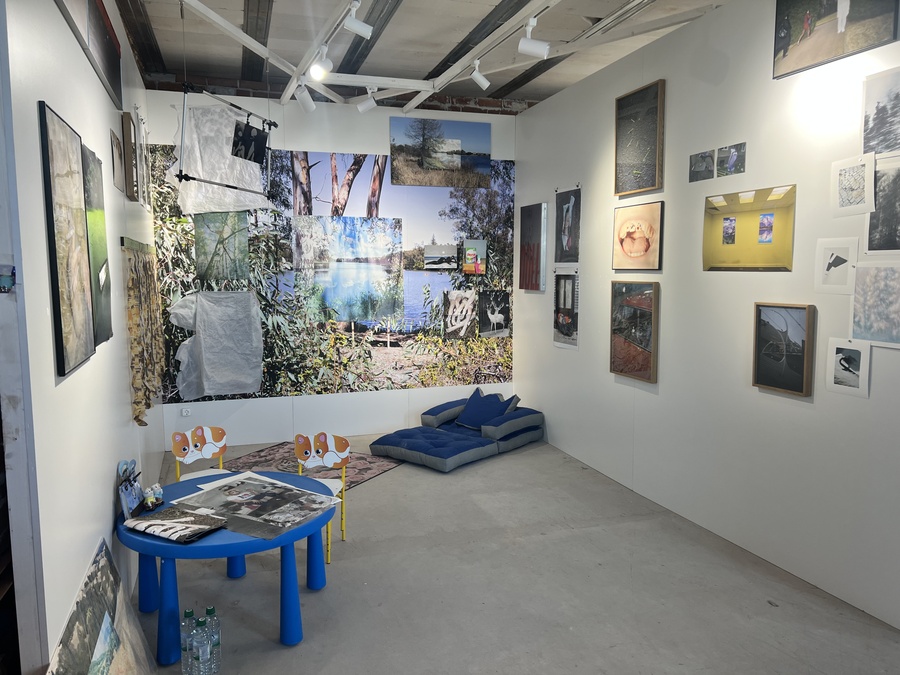
Exhibition Block Example
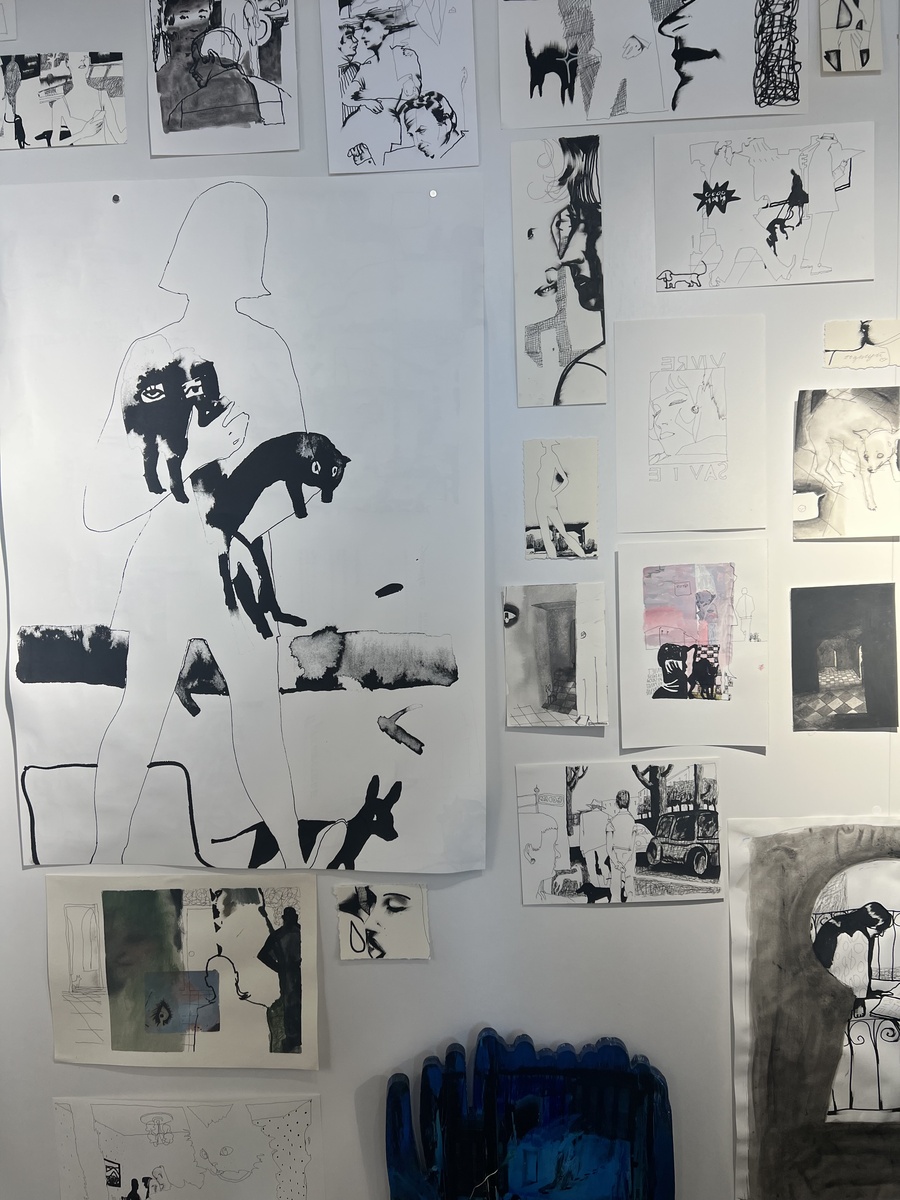
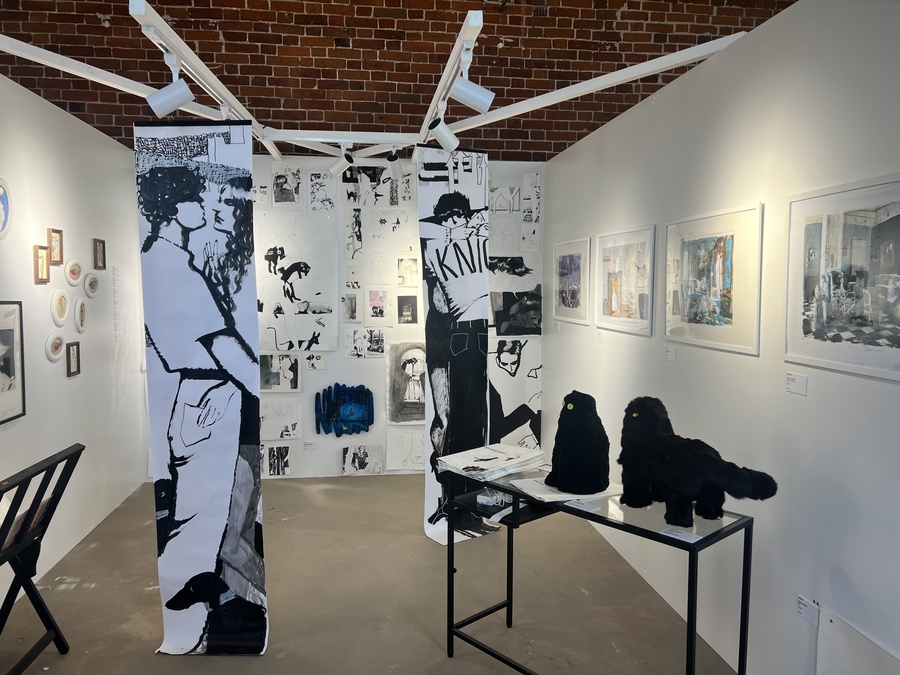
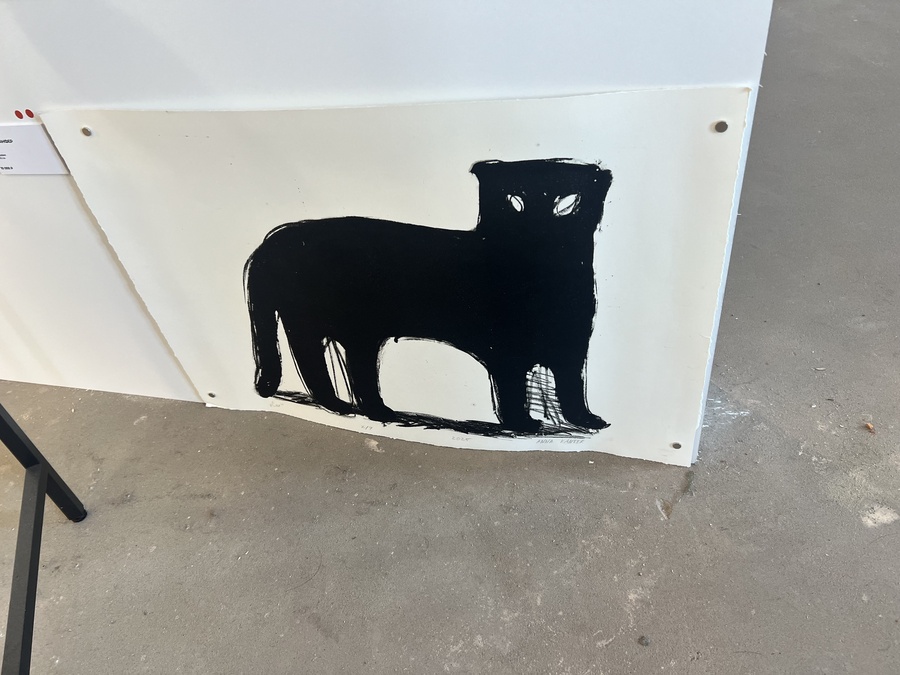
Exhibition Block Example
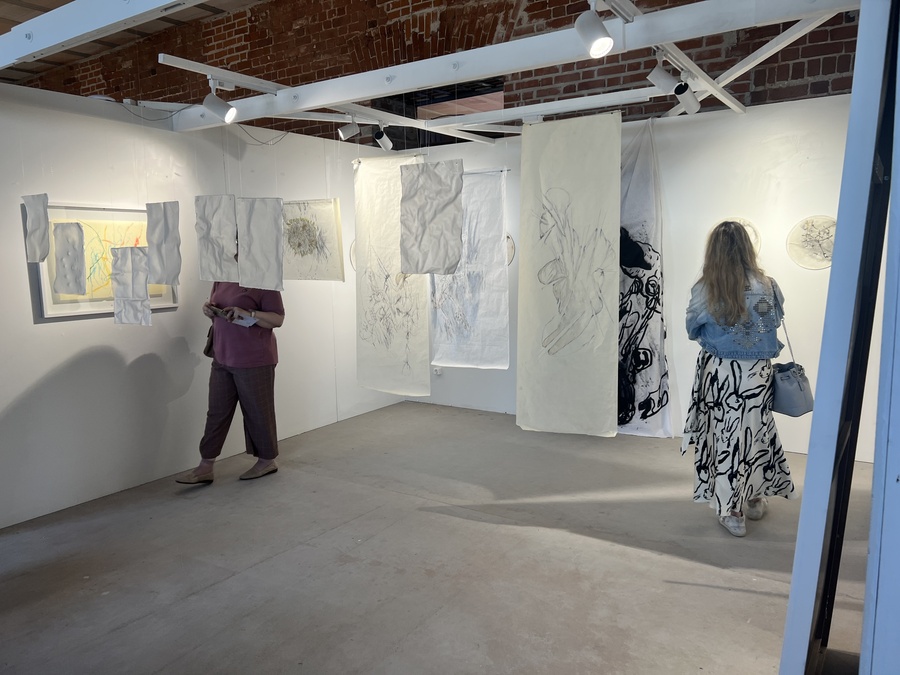
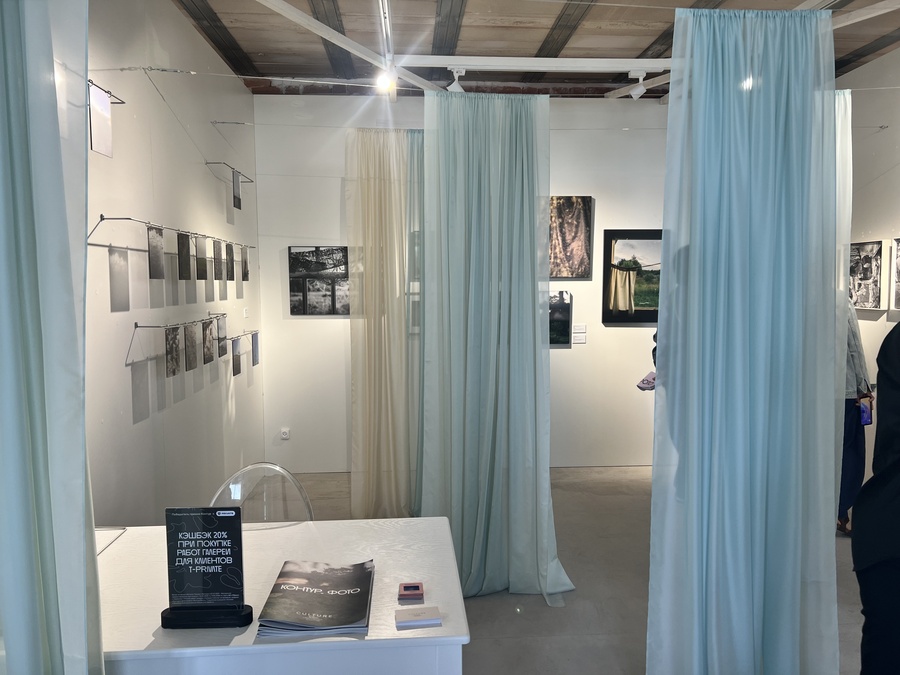
Unusual block examples
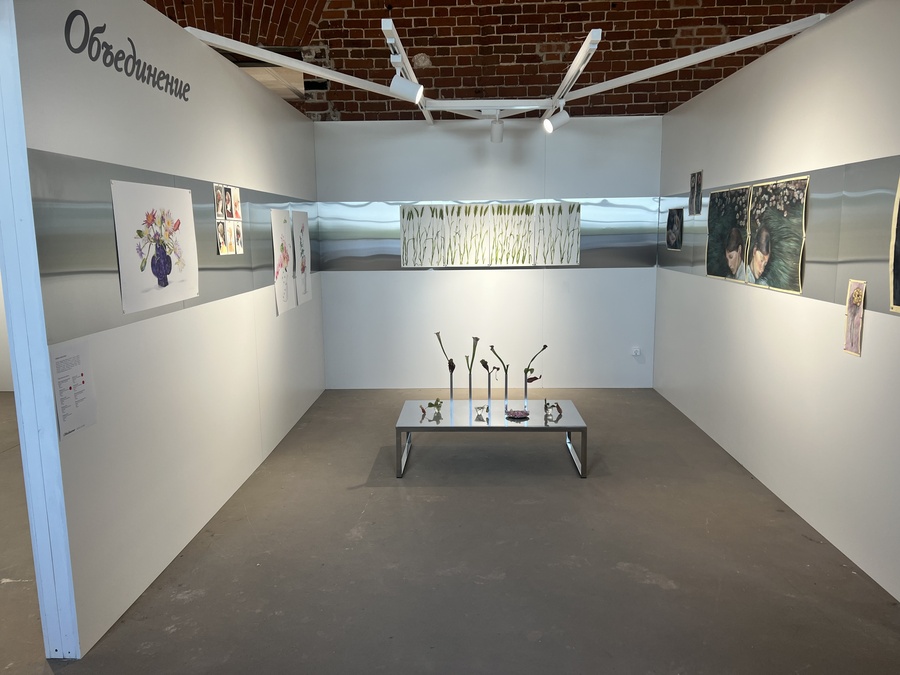
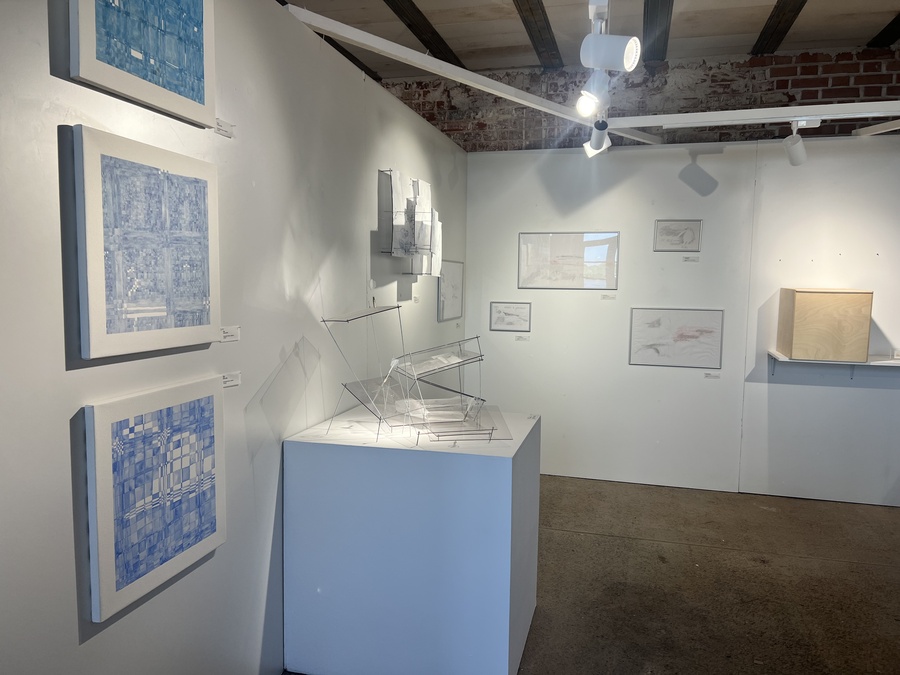
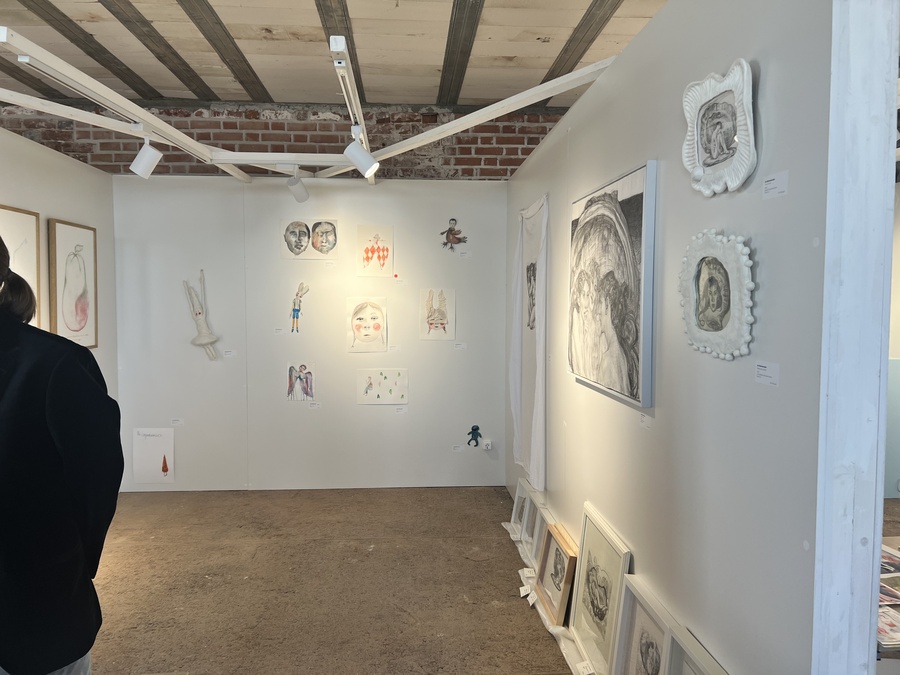
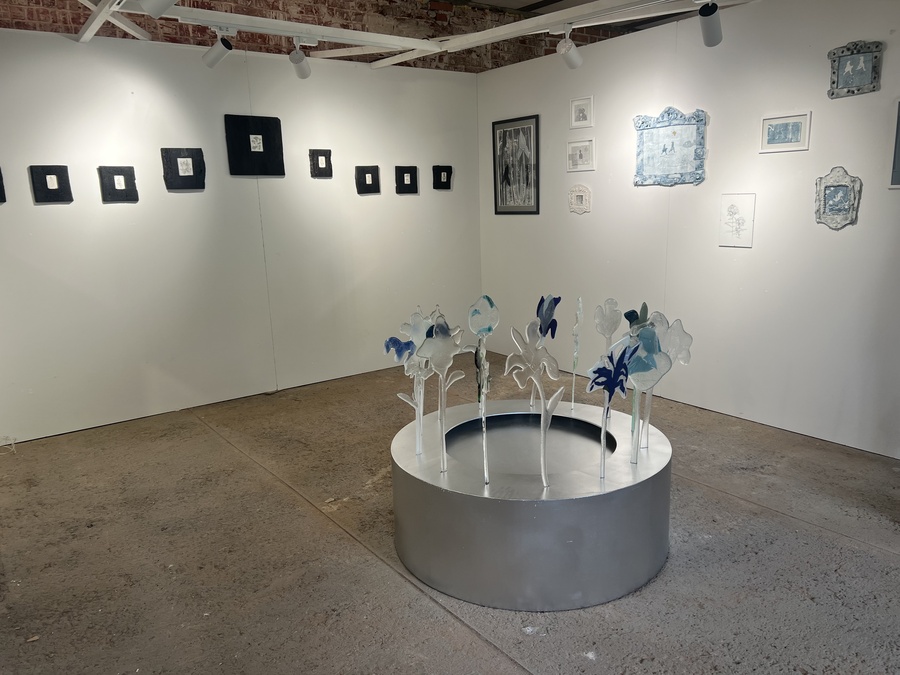
«Empty Blocks”—Quiet Zones
Completely blank block, they made us take photos of the work.
Some exhibition sections were completely empty—there was a total absence of people. It was profoundly quiet, occasionally broken by voices drifting from adjacent sections. In these «voids, ” I felt as if I were in a sound sanctuary—a place where one could pause and simply settle. Scheffer would call this a keynote sound—that background frequency that doesn’t draw attention on its own, but rather sets the tone for the entire environment.
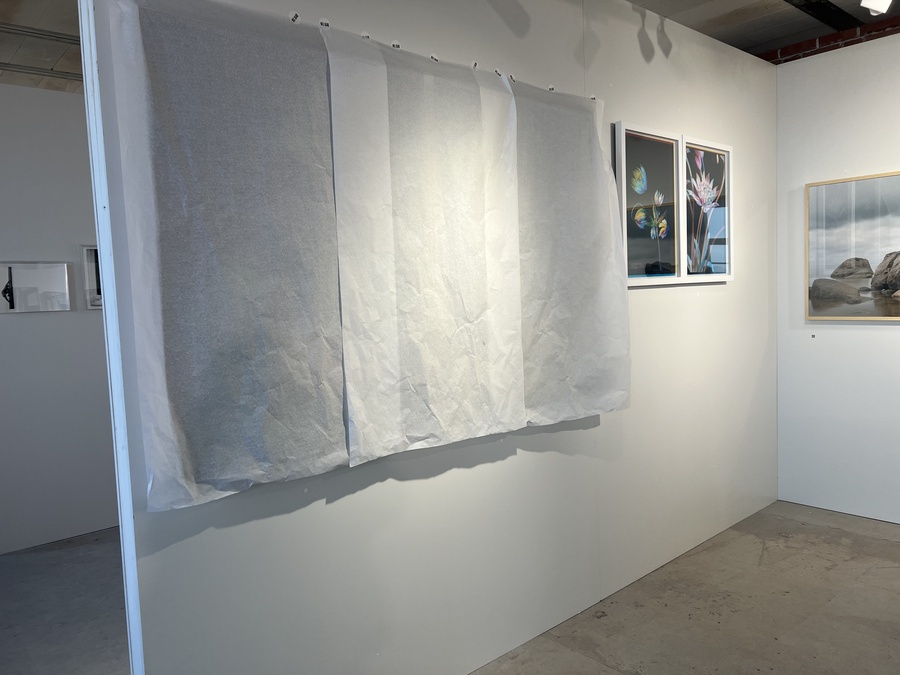
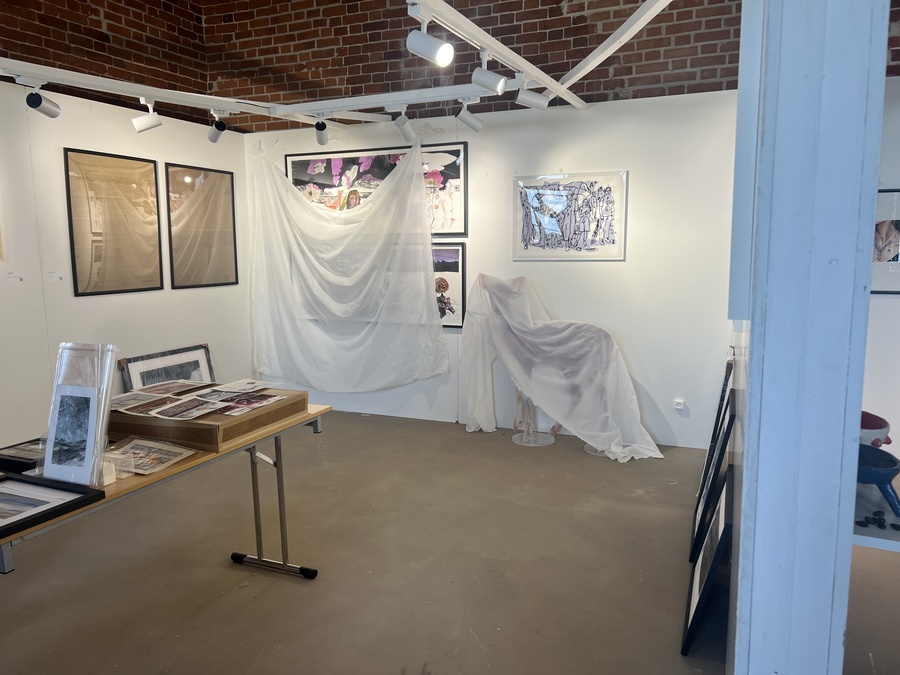
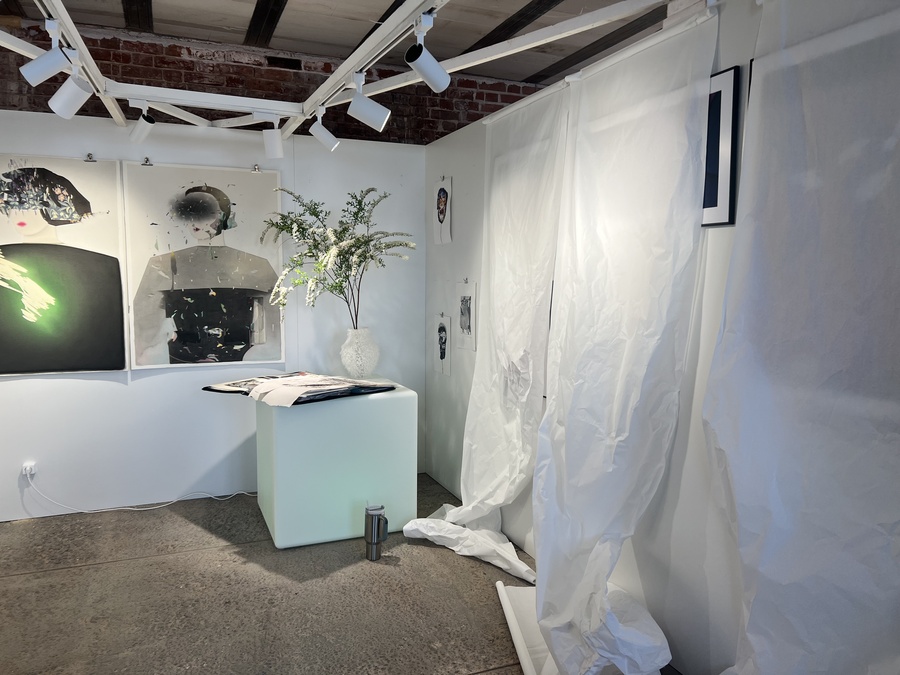
«Hidden Works» by artists that needed to be featured
The hidden paintings had to be lifted, and this process was accompanied by the rustling of paper—a sound that felt very contrasting, uncomfortable, in the silence.
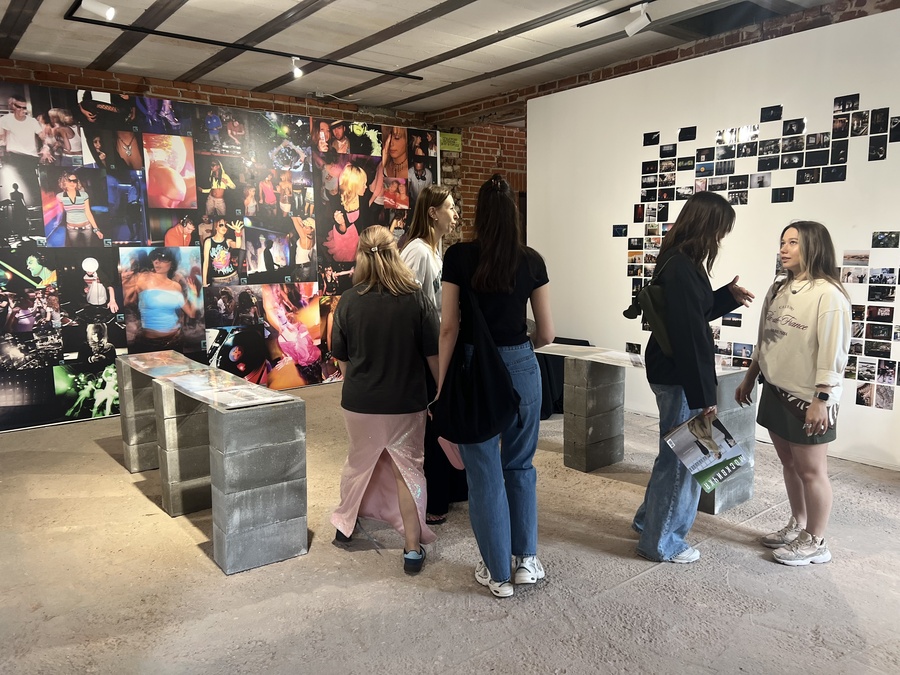
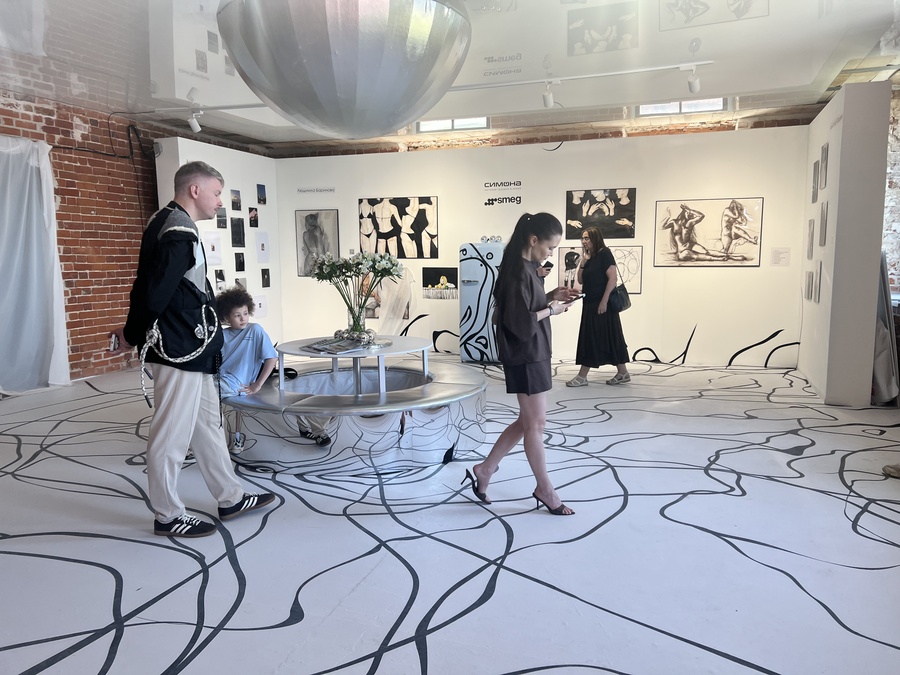
Large, resonant spaces
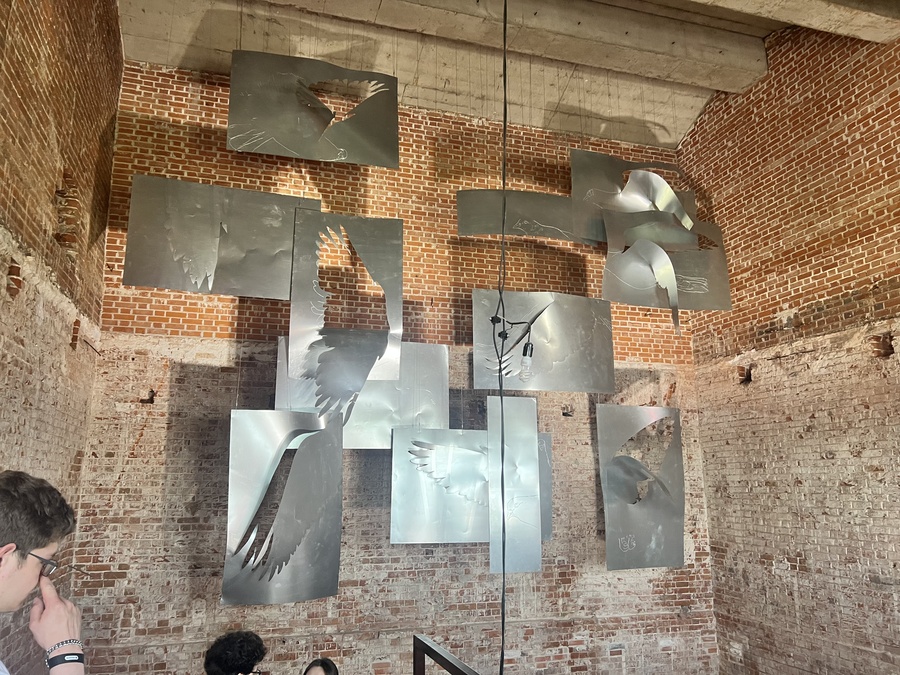
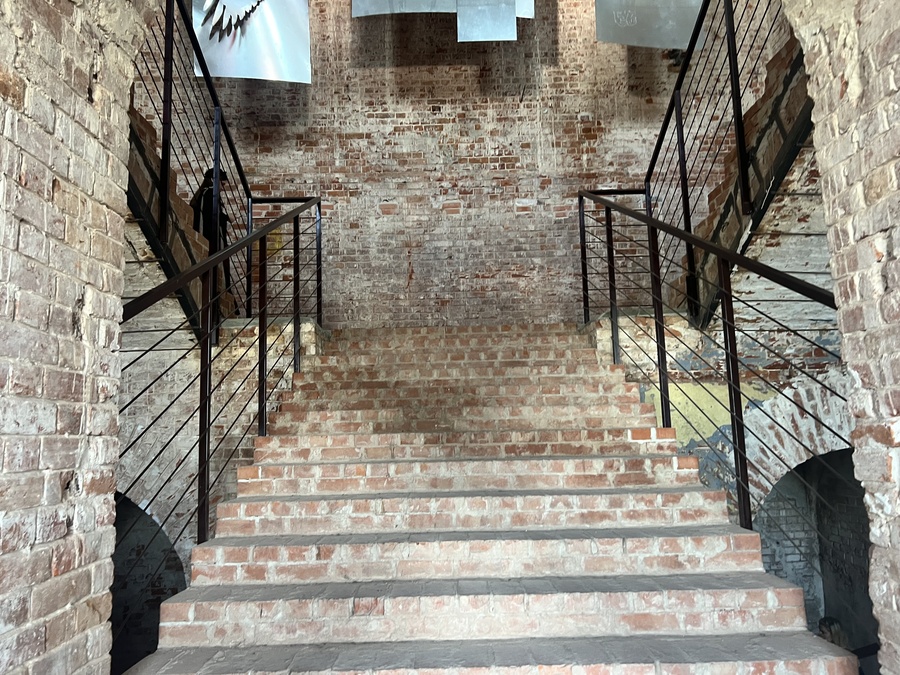
Echo Staircase
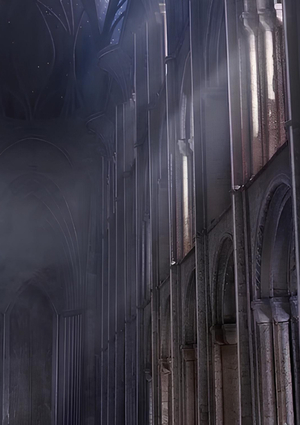
The «Contour» exhibition was held in a historic building with high ceilings. This architectural feature created an echo—every step reverberated off the walls, making the space feel more voluminous.
Dynamics with calm music
Quiet music played throughout the halls. Its gentle rhythm provided a contrast to the emptiness and prevented the silence from feeling uncomfortable. This kind of music functioned as an auditory transition—it softened architectural harshness and helped maintain focus.
View from the window (building next to the road)
The building was located near the road and the river. Sometimes, you could hear the sounds of cars. It was a rather sharp sound that added a contrast to the quiet, uniform atmosphere.
Dog with Visitor
But the strongest contrast was created by sharp sounds. Some guests had dogs. A dog’s bark made me jump—it was sudden, sounding much louder than everything else. This bark became a soundmark—according to Scheffers, a unique sound that stands out from the general background and is memorable.