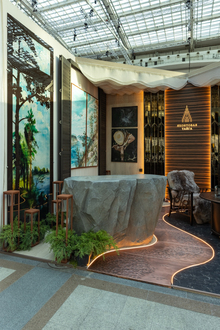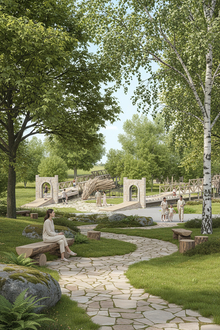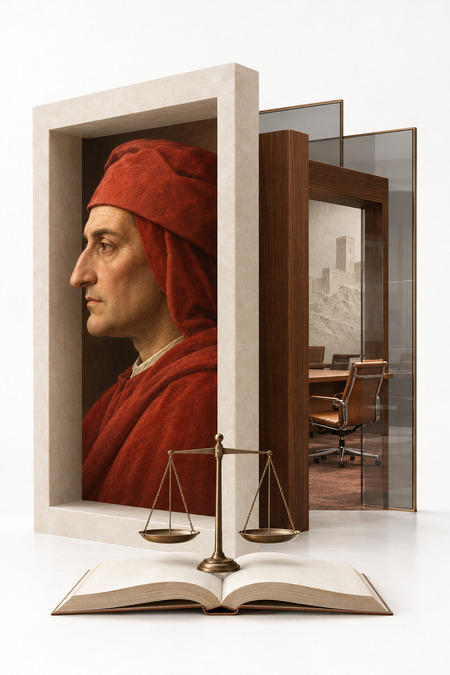
The visual study is connected to the development of a design project for the Bartolius law firm office. The goal of the study is to create an image of a space that reflects the firm’s values while considering the historical and cultural context of the location. The analysis of the surroundings, architectural, and interior references is aimed at finding compositional, color, and material solutions that unify professional rigor, an atmosphere of trust, and a sense of security.
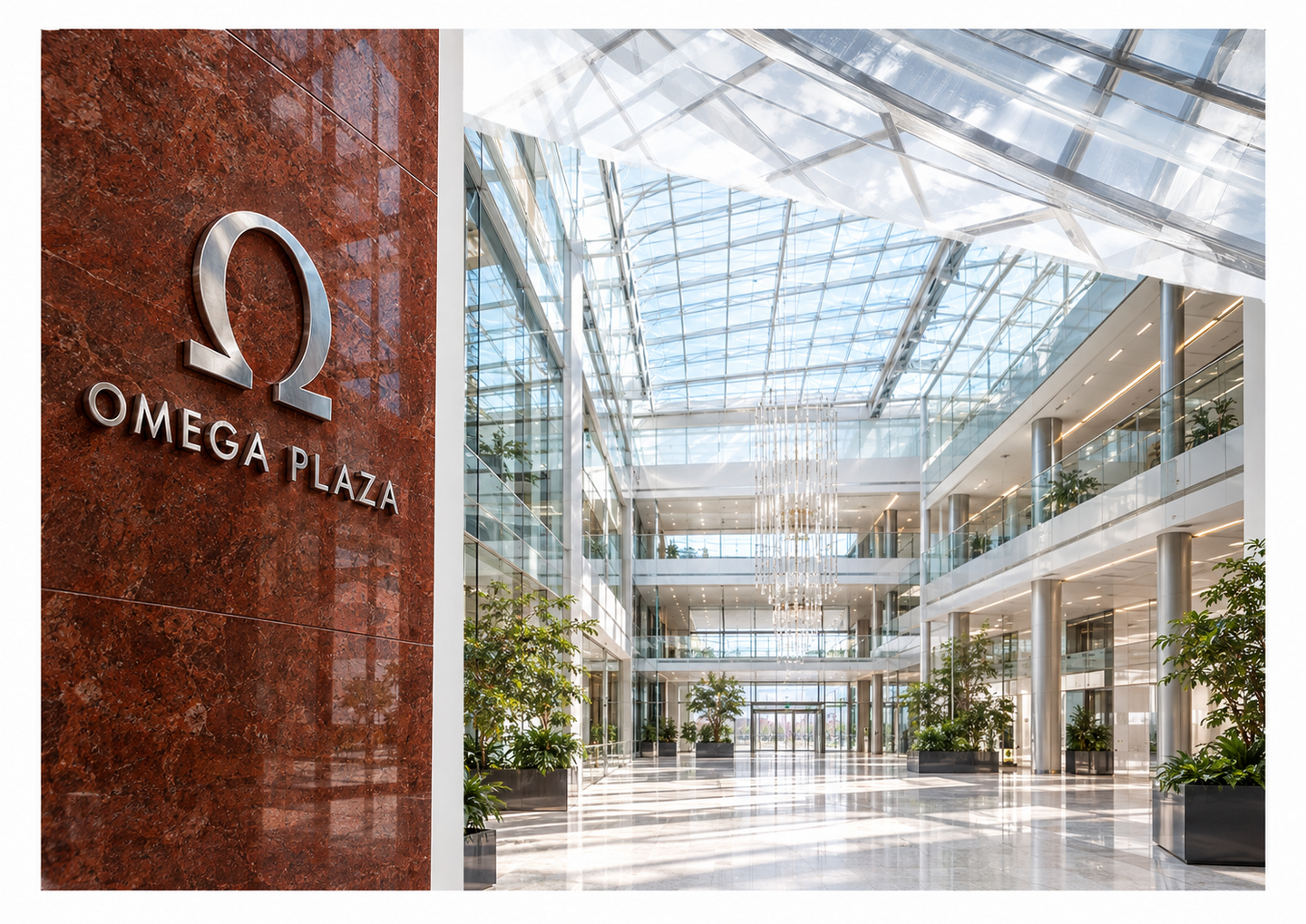
Omega Plaza is a modern office and commercial complex located in the Southern Administrative District of Moscow, near the Avtozavodskaya metro station. The business center’s interior space is organized around spacious glass atriums that fill the area with natural light, creating a sense of openness. The atriums are connected by shopping galleries, allowing employees and visitors to purchase everything they need without leaving the complex.
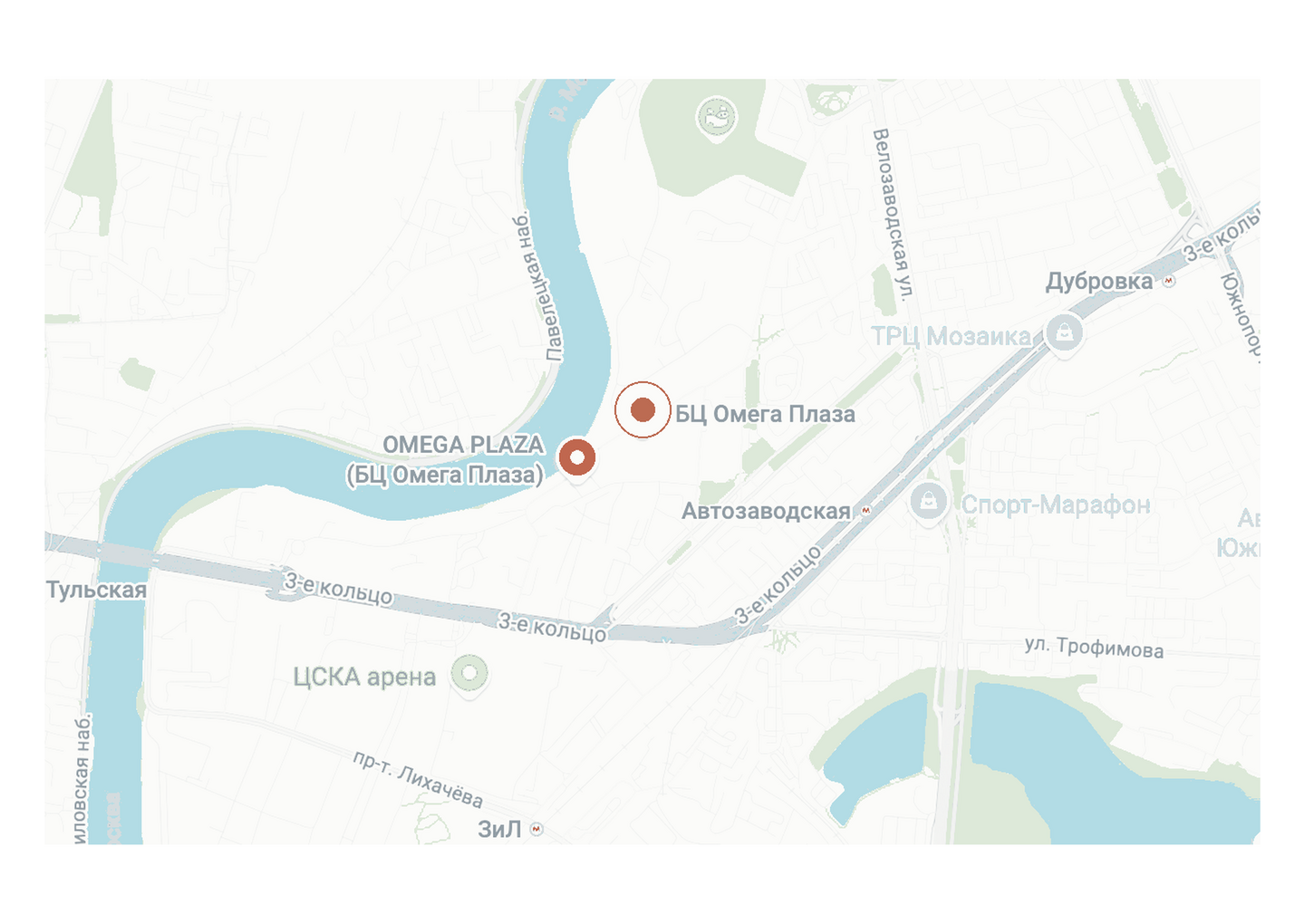
The Avtozavodskaya Metro station provides both vehicular and pedestrian access to the complex. Additional transit links are formed by the MCC stations Avtozavodskaya and ZIL. Lipki Park and Simonov Monastery complete the business environment with historic and recreational settings.
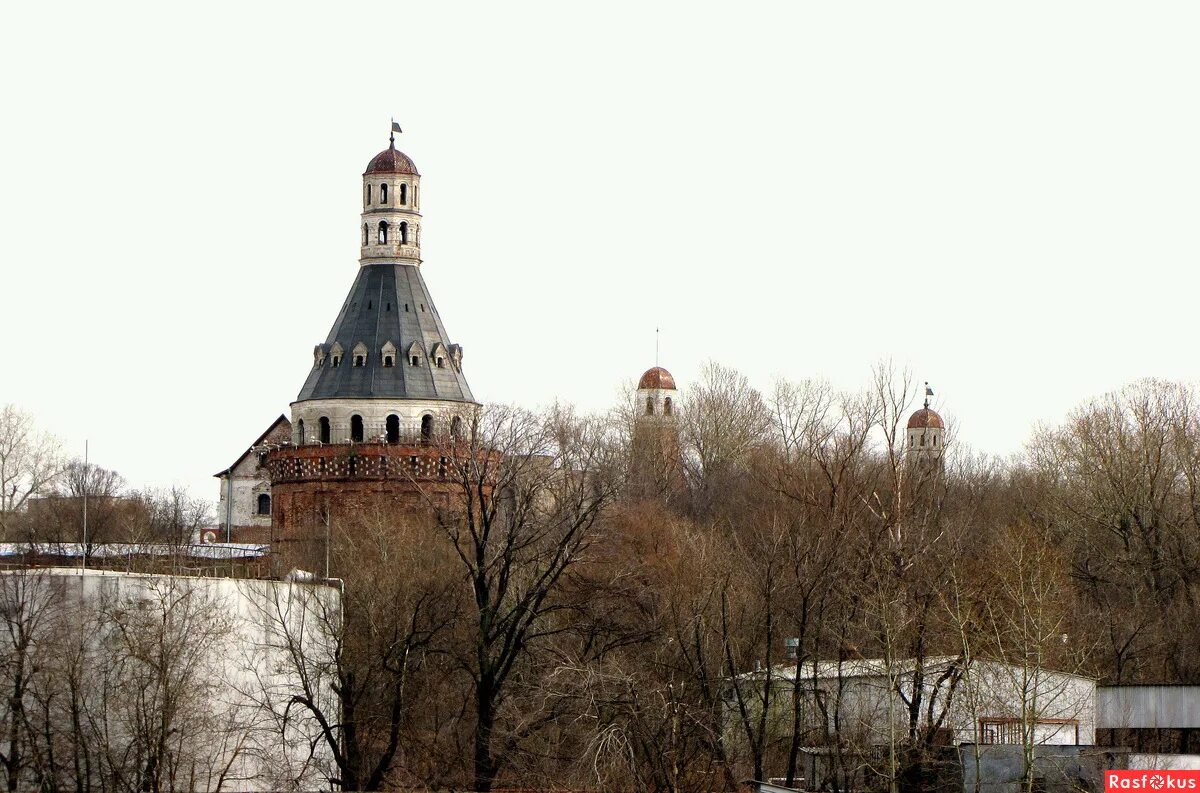
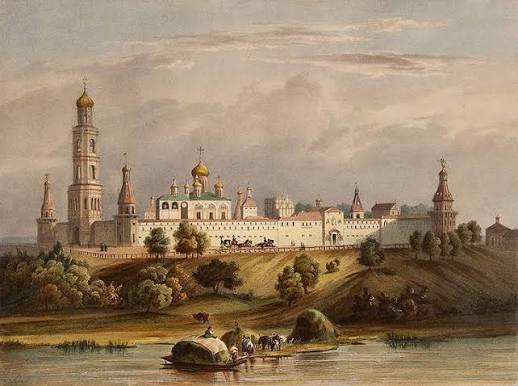
Simonov Monastery was founded in the 14th century by Fyodor—a student and nephew of Sergius of Radonezh. Its fortifications were part of Moscow’s defensive belt, protecting the southern approaches to the city. Surviving to this day are three 17th-century towers, fragments of the fortress walls, and a refectory with the Tikhvin Church.
The spirit of the place is revealed through the historical defensive role of Simonov Monastery and the juxtaposition of different eras in the surrounding architecture. These characteristics are reinterpreted in the interior: a framed entrance and a gradual transition to private areas create a sense of security, while glass partitions maintain a connection with the modern architecture of Omega Plaza.
The spirit of the era in this locality is evident in its changing function—from a monastic and defensive site to an industrial zone, and finally to a contemporary commercial, residential, and public environment.
Analysis of the Existing Entity
The Bartolius Bureau was founded in 1999 by alumni from the Faculty of Law at Lomonosov Moscow State University. The Bureau’s high level of professionalism is confirmed by Russian and international legal rankings from Pravo.Ru-300, Kommersant, Chambers Europe, Legal 500, and Best Lawyers.The Bureau’s Social Responsibility. A core focus for the Bartolius Law Office is providing legal support to the Charitable Foundation for Children with Oncological and Other Severe Diseases, «Podari Zhizn» (Give Life).
The Bureau’s partners know the volunteer group personally—a group that worked at the hospital with pediatric oncology patients and became the foundation of the team when the Foundation was established. Our employees took a direct role in the Foundation’s development, defending its volunteers in situations where their activities were improperly classified by state authorities. Today, the Bureau’s lawyers represent the interests of the Foundation’s partner hospitals in various disputes, assist with its analytical work, and promote the concept of charity.OUTREACH PROJECTS
The Bureau operates a «Enlightenment» program dedicated to publishing activities and supporting student and academic projects.
SUPPORT FOR STUDENT AND ACADEMIC PROJECTS
«Bartolius» is the main sponsor of the «MSU Summer School of Masters.» The Bureau’s partners combine legal and scientific endeavors, giving lectures during masterclasses for students of the «MSU Lit Club.» Furthermore, the Bureau supports and funds the Academic Club of the MSU Faculty of Law and the Legal Institute «M-Log».
Why is the bureau named «Bartolius»?
The name of the bureau is connected to the name Bartolo da Sassoferrato (1313–1357)—one of the most influential jurists of the Middle Ages. He taught law in Perugia and earned his doctorate in law very young—around age 22 or 23.
He was not limited to interpreting Roman texts; instead, he adapted the provisions of the Corpus iuris civilis (a fundamental codification whose influence on modern law worldwide is incalculable. Some provisions have been transcribed verbatim into our Civil Code (»…if possessed conscientiously and openly…»)) to the political and economic conditions of the Italian city-states.
Bartolo’s authority was so great that the formula later emerged: nemo iurista nisi Bartolista—“no one is a jurist unless he is a Bartolist.»
Bartolo did not embrace a rigid, formal approach where a rule is applied without considering the specific situation. His primary guide was justice: it was important not only to know the law but also to understand what decision would be justified in those particular circumstances. His students and followers noted his exceptional sense of fairness when resolving the most complex disputes.
Bartolo was also distinguished by a strong «legal intuition.» According to accounts of him, when answering students' questions, he could first determine the just solution without referring to specific regulations and only then find the legal basis for it.
Conclusions from the analysis
The defensive role of Simonov Monastery becomes the conceptual foundation of the project: the image of a fortified border is reinterpreted as a symbol of reliability and security. Whereas fortress walls previously fulfilled this function, in the space of the law office, it is continued by legal protection—a well-founded position, professional support, and the defense of the client’s interests. The interior is designed to convey this idea through an atmosphere of calm, trust, and confidentiality.