Half-Yearmatic Plan
Month 1: Introduction to Stop-Motion Animation
Goal: to introduce the audience to the genre, its characteristics, and its history.
Month 2: The Magic of Production
Goal: to illustrate the labor involved in frame-by-frame animation and to invite the viewer to see behind the scenes of the production process.
Month 3: Cartoons from Around the World
Goal: To showcase animated films from various countries and compare the artists' approaches to animation.
Month 4: Director’s Cut
Goal: to introduce readers to the people shaping the industry.
Month 5: Stop Motion Beyond Boundaries
Goal: To introduce readers to lesser-known works and emerging authors, showing that animation is something anyone can pursue.
Month 6: The Future of Frame-by-Frame Animation
Objective: to showcase how technologies are developing in the stop-motion industry, and how innovations streamline the animation creation process.
Content Samples
1. Article — Review of the cartoon «Petya and the Wolf»
An article on the «Stop! Taken» website that introduces the viewer to the animated film. It is important to structure the review article so that it contains no spoilers—only interesting moments that will intrigue the reader. Example excerpt:
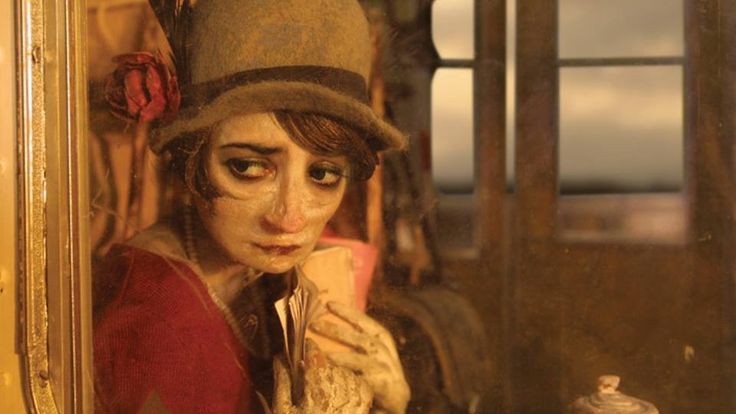
The visual world of «Petya and the Wolf» is composed of muted tones, rough textures, and meticulously crafted details. The snow-covered trees, darkened by the passage of time, the folds in the clothing, and the dolls' faces appear as if the film’s tiny world exists somewhere real. The materiality of every object is palpable on screen: the coldness of the snow, the coarse surface of the wood, the softness of the fur. All of this creates a unique atmosphere of a winter fairy tale where coziness coexists with unease.
The surrounding space gradually reveals the story’s character. The house and fence seem cramped, limiting Petya’s freedom, while the forest draws him in with its mystery. Among the trees, the protagonist finds himself alone against a world that does not adhere to the rules set by his grandfather. Thanks to the set design, the viewer senses the change even before it becomes obvious in the characters' actions.
2. Unknown Japan: A Video Review of the Animated Film «Mori no Ratio»
YouTube video review detailing the unique fairytale world created by Tomoyasu Murata—the Japanese director and creator of «Mori no Ratio.» The video features clips from the animated series, with a voiceover narrating the aesthetic of the cartoon.
Example of voiceover narration: «What immediately draws the eye are the dolls themselves. They possess unusual proportions, expressive silhouettes, and textured surfaces. The innocence and childlike simplicity of the characters are conveyed through the materials used to create them: fluffy white cotton, soft fabric, and large glass eyes. This materiality becomes a crucial part of the series' visual language. The characters seem to belong to the same world as the objects surrounding them. The dolls and the set design exist in one physical space, and the camera captures their true forms, shadows, and surfaces.»
3. How is a stop-motion puppet structured?
An informative article on the website inviting readers to delve into one of the most complex and intriguing aspects of stop-motion creation: the construction of an animation puppet.
To support the text, illustrations are essential, so the article will also feature real photographs of the puppets.
Sample excerpt from the article: «Inside many animated puppets is an armature—a movable framework that acts as a skeleton. It is made from metal, wire, or specialized articulated joints.
In simple constructions, flexible wire is used. It allows the arms and legs to bend, but over time, the metal can fatigue and break. For complex and long-duration shoots, articulated armatures are often employed: individual metal parts are connected by movable nodes that hold a selected position.
Thanks to this, the animator can slightly turn the head, change the finger positions, or shift the character’s weight—and the puppet will remain in the desired pose while the camera films the shot.»
4. Top of the Month
Poll in the Telegram channel: viewers are invited to compile their top list of stop-motion cartoons and discuss their choices in the comments. Readers can make new acquaintances with like-minded people and engage in discussions. The final statistics are posted on the website and updated every month.
5. People Who Bring Clay to Life
YouTube interview podcast with an animator from LAIKA Studios: on their creative journey, the behind-the-scenes of production, and key details of animation. The podcast guest can shed light on the industry’s inner workings and offer advice to aspiring animators.
Example interview questions designed to elicit detailed and honest responses:1. How did you become interested in puppet animation, and what specifically drew you to it?
2. Where does character creation begin—with a sketch, a script, or the director’s initial concept?
3. What role does the animator play in character development, and at what stages are they involved in the film’s production?
4. How is the process of managing interchangeable faces and facial expressions structured? How far in advance does the animator plan each emotion?
5. What equipment and materials are necessary for initial projects? Is it possible to start at home with a limited budget?
6. How should one build an initial portfolio to capture the attention of a professional studio?
6. A Whole World on the Table