Navigation
1. Concept 2. Early Optical Effects 3. Working with Space and Scale 4. Editing as a Way to Create the Impossible 5. Light and Optical Environment 6. Material Transformation of the Body 7. Special Effects in Genre Cinema 8. Conclusion
1. Concept
Cinema, since its inception, has been a tool for creating visual illusions. Before the advent of digital graphics, which allow for the rendering of any scene or effect, directors and cinematographers employed various techniques to convey what was difficult to capture directly.
Early cinema created new realities using visual techniques that could be called pre-digital special effects. As early as the late 19th and early 20th centuries, the first attempts to manipulate the image began to appear in cinema. Directors could make objects disappear, layer frames upon one another, utilize miniatures, or distort time and space through editing. These techniques did not attempt to conceal their artificiality; instead, they allowed the viewer to form a new visual perception. What was impossible in reality could easily fit into the frame.
As part of my visual research, I intend to examine the visual techniques employed and how they forged the distinct visual language of that era. Special attention will be paid to how the physical constraints of filming and editing influenced the aesthetic of cinematic imagery. Furthermore, we will explore the purpose of visual effects across different film genres, how makeup was utilized on live actors, and the methods of model animation.
The core hypothesis of this study is that directors of that time did not aim to completely conceal the artificiality of special effects on screen. Instead, they constructed a unique visual world where the audience based their perception on an understanding of the materiality of the illusions. Consequently, we examine these special effects not merely as a technical solution employed by the filmmakers, but as an autonomous visual language.
Visual effects in pre-digital cinema were created using actual physical objects and real technical processes that occurred during filming. Unlike digital effects, which are generated in computer software after the image is recorded, pre-digital special effects relied on sets, models, makeup, lighting, film, and camera optics.
Because the effect was always closely tied to the physical environment where the image was created, the illusion felt tangible. For example, if an object needed to disappear, the camera would simply be stopped, and the shot composition would be changed. Large-scale scenes were shot using miniature models, and ghostly figures were achieved through double exposure of the film. In essence, the illusion arose not as something virtual, but as a result of the camera interacting with real objects, space, and light.
2. Early Optical Effects
In the history of early cinema, optical and montage techniques were among the first special effects, allowing filmmakers to create the illusion of objects disappearing, transforming, or layering directly within the frame.
One of the earliest examples of using optical special effects was the scene in Georges Méliès' film «A Trip to the Moon» where the astronomers disappear. In the episode involving the collision with the Moon inhabitants, the characters explode into a cloud of smoke after being struck by an umbrella. This effect was created using stop-motion: the filming was interrupted, the actor left the frame, and then recording continued. During the film’s screening, this splice was perceived as an instant vanishing of the body.
Director Georges Méliès «A Trip to the Moon» (French: Le Voyage dans la Lune), 1902
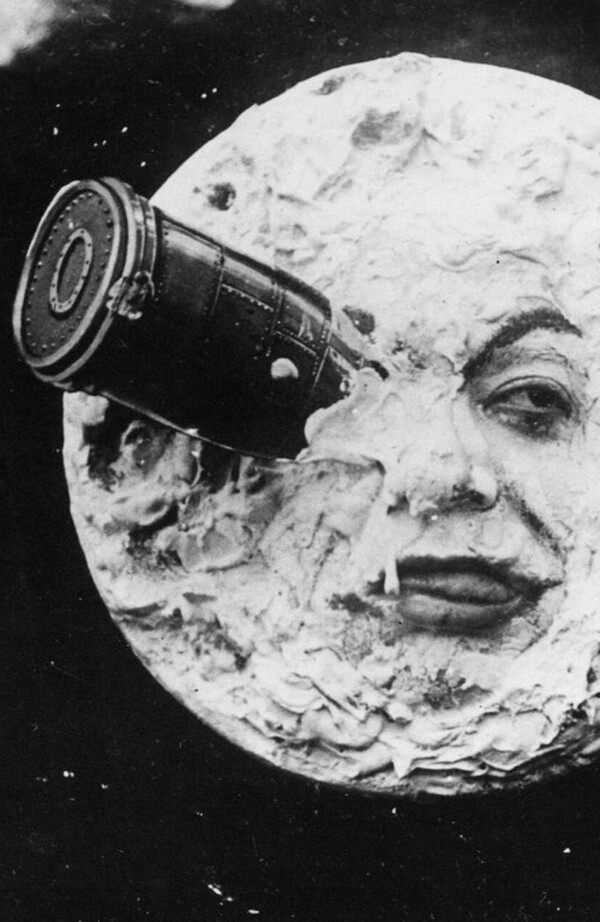
In another scene, a rocket crashes into the Moon’s eye. This effect is achieved by combining painted backdrops, three-dimensional objects, and theatrical staging within the frame. The illusion here is not based on realism, but on the spectacular nature of the cinematic stunt itself.
Director Georges Méliès «A Trip to the Moon» (French: Le Voyage dans la Lune), 1902
In Friedrich Wilhelm Murnau’s film Nosferatu: Symphony of Horror, there is a scene featuring Orlok’s shadow hand. In this scene, his hand shadow moves seemingly on its own, separate from the body, creating the sensation of a living, autonomous silhouette. When the shadow fingers begin to slowly clench on the girl’s chest, the scene becomes particularly tense. Due to the interplay of light and shadow, and the camera presenting only a flat image, the sense of the shadow existing as a separate entity is genuinely created.
This technique relies on the use of highly contrasting lighting and a specific frame composition. The light source is positioned in such a way that it generates a distorted silhouette of the hand. Consequently, the entire scene transforms into a visual illusion, where the threat is perceived not through the actor’s performance, but specifically through his shadow.
Director Friedrich Wilhelm Murnau «Nosferatu: A Symphony of Horror, ” 1922
In these scenes, we do not see the character itself, only its silhouette. This intensifies the sense of Orlok’s immateriality and, consequently, the terror associated with this supernatural entity.
Director Friedrich Wilhelm Murnau «Nosferatu: A Symphony of Horror, ” 1922
3. Working with Space and Scale
Another way of creating visual illusion in pre-digital cinema was through manipulating frame space. Unlike digital cinema, where space can be entirely generated through computer graphics, special effects in old cinema relied on the creation and filming of real-world objects.
Directors have used miniatures, sets, and forced perspective to create objects and spaces that do not exist in reality or that cannot be filmed in full scale. In the 21st century, models have been used and continue to be used instead of computer graphics, primarily for tighter control over details and to achieve realism. Hogwarts Castle from «Harry Potter,» which was a physical model, is a prime example.
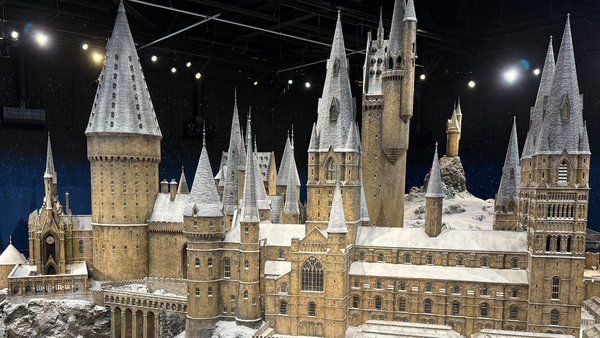
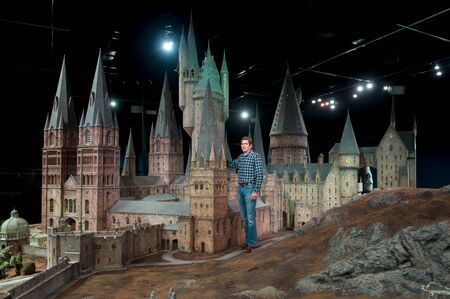
Hogwarts Castle mockup from set footage
Another example of working with artificial space is Fritz Lang’s «Metropolis.» To depict a futuristic city, large-scale building models, multi-layered sets, and combined photography were used. In the fragments where traffic moves between skyscrapers, the miniature city is shot in such a way that it is perceived as a gigantic space. The lighting and the multi-layered composition draw attention away from the real scale of the objects, distorting the perception of the overall scene—everything appears larger and more imposing. This effect is what conveys the feeling of a vast city of the future. Furthermore, this overall effect of the city’s incredible «upper levels» is used to create contrast with the lower, working, and grimy sections.
Director Fritz Lang Metropolis, 1927
The 1933 film «King Kong» also utilized scale manipulation. The camera filmed city models from an angle, concealing their actual size, which allowed them to be perceived as a fully realized urban space.
Stop-motion animation was used to create King Kong, which is why his movements appear jerky and mechanical. However, it is this imperfect plasticity that emphasizes the materiality of the special effect. The viewer senses the presence of a physical object within the frame.
Directors and producers Marian K. Cooper and Ernest B. Schoedsack. «King Kong, ” 1933
The composition of the frame creates a contrast between the massive scale of King Kong and the small buildings and machinery.
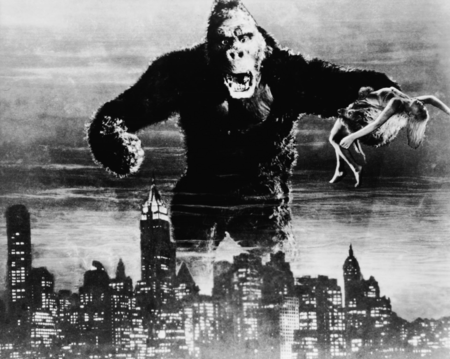
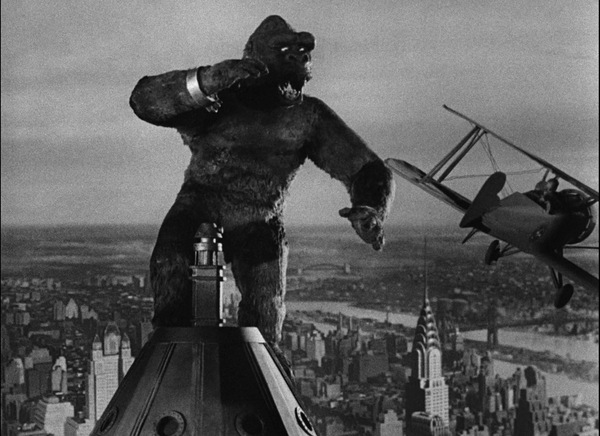
1. King Kong in promotional material for the original 1933 film 2. A still from the 1933 film King Kong
4. Installation as a Means of Creating the Impossible
Editing can be viewed not just as a method of joining shots, but as an independent tool for creating visual illusions. Through splicing, one can alter time, space, and the physical properties of objects directly within the image. With its help, one can create incredible effects and scenes that would be impossible to achieve, for example, in theater.
One of the early examples of this approach was the film «Sherlock Jr.». When the film’s protagonist enters the cinema screen, the space around him begins to shift abruptly through a series of cuts. The hero maintains the same position in the center of the frame, but the background behind him transforms from a garden to a street, and so on. Because of the constant change in space, the hero seems to lose stability and cannot remain contained within the image. The illusion is built not on set design, but on the rhythm of the editing, which fractures the continuity and unity of the space.