Concept
«Creating Doc”—a Telegram channel dedicated to independent, auteur-driven documentary film that often bypasses mainstream recommendations yet is crucial for advancing the discourse in this cinematographic field. Each post features a recommendation for one film, a few still frames from it, and a brief essay discussing its craft and the lasting impression it leaves after the credits roll. What perspective does the camera employ? Whose voice narrates the soundtrack? At what point does the director allow reality to unfold, and at what point do they decide to reconstruct it from fragments? Through documentaries, we witness someone else’s testimony—a reality we can enter and inhabit for a while. Where possible, we provide links to where you can watch these films on the big screen: in theaters, specialized film venues, and film clubs. The first half of the week is devoted to film recommendations, with one movie featured each day. On the fifth day, we offer a selection of reviews, essays, and/or podcasts about those films. On the sixth day, subscribers vote for their favorite film, and on the seventh, a post appears featuring one to three films that follow suit in style, theme, or tone, allowing the channel to grow like a collective conversation.
Half-Yearmatic Plan
Weekly Rhythm (Consistent Every Month):
Days 1–4: One film per day: stills, text, viewing link, and a note about the large-screen screening (if applicable).
Day 5: Materials related to the week’s films: one to three reviews, essays, or podcasts.
Day 6: Poll: Which film of the week did you like the most?
Day 7: «Similar Works»: A post about the winning film and one to three other movies that share a similar technique, theme, or tone.
The first three months focus on documentary film genres; the following three focus on countries and regions. There will be no chronological order within a month: a 1924 film can sit alongside a 2022 film. Each month, we track screenings of documentary film in theaters, film spaces, and film clubs, and add them to our posts.
Month 1. Observations
Observational and sensory cinema. Long takes, sound, light, bodies, labor. Films that allow the viewer to watch without prompts, where the director hardly intervenes in the filming of the space and the interactions of the people being filmed.
Month 2. Self-Portraits
Month 3. Archival, Experimental
Journals, self-portraits, and first-person essay films. The director is either on camera or providing a voiceover, and we follow along through their life.
Archival cinema, early montage experiments, and play with form itself. How splicing, rhythm, and intonation can transform reality into anything.
Month 4: «The USSR and the Post-Soviet Space.»
Directors who filmed in a country that no longer exists, and those who work with its memory today. Films from various decades.
Month 5: «North and South America.»
Independent American cinema. Laboratories, workshops, and experimental studios; documentary activism; portraits of cities and people.
Month 6: «Europe: Countries Selected by Readers.» We begin with French documentary cinema, and throughout the month, subscribers choose the regions they want to read about in the Saturday polls. The final week is dedicated to the semester’s wrap-up, focusing on the films readers selected most often.
10 Content Samples
All posts about films follow this structure: Styles, shots (3–5 pieces) — Title, director, year — Text — Where to watch — An additional line, «on the big screen, ” appears when a suitable screening is available in the next week to month.
Example 1 (Day 1)
Leviathan
Lucien Casteen-Taylor, Virina Paravel, 2012.
a commercial fishing trawler off the coast of New England, night, water, seagulls, people, and fish, shot with tiny cameras mounted on the boat and on the fishermen themselves. The filmmakers work in the Harvard Lab for Sensory Ethnography, and it shows. The camera floats, dives, and enters places where the human eye has never been. There are almost no words, and the film transforms into sound, light, and movement, into which one can get lost.
🎞 on the big screen: [cinema, screening space, or film club, screening date]
where to watch: [link]
Sample 2 (Day 2)
«20 Cigarettes»
James Benning, 2011.
American director James Benning favors long, static shots where seemingly nothing happens, allowing everything to be seen. In this film, twenty people take turns smoking in front of the camera, and we watch as the cigarette burns down—on their faces, hands, in their pauses, in their habits, in their distinctions. These twenty brief portraits combine to form a dialogue about time, attention, and what we notice in another person when there are no distractions.
Where to watch: [link]
Sample 3 (Day 3)
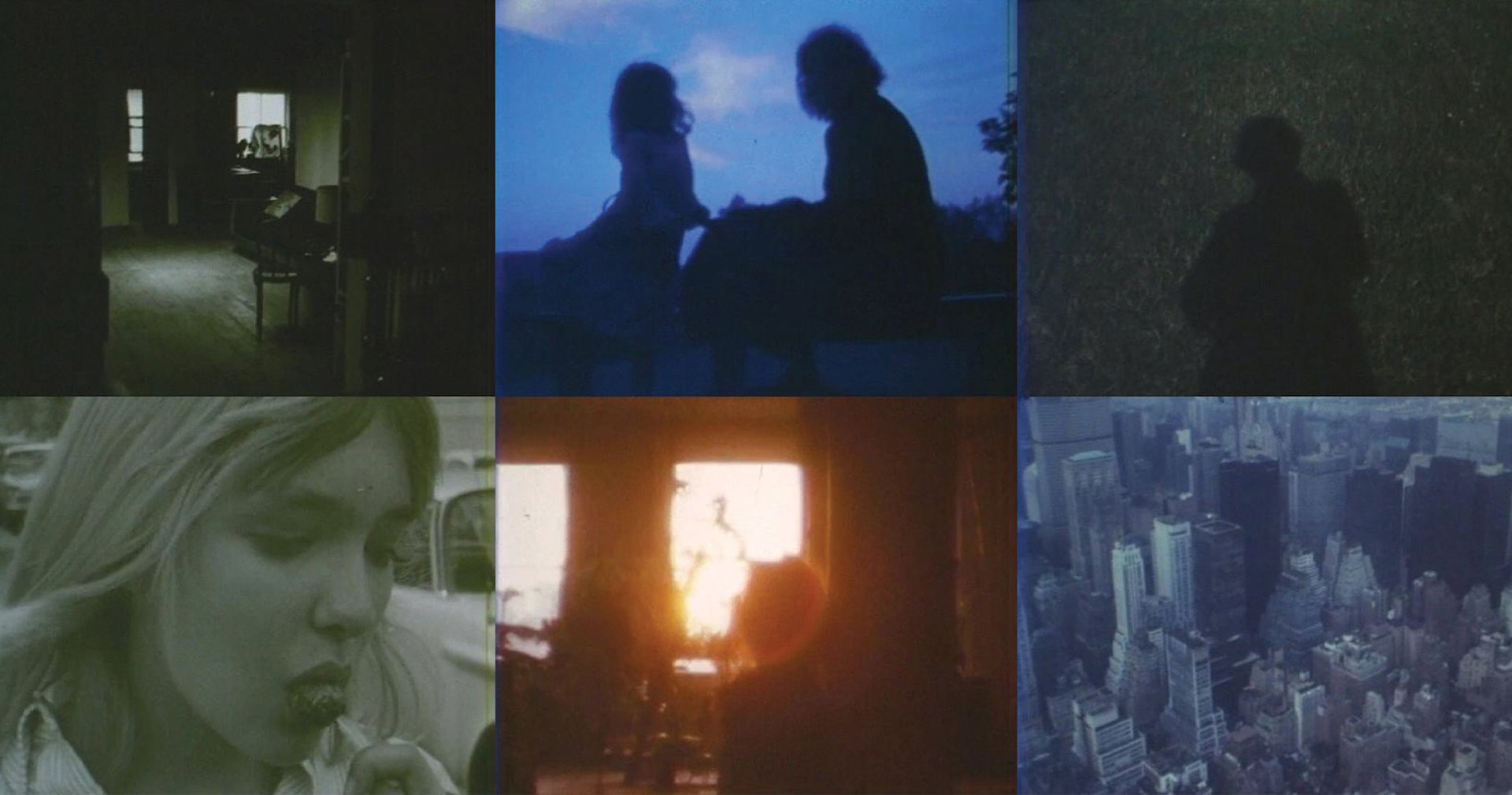
«Moving forward, I sometimes caught fleeting glimpses of beauty» Jonas Mekas, 2000.
Nearly five hours of diary footage shot in New York over decades, narrated by Mekas reading them like letters. The director, of Lithuanian descent, compiles a life from small moments: friends, winter streets, holidays, faces visible in windows. His camera is light and handheld—it moves along with the body, and the rhythm of the editing is akin to breathing. The film can be watched in segments and revisited, allowing you to discover a new resonance in moments that once seemed incidental. 🎞 On the big screen: [cinema club or screening space, date] Where to watch: [link]
Example 4 (Day 4)
«Côte d’Annes»
Anne Ward, 2008.
At eighty, Anne Ward returns to the shores where her life has unfolded: Belgium, France, California. The film is constructed from memories, old footage, and theatrical devices like mirrors placed directly on the sand. She speaks about herself with humor, warmth, and attention, making you feel as if you are sitting next to her in the kitchen listening as she flips through a family album.
Watch online: [link]
Sample 5 (Day 5: Weekly Materials)
Credits: One still image from each film of the week in the main grid.
Read and listen: Materials for the films of the week
This week we watched «Leviathan, ” „20 Cigarettes, ” „Moving Forward…, ” and „Agnès’ Coast.“ We have gathered three materials for you that will help you watch and analyze further:
Review: [author, publication, title] — [one line about the text’s appeal: observation, comparison, terminology]
Text: [author, publication, title] — [one line about what it adds to the film]
Podcast: [title, episode, link] — [one line about the discussion topic]
If you have read or listened to anything else about these films, please write in the comments—we would be happy to receive your recommendations and add them to the selection.
Sample 6 (Day 6: Survey)
The winning film will be the protagonist of tomorrow—we will give recommendations for similar movies. If you haven’t seen anything yet, write in the comments what you are watching now and share your impressions and suggestions!
Sample 7 (Day 7: «Similar, ” Survey Winner: „Leviathan“)
Stills: One still from each film.
If you enjoyed «Leviathan, „
we selected films where the camera observes labor, the body, and nature almost without dialogue, allowing the image and sound to function as the film’s primary language.
Continuing the conversation about the radicalization of observation and posing the question of how contemporary documentary cinema interprets the modern use of the non-human gaze, we recommend the following films:
„No More Nights“ by Eleanor Weber (2020).
It is available with English subtitles, for example, here.
To enter into a dialogue with what you’ve viewed, you might read some texts related to the films:
Valeria Kosenko on the specific film.
Darina Polikarpova, a more general piece, is here.
„De Humani Corporis Fabrica“ by Lucien Casten-Taylor and Virina Paravel (2022).
The creators of „Leviathan“ return with miniature cameras, and this time the camera enters the human body: in Parisian hospitals, endoscopes and medical optics become the film’s eyes. If Weber’s mechanical gaze looks down upon the earth from a height, here the same gaze is turned inward, and the body is presented as a landscape that we are accustomed to considering our own. The film asks: to whom does such a gaze belong, and what does its familiarity do to us? A warning in advance: the film contains many real surgical scenes.
Sample 8 (Day 1 of another week)
«Kino-Eye»
Dziga Vertov, 1924.
a documentary film subtitled «Life Unforeseen»: without actors or sets, only the camera, which ventures out into the city to observe. Vertov edits the footage as if he wants to show how the camera differs from the human eye—it can speed up, rewind time, and notice things for which we lack patience. I watch it like a letter from a time when cinema was just learning to define itself, and in every cut, you can hear the excitement of an explorer.
🎞 On the big screen: [film club, retrospective, or cinema space]
Where to watch: [link]