
INDEX
Theoretical Introduction
What This Research Examines
Why I Chose This Topic
The Historical and Cultural Context of Yamal
The Origin of Yamal’s Visual Language
The Symbolism of Ornamentation
Memory of the Hands: Crafts as an Invisible Archive
Modern Transformation and Forgetting
Conclusion
THEORETICAL INTRODUCTION
Memory is often presented to us as something abstract—a collection of events, dates, and documentary evidence. However, in traditional cultures, particularly those of Northern peoples, it functions completely differently: it manifests in actions, objects, ornaments, and the rhythms of movement. The pattern serves here as a unique language that preserves accumulated experience across centuries outside of verbal form. For example, Yamal embroidery provides a clear illustration of how visual imagery becomes a form of collective memory—it doesn’t merely decorate clothing; it organizes the world’s space, records origin, lineage, and territorial boundaries. Knowledge in traditional Northern culture was transmitted not through writing, but directly through the body—through the hands of the eldest women of the lineage, grandmothers, and mothers. By repeating the same ritualized movements, the master not only reproduced the patterns but also established a living connection between generations.
This study is dedicated to exploring ornamentation as a preserver of intangible heritage—a heritage expressed not in archival documents, but in the form of lines, rhythm, and meaningful hand movements. We examine the pattern as a «non-written archive”—a means of preserving memory that the contemporary person can „read.“
WHAT IS THIS RESEARCH ABOUT?
This study aims to see beyond the decorative elements in Yamal patterns and uncover the semantic layer hidden beneath the familiar aesthetics of the North. The Yamal ornament is a system of signs in which every element is connected to real life—the movement of migratory routes, natural cycles, family dynamics, and the distribution of roles.
WHY I CHOSE THIS TOPIC
For me, this research isn’t an abstract academic interest—it brings me back to my own experience. I was born in Yamal and lived there for sixteen years, among people for whom patterns weren’t museum artifacts, but an integral part of daily life. As a child, I saw these ornaments on clothing, household items, and in the gestures of the women who sewed and embroidered. Later, while I was attending vocational school and completing my thesis about the North, I first consciously encountered how complex and profound this visual language is. I studied the structure of the ornaments, their function, and their symbolism, and for the first time, I understood that behind simple forms lies an immense layer of memory. Back then, I saw in the patterns not just decoration, but a living cultural topography that encodes routes, relationships, rituals, and emotions. Now, living in St. Petersburg and pursuing visual research, I realize I want to return to this subject with a fresh perspective. Not as someone who grew up within the tradition, but as someone trying to read it anew—to understand what remains, what has disappeared, and what might be reinterpreted.
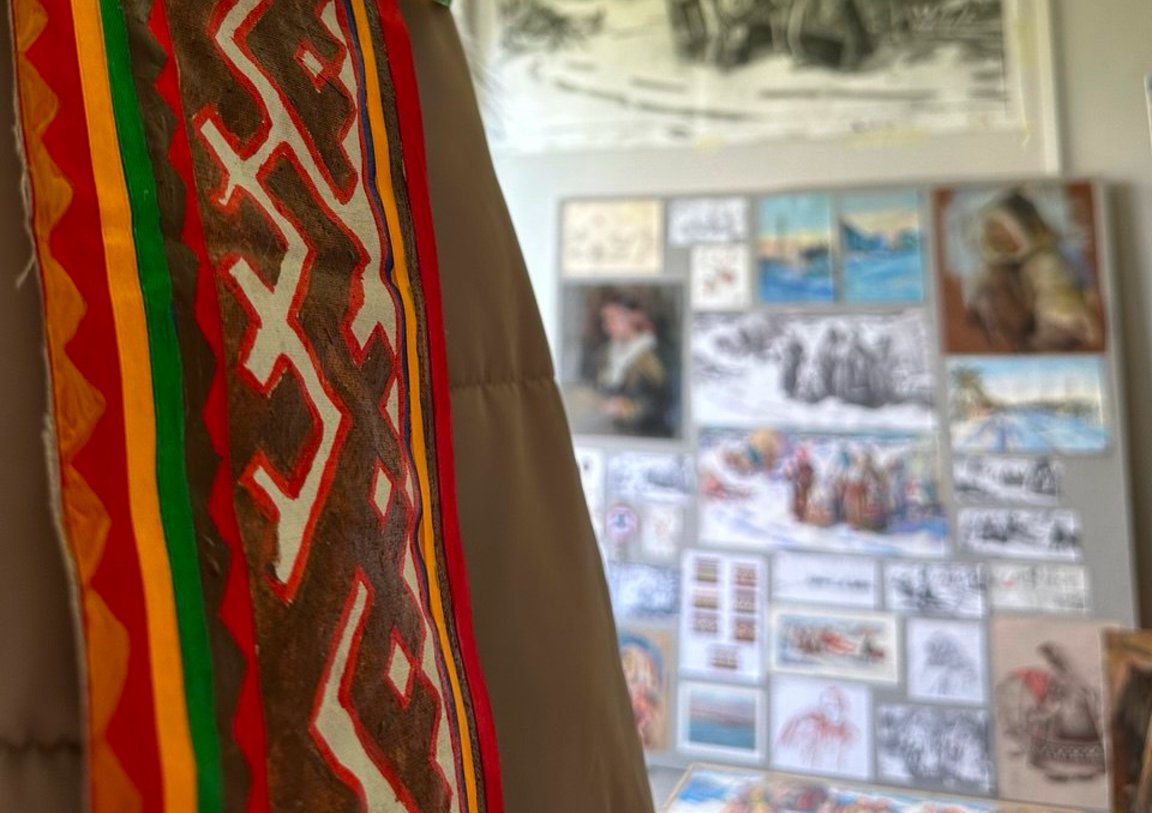
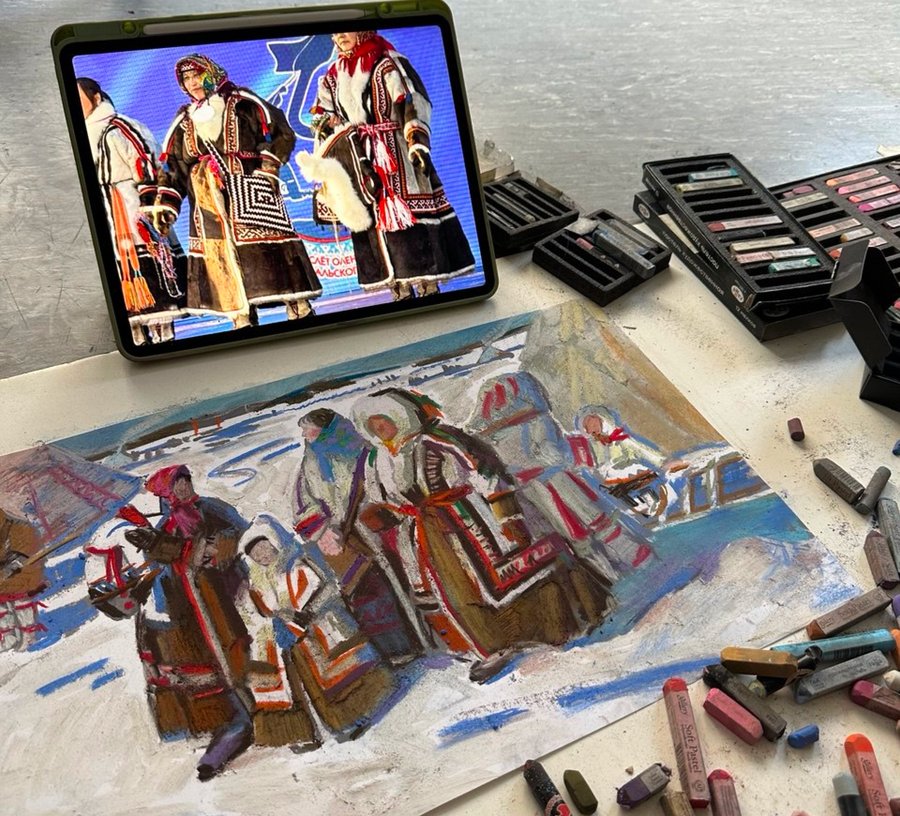
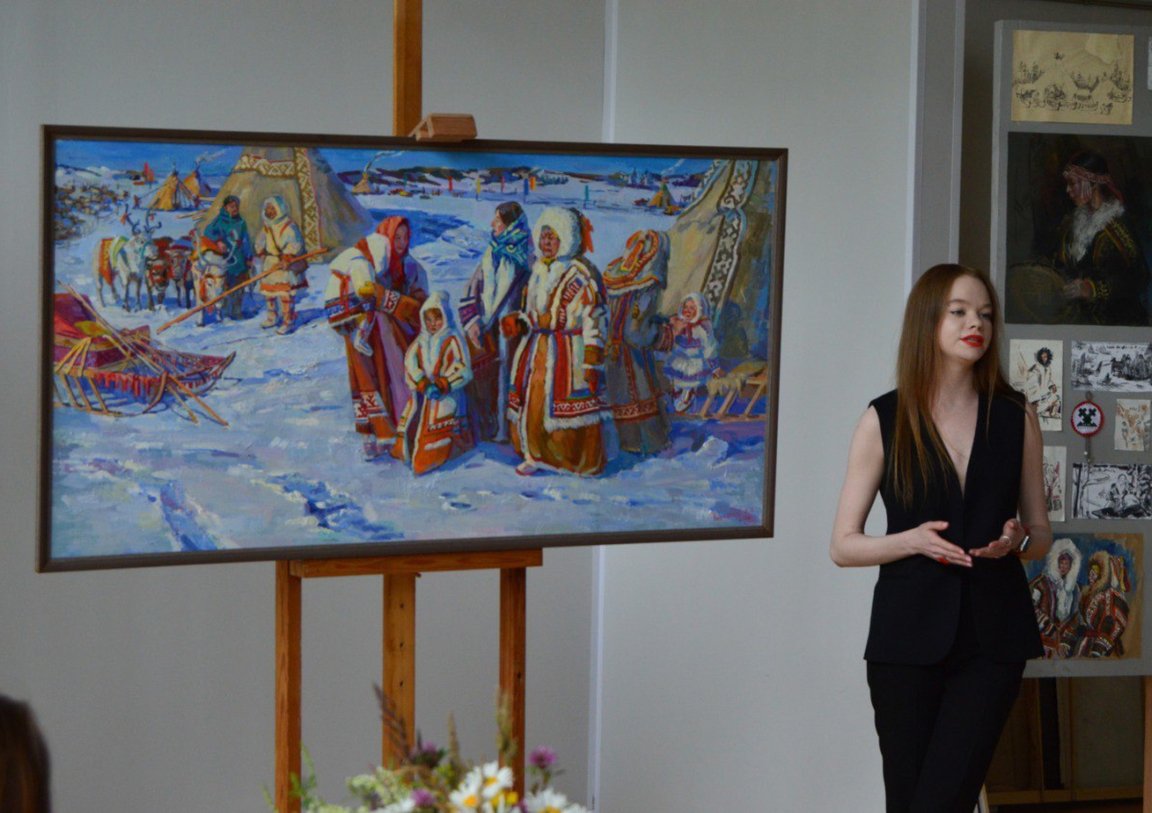
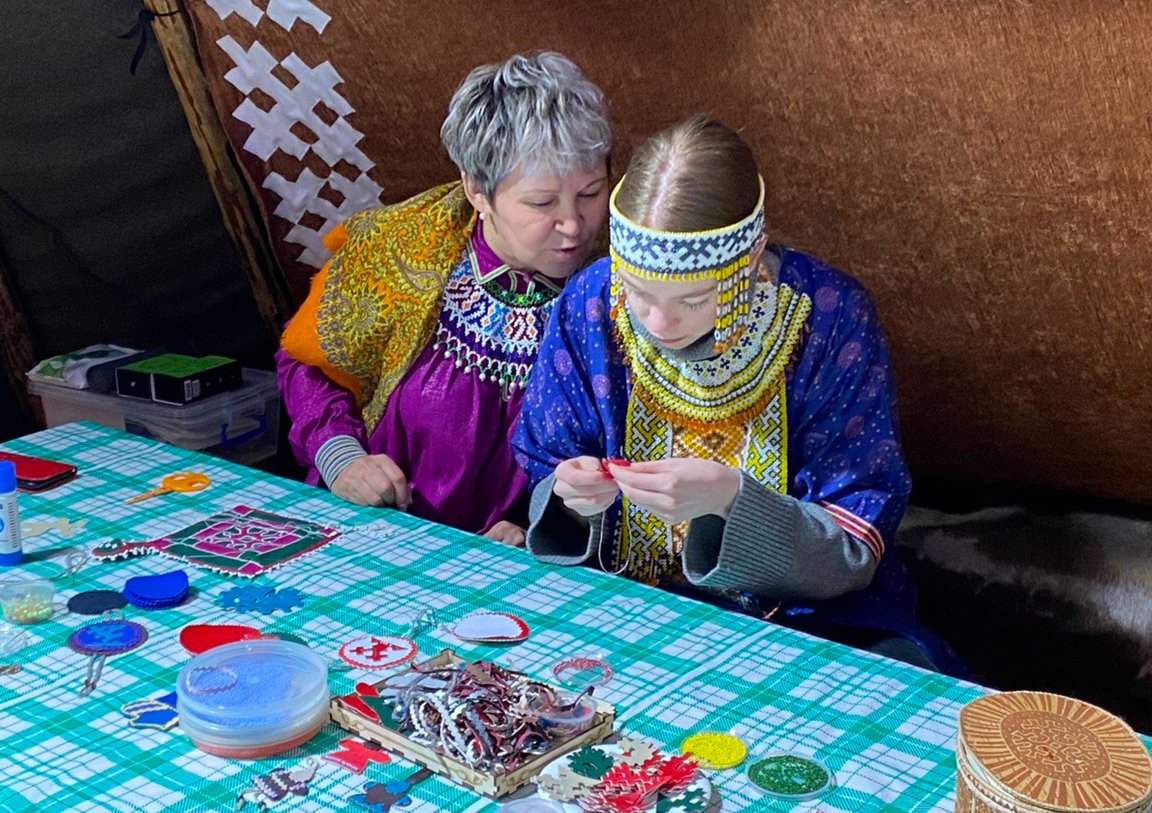
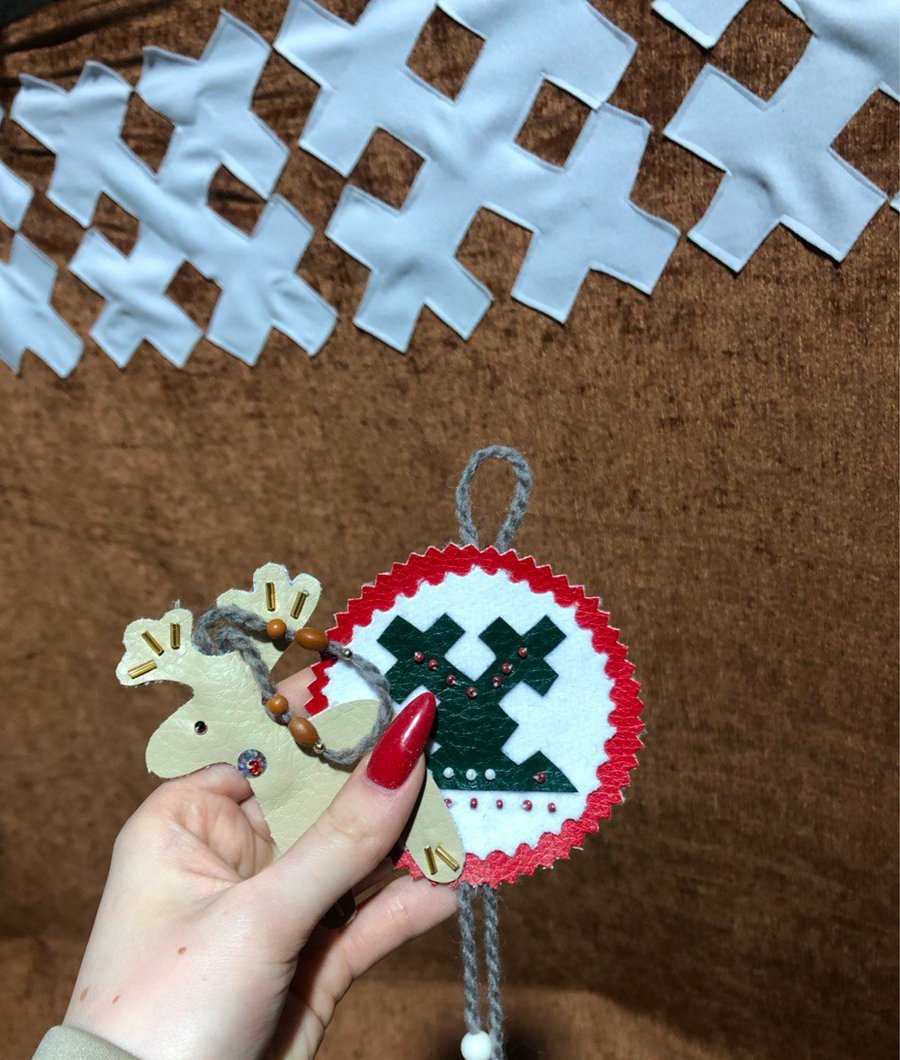
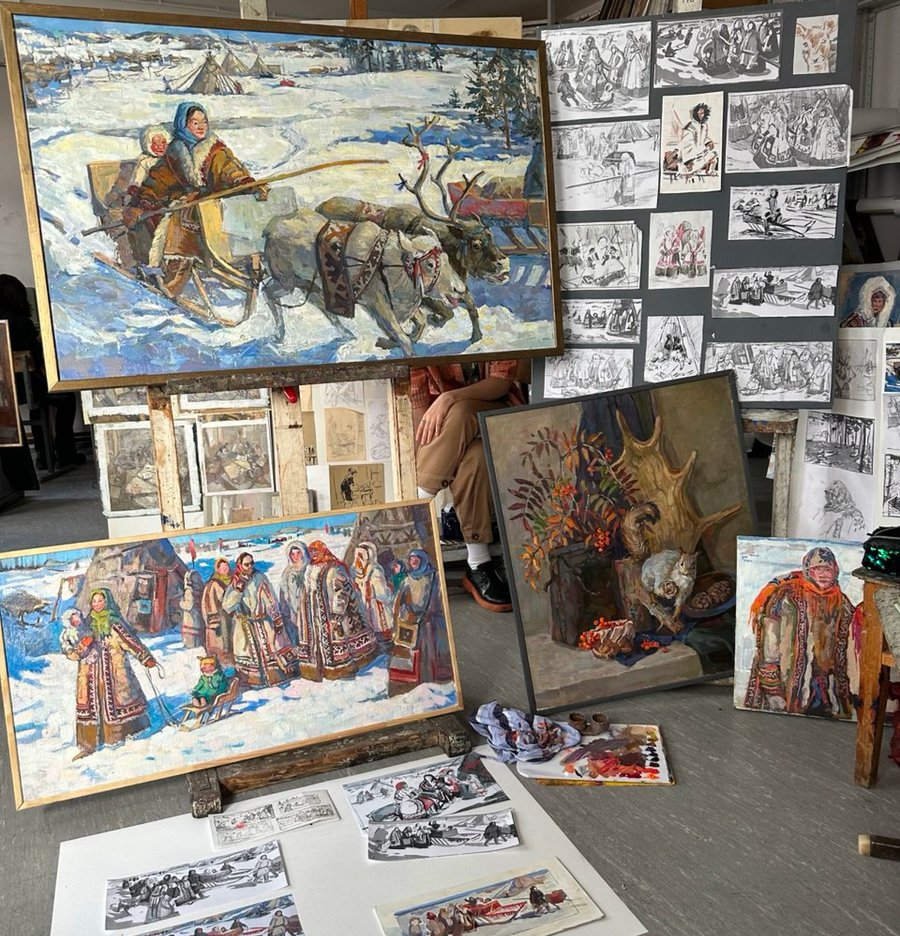
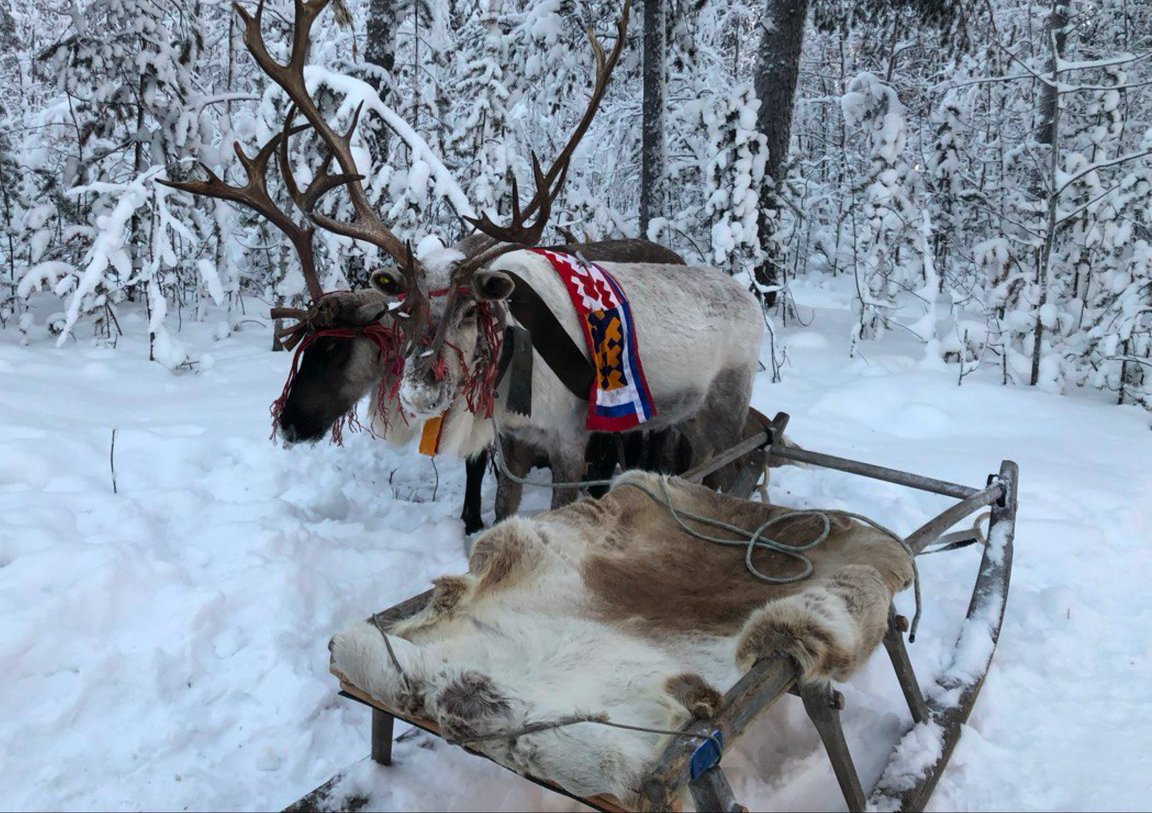
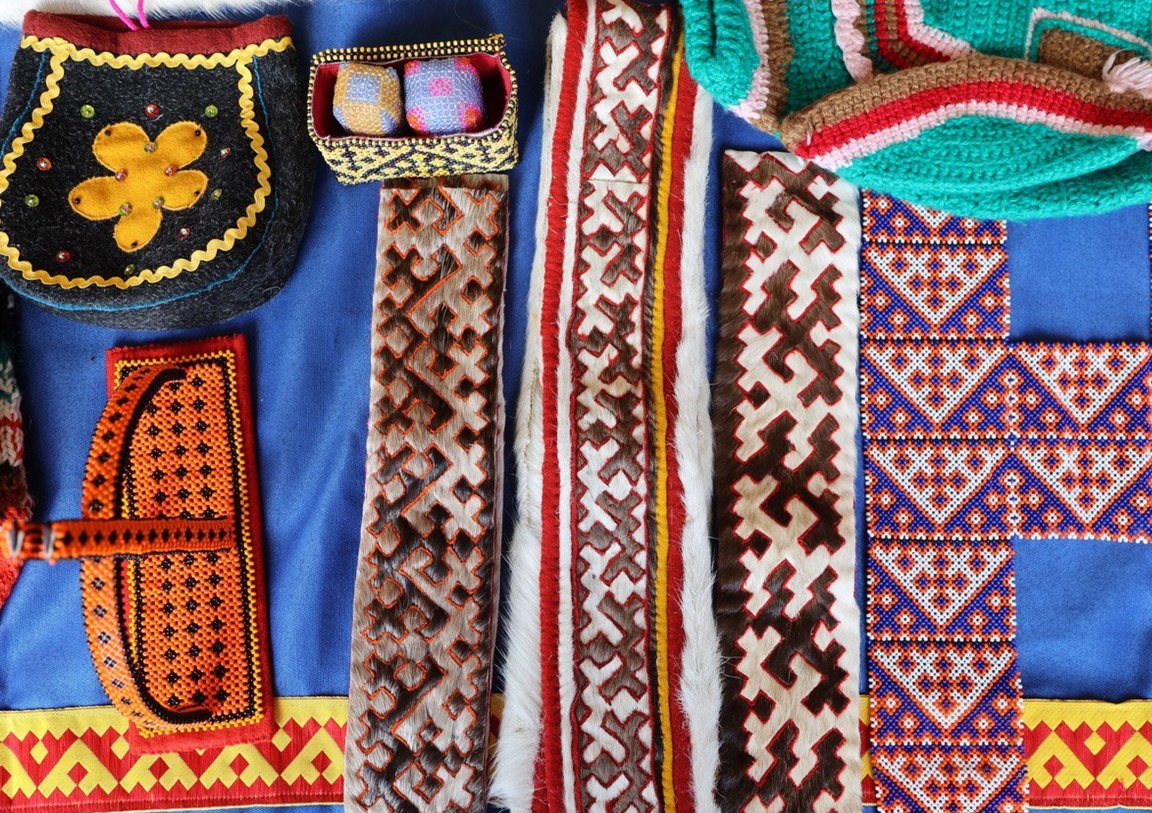
Photographs are from a personal archive, 2023–2025
HISTORICAL AND CULTURAL CONTEXT OF YAMAL
Yamal is a vast peninsula in the northern part of Western Siberia, washed by the Kara Sea to the north and bordering Taimyr to the east. The territory is characterized by a harsh Arctic climate: long winters, a short summer, permafrost, and strong winds, which shape not only the way of life but also the worldview of the people who live there.
Video work by Dmitry Shcherbinkin
Yamal is an expansive peninsula in the northern part of West Siberia, bordered by the Kara Sea to the north and Taymyr to the east. The territory is characterized by a harsh Arctic climate: long winters, short summers, permafrost, and strong winds—factors that shape not only the lifestyle but also the worldview of the people who live there.
Photos from the Khanty video. «The Magic of Patterns in Natalia’s Hands»
The Indigenous peoples of Yamal—primarily the Nenets, as well as the Khanty and Selkups. The Nenets are a nomadic people whose main occupation is reindeer herding. Their movement depends on the season; they follow their herds across pastures located in the tundra and forest-tundra of the Yamal Peninsula. The Khanty and Selkups also possess rich traditions of craftsmanship and ornamental art, though their style differs in motifs and execution techniques. For all these peoples, life is inextricably linked to the surrounding nature: route selection is determined by the condition of the snow and ice, wind direction influences settlement location, and natural cycles regulate the gathering of food and materials for clothing.
Women during the plague. Tobolsk District, Berezovsky Settlement, Nenets. Photo by S. I. Rudenko. 1909–1910. REM Archives.
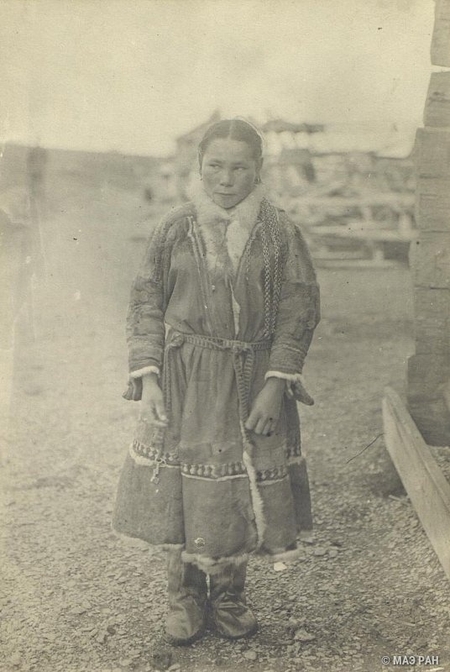
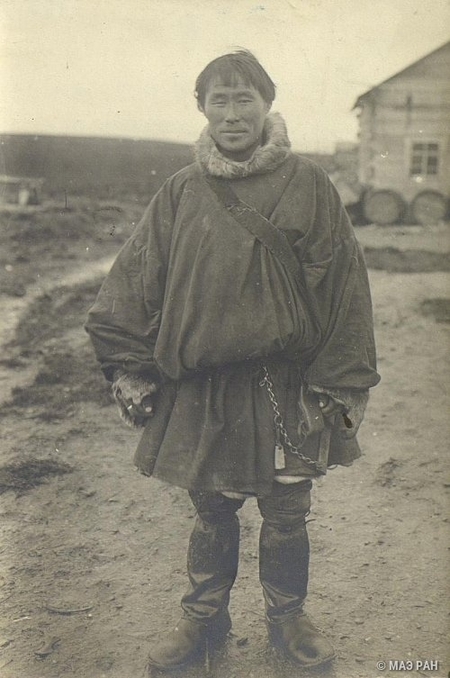
Full-length portrait of a woman and a man. Nenets. Early 20th Century Photo from the Collection of the Russian Academy of Sciences (RAS)
Under these conditions, the visual language—including ornamentation—served not only an aesthetic function but also a practical one. It: — marked tribal affiliation—patterns on clothing allowed one to determine which family or tribe a person belonged to; — offered protection from «evil"—certain line forms and combinations were considered amulets; — aided in distinguishing objects—nomadic life required clear demarcation of garments and items; — structured worldview—motifs depicted routes, seasonal cycles, and humanity’s connection to nature.
Women played a pivotal role in transmitting and preserving traditional knowledge. From childhood, girls mastered the skills of sewing, knitting, appliqué, and weaving. Every stitch, every thread became part of the lessons that passed down the experience of previous generations. It was women who developed a specific visual code reflecting the real aspects of their daily lives: the division of labor, paths of travel, care for the family, the cyclical nature of domestic tasks, and interaction with the natural world around them.
ORIGINS OF THE YAMAL VISUAL LANGUAGE
Reindeer Herder Day in Yamal. Photo credit: «Purovsky District Culture Department»
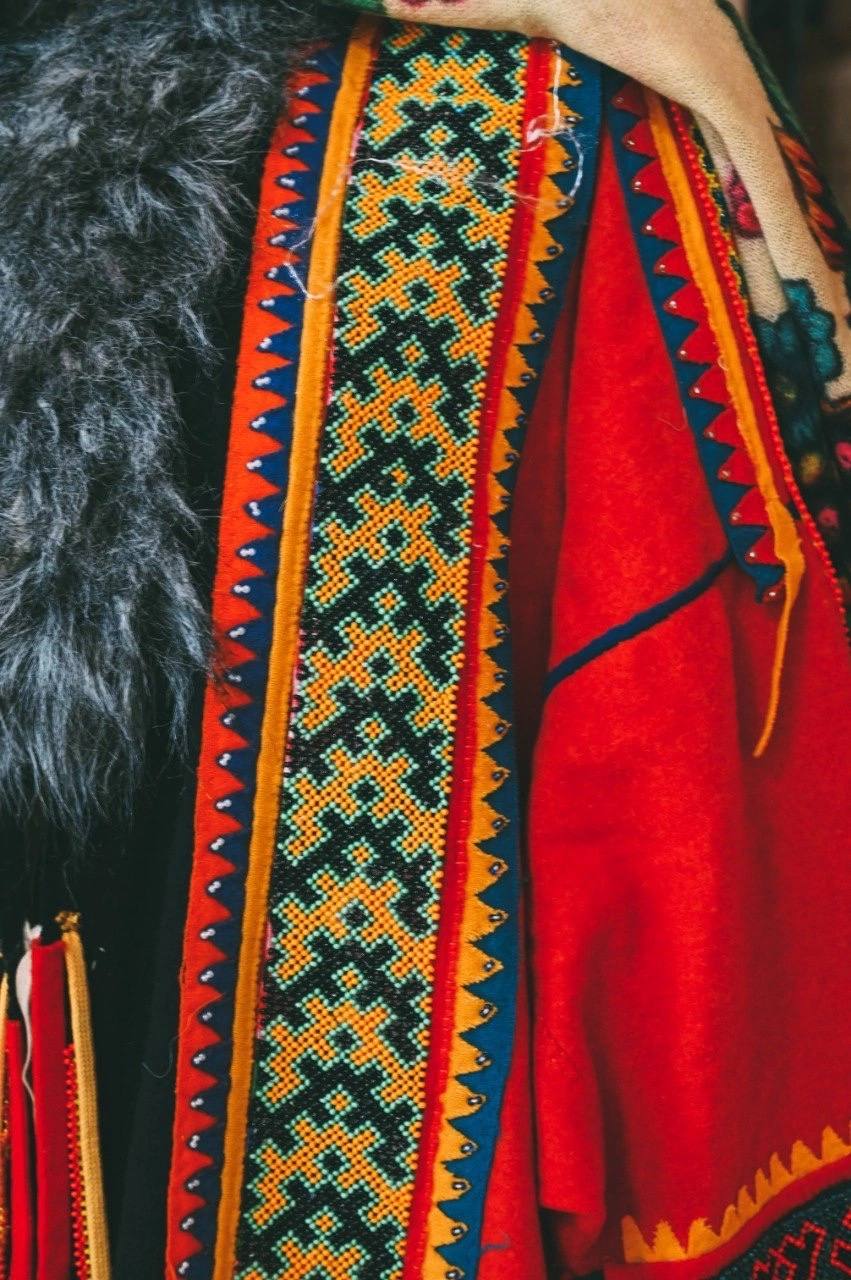
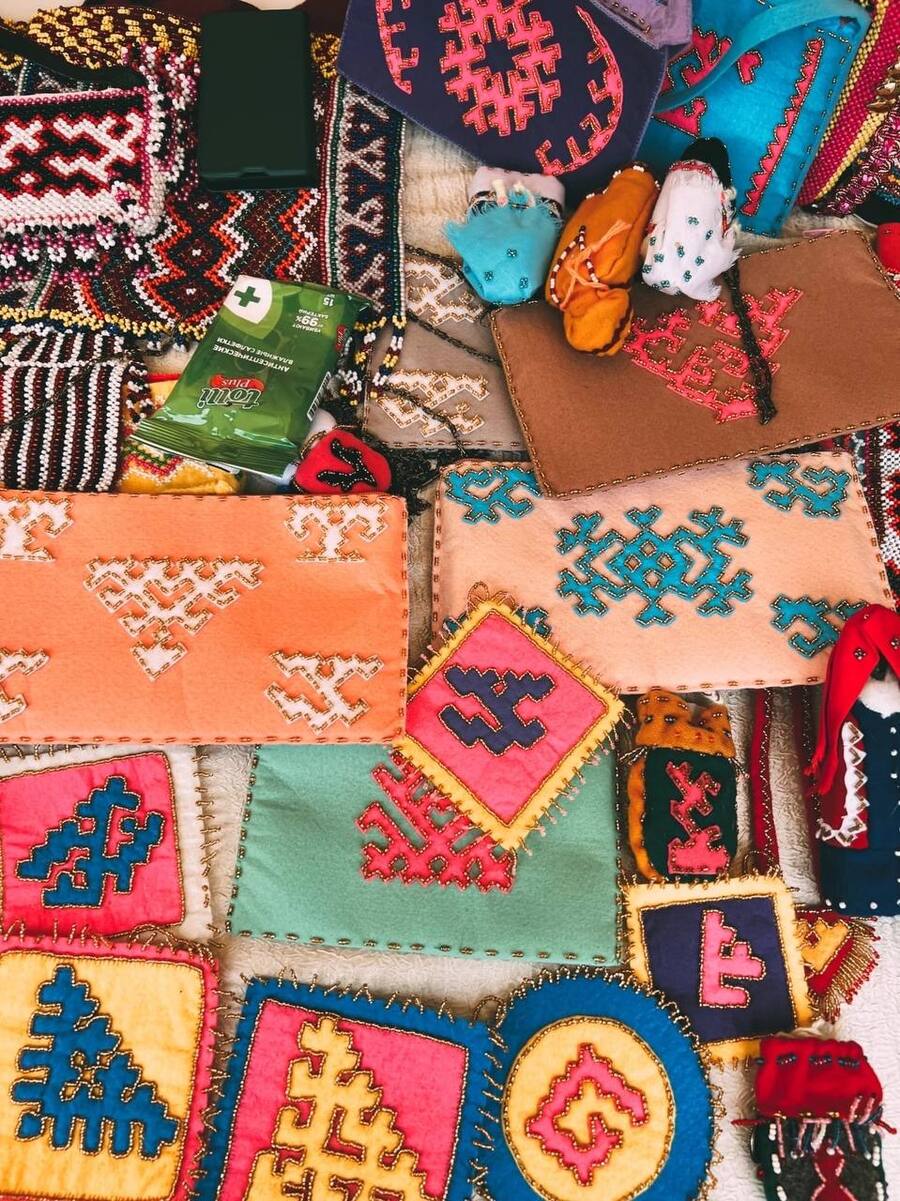
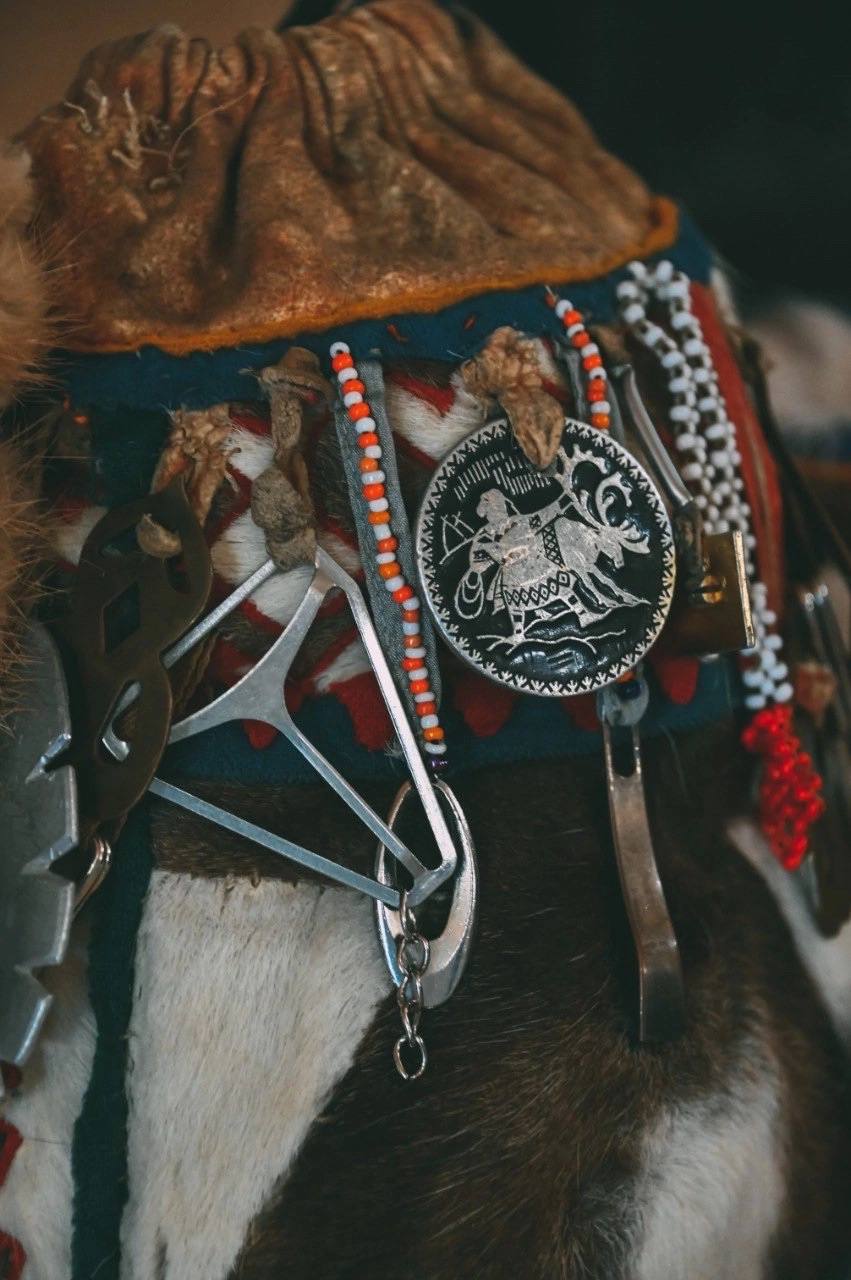
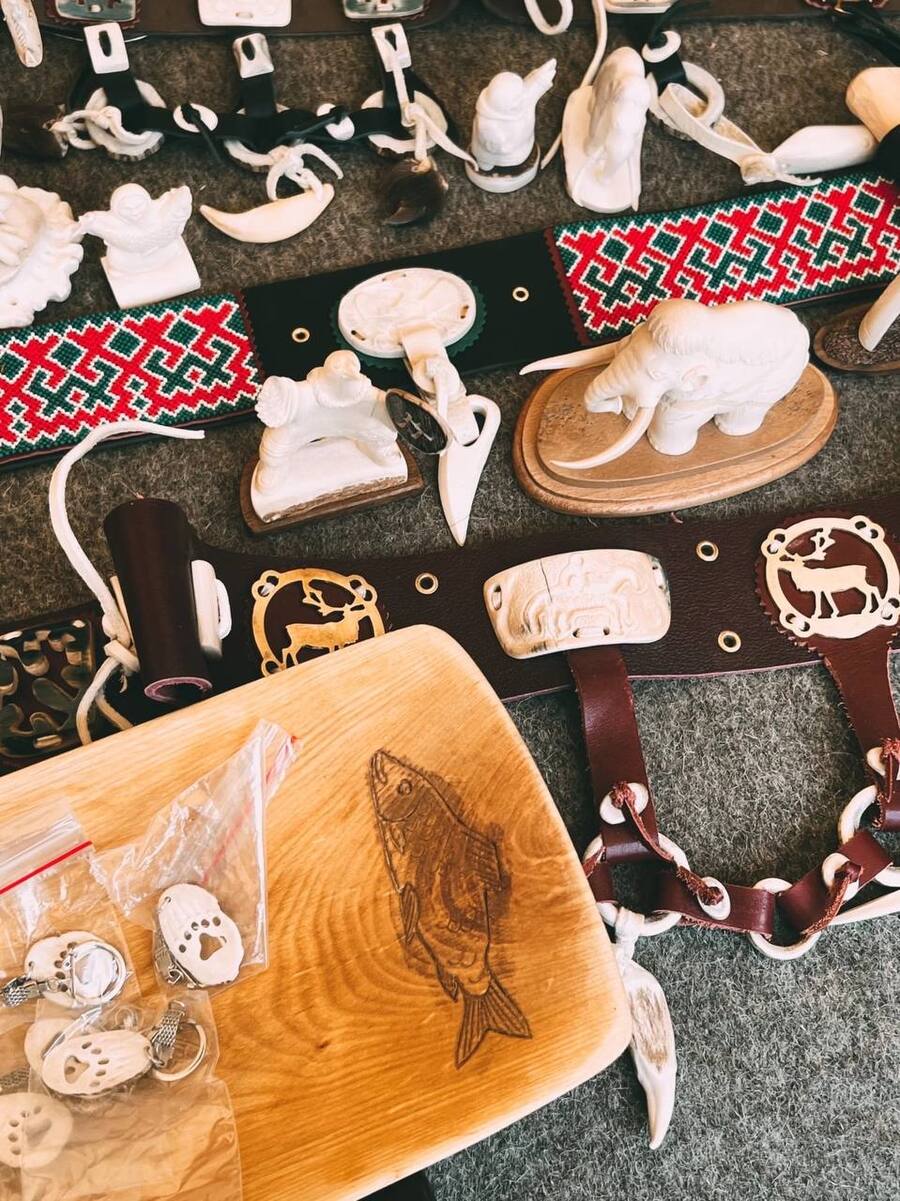
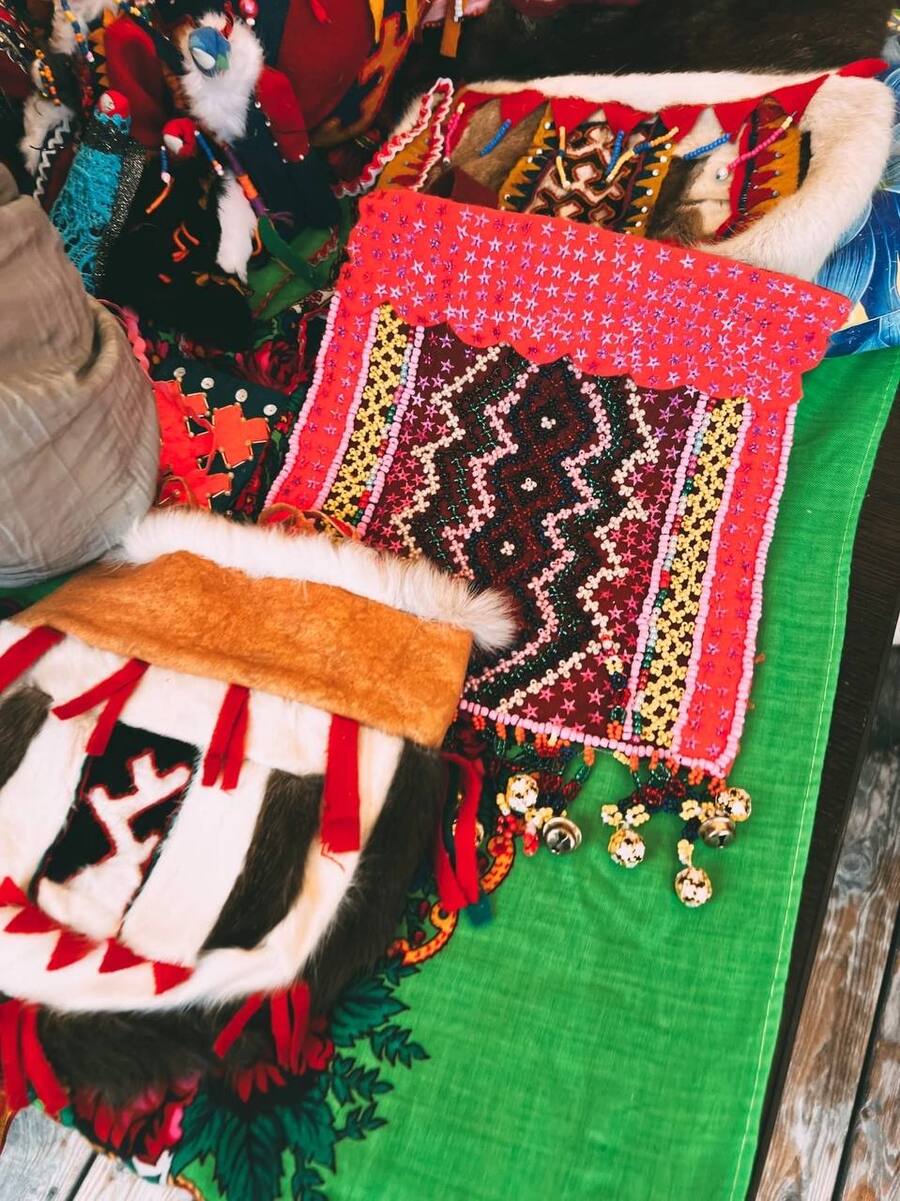
Photos taken from a personal archive. Noyabrsk, 2023
Traditional art of the northern people preserved ancient customs, rituals, and national self-identity. Among the forms of folk art, sewing and clothing creation hold a special place. Specific hand-crafted tools were used for this work. Needles were made from reindeer leg bones or bones of other animals, and sometimes fish bones were employed. They were kept in specially made needle cases crafted from reindeer hide or fabric (such as cotton). These needle cases came in various shapes and were decorated in diverse ways: appliqué, beadwork, and embroidery techniques were used, and they were also fitted with a specific compartment for storing a thimble.
Antonia Salinder’s work. Photo: Alexander Chirva / «Yamal-Media»
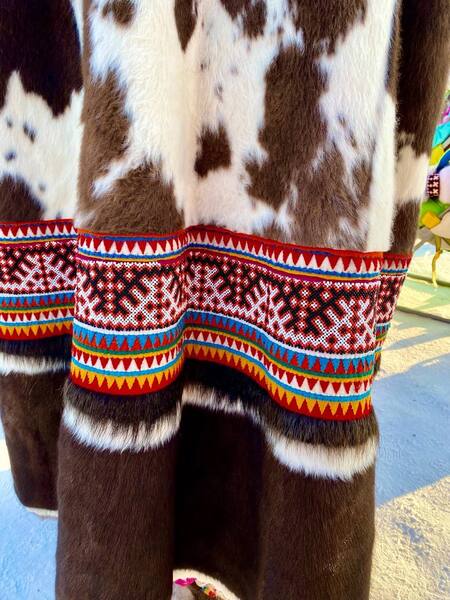
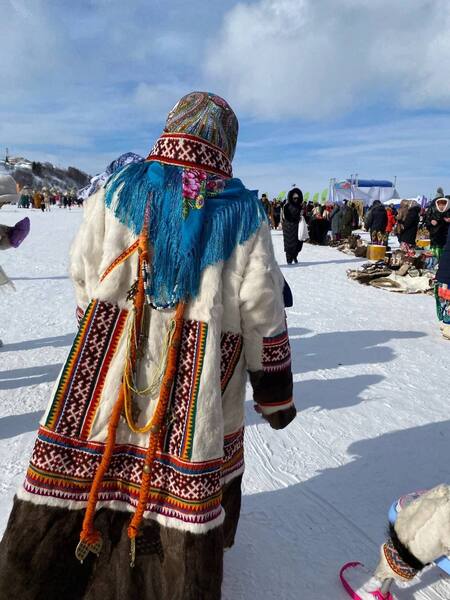
Photos taken from a private archive. «Reindeer Herder Day» in Noyabrsk, 2023
Patterns consist of geometric elements that serve not only an aesthetic function but also possess specific names and deep symbolism. Among the constant components of Nenets patterns, triangles, squares, straight lines, and rectangles stand out. It is important to note that similar elements are also found in the ornaments of Slavic peoples. It is likely that the Nenets adopted a number of decorative motifs from neighboring Khanty and Finno-Ugric tribes. A key theme in the ornaments is the depiction of the sun, which symbolizes the special significance of sunlight in the North, where every ray is valued as highly as gold. The second most significant motif is the figure of a reindeer or its antlers, because for the inhabitants of the Arctic, the reindeer represents an indispensable helper, a provider of sustenance, a transporter, and a protector.
SYMBOLOGY OF ORNAMENTS