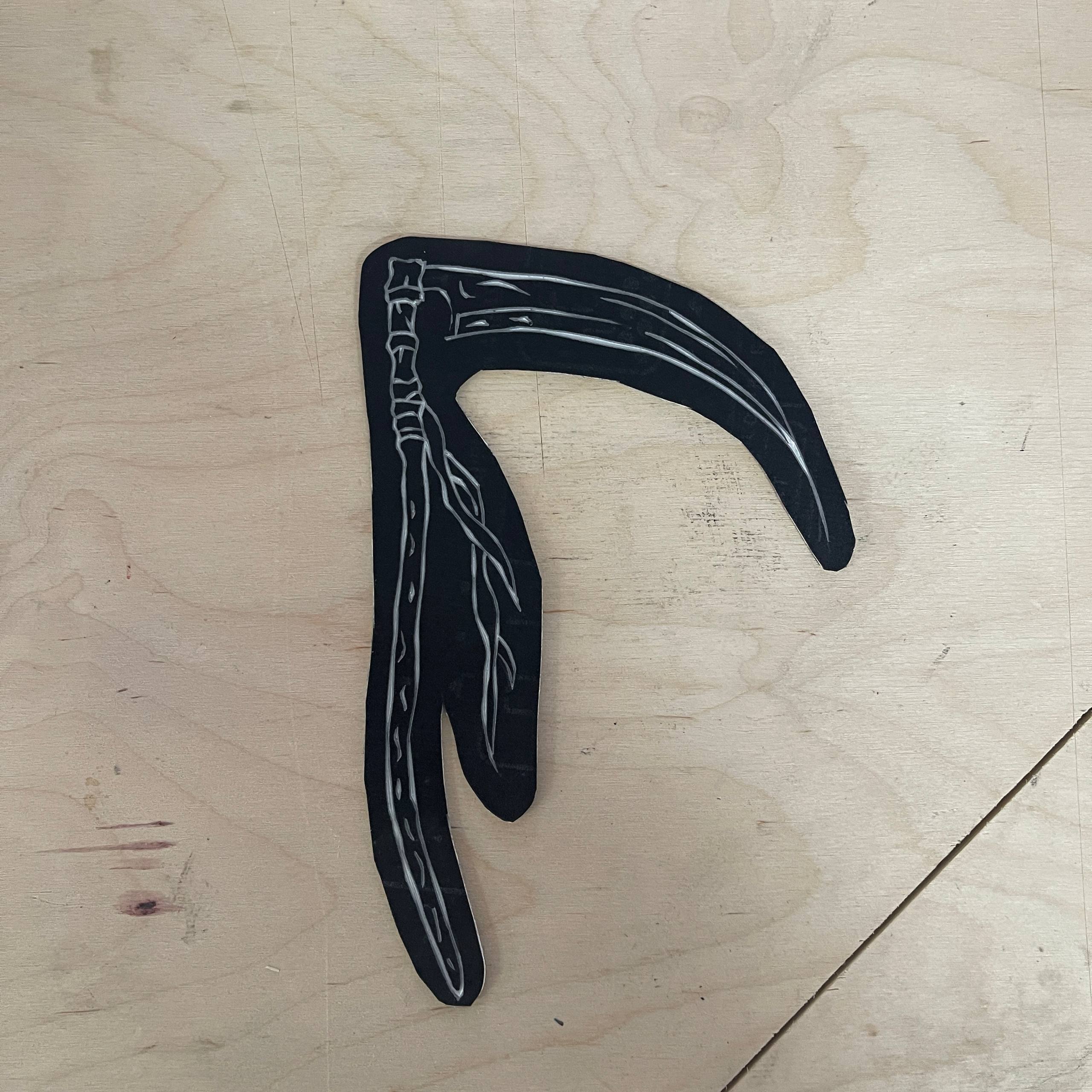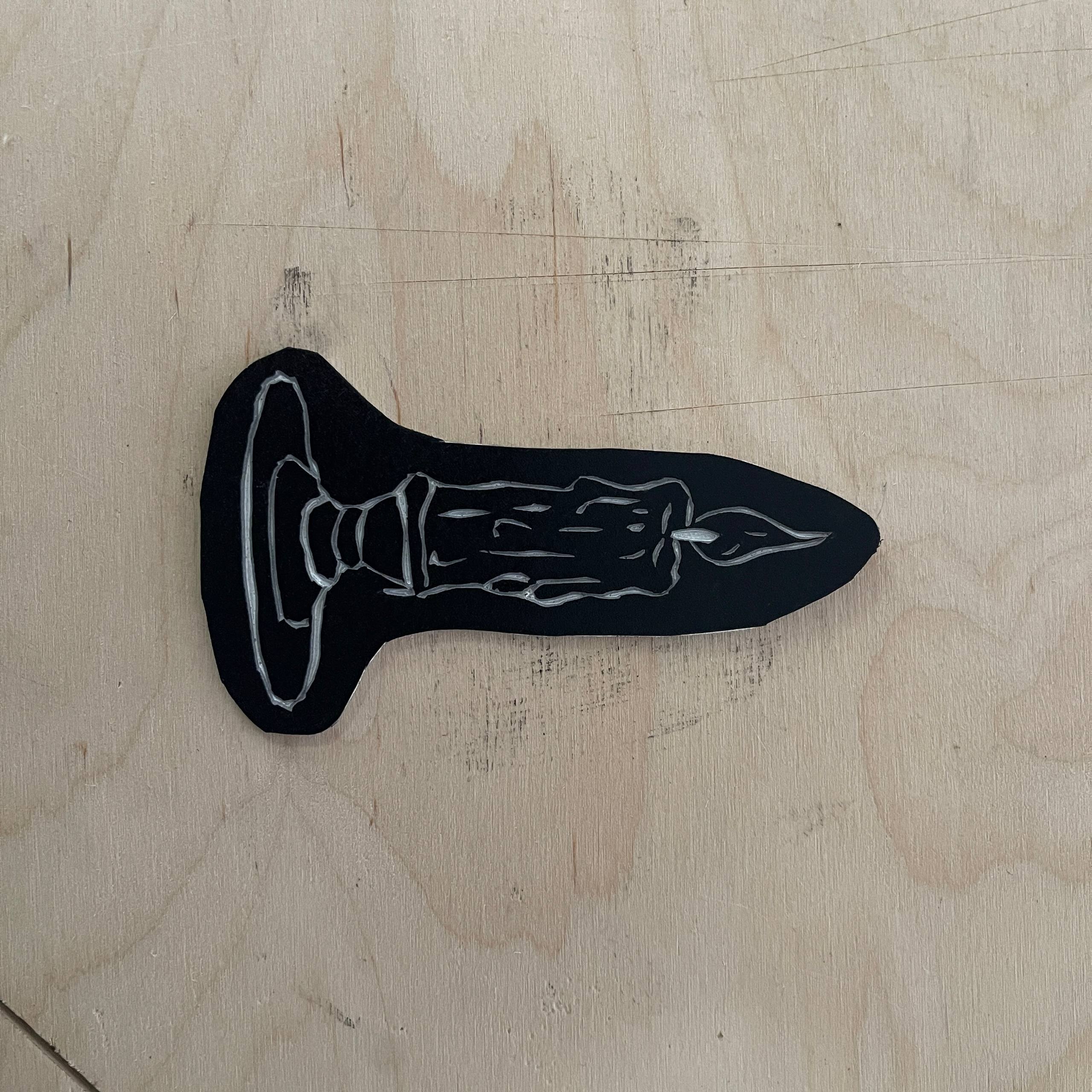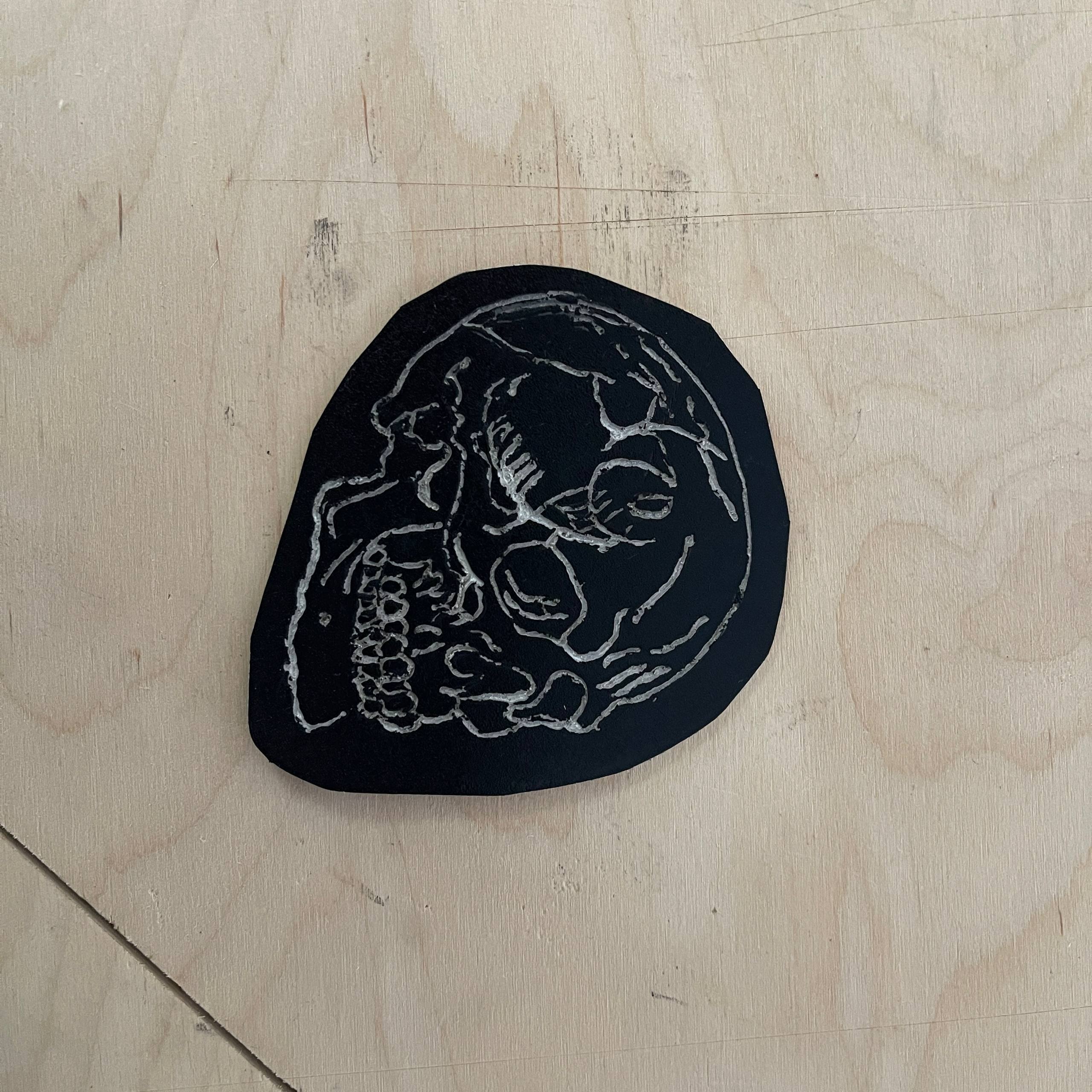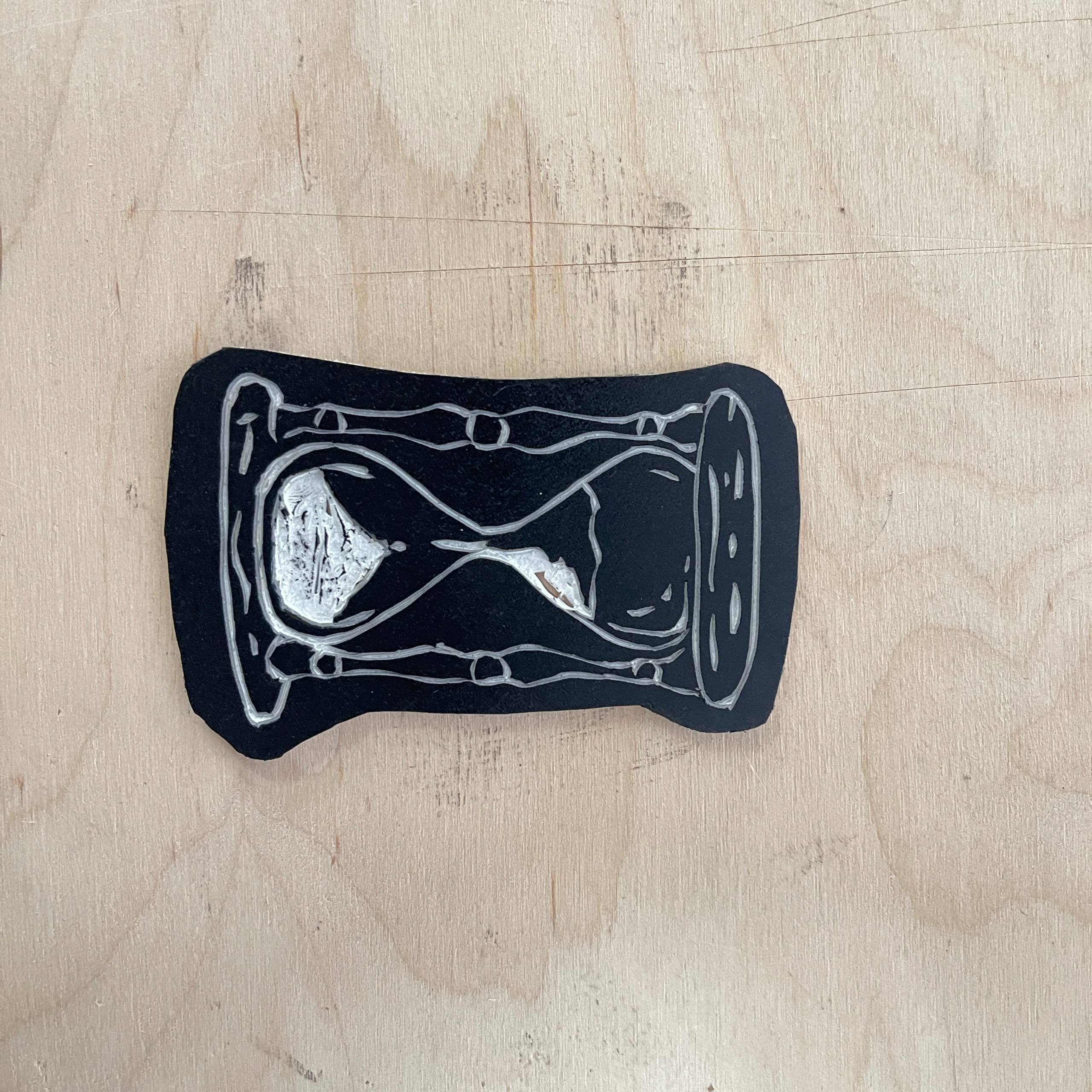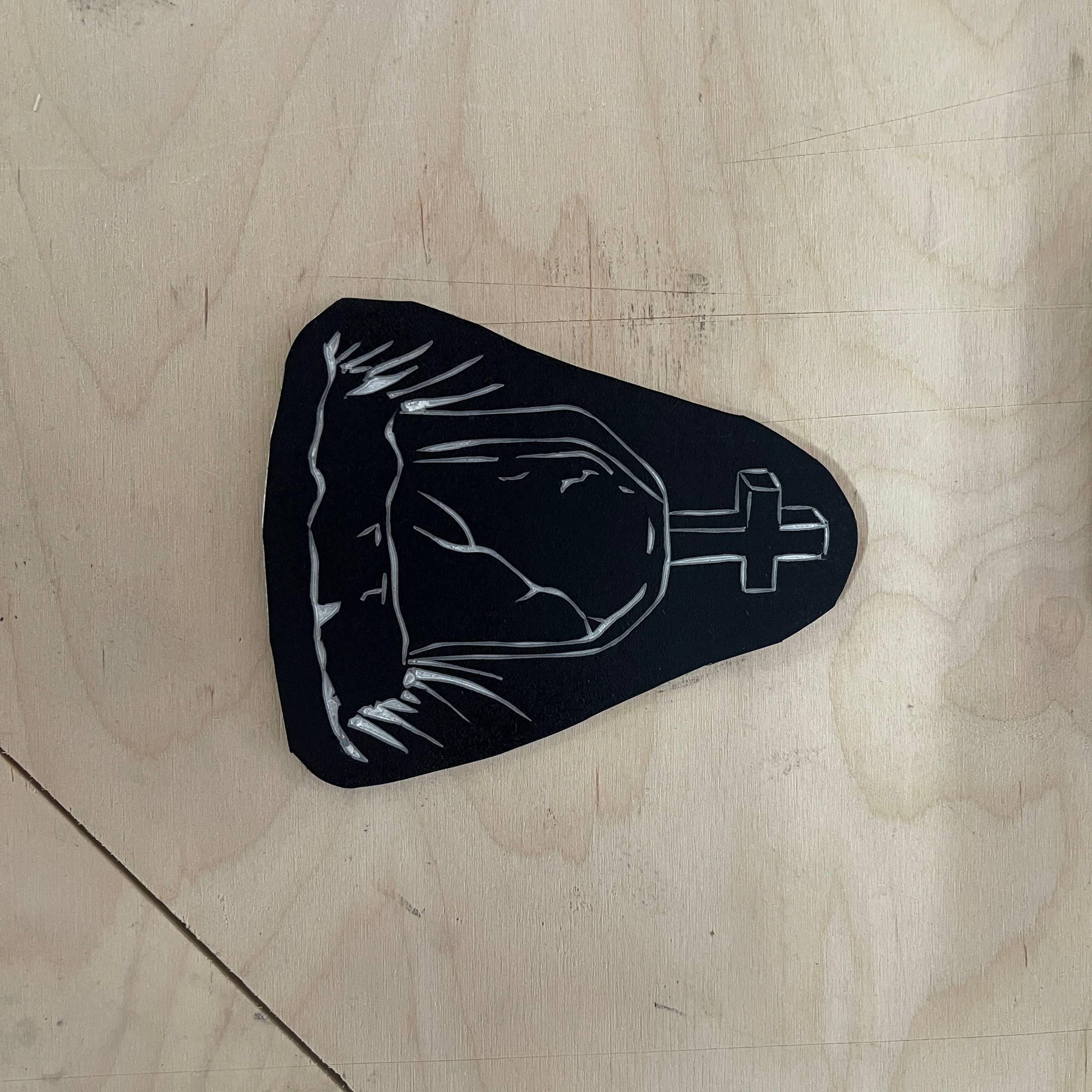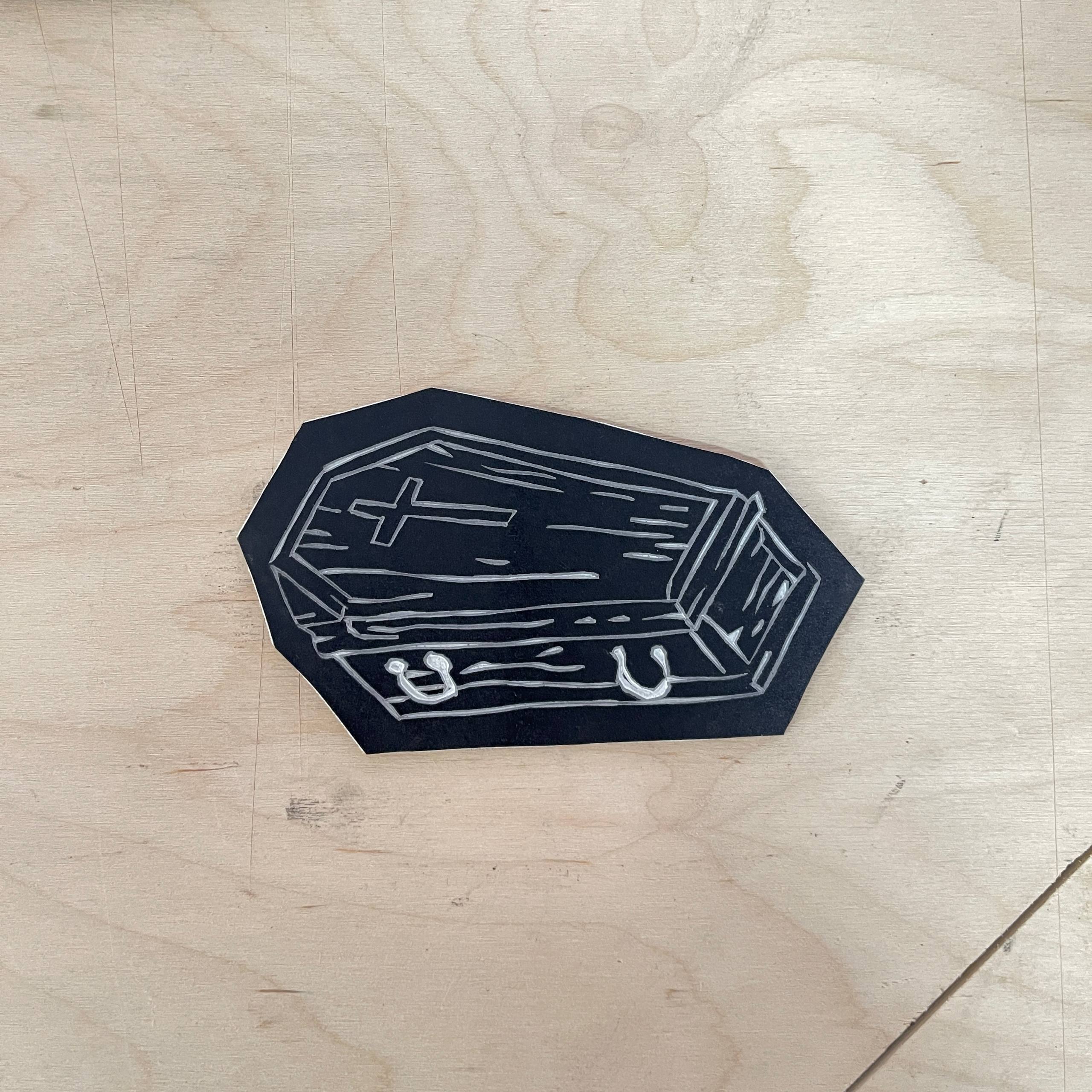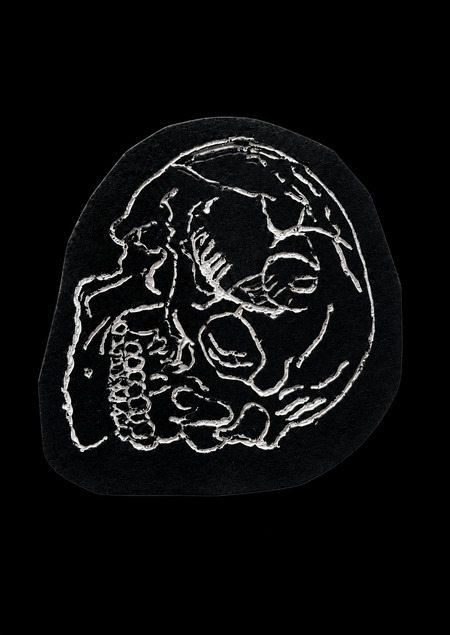
Death—a linocut project exploring the presence of the archaic in modern culture through apocalyptic imagery.
Overall Concept
Myths are gradually permeating contemporary life, becoming increasingly tangible and inevitable. They are cyclical, continually reproduced throughout history, yet never before has their simultaneous presence been so intense. Globalization and the advancement of media allow thousands of myths to coexist, endlessly replicating existing imagery. Like the ghosts of Jacques Derrida, they return again and again, taking on new forms. Among these, the biblical myth of the Four Horsemen of the Apocalypse holds a special place. Famine, War, and Pestilence manifest in modern reality through economic crises, armed conflicts, and epidemics. Death remains—the final rider whose ultimate embodiment symbolizes the myth’s return to its archaic essence. Our project investigates the mythologizing of modernity, historicity, and collective memory through the image of «The Feast During the Plague.» The Four Horsemen are embodied in the tableware: napkins bearing symbols of War, cups featuring attributes of Pestilence, plates displaying images of Famine, and tablecloths with fragments of symbols of Death. Objects intended for celebration and abundance become carriers of images of destruction. A contradiction emerges between daily ritual and archaic terror, between historical memory and the repetition of myth.
Can a myth truly conclude, or is it doomed to return? And is a feast during the Apocalypse possible?
Concept
Death penetrates modernity—it has always been within it. If Plague, War, and Famine represent systems that lead humanity toward destruction, then Death becomes their ultimate endpoint—the inevitable return to the archaic, from which modernity constantly strives to separate itself. Modern humanity has learned to conceal death behind medicine, statistics, screens, archives, and images, transforming it from a physical event into a media construct. However, it is precisely for this reason that Death becomes the simplest, and simultaneously the most terrifying, myth. It is impossible to permanently recontextualize, as it invariably returns in its original form.
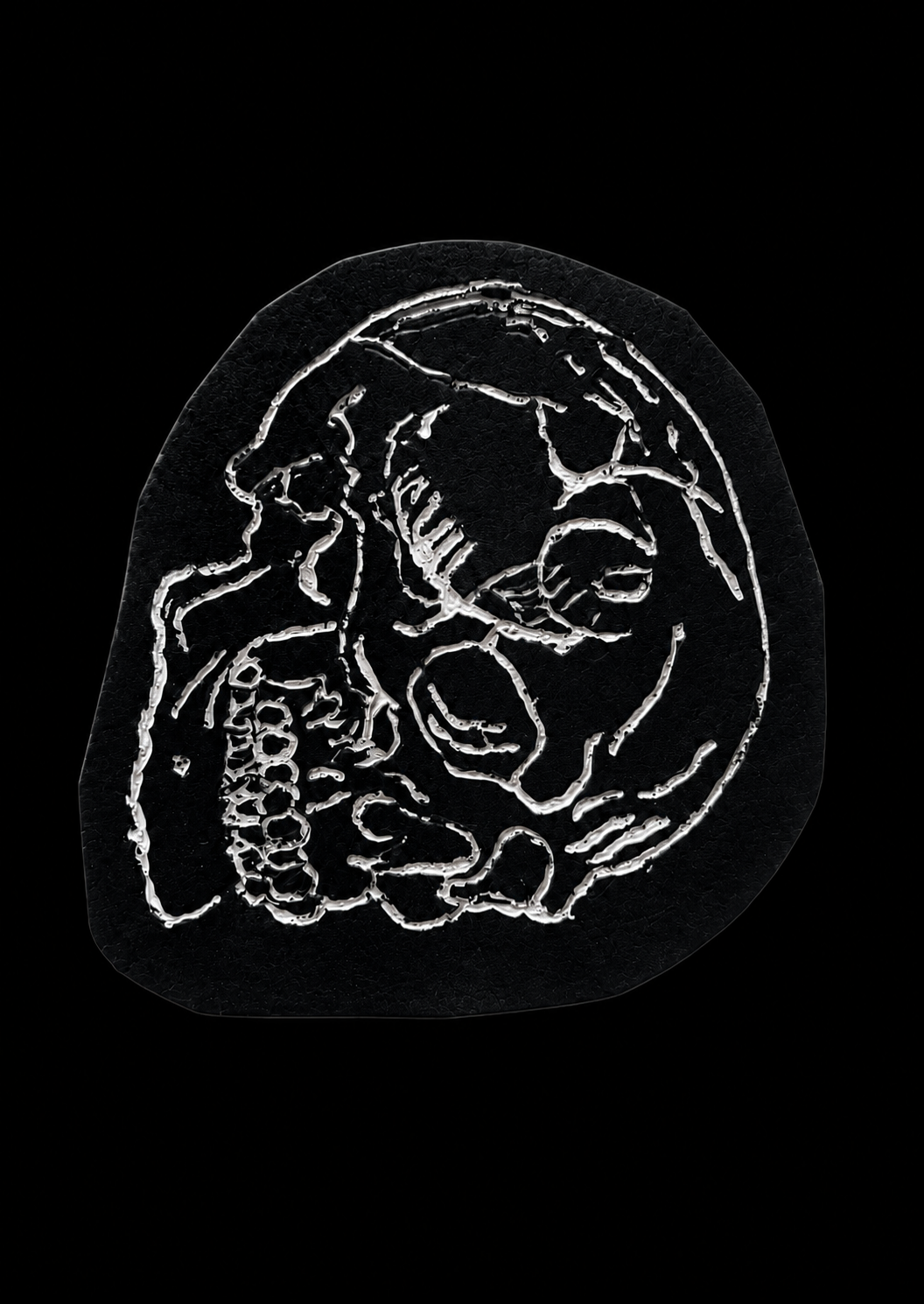
In our project, Death is embodied as a void within a feast. The tablecloth serves as a foundation of abundance, but instead of food, life, and movement, fragments of bones, skulls, withered forms, and other archaic symbols of death emerge upon it. If previous riders gradually invade the human space, Death already occupies it entirely. She remains after myth, media, and history itself disappear.
Death destabilizes historicity because outside of it, the very possibility of speaking about history—and consequently, about myths as forms of its understanding—is lost. Thus, the paradoxical picture of the Apocalypse emerges: it is born as one of the most ancient myths, yet simultaneously embodies the destruction of historicity and all other myths. This contradiction shapes the dramatic structure of our project and brings us back to the question posed at its outset: is a feast possible during the Apocalypse? Our work becomes an attempt to explore this question through the confrontation of abundance and void, modernity and archaism, life and its inevitable end.