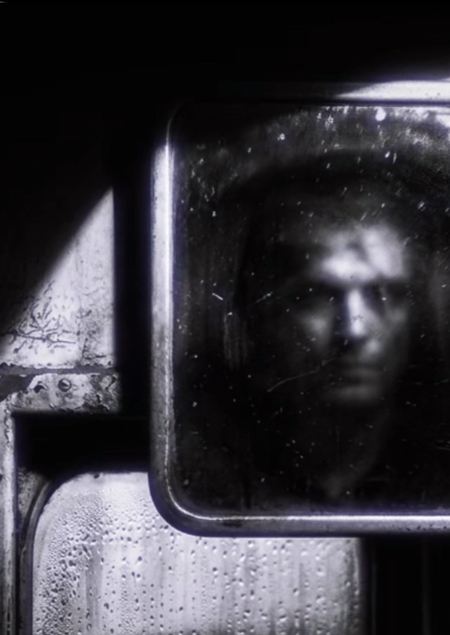

THE SPACE BETWEEN
Концепция лиминальных пространств.
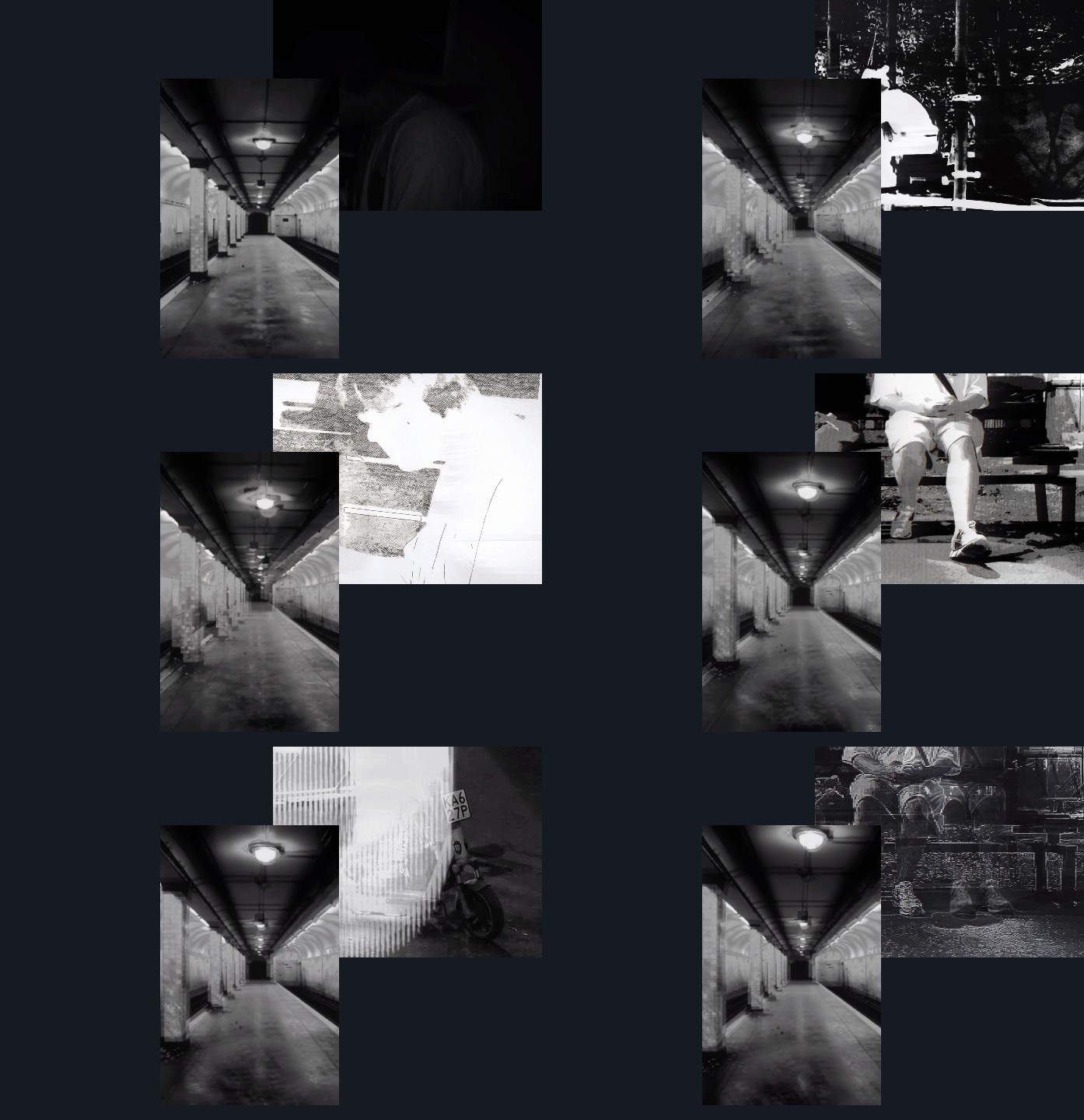
This is a term from anthropology that later migrated into architecture, philosophy, and internet culture. Liminal space is a transitional zone where a person is pulled out of their familiar context. In such places, a specific feeling arises—anxiety mixed with strange attraction. Now, this encompasses a vast cultural landscape: subreddits, playlists, indie horror films. However, podcasts have scarcely explored this niche. I want to create an auditory trip through these spaces—with a feeling of complete immersion.
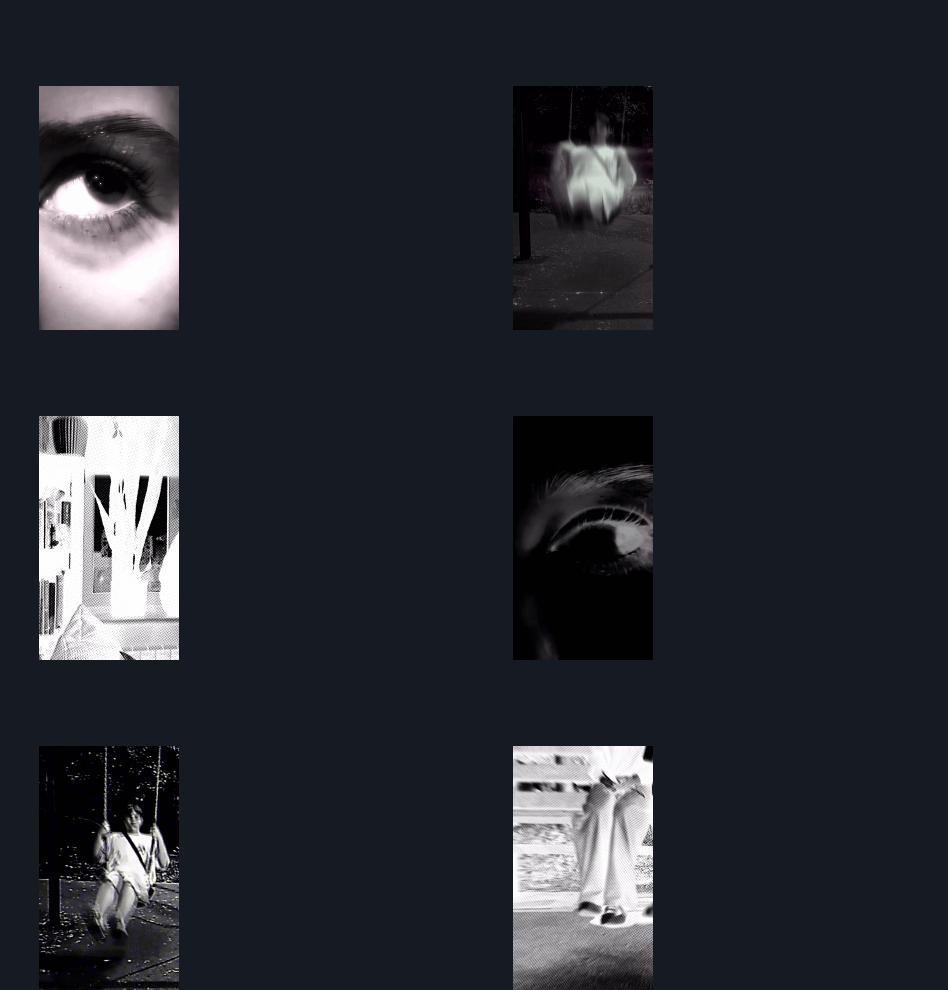
How is the series' dramaturgy structured?
Each issue is a session contained within a single space. Together, they form a journey from the exterior to the interior—a kind of funnel:
- We begin with a physical corridor (the outside),
- We descend deeper through a staircase and vestibule,
- The technical support chat—a space of digital timelessness,
- The finale—a waiting room inside the mind, a metaphor for the internal pause where we sometimes all get stuck.
From one issue to the next, subjectivity grows, and the boundary between the real and the imagined dissolves.
Почему это может заинтересовать
аудиторию?
The podcast appeals to very personal experience. Every person has encountered a similar situation at least once in their life. This is a universal anxiety, packaged in the form of audio art. Furthermore, there is currently a demand for «slow» content that does not require constant attention, but rather immerses the listener in a state akin to meditation or light trance.
Theoretical Segment of the Podcast
Слоган: Ты застрял, и здесь темно.
Main Annotation (for platforms):
There are places where we get physically and mentally stuck. The vestibule between stations. The stairwell smelling of someone else’s dinner. The tech support chat at three in the morning where the operator stopped replying. This is a podcast trip through the liminal spaces of your psyche. Sound is a full participant here. Put on your headphones. The doors are closing.Short Annotation (for social media):
Five anxiety sessions in your headphones. Horror woven from drone, whisper, and pause. We explore the architecture of timelessness—from a hospital corridor to the waiting room inside your head.Thematic Outline of the Series (5 Episodes):1. Session #01: The Corridor
Hospital lighting, the scent of chlorine, an endless door ahead that never moves closer.
2. Session #02: The Stairwell
Concrete spans, other people’s voices from above and below, chalk drawings that weren’t there yesterday.
3. Session #03: The Vestibule
The junction of train cars, the shudder of metal, the choice between «forward» and «back.» A delayed mirror.
4. Session #04: The Nighttime Tech Support Chat
You are in the queue; the operator has been typing for 20 minutes, and the bot suggests rebooting your reality.
5. Session #05: The Waiting Room Inside the Head.
Summary of all issues
Session #01
— Corridor:Sensation: You are walking. The door is receding. The lamp hums. The ceiling stain repeats. The figure on the stand isn’t running away.
Explanation: The lamp hum is 100–120 Hz. The lack of visual reference points distorts the perception of distance. The color of the walls suppresses emotion.
Session #02
— Stairwell:Sensation: Between the 7th and 8th floors—eleven steps instead of eight. The railings are sticky. Chalk drawing that wasn’t there yesterday.
Explanation: Concrete reflects 98% of sound. The brain, in a state of anxiety, miscounts the steps. Scents are archived for hours.
Session #03
— Vestibule:Sensation: A cold handrail. A hum a half-tone lower than comfort. A mirror with a delay. «I don’t know how I got out.»
Explanation: Infrasound 80–120 Hz. A steel resonator. A liminal gap between worlds. A reflection delay of 10–15 ms.
Session #04
— Nighttime Tech Support Chat:Sensation: 2:47 AM. Anna types for 20 minutes. The laptop fan whirs. The bot suggests rebooting… you.
Explanation: Blue light suppresses melatonin. The typing indicator triggers a micro-burst of dopamine, followed by cortisol. After 15 minutes of waiting, the text achieves a sense of alienation.
Session #05
— Waiting Room Inside the Head:Sensation: The sound of blood rushing. Fragments of the day’s conversation. «I’m stuck too. The door was always open. It’s inside. Close your eyes.»
Explanation: Default Mode Network. Hypnagogic hallucinations. Frankl’s paradoxical intention: escape is to stop looking for an escape.
Full transcript of the recorded episode:
Сеанс #03
You are standing in the vestibule. Right now. It doesn’t matter where you are actually listening to this—on the subway, at home, in bed before sleep. Imagine you are here. With me. The cold metal of the handrail. Slightly damp. To your right is the door to the carriage—that way. To your left is the door to the carriage—the other way. You are in between. And the train is moving, but you don’t know which direction. That’s how it always is in vestibules. They don’t adhere to a route. Do you hear that hum? It’s not coming from outside. It’s inside the structure itself. The vestibule is the train’s throat. It is singing to you. Not a song. Just a note. One. It is exactly half a tone lower than what your ear finds comfortable. That’s why you want to get out. Or smoke. But you aren’t smoking. A mirror. There is a mirror here. But it doesn’t reflect you. Rather, it reflects you, but with a delay. Raise your hand. See? The reflection raised it a fraction of a second later. This isn’t frightening. It will be frightening when it raises first. I am here too. I am standing opposite you. I don’t know how I got off at my station. Maybe you won’t get off either. Maybe we’ll stay here together. Do you want to open the window?
Hello. This is an episode about the vestibule. About the space we are used to ignoring. A mistake. Today, we’ll explore acoustics, psychogeography, and a bit of metal physics. A train vestibule is a unique acoustic environment. The frequency range of the hum we hear here is concentrated around 80–120 Hertz. This is so-called infralow frequency, which causes unconscious anxiety in humans. This is why standing in a vestibule for too long is uncomfortable—it’s not your imagination; it’s physics. It’s also interesting how sound behaves in a confined metal space. The walls of the vestibule act as a resonator. Imagine a guitar. Except instead of a soundboard, there are two sheets of steel, and instead of strings, there is air compressed by the train’s speed. From a psychogeographical perspective, the vestibule is a classic liminal space. The term was introduced by anthropologists in the early 20th century to describe transition rituals. The vestibule is neither a destination nor a point of origin. It is the gap between worlds. And you cannot stay in it for long. You might lose your bearings. In both the literal and figurative sense. As for the mirror. If you stand in the vestibule and look into it, you see yourself. But the train’s vibration creates micro-tremors, causing the reflection to lag by 10–15 milliseconds. The brain doesn’t consciously register this delay, but it notes it. The «unfamiliar gaze» effect arises. You look at yourself and don’t recognize yourself. This is normal. That’s all for today. Take care of yourselves. And get off at your station.
· Genre: liminal horror / site-specific audio
· Sound design is not background noise, but a co-author
· Two Tonal Voices (TOV) in one episode as a creative experiment
· Theme: anxiety is not explained, it is created
· The listener is a participant, not a spectator
Послушать:
Прочитать полный текст остальных
выпусков:
(Please provide the Russian text you wish to have translated.)