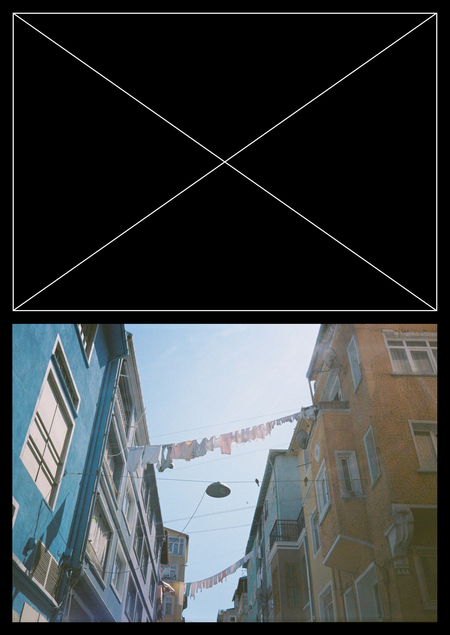
non-place to place media archive — an archive of photographs and videos collected during observations of everyday environments.The archive does not have a fixed viewing order. Individual pieces exist as fragments of a larger environment, functioning through accumulation, repetition, and juxtaposition to gradually form an understanding of the place’s identity.
non-place to place — «from non-place to place»
The project title references the concept of the non-place, formulated by anthropologist Marc Augé, who describes airports, train stations, highways, and other transit zones as spaces devoid of history, memory, and local identity.
Conversely, the media addresses what makes a space a «place”—traces of presence, material gestures, rituals, and visual patterns that cannot be transferred from one culture to another.
The reference to the non-place concept in the title reflects a process of transition: to arrive in a space with local identity, one must first pass through anonymous transit zones.
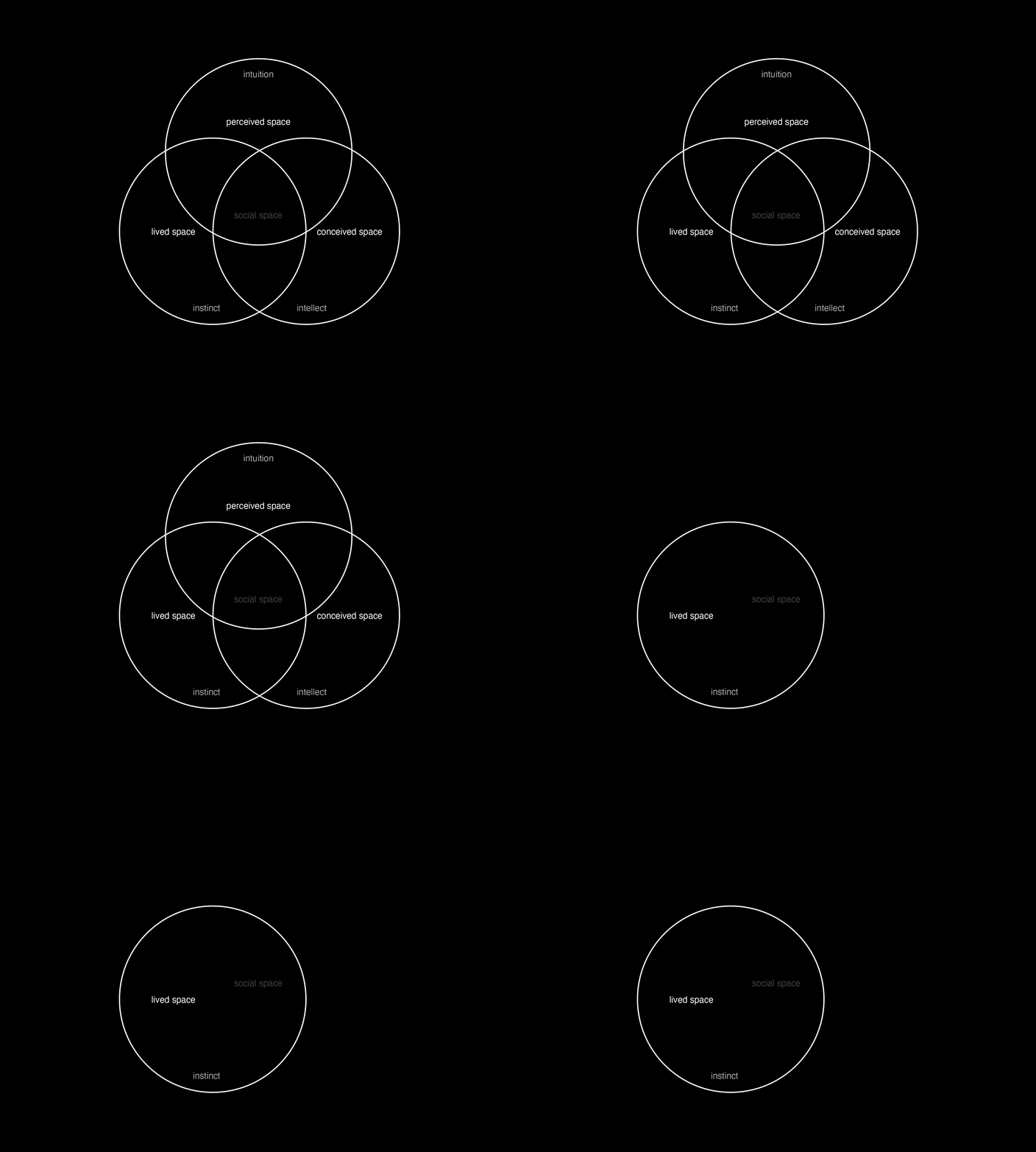
Perception — comprehension — experience
Material gathering occurs at the level of perception—through spatial practice and the everyday use of the environment. The focus is on events, routes, gestures, and patterns that form the structure of the space as it functions.
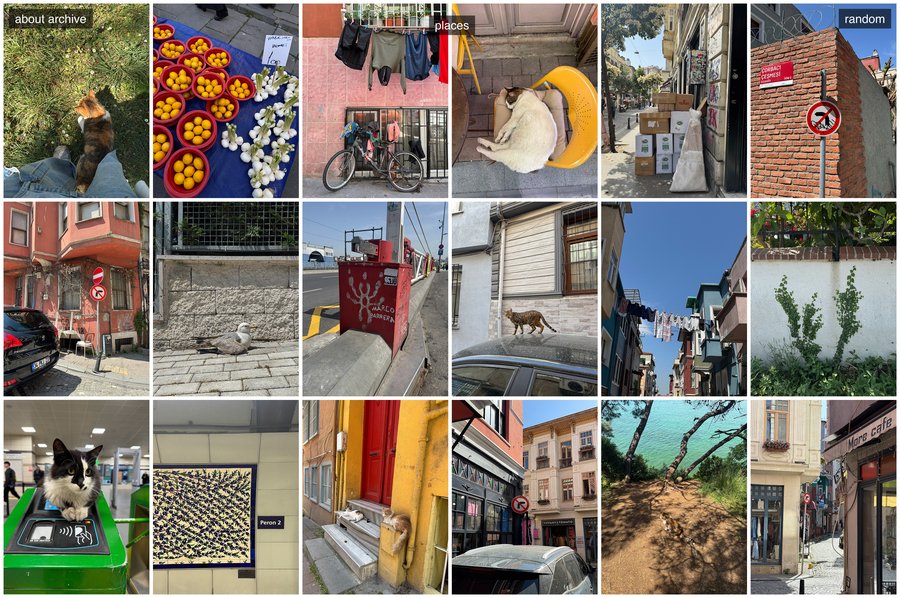
The archive exists as a web platform, where materials reside outside of a rigid structure or predetermined sequence. This choice of format allows us to discard hierarchy and a fixed viewing order, preserving a fluid mode of observation. Such a operational principle envisions an environment that functions less as a repository for materials and more as the very condition for their existence.
The material is organized by location—countries and cities. Within each location, the archive is structured using tags that emerge during the observation process. Each tag reflects a discovered spatial feature, which is confirmed through recurring objects, patterns, or events.
mobile version
Printed publication
The project examines spatial identity through various modes of fixing and representation, positing that changing the medium inevitably alters both the manner of observation and interpretation. Alongside the media archive, a printed publication emerges as part of this research.While the media archive is built upon the principle of free association, the printed publication suggests a different organizational approach to the material. Visual assets undergo a sequential selection process and are organized into a distinct structure. The photographs are accompanied by critical texts that allow the examination of environmental visual patterns within a broader cultural, social, and spatial context.