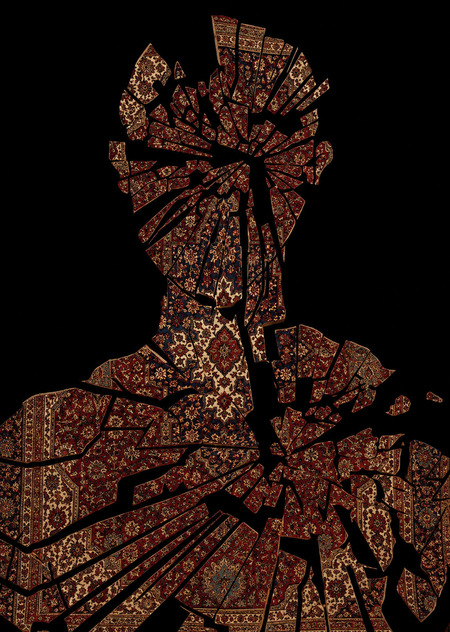
Фраза, которую армяне слышат на протяжение всей своей жизни.
«That’s not how we do things here.»
О чем?
This podcast is about family, traditions, and the generations that view the same culture differently. It explores what shapes us—and sometimes limits us—what has been passed down to us, and what we choose to pass on next.
Introduction Decoded
We grew up navigating between what we were told at home and how we live today—between the traditions passed down through generations and the personal choices each individual makes. «That’s not how we do things.» «What will people say?» «Don’t bring shame to the family.» We heard this since childhood, and often continue to live by these words without even realizing it. This podcast is about family, tradition, and generations that view the same culture differently—about what shapes us—and sometimes restricts us—and about what we choose to pass on.
Graduation Questions
- When did you first feel like an outsider?
- Where do you feel most Armenian?
- What makes a person Armenian?
- How important is knowing the language to feel a sense of belonging?
- What traits of Russian culture have you adopted?
- What Armenian values remain with you regardless of where you live?
- Do you feel like you switch between two versions of yourself?
- Is there a difference between Armenians from Armenia and diaspora Armenians?
- Do you know any stereotypes about Armenians?
- Have you ever experienced cultural loneliness?
- How did the moment come when you found your people?
- Was there a moment when you were made to feel like an outsider?
- Is it possible to belong to multiple cultures at once?
Episode Transcript
Emma:
Too Armenian for Russia, too Russian for Armenia. In this issue, we will discuss identity and the sense of belonging—what makes us feel like we are ours and what makes us feel like strangers—and what it feels like to feel at home in several places at once. Today, people who experience their Armenian identity in different ways are gathered around this table. I moved to Moscow just over six months ago and I’m still looking at this experience through the eyes of someone who is only getting used to a new reality. Tata moved to Moscow ten years ago and can already share how the feeling of home changes over time. Seryozha was born and raised in Moscow, in an Armenian family, and knows what it’s like to seek a balance between two cultures simultaneously. And Susan moved to Moscow at a rather mature age and has managed to maintain harmony and balance between Armenia and Russia. Hello! Thank you for coming. Let’s start with such a question. When did you first feel like you didn’t belong?
Susan:
This is probably something you run into as soon as you arrive in a new city. This is the first time for me. But the scariest thing is that when you return there after a long time, you still feel like an outsider. I call myself an insider among strangers, and a stranger among my own people. I think that would be my answer to this question.
Tatevik:
I think I felt it for the first time in university, somewhere around the first or second lecture when I was 16—I was still a kid—when everyone around me was cracking jokes with some kind of hidden meaning, and I didn’t know that subtext; I didn’t know the context, I grew up on different types of humor. That moment was genuinely difficult—to accept it quickly, to adapt somewhere. And right in that moment, this thought formed in my head: that I was an outsider. And then, when I came home for the summer, there was this established context they had built up throughout the year, and again, they were joking around, but you weren’t in those jokes anymore; you had a completely different mentality, different thoughts, a whole different context. And there, too, you felt like you were an outsider, stuck somewhere in the middle, neither here nor there. That was probably the first time.
Sergey:
This probably happened to me more in Armenia. Moscow is a very multicultural place where people from diverse nations live, but when you arrive in Armenia, we always knew we were Armenian. Even though we live in Russia, when you get to Armenia, you start to realize that you are fundamentally different. And it happened more in Armenia. It was in Moscow later, when I was older, and children were starting to grow up and interethnic conflicts began to surface. But it was primarily there that this first occurred.
Emma:
Honestly, I think this happened to me in university during my freshman year too—when you walk into that studio and you realize you can’t just crack a joke, because even strangers will get what you mean. You can’t say something flippant, and everyone immediately gets the reference. You can’t say some phrases that everyone will understand,
and maybe that’s when this happened here for the first time.
End Credits