Research Structure
1. Concept 2. Edward Said’s Theory of Orientalism 3. Museum Structure 4. Prevalence of Religious Artifacts 5. Ideological Framework 6. Historic Stereotyping 7. Conclusion 8. Bibliography 9. Image Sources
Concept
One of the significant institutions shaping Russians' perception of the East is the State Museum of Arts of the Peoples of the East, located in Moscow. The relevance of this research stems from a global trend toward re-evaluating museums as carriers of the heritage of colonialism and imperialism, a movement reflected in active debates and practical initiatives worldwide.
In Russia, where the museum field possesses a complex, dualistic history connected both to the legacy of the Russian Empire and the ideological constructs of the Soviet period, the analysis of the Museum of the East acquires special significance. This museum, founded in 1918, is a direct heir to the traditions of imperial collecting while simultaneously being a product of a new power structure that sought to redefine its relationship with the country’s multinational «East» and with the world at large. Historically, Russia can be viewed as a colonial empire comparable to the British or French, and the Soviet system also implemented a policy of control and integration of national republics, which mirrors imperial practices.
The research will utilize only the permanent collection exhibition at 12A Nikitsky Boulevard.
The study is built around four elements of colonial discourse identified through the analysis of the Museum of the East’s permanent exhibition. First, there is the structural organization: a non-chronological, thematic arrangement that creates a static and «eternal» view of the cultures of the East. Second, this is the pronounced dominance of religious and ethnographic artifacts over secular ones. This reduces complex civilizations to their religious or primitive component. Third, there is the ideological framework, presented through romanticized and stereotypical narratives, especially regarding the indigenous peoples of the North and in the Rerikh cabinet, which reproduce stereotypes of Orientalist aesthetics. Fourth, this is the stereotyping of history, characterized by a simplified and one-dimensional representation of the Soviet period and its relationship with the peoples of the East, thereby establishing an artificial boundary between the «traditional» and the «modern.»
The primary source for identifying the essence of colonial discourse was Edward Said’s book, Orientalism, which exposes how the West constructed the image of the East as an exotic, mysterious, and subjugated «Other,» utilizing it to assert its own cultural and political hegemony. Although Said’s theory was originally aimed at critiquing Western discourse, its methodological principles can also be applied to the analysis of the Russian context. The study also addresses Alexander Etkin’s theory of internal colonization (listed as a foreign agent on the Ministry of Justice of the Russian Federation website), which illuminates the mechanisms of the «Orientalization» of the Soviet East, Far Eastern Territories, and the Far North. Furthermore, sources documenting the museum’s own history, as well as academic articles on museology and Oriental studies, are examined.
The key question is how the State Museum of Peoples of the East preserves and updates the core mechanisms inherent to colonial discourse.
Facade of the Museum building on Nikitsky Boulevard
Orientalism by Edward Said
Edward Said’s theory of Orientalism, presented in his 1978 work of the same name, became crucial for understanding the mechanisms by which the image of the East is constructed in Western science, art, and public consciousness. The notion of «Orientalism» in the work is multifaceted. «In a broad sense, it is a way of thinking based on the ontological and epistemological distinction between ‘the Orient’ and (in most cases) ‘the Occident’» states Said [12, p. 20].
Said’s concept established a social construction of the East to justify the colonial expansion of European powers. In many ways, this construct was created and sustained by academic research, which is why Said accuses European, and later American, Oriental studies of serving politics and reinforcing stereotypes about Eastern peoples. Orientalism is not merely a «lie» or a «myth»; it was not created instantaneously by a single entity, nor was it a random, unfounded assertion—it was a deliberate effort to construct an image [12, p. 40].
Orientalism creates and sustains an effect of exoticism, viewing the East through the lens of the philosophical concept of the «Other.» Moreover, this «Other» is not simply secondary, but hostile, a point highlighted by the way Said situates Russia alongside the «Orient, ” alluding to its prolonged political confrontation with the United States [12, p. 58]. Meanwhile, the image of the „East“ or „Orient“ was utilized by European powers to define their own identity in contrast to the „Other“ East.
The East doesn’t merely neighbor Europe; it is the location of Europe’s greatest, wealthiest, and oldest colonies, the source of its civilizations and languages, its cultural rival, and one of its most distinct and enduring images of the Other. Furthermore, the East helped Europe—or the West—to define its own image, idea, identity, and experience—often through contrast.
Because of the perpetuation of stereotypes and the essentialist approach to representing the East, researchers tend to focus on classical heritage, presenting Eastern cultures as traditionalist, in a way that preserves archaic traits, thereby creating a static image [8, p. 28]. This approach disregards the recent past and modernity, failing to view the East as a developing system. Another aspect of considering the dynamic history of the East is the disappointment with its contemporary state when contrasted with the romanticization of its past. The national characteristics of Eastern peoples are oversimplified, exaggerated, or ignored under the guise of stereotypes.Furthermore, in Said’s book, Orientalism is presented as a «Western style of domination» [12, p. 21] and a symbol of hegemony. Orientalism denies Eastern peoples the right to self-representation [p. 22], leading to the implication of a subordinate role for Eastern nations.Many scholars have criticized Said for the polemical tone of his research [8, p. 27], deeming it subjective and ideological. Nevertheless, his book gained resonance because it entered the necessary stream of philosophical reflection within the postcolonial movement. To some extent, his work continues the ideas of the philosopher Frantz Fanon, whom Said frequently cites in his writing.Alima Bisenov points out that Said’s theory is mainly oriented toward the Middle East, a bias inadvertently determined by his background and scholarly work [2]. Moreover, the text implicitly suggests a certain «correct» way to represent the East, but it is difficult to objectively agree with this assertion made by Said.The applicability of Said’s theory from the Russian perspective is a topic of debate due to the entrenched perception of the country’s dual self-identification: as part of Europe and as part of Asia [4, p. 21]. Edward Said himself does not provide a clear directive, viewing Russia and the USSR as a «hostile East» while simultaneously using Leo Tolstoy as an example of Orientalism in literature.
Museum Organizational Structure
The structural organization is the central element upon which the colonial discourse in the permanent exhibition of the State Museum of the East is built. The exhibition is divided into 12 sections based on geographical criteria. The non-chronological arrangement of the exhibition is one of its main shortcomings because, from the perspective of postcolonial analysis, it acts as a powerful tool for creating a «frozen, ” archaic image devoid of development. By, for example, placing archaic figurines alongside 19th-century crafts in the Hall of Chinese Art, a general aesthetic impression is created wherein the historical context—the social and political processes—is nonetheless ignored. Traditional porcelain, silk, and calligraphy are presented, but there is a complete absence of mention of China’s modern technological advancements. This is directly related to the „salvage paradigm“ concept proposed by anthropologist James Clark [14]. According to this paradigm, Western researchers and collectors operated under the belief that the traditional cultures of the „Other“ were on the verge of disappearing under the pressure of modernization and colonialism. The researchers’ task was to „save“ and „preserve“ the most vivid symbols of these cultures by placing them in a safe repository—the museum.
Prevalence of religious artifacts
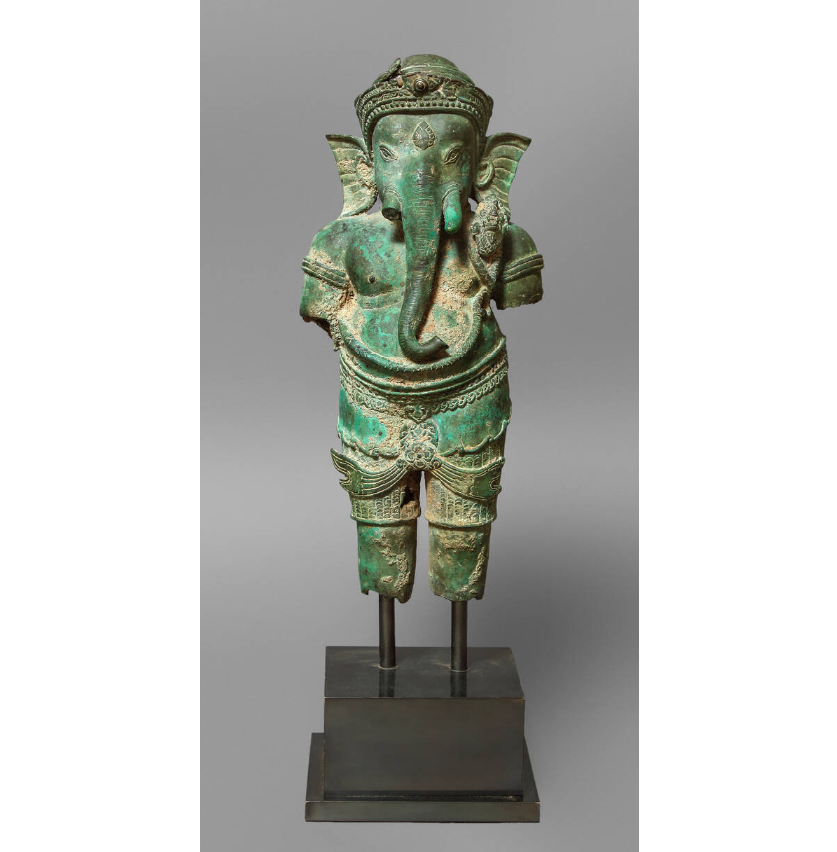
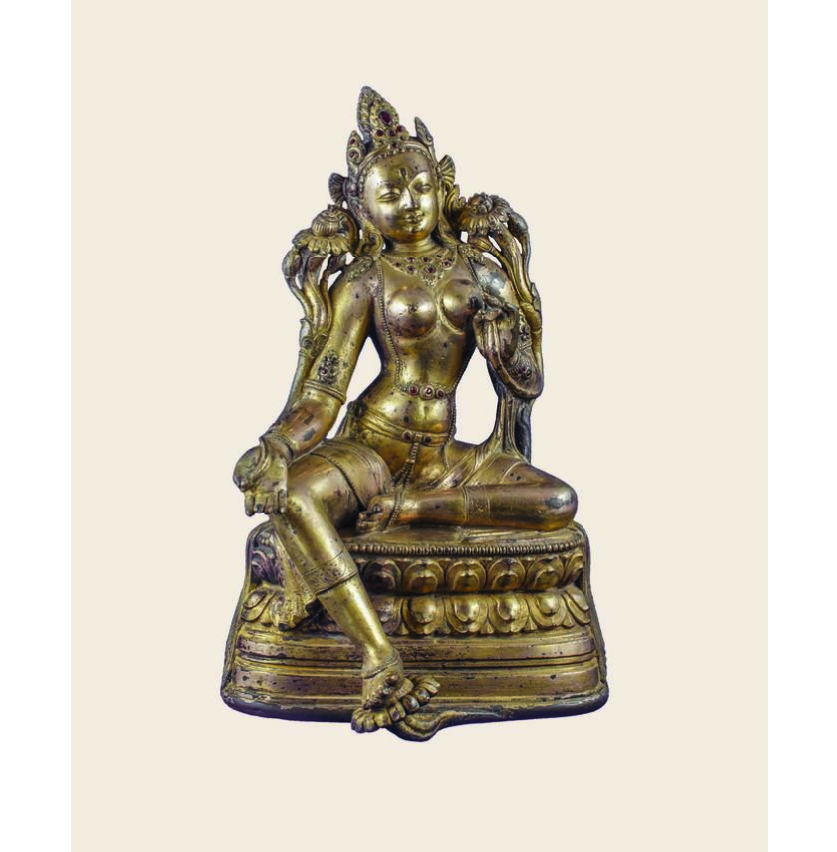
Another powerful tool in the perpetuation of colonial discourse within the State Museum of the East is its typological disproportion—specifically, the prevalence of religious artifacts over secular ones.Navigating the Indian art hall is difficult without knowledge of Indian mythology, as the brief captions fail to explain the role of deities bearing obscure names. This creates a sense of distance, a barrier that elevates Indian culture into the realm of the «Other.» Furthermore, the second-floor halls mix Hinduism and Buddhism, creating a false impression of similarity between these religions. By placing the halls dedicated to India (where Hinduism predominates) next to those for Central Asia (where Buddhism predominates)—based on the similar techniques used for creating statuettes and other exhibits—an unprepared visitor may fail to recognize that they are viewing objects from two distinct cultural traditions. Conceptually, this arrangement might be a clever way to demonstrate the mutual integration of two geographically close yet spiritually divergent cultures. However, in practice, it fosters an oversimplified view of Eastern beliefs.By presenting other cultures primarily through the lens of their beliefs, the museum emphasizes their fundamental difference, making religion the central and most visible element of «Eastern» identity. This constructs an image of a «mystical East, ” accessible only to the select few—expert Orientalists who can „decipher“ its enigmatic symbols and doctrines. Moreover, the mystification of these religions and the lack of sufficient educational context amplify the contrast in the public mind between Christianity (as the dominant Western religion) and Eastern religious systems, thereby fueling a binary opposition between the „Self“ and the „Foreign.“Simultaneously, the museum renders invisible—and thus less significant—other facets of life: daily life, art, science, politics, and the quotidian existence of people. Religion becomes the defining factor in establishing the canon of Eastern culture. This is directly linked to the classic Orientalist depiction of the „East“ as „mystical“ and „disorganized”—a concept that, according to Edward Said, constitutes one of the core tenets of the system of „Orientalism.“
Ideological Framework
It is interesting to examine the «North Asian Art» department, which is dedicated to the culture and art of the peoples inhabiting the northeastern regions of Russia, including Siberia, the Far East, and the Arctic North. The exhibition features artifacts dating back to the X century as well as rather contemporary pieces, such as the 1985 sculpture «Miracle Fish» crafted from mammoth ivory. In the explanatory texts describing the daily life of the Arctic North, the creators of the exhibition placed significant emphasis on hunting and survival in these territories with their harsh climate. However, this presentation—typical of ethnographic museums generally—creates an illusion of wildness and archaic nature within Russia’s territories.The emphasis on a «primitive» way of life, hunting, and severe climatic conditions is an example of a colonial stereotype. It reinforces the image of «barren lands» that require settlement, civilization, and aid from the center. Such an image historically played an important role in justifying colonial and imperial expeditions, in this case, the Russian colonization of the North. This narrative ignores the complex social structures, rich mythology, and adaptive technologies of these peoples, presenting them more as part of nature than as full-fledged human communities. Even the inclusion of modern sculpture adds an element of «exoticism» to this narrative, confirming that even today these peoples remain tied to their «natural» context.Many scholars find it reasonable to speak of «internal colonization» [13, p. 10]. Etkind argues that «internal colonization» as a metaphor and mechanism justifies Russia’s duality—both as a competing European power and, at the same time, as a lagging and traditionalist country.
Colonization always consists of two components: cultural and political. Pure violence is not colonization, but genocide. Cultural influence in itself leads to enlightenment, not colonization. When we talk about the process of colonization, we see how cultural hegemony and political dominance work together—in some union, relationship, or confrontation.
In the article, «The Orientalist Grand Game: Who Owns the Far East?», it is asserted that Orientalism, much like Russia’s imperial ambitions, has been directed toward the Far East. These factors led to the displacement of Chinese people from these territories and the proliferation in popular culture of the metaphor of the «yellow peril, ” allegedly originating from Japan [10]. Furthermore, there was an impulse to „museumify“ Eastern culture. The article states, „Details of daily life and customs, personal belongings of the original ethnic groups […] that inhabited these territories, are kept today in many European collections and continue to reproduce the endless exoticization of the East through a Western lens.“ This „museumification“ allows culture to be presented as static, exotic, and unchanging. This approach is also mentioned by Said [12, p. 28]. The preservation of other peoples' daily lives creates an illusion of „otherness“ and stasis, implying the transformation of living, evolving, and diverse communities into certain „frozen“ objects, exhibited as exotic relics of the past.
Admissions 5
After the Hall of Far Eastern and Far North Culture, the Fine Arts Hall appears especially contrasting, as it primarily represents the «Soviet East”—including Armenia, Georgia, Turkmenistan, Kazakhstan, and other countries. Alongside the applied arts from the previous halls, this section features 20th-century painting and sculpture, making the „Soviet East“ feel more contemporary and much more familiar to the typical Russian viewer. In this way, this conceptual region appears more Europeanized compared to the others.
This establishes an implicit hierarchy: the „traditional East“ is presented through the prism of religion, ethnography, and archaism, while the „Soviet East“ is framed as part of modern history, which is easier to comprehend because it has already progressed through a certain stage of development. This implies that for the peoples of the East to enter modernity, they needed to go through the Soviet model of development—a concept that in itself is a colonial assumption, positing a single, correct trajectory of progress.
This duality perfectly mirrors the complex politics of the Soviet Union itself regarding its national republics and other Eastern nations. On the one hand, the government proclaimed the brotherhood of peoples, the fight against colonialism, and support for national liberation movements. On the other hand, there was strict centralization within the country, cultural policy was controlled from Moscow, and local cultures were often viewed as „backward“ and in need of „cultural uplift.“
Nikolai Rerikh’s studio is another vivid example of ideological narrative. In his art, «wild» Eastern peoples are interpreted by a European intellectual. The East is presented here artistically—self-sufficient in its simplicity and naturalness. Yet, implicitly, it stands in contrast to the «developed West,» which, looking at Rerikh’s paintings, is captivated by the Neo-Romantic gaze of the Modern era. This narrative does not so much acknowledge the value and complexity of traditional cultures as it looks down upon them with a sentimental sympathy that does not imply an equal dialogue.
Conclusion
Some researchers equate the artistic image created in a museum exhibition with a model of reality. «Museum scholars, in this regard, speak of the practice of modeling reality using an always fragmented, excerpted collection of objects. This is achieved through research into a theme and scientifically accurate data about the objects, using the tools of exhibition design. The model of time has the property of ‘condensing’ meaning; it is always conventional and free from secondary details, ” notes I.V. Andreeva [1, 17]. Thus, the modeling function interacts closely with the cognitive function: through the creation of an exhibition model, the formation, preservation, and transmission of socially significant knowledge about cultural heritage occur. This is precisely why it is important to reform the museum and cleanse it of colonial discourse that fosters narrow-mindedness and reinforces a hierarchy based on national identity in the mass consciousness.The process of decolonizing museums is a complex and multifaceted challenge that demands moving away from colonial models of representation and transitioning toward practices founded on collaboration, equity, and the recognition of multiple histories. This requires the museum not only to acknowledge its colonial history but also to actively research it and make the findings accessible to the public. „Museums are a collective expression of what we consider important in culture; they offer a space for reflection and debate about our values, and without reflection, meaningful progress cannot be made, ” states Claire Bishop in her book, Radical Museology [3, p. 75]. A complete reassessment of the collection’s history and origins, the introduction of educational programs, and openness to change help to create the most complete and relevant worldview in museum institutions, particularly regarding the image of the East. The Museum of the East in Moscow faces a difficult task—to break away from the colonial mindset dictated by its history and become a living institution that reflects the spirit of the age. Updating and making the permanent exhibition more timely will result in a fuller and fairer representation of Eastern peoples.
Andreeva, I. V. The Method of Museum and Exhibition Design as a Basis for Classifying Museum Exhibitions // VM. 2019. No. 1. URL: https://cyberleninka.ru/article/n/metod-muzeynoekspozitsionnogo-proektirovaniya-kak-osnovanie-klassifikatsii-muzeynyhekspozitsiy (Accessed: 10/18/2026).
Bisenova, A. Orientalism Forty Years After Edward Said’s Book Publication // Syg.ma, 02/07/2021. URL: https://syg.ma/@leisan-garipova/alima-bisienova-oriientalizm-chieriez-sorok-liet-poslie-publikatsii-knighi-edvarda-saida (Link requires VPN; Accessed: 10/18/2026).
Bishop, K. Radical Museum Studies, or Are Modern Art Museums Truly «Contemporary»? / Claire Bishop; with photos by Dana Perzhovsky. — Moscow: LLC «Ad Marginem Press,» 2014. — 96 p.: ill.
Vasiltsov, K. S. Russia and the «Asiatics»: The Rhetoric and Practice of Russian Orientalism // Russian Orientalism (Science, Art, Collections). — St. Petersburg: MAE RAS, 2019. — pp. 17–35.
Voitov, V. E. Materials on the History of the State Museum of the East. 1918–1950. People. Objects. Affairs. — Moscow: GMV, ScanRus, 2003. — 520 p.
Voitov, V. E. Materials on the History of the State Museum of the East. 1951–1970. People. Objects. Affairs. — Moscow: GMV, 2006. — 640 p.
Voitov, V. E. Materials on the History of the State Museum of the East. 1971–1990. People. Objects. Affairs. — Moscow: GMV, 2015. — 720 p.
Govorunov, Alexander Vasilievich, Kuzmenko, Oksana Pavlovna. Orientalism and the Right to Speak for Another // International Journal of Cultural Studies. 2013. No. 2 (11). URL: https://cyberleninka.ru/article/n/orientalizm-i-pravo-govorit-za-drugogo (Accessed: 10/18/2026).
Mkrtichev, T. K. State Museum of the East, Moscow. — Moscow: Direct Media, Kommerskolskaya Pravda Publishing House, 2012. — 13 p.
Orientalist Great Game: Who Owns the Far East? // Syg.ma, 01/31/2025. URL: https://syg.ma/@sygma/orientalistskaya-bolshaya-igra-komu-prinadlezhit-vostok (Link requires VPN; Accessed: 10/18/2026).
Polyakov, T. P. The Mythology of Museum Design or «How to Make a Museum?» / T. P. Polyakov. — Ministry of Culture of the Russian Federation Academy of Advanced Training, Culture and Tourism; Russian Institute of Cultural Studies. — Moscow, 2003. — 456 p.
Said, E. Orientalism / Academic Editor A. R. Ikhsanov. — Moscow: Garage Museum of Modern Art, 2021. — 560 p.
Etkind, A. Internal Colonization. The Imperial Experience of Russia / Authored Translation from English by V. Makarova. — Moscow: New Literary Review, 2013. — 448 p.
Chwatal, C. Decolonizing the Ethnographic Museum // Art Papers. — URL: https://www.artpapers.org/decolonizing-the-ethnographic-museum/ (Accessed: 10/18/2026).
aaaa
bbb