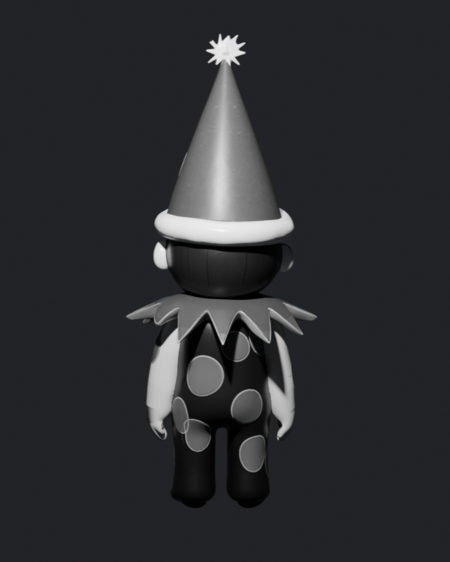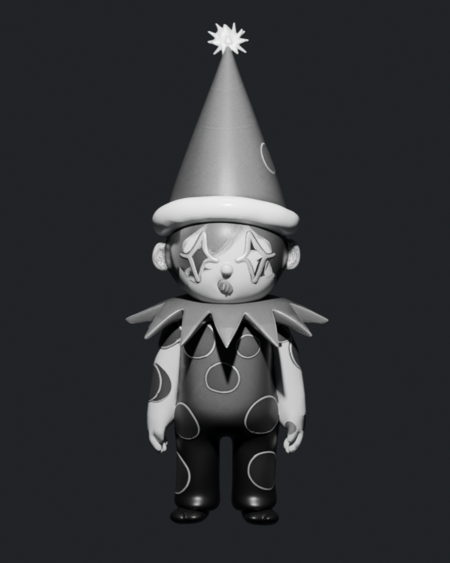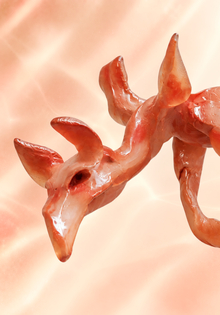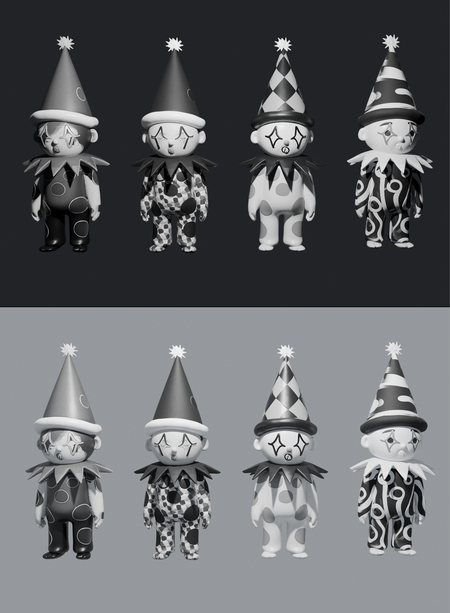
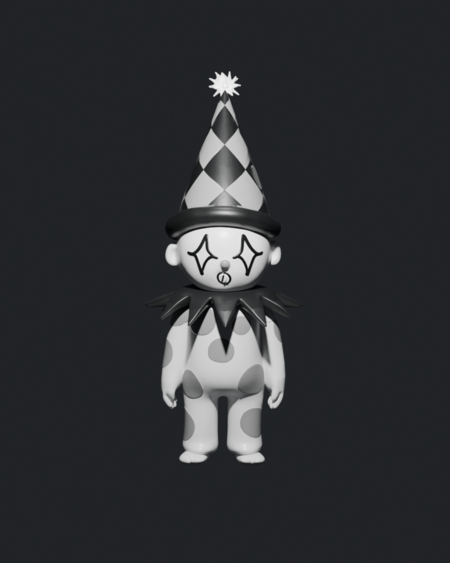
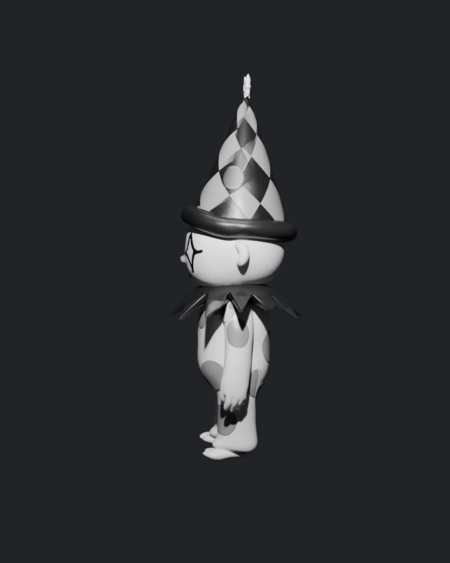
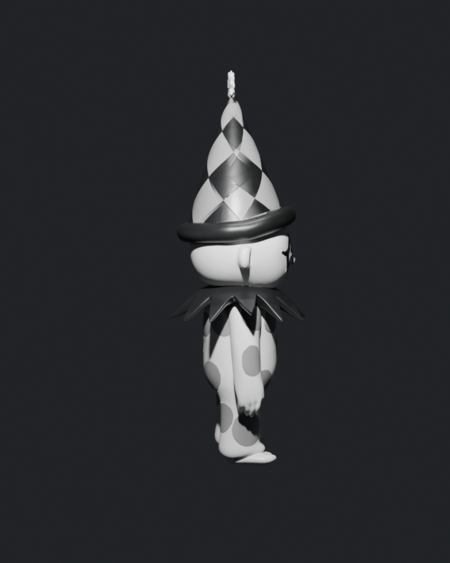
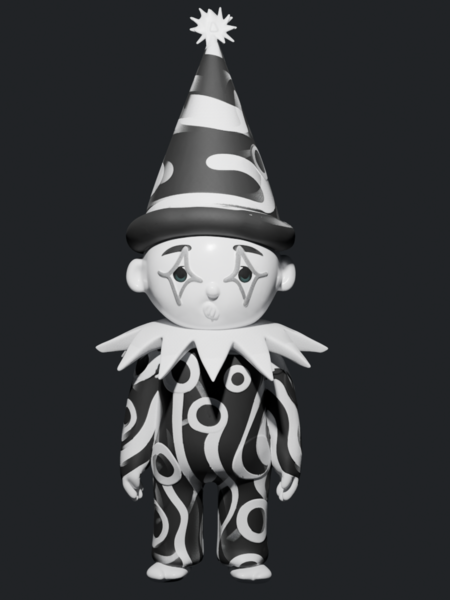
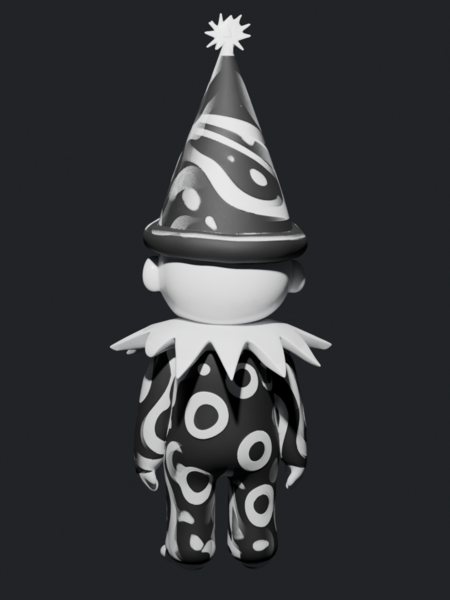
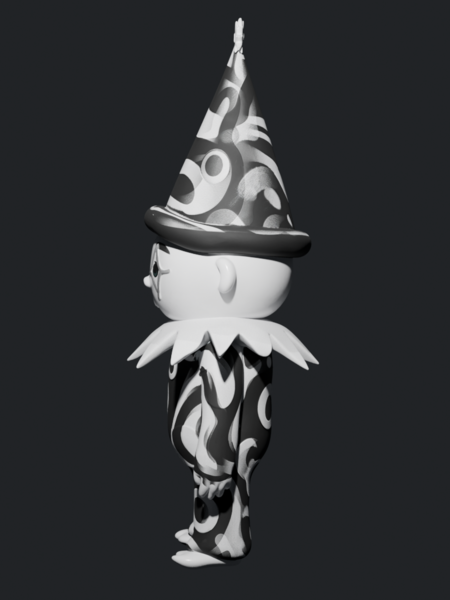
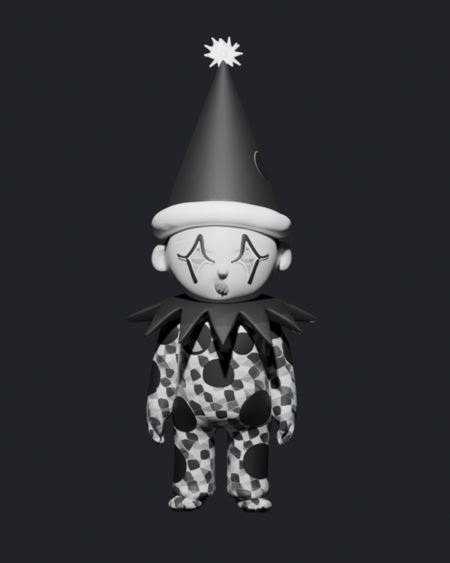
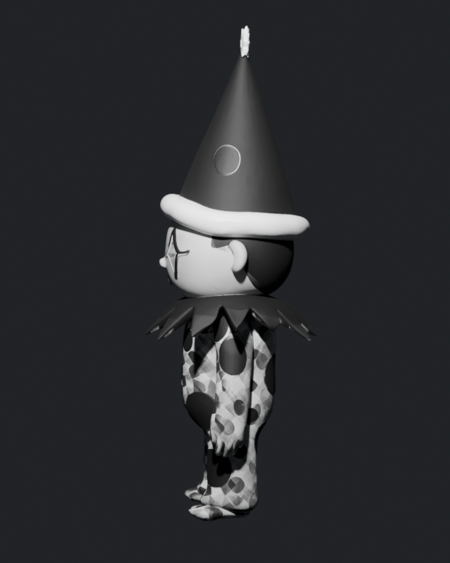
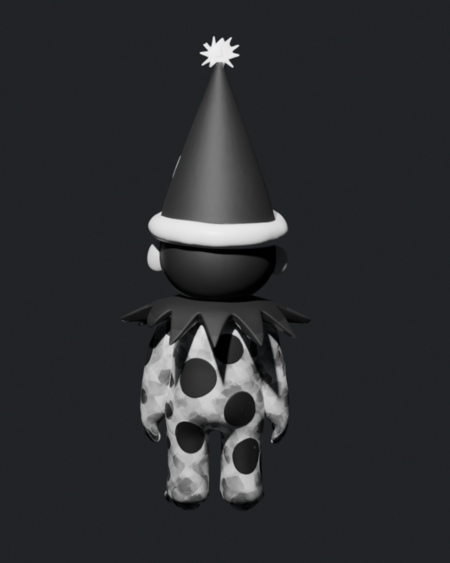
«After the Applause”—a collection of four collectible figures inspired by the image of a melancholic clown and theatrical aesthetics.
The characters exist on the border between a festive performance and the moment immediately following its conclusion. Their appearance draws inspiration from theater, circus, and fairy-tale archetypes, yet each character presents a unique, original artistic vision. The project was initially inspired by the archetype of Pierrot—a melancholic theatrical figure characterized by sensitivity, solitude, and the contrast between his on-stage persona and his inner state.
Four figurines depict characters left after the performance concluded. They retain festive attributes, but no longer perform for the audience. One of the characters holds a balloon, which becomes a symbol of anticipation, hope, and a solitary companion.
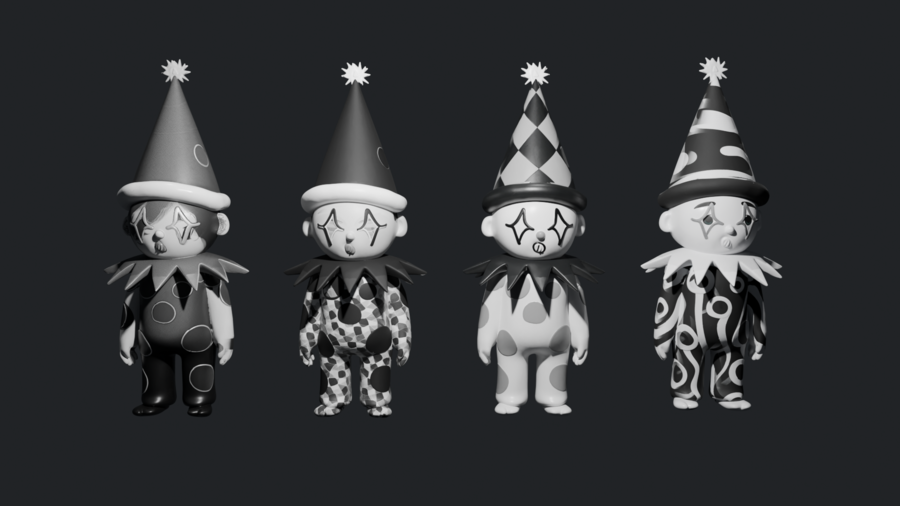
This series is not a copy of Pierrot or any other existing characters. The work reinterprets the general characteristics of the sad clown archetype: the festive costume, theatricality, emotional vulnerability, and the incongruity between external ornamentation and internal melancholy.
The series is connected to the studio’s diploma project, which creates artistic visual concepts for brands and products. Within the studio, characters can first appear in a cinematic video and then transition from the screen space into physical media. The figurines are an example of this transition: a visual identity developed for video and animation is brought to material life as a collectible object.
Production Stages
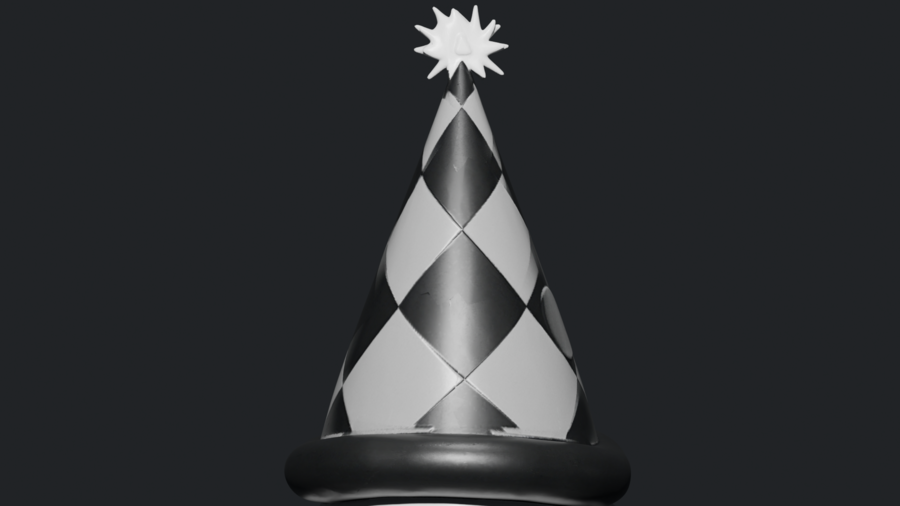
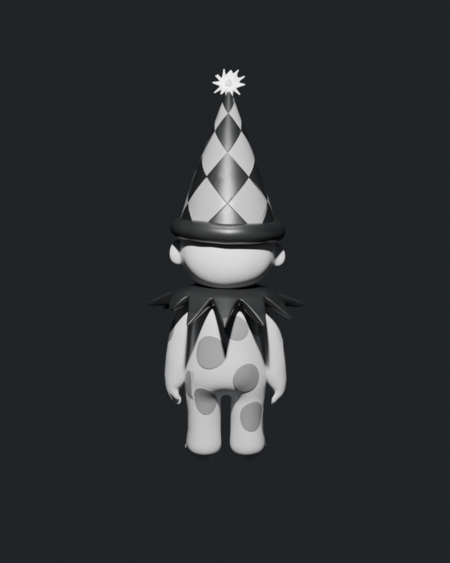
The figurines are intended to be produced using photopolymer 3D printing. Photopolymer resin is used for production, as it allows for the precise reproduction of small character details, rounded forms, and costume elements.
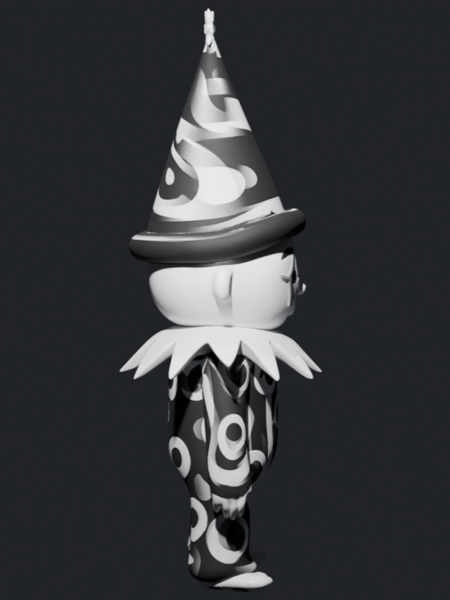
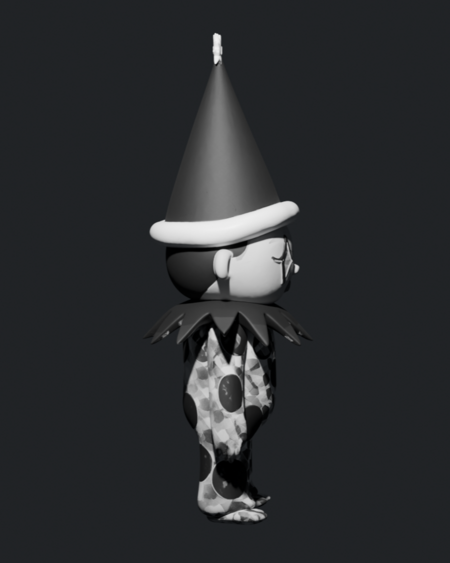
A separate digital 3D model is created for each figurine. The models are checked for unclosed surfaces, overly thin details, intersections, and stability issues. After verification, the files are prepared for export in STL format for photopolymer 3D printing.
After printing from the models, the support structures are removed. The details are washed, dried, sanded, and primed. Then, the figurines are painted with acrylic paints in the series' overall color scheme. The final step is applying a protective matte or semi-gloss finish.
Delivery
Collection of the completed kit is available for self-pickup from the workshop. If self-pickup is not possible, the cost of delivery to the collection point will be calculated separately after confirming the weight and dimensions of the packaging.Minimum Order Quantity — One set of four figures.
The initial set is required to test the quality of photopolymer printing, the stability of the characters without supports, the durability of fine details, the quality of painting, and the correspondence of the physical objects to the digital models.For the further realization of the project, a small series of 5 sets is anticipated. Each set includes four different characters. Therefore, the total potential run is 20 figures.
Estimated production time is up to 15 days after the 3D model has been approved and the order finalized. The workshop provides this timeframe as a general guideline for order fulfillment.
Grant Calculation
The preliminary cost estimate was calculated based on the open pricing of workshops specializing in photopolymer 3D printing of small objects. For the calculation, an estimated weight of one figurine of about 100g was used, or about 400g for a set of four characters.
The estimated cost to produce one set of four figures is approximately 28,000 ₽. For a small series of 5 sets, including 20 figures, the preliminary cost is around 140,000 ₽.