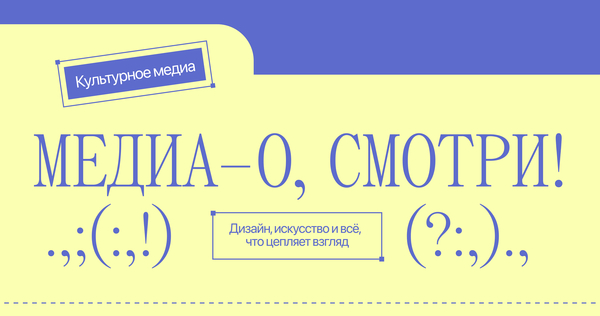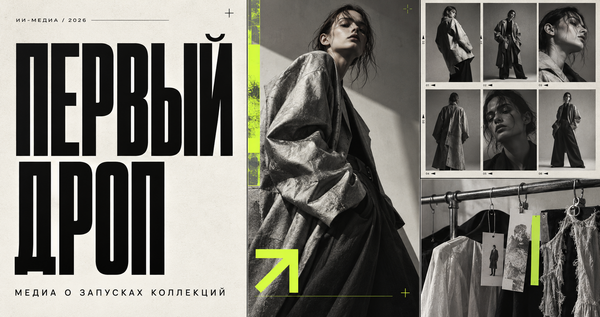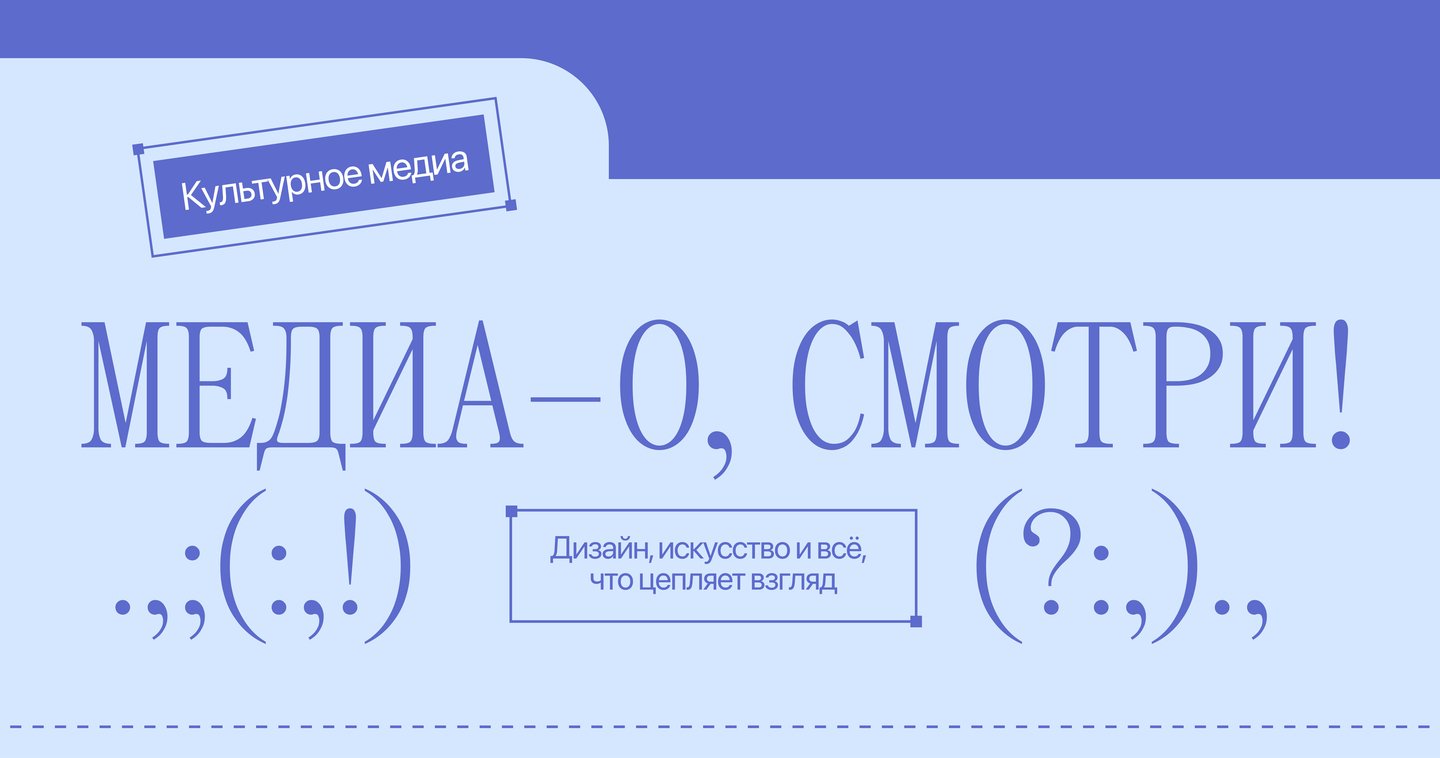
«Oh, look!» — media about visual culture for those who professionally or constantly work with visuals.
The project collects design, art, photography, fashion, books, film, exhibitions, visual archives, and daily observations within one informational space.
The media’s core mission is to help the reader navigate this field, discover compelling objects, understand their context, and see the connections that allow one to move from one discovery to the next.
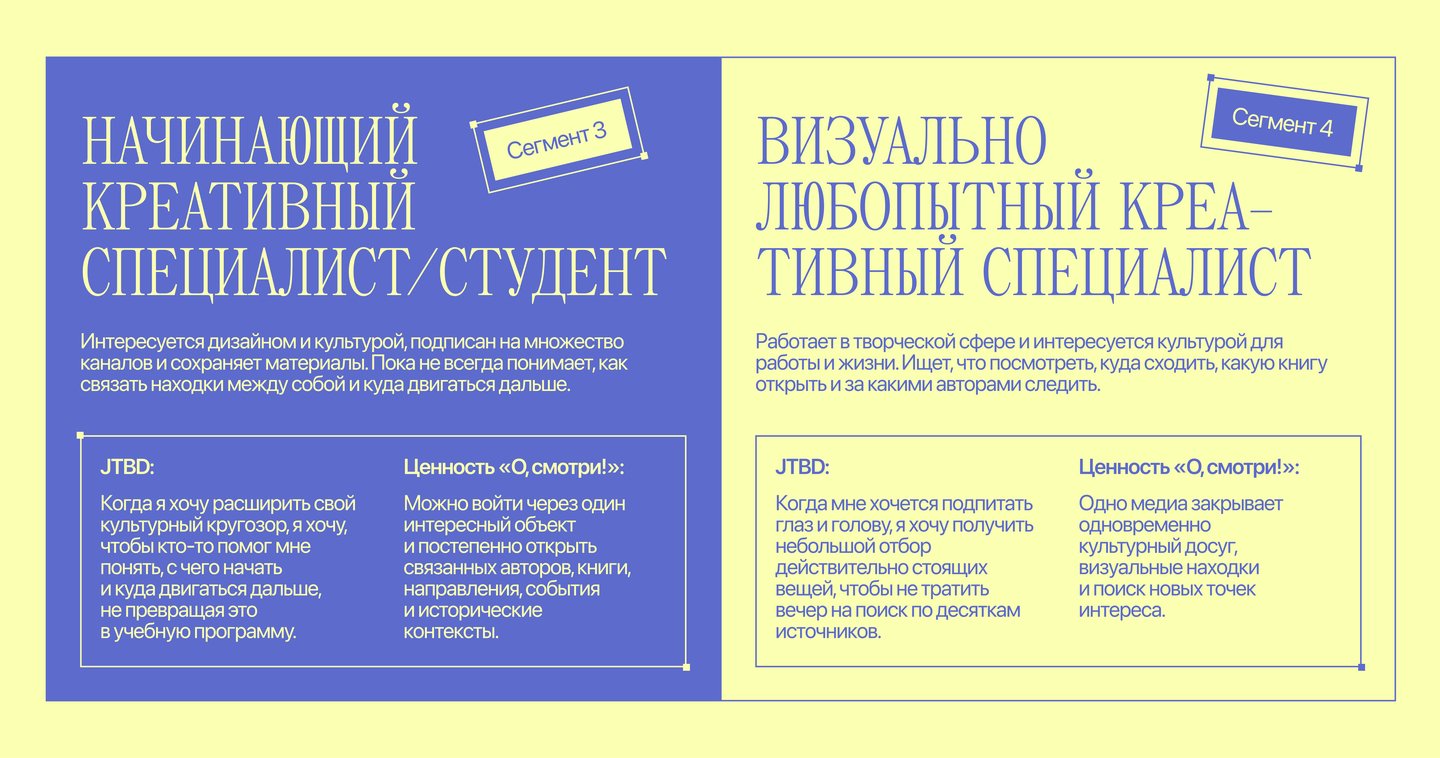
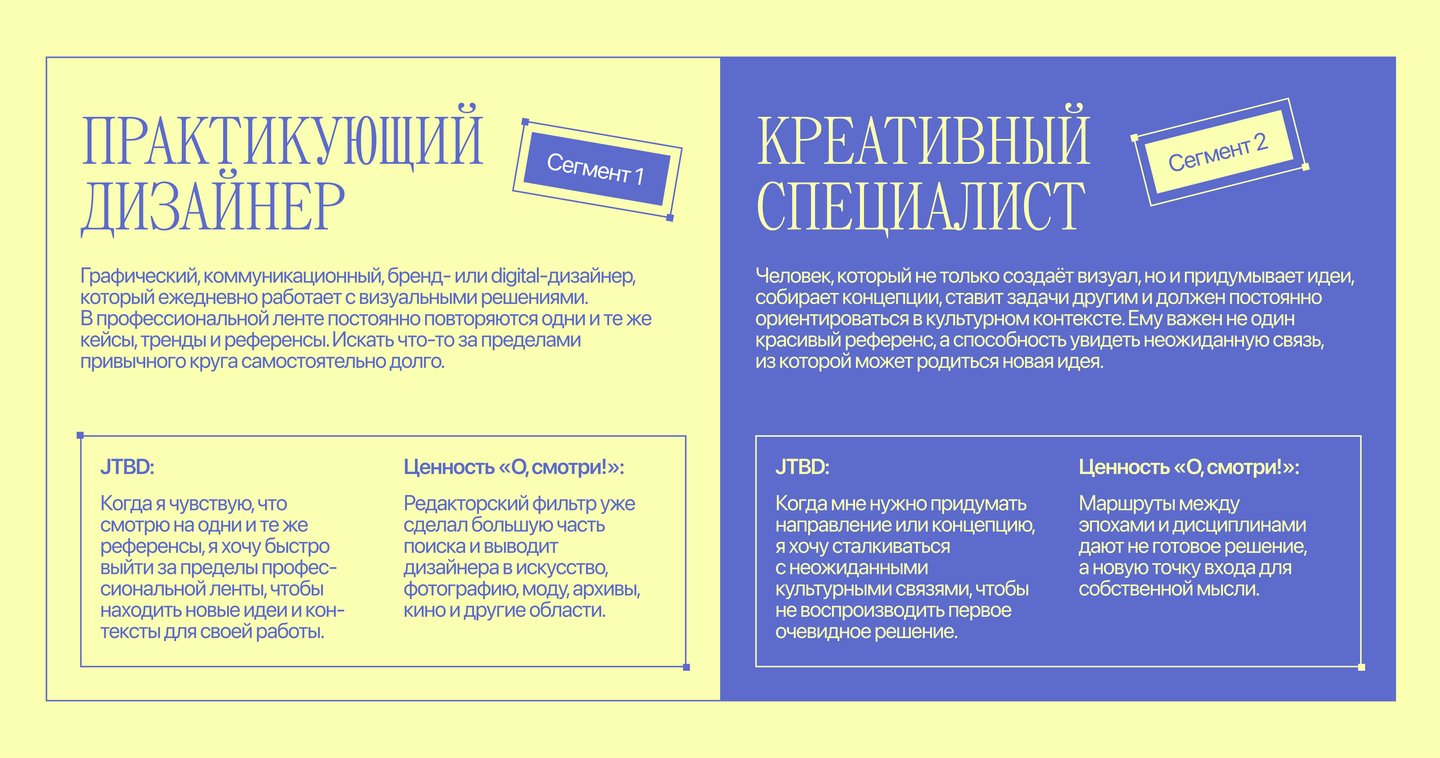
Primary Audience — people whose visual culture is connected to work, study, or ongoing creative practice.
The content is built around four simple actions:VIEW Projects, identities, books, photography, objects, archives, and other visual discoveries.ATTEND Exhibitions, festivals, lectures, markets, workshops, and other events that may interest someone working with visuals.EXPLORE Books, films, magazines, websites, essays, archives, and other resources for further research.NOTICE Non-obvious connections between objects from different eras and disciplines.This creates the core logic of the project: FIND → NOTICE → CONNECT → PROCEED
The database includes 30 sources from various areas of visual culture. The selection is built around the impulse «Oh, look!»: a striking object, a comprehensible context, and the potential for further investigation.
For the «Go» section, events available to the Moscow audience are prioritized. The city, venue, and attendance requirements are verified for each piece of content individually.
Working with sources: data acquisition and updating
Sources serve three functions: discovery, confirmation, and contextual expansion. The priority depends on the question. Information about the work should be verified with the author or the institution representing it; attendance requirements should be checked with the event organizer.
Access method is defined separately for each resource. If automatic retrieval is unavailable, the editor adds the link and permitted materials manually.The source registry saves the title, URL, topic, relevant categories, access method, frequency, and the date of the last successful verification.A discovery is considered new if it is not yet in the media database. Work from past years may become a topic for publication if it aligns with the editorial plan. The creation date of the object, the page date, and the discovery date are stored separately.
The diagram illustrates how raw information transforms into a publication: what happens at each stage, what data is passed forward, and who makes the decisions. Machine stages are denoted as M1–M5, and editorial stages as E1–E3.
Machine Processing
The system finds materials, extracts information, cross-references entries with the database, and suggests categories and potential connections. Following editorial review, it prepares a draft and checks the revised version.
Human Processing
Phase 1. Topic Selection and Fact-Checking. The editor assesses the material, resolves ambiguities, and determines precisely what to offer the reader for consideration.Phase 2. Editing and Design. The editor refines the text, selects imagery, creates captions, and verifies usage rights.Phase 3. Final Approval. The editor reviews the report, approves a specific version, or sends the material back for revisions. The posting on Telegram is handled by a designated individual.
The discovered object receives a permanent identifier—an ID. All stages operate on this single record, progressively augmenting it.
To create a draft, a specific subject, source, facts sufficient for the chosen perspective, and resolution of Question 1 are required.
The author or year may be unknown. Missing information is noted in the record. If the uncertainty affects the meaning of the publication, the work is suspended until clarification.