Новая жизнь исторической деревни: адаптивная регенерация Кучепалды и окружающих поселений
План работы над ВКР
«For city dwellers, it offers the chance to live for a few days according to the customs and unwritten rules of a village.»
The final qualification project is dedicated to the regeneration of the rural settlement system of Vatamanovskaya—Krasnaya Lyaga—Kuchepalda. The project examines opportunities for preserving and redeveloping northern villages through the adaptive reuse of historical architecture, restoring connections to the cultural landscape, and developing local tourism.
The territory encompasses three settlements, each with a distinct state and potential: Vatamanovskaya, an active village; Krasnaya Lyaga, which contains a cultural heritage site; and Kuchepalda, a derelict settlement where the historical planning structure and traditional wooden architecture remain intact.
This combination allows for the formation of a unified tourist hub, in which civic, cultural, research, and recreational functions are distributed among the settlements according to their unique characteristics. The project’s goal is not only to preserve the heritage of the Russian North but also to find new ways to utilize the territory that ensure its continued development.
«Villages are unique centers of living folk culture, having preserved age-old ways of life, settlement planning and construction, ritual practices, folklore… crafts, and industries.»
The goal of this project is to develop a model of territorial interconnectedness between an active rural settlement and abandoned historical areas, where tourism serves as a tool for their joint development, the preservation of the cultural landscape, and the restoration of lost functions.
The project aims to foster several types of tourism to develop a multifunctional territory suitable for both short-term visits and extended stays.The functional program of the territory is shaped by these tourism scenarios:[01] Cultural and Educational Tourism — familiarizing visitors with the region’s history, wooden architecture, and cultural heritage sites;[02] Research and Volunteer Tourism — expeditions, field schools, and restoration and research programs.[03] Rural and Agritourism — accommodation in a rural setting, exposure to local life, crafts, and traditional practices;[04] Nature and Ecotourism — routes through the cultural and natural landscape, and wildlife observation;[05] Hiking and Walking Trails — pedestrian connections between settlements and individual attractions;[06] Event Tourism — festivals, master classes, and educational and cultural events.
Core Design Objectives:[01] Identify key elements of the historical environment and cultural landscape that require preservation and consideration in the project;[02] Develop a regeneration strategy for Kuchepalda without literally recreating the lost village or museifying it, by defining various approaches to dealing with existing and lost structures: conservation, adaptive reuse, and contemporary architectural interventions;[03] Formulate a new functional model for Kuchepalda that ensures regular use of the territory through residential, craft, research, educational, event, and tourism functions;[04] Integrate Kuchepalda, Krasnaya Lyaga, and Vatamanovsk into a unified spatial and functional system, distributing diverse roles among the settlements and establishing a common tourist route;[05] Develop an infrastructure and economic model for the territory’s development where tourism flow and new functions contribute to job creation, local service growth, and community support;[06] Create a phased development scenario for the territory, taking into account existing constraints, available resources, and opportunities for future project implementation.
Spatial and Historical Context
The design area is located in Arkhangelsk Oblast within the boundaries of the Kargopolsky Municipal District, specifically within the former municipal entity of «Pechnikovskoye.»The project considers three territories and the adjacent forested areas that connect the settlements:[01] Vatanamovskaya — an active village (Area $\approx$ 12 km² with adjacent non-forested territory);
[02] Krasnaya Lyaga — a dell featuring a cultural heritage site (Area $\approx$ 3 km²);
[03] Kuchepalda — an abandoned village with a preserved historical planning structure (Area $\approx$ 4.89 km²).
[Vatanamovskaya St.]
Historical photographs of Vatamanovskaya village
Contemporary Photography by D. Vatanamovskaya
[Krasnaya Lyaga St.]
Historical Photographs. Krasnaya Lyaga Outcrop
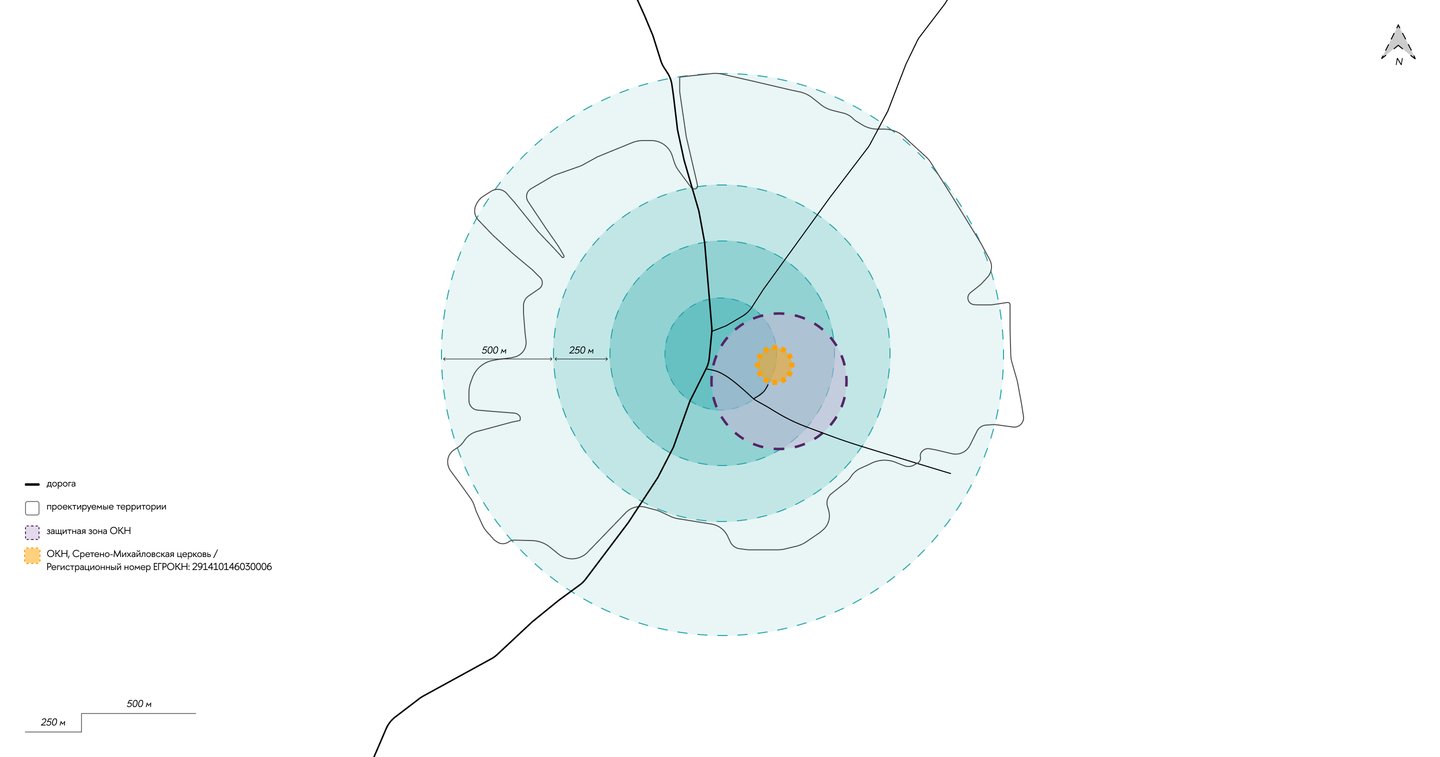
Historical [01,02] and contemporary [03] photography. Krasnaya Lyaga Urochishche / OKN, Sreteno-Mikhailovskaya Church
[D. Kuchepalda]
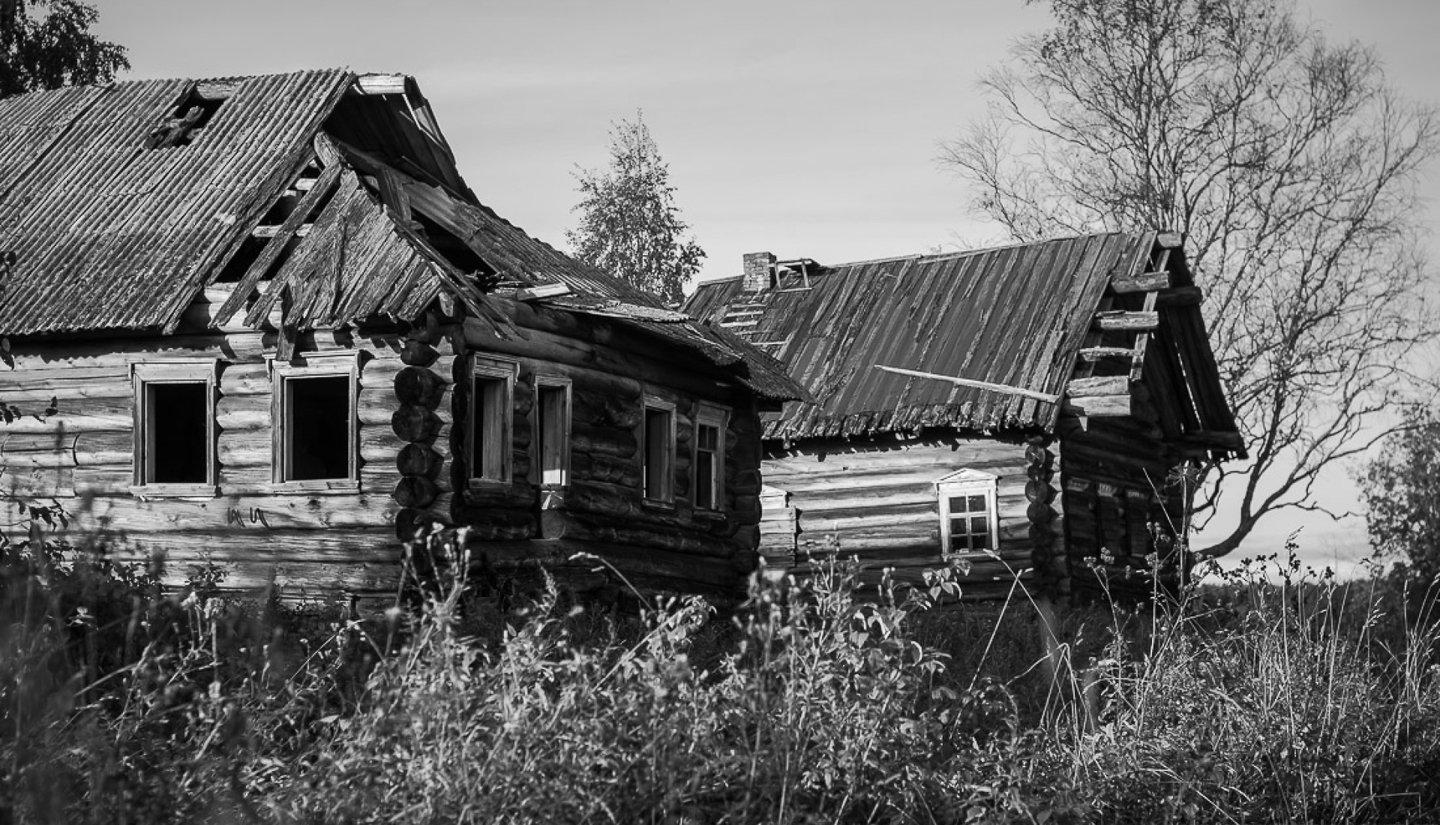
Photographic documentation of the current state of the village of Kuchepalda, 2018. Author — researcher O. I. Khanova of Kuchepalda.
Photographic documentation of the current state of the Kuchepalda village, 2018. By researcher O. I. Khanova of Kuchepalda.
Key characteristics of the territory:[01] The design area is situated within significant tourist flows: to the west are Pudoz, the Kenozersky National Park, and Lyadiny; to the east is the ancient town of Kargopol.[02] The project zone is located along the major regional highway, «Dolmatovo — Nyandoma — Kargopol — Pudoz,» which enhances its transportation accessibility and sets the stage for the territory to develop as another tourism cluster. Thus, the project can serve as a link between existing attractions and help form a more continuous tourist route across the Arkhangelsk region, supporting the economies of rural settlements and small towns.[03] Within the territory of Krasnaya Lyaga stands a federal cultural heritage site—the Sreteno-Mikhailovskaya Church.[04] The territory is characterized by the presence of karst springs and associated water bodies.→ The territory lies between established tourist centers and along an established transport-tourism corridor, but currently, it primarily serves a transit function. The project proposes transforming this transit flow into a stream featuring stops and extended stays within the area.
To develop tourism in small towns and settlements of the Arkhangelsk region, we propose establishing a network of tourist centers connected by routes to existing attractions. These centers can help attract additional investment for preserving the cultural heritage of the Russian North while simultaneously uniting historical-cultural, ecological, rural, and event tourism.
Within the framework of the Final Coursework, the Vatanamovskaya — Krasnaya Lyaga — Kuchepalda system is considered a single local tourist hub integrated into the existing Kargopol route. This approach allows the project to be viewed not only as the development of a specific territory but also as a potential model for preserving northern villages by giving them new functions and integrating them into a larger tourist flow.
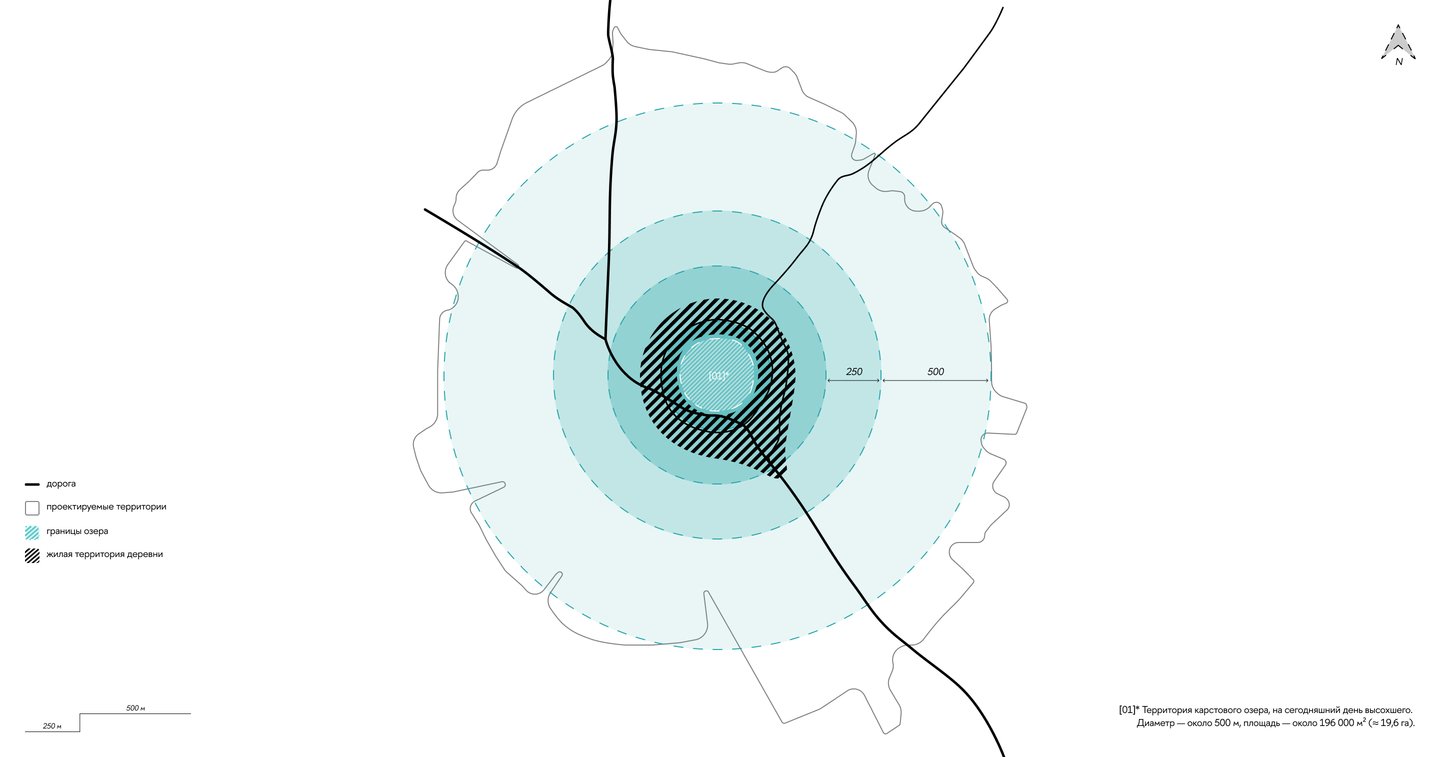
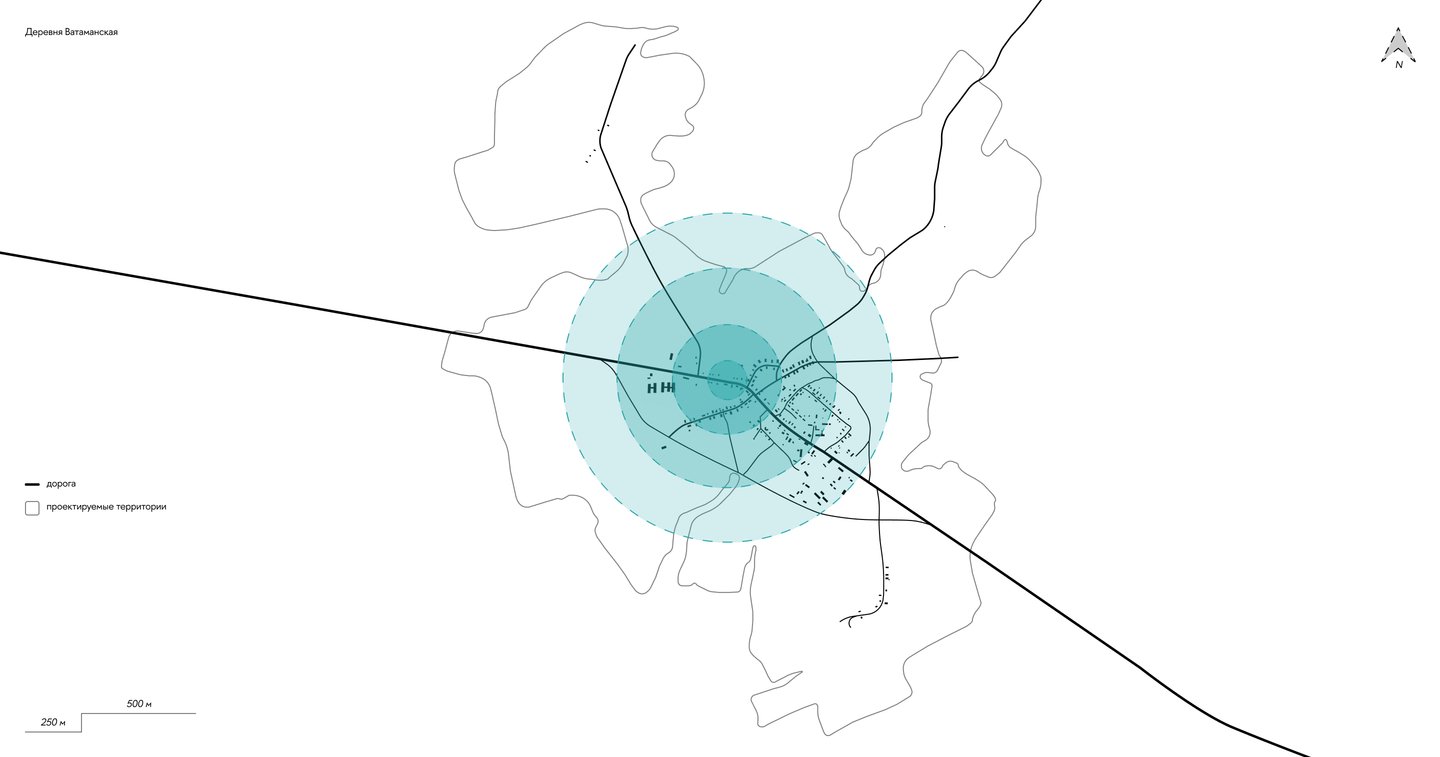
Vatamansovskaya Village / Krasnaya Lyaga Outcrop / Kuchepalda Village
Relevance and Problem Statement