Мимякишь цех
Личный бренд 3D печати
Goal
I want to transform my skill set in 3D work into a personal brand that functions on multiple levels at once.The goal is to create a media tool that simultaneously generates inbound orders for models, custom merch, builds a loyal audience for selling finished pieces, and opens monetization opportunities through courses and private 3D lessons.Functionally, my objective is to provide a Russian-speaking audience with a complete pathway—from the first polygon to earning money for a figurine sold at an art market stall, on a shelf, or through their own website.Thematically, I want to show the specific steps, figures, and solutions behind every figurine and 3D model.On the brand level, I aim to become that master craftsman whose integrity and competence are, in themselves, compelling enough to make people watch, subscribe, and buy. People buy from those they trust, and they trust those who show reality without embellishment.
Themes
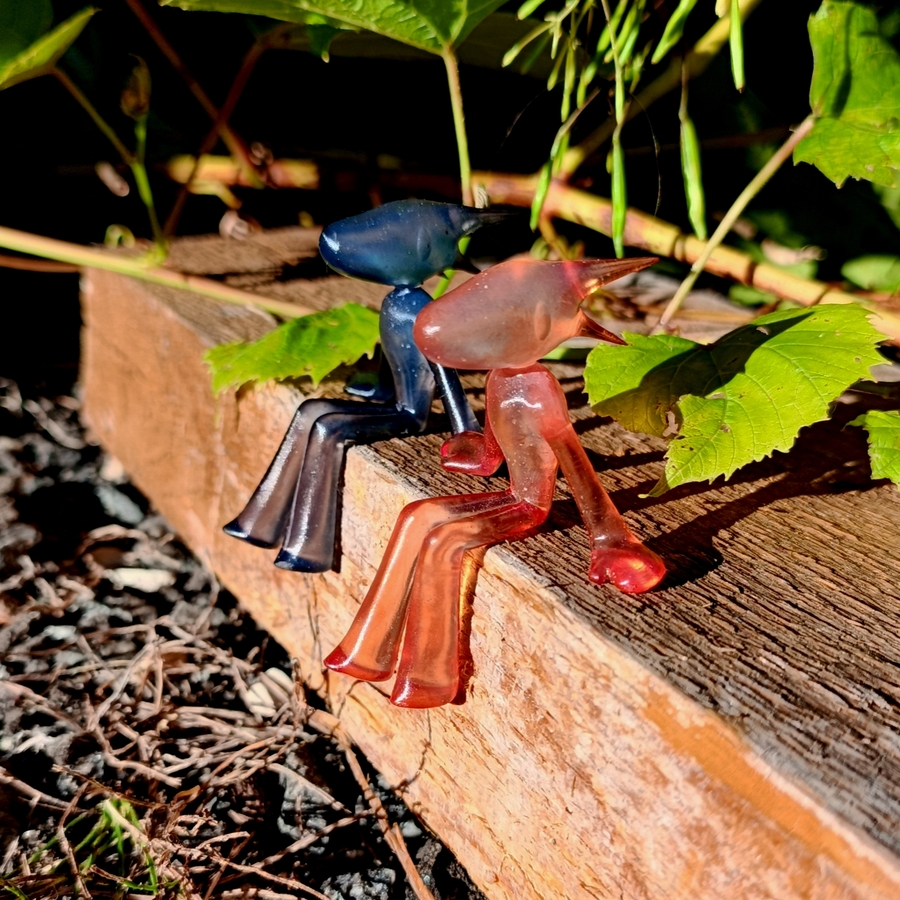
The segment is a Russian-language space for 3D printing and merchandise creation, catering to creative individuals who aim not just to print, but to develop valuable products.The narrow focus is the complete cycle of transforming a 3D model into a marketable art piece. This encompasses modeling, slicing, printing, post-processing, painting, packaging, pricing, and sales.The choice of this niche topic stems from the oversaturation of the 3D printing market with content about printer settings and equipment reviews. Many note that simply printing ready-made models no longer impresses anyone.However, linking the model, the physical product, and market sales elevates the discussion from technology to creative entrepreneurship. Competition here is fundamentally lower, and the value for the audience is higher.The market for 3D-printed collectibles is growing at a steady rate. The main driver for this growth is adult collectors and custom products. I am focusing precisely on a trend that is only going to intensify.
Competitors
I understand that competitors can be divided into several types, and each type requires a distinct approach.
Direct Competitors—are Russian-speaking 3D bloggers who print figurines and sell them through marketplaces. They showcase the printing process, review equipment, and occasionally sell models.Their weakness is that the focus is shifted toward technology rather than creative entrepreneurship. Sales either happen through marketplaces, where commissions consume a significant portion of profit, or they remain chaotic. Few of them consider art marketplaces as a sales channel or delve into the economics of a single figurine with real figures.Their strength lies in the existing audience and familiar topic. However, they do not address the need for understanding the full cycle.
Indirect Competitors — these are illustrator artists with merchandise who sell stickers, posters, and pins on online marketplaces. They solve the same problem—selling their art—but through a flat product that is easily replicated. I offer a three-dimensional product that is difficult to copy and possesses the added value of handmade craftsmanship.
Miniature painters are also indirect competitors. They paint and sell customized miniature figures, but often do not create the models themselves and rely on others' STL files.
Indirect Competitors—these are any entertainment channels for 3D artists that provide tutorials on various modeling and slicing software, competing for the same audience time and attention. Their weakness is that they are not tied to a physical product or sales. The audience watches how to make things look good, but not how to sell them.
Potential competitors are large 3D platforms and publishers who could begin actively supporting Russian-speaking creators with content and marketing, thereby siphoning off their audience.
I cover the entire lifecycle, focusing on the art market, demonstrating product economics, speaking frankly about failures, and operating within the Russian-speaking context. None of my competitors meet all these criteria simultaneously.
Distribution Channel
I am building the outreach around two core platforms—TikTok and Telegram. These two platforms handle different objectives, and together they create a complete funnel cycle: TikTok drives new audiences, while Telegram retains them and transforms them into a loyal community.
I use TikTok as my primary acquisition channel. It is the perfect platform for short videos documenting the printing process, painting, mini-tutorials, and conversational formats, because the algorithm promotes content to people who may not yet know me but might be interested in the subject matter. The formats I plan to use include time-lapses of printing from the first layer to the finished figure, before-and-after painting videos, short insights such as «three beginner mistakes in the slicer, ” or the cost of a single figure, and emotional moments from art markets, showing buyer reactions and the booth atmosphere.
TikTok’s key advantage is that it doesn’t require me to be a professional editor or an experienced blogger. It is enough to film vertically, use trending sounds, and show the real process, because the TikTok audience values authenticity and raw content more than highly polished videos. If I post regularly and stay relevant to the topic, the algorithm will find the right audience for me.
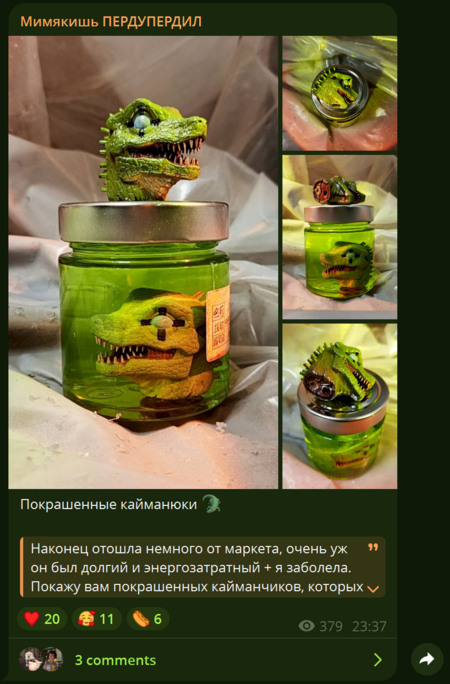
I use Telegram as my primary channel for retention and monetization. It’s a space where people who arrive from TikTok stay long-term because there is no algorithm dictating whether they will see my post. They subscribe intentionally and receive what they came for—whether it’s insight into the process, financial breakdowns, drop announcements, or behind-the-scenes content.
On Telegram, I maintain a diary format using daily or near-daily posts. This might be a photo of my desk with a comment on what I’m doing today and what went wrong, a screenshot from 3D editors with thoughts on modeling, a post analyzing the economics of a single figure—showing the cost of resin, electricity, time, and the final market price—or a poll about what to create next. This format creates a feeling of live presence and allows the audience to feel like they are part of the process, rather than just viewers.
Telegram is also becoming the main platform for monetization. Here, I announce drops of finished figures, sell merch directly without marketplace commissions, and launch a private channel featuring analyses and templates for subscribers who…
Target Audience
I am building the target audience description through personas because what matters to me is not age or income, but rather the problem the person is trying to solve and what is preventing them from solving it. Each persona represents a distinct segment, and together they cover the entire audience I am working with.
The first character is Dmitry, a 27-year-old IT engineer who bought an Elegoo Mars (3D printer) six months ago and prints keychains and bench models. His priority phrase is like, «I want my hobby to pay off, ” because he has already invested money in the printer and resin but doesn’t yet know how to turn it into something bigger. His goal is to transition from printing for himself to selling on a marketplace, and his motivation is utilitarian—tied to a desire for success. The problem is that he cannot find information on how to price items, where to sell them, or what to tell a customer, and he is afraid that his figures aren’t good enough. His technical knowledge of printing is average, but his knowledge of sales is zero. The context is that he watches YouTube in the evenings after work, searching for queries on how to sell 3D figures. His consumer behavior type is methodical because he asks how this product will help him solve a problem, and his Job-to-be-Done (JTBD) is formulated as, „When I have printed a figure, I want to understand how to turn it into money so the hobby stops being a black hole in my budget.“
The second character is Anya, a twenty-four-year-old illustrator who designs characters and sells stickers and prints on marketplaces. Her priority statement is: «I want my art to be tangible because I want to transcend the flat image.» Her goal is to find someone who can create a 3D model based on her artwork and print it—her motivation is both aesthetic and socially driven. The problem is that she doesn’t know who to approach, how much it will cost, or how to maintain control over the quality, as her knowledge of 3D and printing is nonexistent. She searches Telegram chats for artists who create figurines from artwork, and her consumer behavior is socially oriented. Her Jobs to Be Done (JTBD) is framed as: «When I have a character I want to sell in three dimensions, I want to find a master craftsman to execute it without my involvement in the technical details so I can continue drawing.»
The third character is Oleg, a 35-year-old game designer who attends art markets and buys figures from local creators. His priority phrase sounds like «I value handmade work over mass-produced junk because I’m not just looking for an item; I’m looking for a story and uniqueness.» His goal is to understand who made what he buys and whether it’s worth the money. The problem is that he doesn’t know how to distinguish between something «printed on a printer in five minutes» and something «handcrafted with soul, ” and he wants to see the process to justify the purchase. His knowledge level in production is low, but his level in consumption is high; he follows the creators from whom he purchased products to stay updated on the process and manufacturing. His consumer behavior is impulsive and socially oriented because he buys emotionally, but he wants to validate the purchase by making the right choice of artisan. His Jobs to Be Done (JTBD) is formulated as: „When I see a figure at a market, I want to know the story of its creation to decide if it’s worth the money, and so I can tell my friends why I bought it.“
All three characters are connected through my content. Dmitry is learning sales from me; Anya seeks a master in me, and Oleg is a buyer who wants to know the story. Therefore, my content must showcase the process, the data, and the behind-the-scenes aspects so that everyone finds what they came for.
Unique Selling Proposition
Value Proposition 1: Full Cycle Instead of Fragments
Competitors show isolated steps—how to set up a printer, how to paint a miniature, how to list a model on a marketplace. I show the entire journey, from the first polygon to getting paid for the figure at an art market. This is clear at a glance because in the channel description and videos, I state immediately that this isn’t a series of equipment reviews for the sake of reviews; it’s an end-to-end process where every stage connects to the previous one and leads to a sale.
Value Proposition 2: Real Numbers Instead of Empty Words
Competitors claim you can make money with 3D printing, but they never show the exact cost of resin, equipment, printing time, or painting—nor do they disclose the net profit after all expenses are deducted. I transparently outline the economics of every single figurine, including failed runs and unsold pieces. This is immediately evident because in every video and post, I provide specific figures and don’t hide failures; I dissect them as an integral part of the process.