FUTURE MEDIA THEMES
SEGMENT
The future of media operates in the B2C (Business-to-Consumer) segment—its primary audience consists of everyday users who want to apply neural networks to work and daily tasks but are not ready to become programmers or study complex technical tools.
Inside the studio, three main groups are distinguishable: hired employees; freelancers; microbusiness owners.
The general problem for these groups is the large amount of repetitive work and lack of time. Neural networks can already automate a significant portion of such tasks, but for a beginner, the choice of tools and how to apply them often remains unclear. Therefore, the media teaches artificial intelligence as a technology, not as a skillset. Instead, it demonstrates how to use AI as a practical, everyday tool.
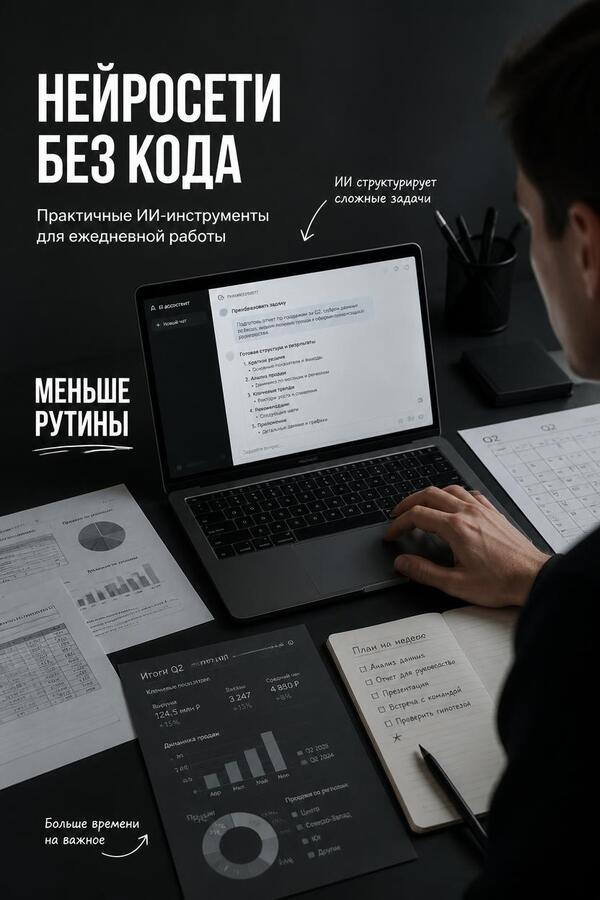
The media is dedicated to the practical application of neural networks for automating daily routines.
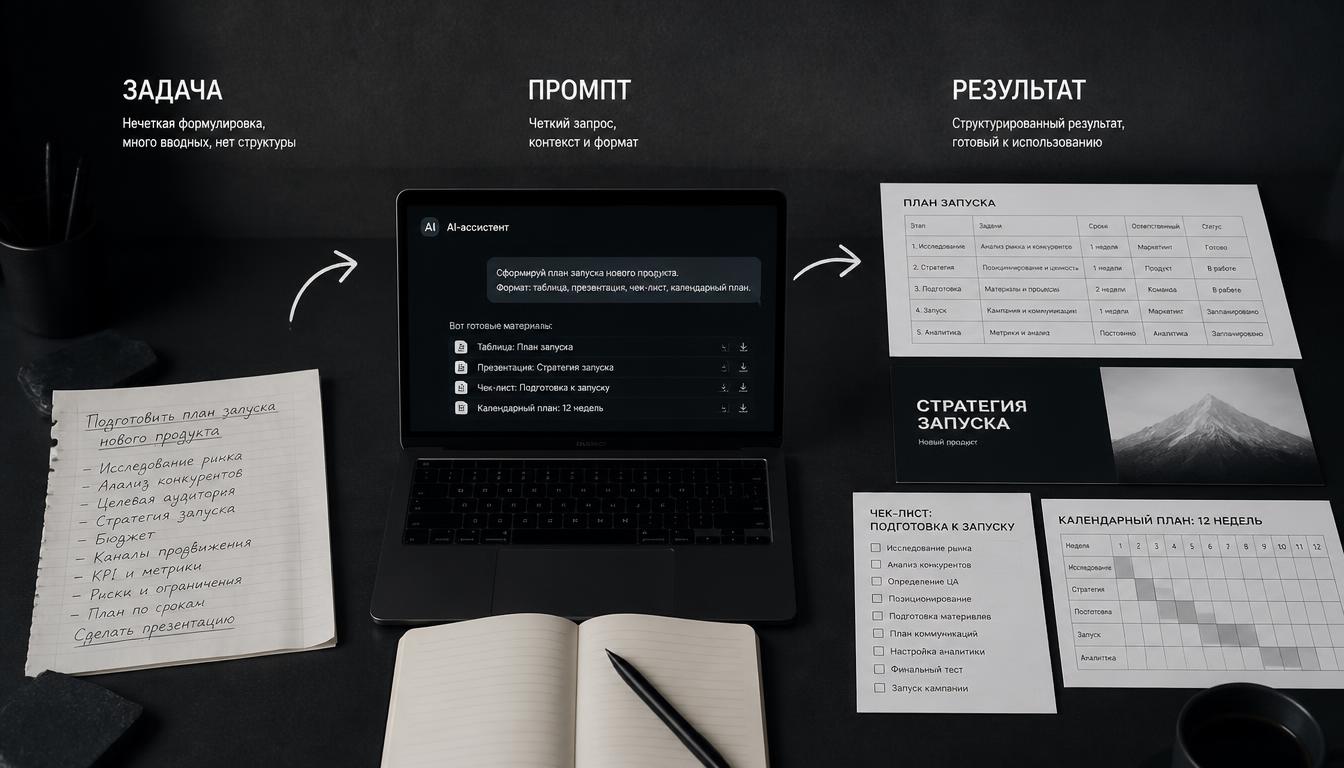
Problem → appropriate tool → ready-made prompt → step-by-step guide → result.
Core areas of focus: texts and documents; tables and data; presentations; planning; information management; content creation; automation of repetitive tasks.
The editorial principle: Not «What can a neural network do?», but «What can it do for you today?». For example, instead of an article titled «ChatGPT’s Potential for Business, ” the media offers a piece such as: „How to turn meeting notes into a finished protocol in 5 minutes.“ This approach lowers the barrier to entry and makes AI understandable to people without a technical background.
COMPETITORS AND THEIR ANALYSIS
Five criteria were selected to analyze the competitors. These allow for the evaluation not only of the topics of the publications but also of how the competitors compete for audience attention.
Presence Platforms and Content Adaptation
We analyze where competitors publish content: Telegram, VK, YouTube, Yandex Zen, websites, and other platforms.
It is important to determine whether they create unique content for each platform or simply duplicate a single post everywhere.
2. Visual Style and Formats
We examine:
short videos;
long videos;
cards;
articles;
screenshots;
infographics;
memes.
This helps us understand which formats are already familiar to the audience and what visual solutions competitors are using.
3. Tone of Voice
We analyze the nature of the communication:
expert;
formal;
friendly;
ironic;
provocative;
promotional.
Tone of Voice is especially important for our project because a complex technological topic must be perceived not as a textbook, but as a conversation with a person who helps solve a specific problem.
Engagement Tools
Studied:
surveys;
comments;
reactions;
closed communities;
checklists;
gated guides;
calls to share results.
This shows whether a competitor turns an audience into passive readers or builds a community around its content.
5. Audience Pain Points and Reaction
User comments and reactions are studied using analytical services and manual review.
Special attention is paid to questions such as:
what is unclear to users;
what they complain about;
which materials they save;
which topics spark discussion;
which promises the audience considers exaggerated.
This is where you can find unaddressed audience needs, rather than simply reiterating competitor themes.
DIRECT COMPETITORS
01. «NeuroLiteracy» Platform: Telegram
«NeuroLiteracy» focuses directly on the topic of neural networks, targeting users who need to stay informed about the development of AI. The content is primarily composed of news, service updates, and information on new AI capabilities.
Strengths High Relevance: Subscribers can quickly learn about a new tool or update.
Limitations The large volume of news does not always answer the user’s subsequent question: «Okay, but exactly how should I use this in my work?»
02. YouTube Channel «AI Breakthrough» Platform: YouTube
The channel is oriented toward a deeper introduction to artificial intelligence technologies. The main format is video tutorials and technical breakdowns.
Strength Depth of material and detailed explanation of technological capabilities.
Challenge for Beginners A user encountering AI for the first time may get lost in the terminology, settings, and technical details.
03. Zen Blog «AI for Everyone»
Platform: Zen
The content is aimed at a broad audience and explains the application of AI in an accessible manner.
Strength
Low barrier to entry and a large volume of materials on various topics.
Limitation
A high number of repetitive posts and sponsored integrations can reduce the sense of independent recommendation.
AN OPPORTUNITY FOR OUR MEDIA
01: Not just to report on the release of a new tool, but to immediately test it against a real-world problem.
02: Result first—explanation second. The user must understand what they will gain even before starting to read the instructions.
03: Create the image of an independent reviewer.
03.1: Every review must include not only the advantages, but also:
— limitations;
— flaws;
— cost;
— scenarios where the tool is useless;
— alternatives.
INDIRECT COMPETITORS
Indirect competitors do not necessarily focus on neural networks. They compete with the future of media for the time and attention of the same audience.
01. Time Management Communities For example, productivity communities on VK.
Their audience already shares the same core need: «How can I accomplish more and spend less time on routine tasks?» The difference lies in the tool.
Productivity media offers: planning, to-do lists, habits, and organizational systems.
02. Habr
Habr is a major platform for a technical and professional audience. AI is actively featured in the platform’s content, but many publications are aimed at people already familiar with technology.
For our media, this means there is a space for us: «AI for the person who doesn’t want to get into the technology details.»
Instead of competing with Habr on the depth of technical content, we should explain the application of the technology at the level of everyday work tasks.
03. vc.ru
vc.ru brings together entrepreneurs, specialists, and people interested in technology and career paths. AI is discussed here in the context of business, work, marketing, and new products.
However, users often visit the platform for a wide variety of topics.
POTENTIAL COMPETITORS
Potential competitors may not fully occupy our niche today, but they already possess the audience, resources, or expertise needed to quickly enter it.
01. Skillbox
Online schools are already creating free educational content about neural networks. Their advantage lies in their large audience, expert staff, and production capabilities. Furthermore, the school’s educational model is naturally tied to course sales.
02. Yandex Practicum
The platform has a strong educational infrastructure and a large volume of material on technologies. Potential competition arises for users who want to master AI tools independently.
03. Sber and MTS Corporate Blogs Major technology companies have access to experts and can create high-quality educational content about AI. Their advantage lies in a high level of expertise and resources. However, corporate communication is typically more formal.
CONCLUSIONS AND INSIGHTS
Insight 1. Audiences are tired of promises. Phrases like, «Neural networks will change your life, ” or „AI will replace most professions“ create information noise. What matters much more to the user is a concrete result: „Can I use this tool to save 30 minutes today?“ The solution is to adopt a supportive, friendly Tone of Voice and explain technologies through everyday analogies. AI should be perceived not as a complex technology, but as a new tool in one’s professional toolkit.