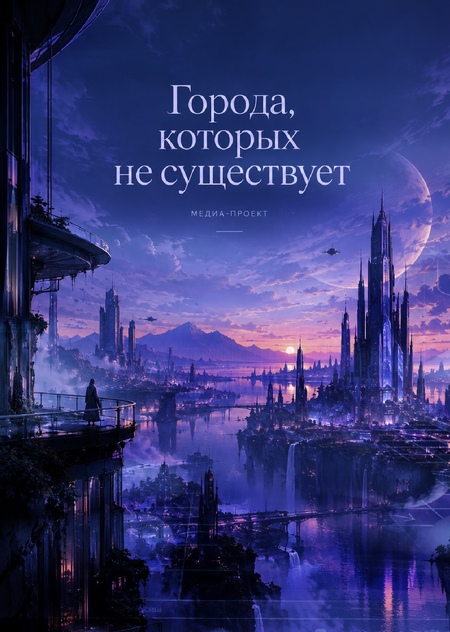
Media analysis of a niche project on fictional cities, architecture, and the structure of fantasy worlds
Media objective
We create media about fictional cities from cinema, games, books, and animation—treating them not merely as backdrops, but as complete urban systems.
Our goal is to explore the architecture, urban planning, transportation, social structure, and visual language of these fictional cities, examining why they appear convincing and how space influences narrative. We aim to bring together fans of film, gaming, architecture, and visual culture around the study of imagined spaces, demonstrating that even a non-existent city can be analyzed with the same depth as a real one.
Rather than recounting plot, we dissect the mechanics of the city itself: where people live, how they move, why certain districts feel safe while others feel dangerous, and what tangible architectural concepts underpin the fictional space.
Media Themes
Segment: culture / film and games / architecture and design / hobbies and entertainment.
Niche Topic:
«Fictional cities as complete urban systems: architecture, infrastructure, inhabitants, and the internal logic of worlds from film, games, books, and animation.»Rationale for Selection:
Today, there are countless fictional worlds, but viewer attention is often focused on the characters, plot, and lore.
The city itself often remains mere background.
Our project proposes a shift in perspective:
Not, «what is happening in the city?» but rather, «how can this city actually function?»For example:
— Where do ordinary residents of Night City live?
— How is Gotham’s transportation system organized?
— Why does Dunwall look the way it does?
— Which real cities served as prototypes for fictional ones?
— How does architecture help create the feeling of a specific world.Core Idea:
The city is not a set piece. The city is a character.
Competitors
Direct Sources:
1. EpicWorld — fictional geography, maps, and invented spaces.
2. DTF materials on video game cities — analyses of in-game cities and their structure.
3. Arzamas — materials on the interaction of architecture, film, and fictional spaces.Indirect Sources:
1. Architectural media.
2. Film media and video essays.
3. Gaming media and channels about worldbuilding.Potential Sources:
1. YouTube channels about architecture in games.
2. Channels about concept art and world design.
3. Media focusing on speculative design and futurism.
Direct Competitors
EpicWorld
Platform: website
Focus on fictional geography, maps, and invented worlds.
Strengths:
— systemization;
— cartography;
— archival feel;
— attention to detail.
Areas for Development:
— a broader public appeal;
— connection to popular film and games;
— regular analysis of specific cities.
DTF
Platform: website / social media
It publishes materials about cities from video games and their structures.
What it offers:
— detailed analyses;
— the connection between architecture and gameplay;
— an «excursion» format through the game world.
What it lacks:
— a unified specialization on cities;
— comparisons across film, games, and literature;
— a consistent analytical system.
Arzamas
Platform: website / social media / YouTube
Explores architecture, culture, and cinema.
Strengths:
— Depth;
— Historical context;
— Educational approach.
Areas for Improvement:
— Specific focus on fictional cities;
— Interactive maps;
— A lighter, more gamified presentation.
What the direct competitor analysis revealed
Most existing materials approach fictional cities from a single perspective: as part of a game, movie, architectural history, or lore. Some discuss the history and structure of a specific world, others analyze cinematic architecture, and a third examines in-game spaces. However, the reader usually receives a finished narrative about a city rather than a unified framework through which to independently compare different fictional urban environments.
The main limitation of current content: There is no single «tool» that allows one to view any fictional city as if it were real.
Our Vision
We don’t just tell stories about cities from beloved works; we create a system for researching them.
Each city is examined through several parameters: ARCHITECTURE → LAYOUT → TRANSPORTATION → RESIDENTS → SOCIAL STRUCTURE → ATMOSPHERE → HISTORY → REAL-LIFE PROTOTYPES
For example, the material on Night City is not: «10 facts about Night City.»
But rather: «How is Night City structured, and why does its vertical architecture reflect the city’s social organization?»
Indirect competitors
Architectural Media
Provides students with knowledge of architecture and urban environments.Film Media
Offers students analyses of films, visual style, and production design.Game Media
Explores game worlds and lore.Our disadvantage compared to them:
We cannot compete with them in breadth.Our advantage:
We compete through narrow specialization.
We don’t have to cover everything.
We focus only on cities—but we examine them much more deeply.
Competitive Analysis Summary
Most competitors help the audience learn more about a favorite film, game, or piece of architecture, but the city usually remains part of a broader theme. Some projects focus on lore, others on architecture, and a third on the visual elements of the work.
Almost nowhere does the city become the main subject of study.
What is missing: — a unified system for analyzing cities; — comparisons of cities across different media; — maps and diagrams; — an analysis of urban infrastructure; — a perspective on the city from the viewpoint of an average resident; — a transition from fictional space to real life.
Our proposal
We combine the strengths of existing formats—the visual dynamism of architectural media, the depth of cultural research, and the engagement of game design—but shift the focus entirely to fictional cities.Core Formats:City Deconstruction
A comprehensive exploration of a single city.City Mapping
Districts, transportation, and key landmarks.The City in Reality
Which real-world cities and architectural concepts inform the fictional one.The City Through a Resident’s Eyes
How an ordinary person lives within this world.The City as Character
How space influences narrative and characters.Could It Exist?
Testing the city’s internal logic.
TONE OF VOICE
Our Tone of Voice: Enthusiastic, inquisitive, visual, accessible, and slightly ironic.Without:
— academic snobbery;
— dry encyclopedic recitation;
— the «you must know this lore» fanatical tone.
Instead of:
«In an architectural sense, the city represents…»We write:
«Why hasn’t anyone thought about decent subway service in this city?»But then we really dig into why the subway is impossible there, or conversely, why it absolutely should exist.
Distribution Channel
Telegram
Main Platform
— analyses;
— cards;
— maps;
— discussions;
— polls;
— collections.
VK
Visual Reach
— short posts;
— illustrations;
— clips;
— cards.
YouTube / Shorts
Video Analyses
For example: «Building a city from a film in 10 minutes» «How Night City works» «5 real cities that inspired fantasy worlds.»
Website — Potential Development
Interactive Atlas of Fictional Cities.
This could become the main long-term product.
Target Audience
«World Explorer»
Persona: Anton, 23, Student.
Context: Loves science fiction, games, and movies; after viewing, he frequently researches the world’s lore.
Value: Maps, lore, history, and detailed city breakdowns.«Visual Researcher»
Persona: Maria, 21, Student in a creative field.
Context: Collects visual references for her own projects, with an interest in architecture and design.
Value: Architecture, diagrams, maps, color, composition, and visual solutions.«Film Buff»
Persona: Milena, 28, Who watches movies and TV series regularly.
Context: Loves noticing details but lacks professional knowledge of architecture.
Value: Clear explanations as to why a film looks the way it does.«Urban Observer»
Persona: Dmitry, 31, Interested in architecture and the urban environment.
Context: Enjoys studying real cities and observing how the surrounding space is structured.
Value: Comparing fictional and real cities, urbanism, transportation, and planning.
JTBD
World Investigator:
When I finish a film or game with an interesting world, I want to figure out how its city is structured to better understand the work and notice the details I might have missed.Visual Researcher:
When I am looking for ideas for my own visual project, I want to study unusual fictional cities to find new architectural and compositional solutions.Cinephile:
When I appreciate a film’s visual style, I want to understand how space creates its atmosphere to watch movies more consciously.Urban Observer:
When I study a fictional city, I want to compare it to real-world cities to understand which design choices could truly work in reality.
USP