Concept and References
The visual benchmark for the project is «Spider-Man: Across the Spider-Verse”—a combination of animated film volume, graphic shadows, and saturated colored outlines. These principles have been translated onto various original characters united by a single urban environment.
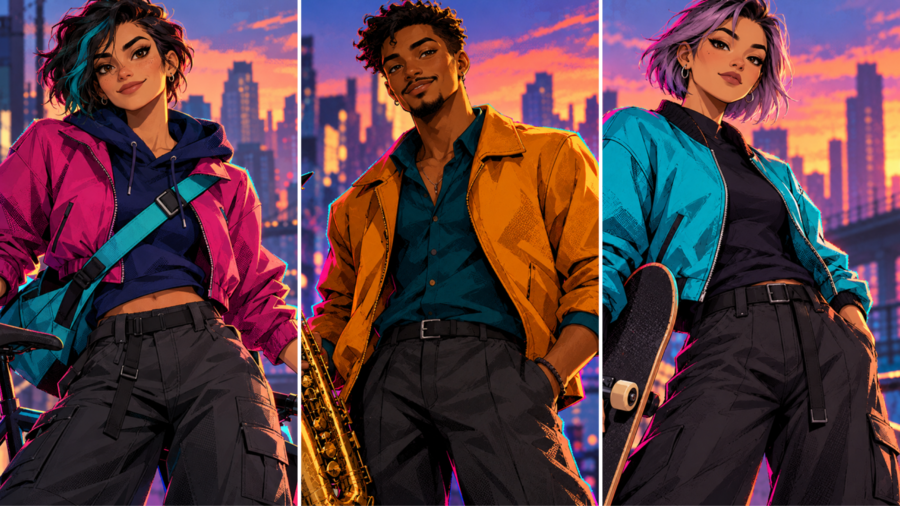
Style guidelines using custom-generated source material as an example. These are not film stills or results from a trained LoRA.
Instead of repeating the film’s characters in the series, new faces appear with different hairstyles, clothing, and accessories. The city functions as a shared stage. Turquoise, magenta, and orange accents tie the costume, face, and architecture together within a single image.
The base model is capable of interpreting a description of an animation style, but the graphic handwriting and surrounding environment change between generations. Therefore, the project’s objective is to train a custom style adapter and examine what features it adds to consistent text prompts.
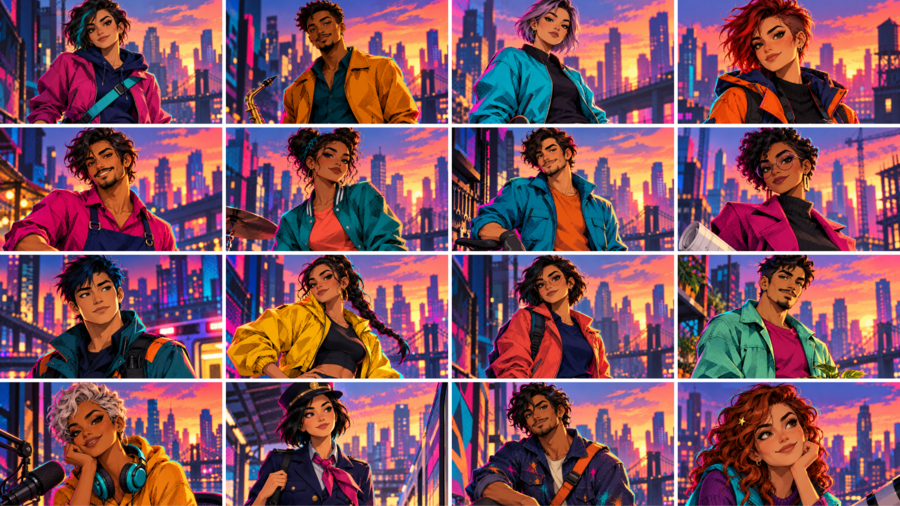
Fragments of 16 square images: 14 train + 2 validation. The full source files and prepared images are located in dataset.zip.
Sixteen square images of new adult characters were prepared for training using OpenAI imagegen. After viewing, they were resized to 768×768 without artistic filters. Fourteen images were used for training, and two more are reserved for validation. The individual signatures contain the framefolk marker. Film stills were not used in the dataset.
Full prepared images: a04, a08, a12. OpenAI imagegen training material.
The goal is to create new characters at the intersection of comic art and 3D animation. Key elements include a legible face, vibrant lighting, and a clear silhouette. Furthermore, the character must remain the central focus even against a contrasting urban backdrop.
My Generations
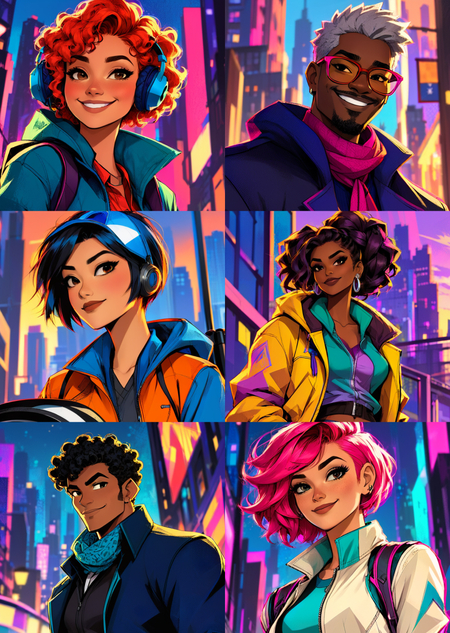
The series is unified by facial volume, bold graphic shadows, and a contrasting color edge. Ten were selected from twelve control generations. Final parameters: 768×768, 32 steps DPM++ 2M Karras, and LoRA strength 0.7. The original prompts are saved beneath the images.
Red curls and blue headphones. A portrait fragment filling a square frame. Prompt: framefolk, an adult female urban musician with short curly copper hair, teal headphones, indigo jacket over a coral shirt, expressive smiling waist-up portrait. Spider-Verse animated character, designed face, dimensional graphic shadows, crisp ink accents, subtle halftone, cyan rim light
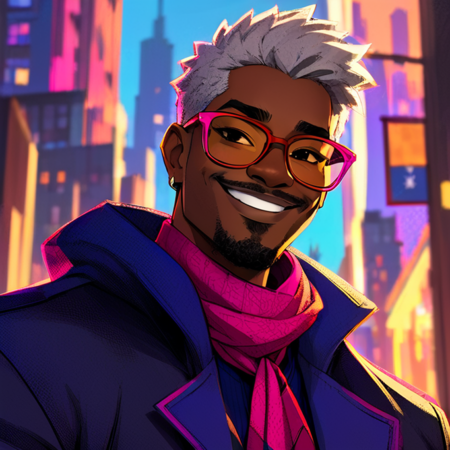
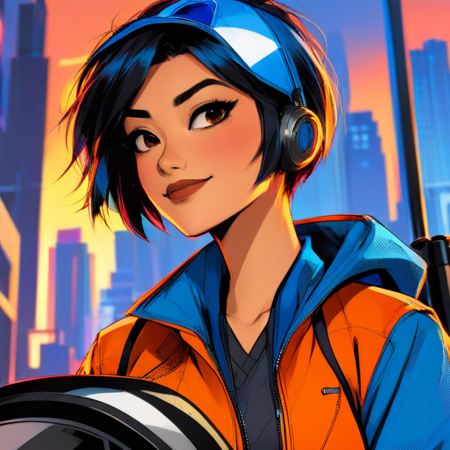
Glasses and a magenta scarf. Prompt: framefolk, an adult Black male city librarian with short silver hair and magenta round glasses, navy jacket with amber scarf, warm smiling waist-up portrait. Spider-Verse animated character, designed face, dimensional graphic shadows, crisp ink accents, subtle halftone, cyan rim light Short haircut and an orange jacket. Prompt: framefolk, an adult East Asian female
The adapter strengthened the connection between the face, colored light, and the urban environment. In every control comparison, both the base model and LoRA received the exact same full prompt and seed. Therefore, the contribution of the training was considered alongside the artistic instructions that were already present in the text.
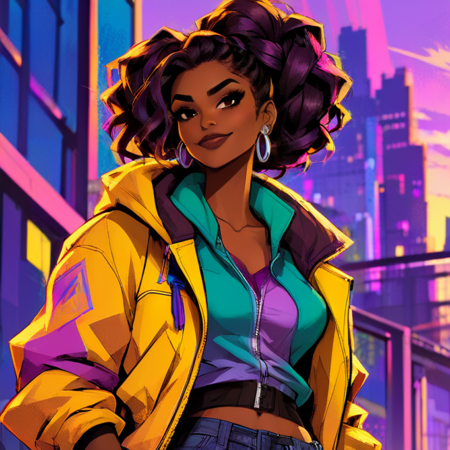
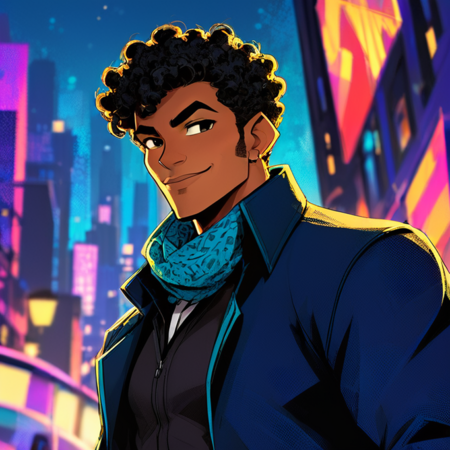
Yellow jacket and contrasting light. Prompt: framefolk, an adult female mural painter with dark braided hair and brown skin, lilac bomber jacket over a yellow shirt, expressive waist-up portrait. Spider-Verse animated character, designed face, dimensional graphic shadows, crisp ink accents, subtle halftone, cyan rim light Dark suit and turquoise scarf. Prompt: framefolk, an adult Latino male night b
Magenta bangs and a light collar. Portrait fragment in a perfect square frame. Prompt: framefolk, an adult female roller skater with freckles and a magenta pixie haircut, cream jacket with teal shoulders, friendly waist-up portrait. Spider-Verse animated character, designed face, dimensional graphic shadows, crisp ink accents, subtle halftone, cyan rim light
The contrast, color outlines, and character of the shadows were conveyed most consistently.
The halftone texture is expressed unevenly: it cannot be argued that the model equally and accurately reproduces all the features of a printed comic or an animated film.
Profile against a warm city backdrop. Portrait fragment in a full square frame. Prompt: framefolk, an adult female street violinist with auburn hair in a bun, mustard coat over a navy turtleneck, thoughtful waist-up portrait. Spider-Verse animated character, designed face, dimensional graphic shadows, crisp ink accents, subtle halftone, cyan rim light
For the series, we selected shots featuring clearly discernible faces. Two candidates were excluded due to less expressive or overly shadowed faces. One frame at the end was shown again for detailed analysis; the series features ten unique characters. No retouching was applied to the final PNGs.
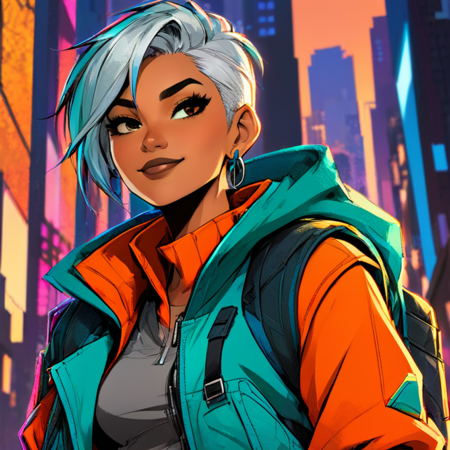
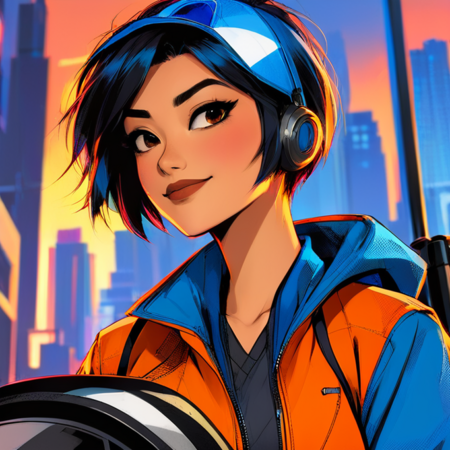
Silver crop and layered jacket. Prompt: framefolk, an adult female urban botanist with silver cropped hair and olive skin, orange utility vest over cyan hoodie, waist-up portrait. Spider-Verse animated character, designed face, dimensional graphic shadows, crisp ink accents, subtle halftone, cyan rim light. Short haircut and orange jacket. Re-display detail; separate generation.
Description of Generative Model Application
The project utilized Segmind SSD-1B, a derivative of Stable Diffusion XL, equipped with its own LoRA adapter, UNet. Training consisted of 800 steps, rank 24, and 14 training images; two validation images were excluded from the updates. The UNet, VAE, and both CLIP components were frozen. We used a custom implementation based on the official Diffusers example, rather than a literal execution of the instructor’s DreamBooth script.
The source images were generated via OpenAI imagegen; the precise internal name of the model was not provided by the tool. Codex was used for the code, captions, text, visual verification, and layout. The final series was achieved with the trained LoRA, without substituting results from imagegen or applying retouching. Cropping in the longread serves to showcase details; the complete PNG files are saved separately.