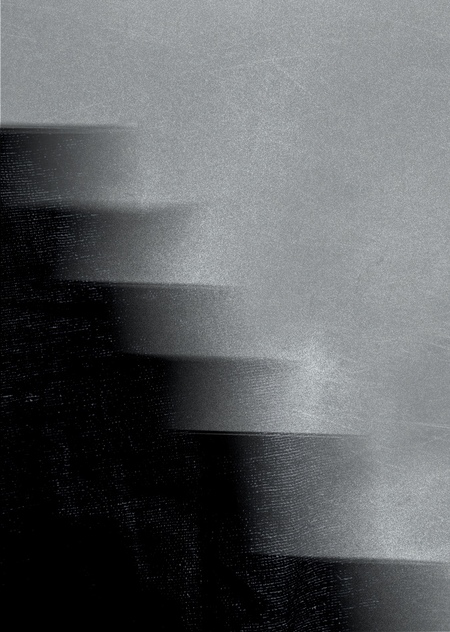
The staircase is one of the oldest images in world culture, acting as a bridge between materiality and symbolism. It is both a physical object—a means of overcoming verticality, traversing a path, and managing changes in elevation—and a metaphor—the ascent of the soul, the vertical axis of power, romantic encounters or separations, dance or music, the passage of time, or the threshold of death.This very duality makes the staircase a unique tool for inquiry. Through it, one can see how culture has, over millennia, metaphorically responded to the same fundamental questions: what is power, love, time, movement, and rhythm?The relevance of this study stems from the fact that the image of the staircase is rarely examined as a standalone topic in art history—it tends to dissolve within architectural, iconographic, or cinematic studies. Yet, the staircase is a transversal motif that allows for the construction of an alternative history of art—not organized by epochs and styles, but by verticalities of meaning.
Categories
- The Ontology of the Staircase
- The Staircase as a Vertical of Social Power
- The Staircase as a Philosophical Image
- The Staircase as an Image of Love
- The Staircase as a Rhythmic Space
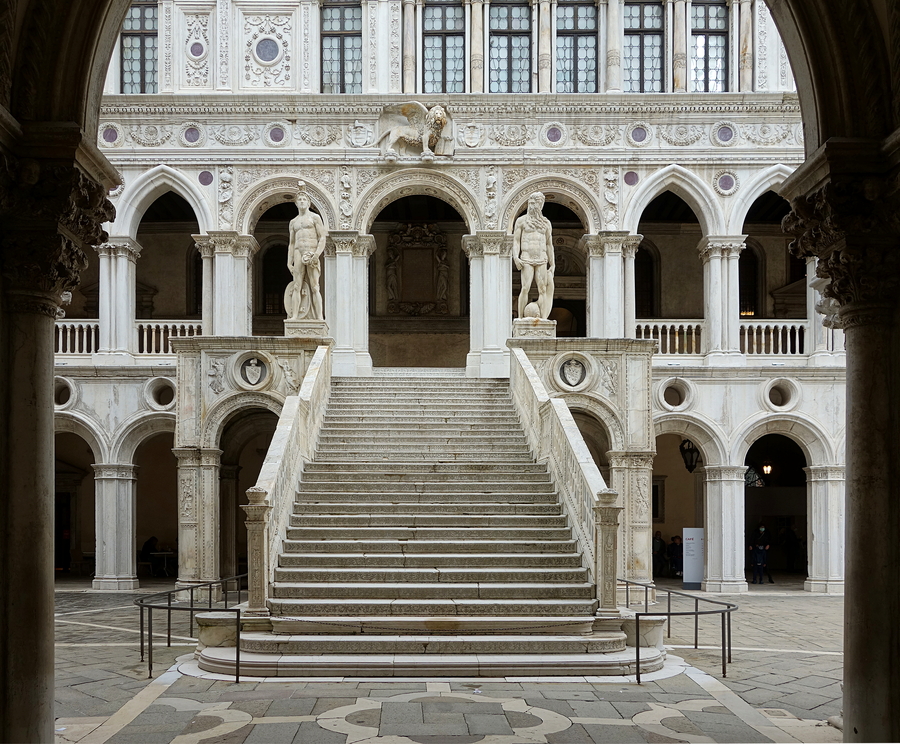
Staircase of Giants, Rizzo 1483–1498
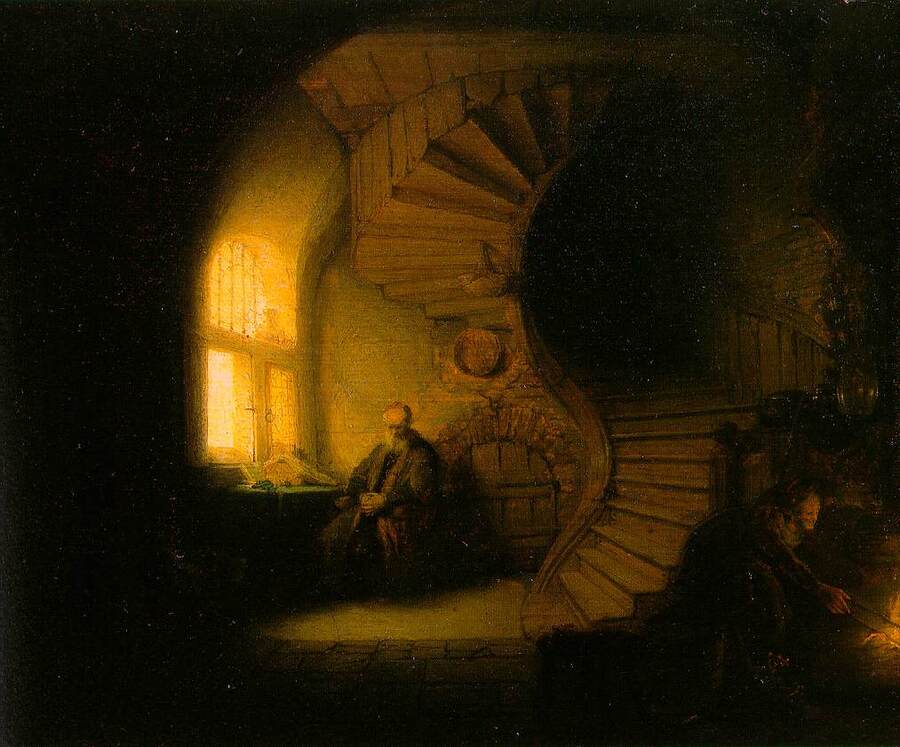
Rembrandt, «Philosophers in Contemplation»
Rembrandt, «Jacob’s Ladder»
El Lissitzky
Albrecht Dürer, «Melencolia I»
Joker
«Vertigo» by Hitchcock, 1958
Francis Bacon, «Seated Figure»
«Going Underground in Bruges»
Alexander Rodchenko, «Staircase»
Juan Miró «Harlequin’s Carnival»
Ilya Kabakov, «Staircase into Nowhere, ” 1960
Piranesi «Prisons»
Stairway of Saint Peter, Rome
Squid Game
«Amelie» Zhone