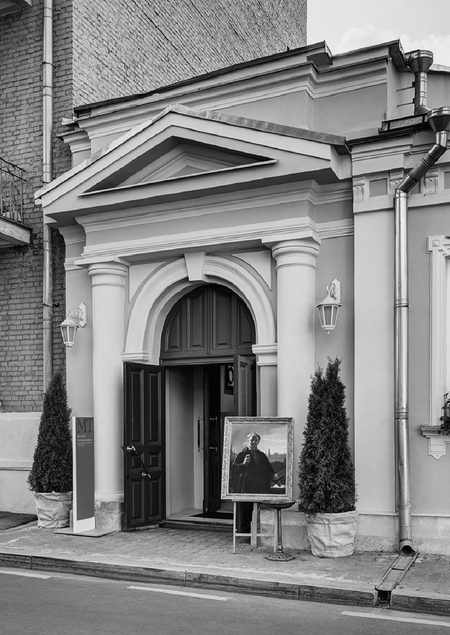
As established in previous chapters, the formation of the V. A. Tropinin Museum and the collections of contemporary Moscow artists was closely tied to private collecting activities. Felix Vishnevsky’s initial collection played a particularly significant role in this process, eventually forming the foundation of the museum’s collection. Subsequent acquisitions broadened its scope while preserving the unique standing of Tropinin’s work. Therefore, this study of thirty pieces is based on comparing their artistic content and historical significance.
The analysis is based on three levels of interpretation for the artwork. The mimetic level allows for the determination of the work’s direct content. The semiotic level reveals the meaning behind the artistic details and methods of representation. The iconological level connects the artwork to the historical perceptions of society and culture of the era.
Section 1. Troponin in the Context of the Meeting
The first section is composed of twelve works by Vasily Tropinin, differing in their time of creation and artistic intentions. Comparing the artist’s various pieces allows one to trace how the depiction of humanity evolved in relation to its social status and cultural environment. Furthermore, the history of the works themselves holds particular significance, as some entered the museum thanks to the research and attribution work of Felix Vishnevsky.
1. V. A. Tropinin. «Portrait of Prince Sergei Mikhailovich Golitsyn.» After 1828
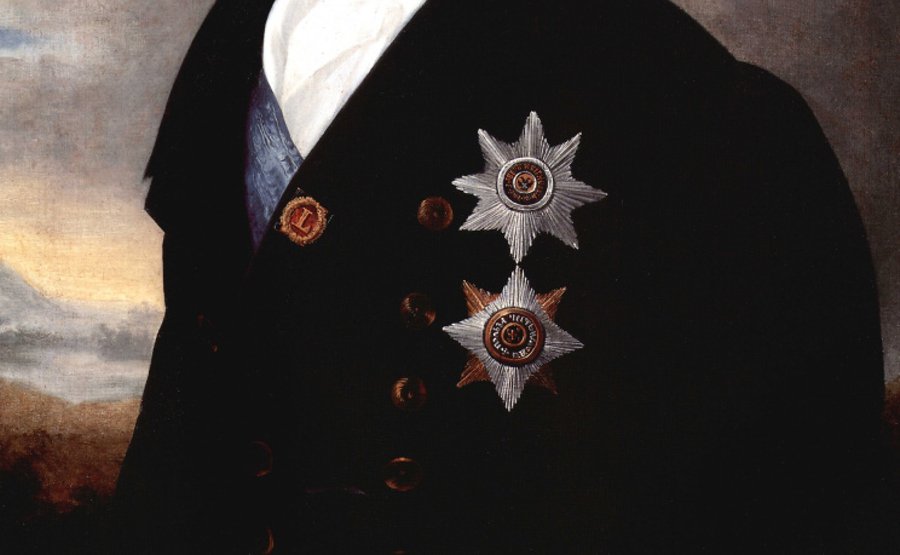
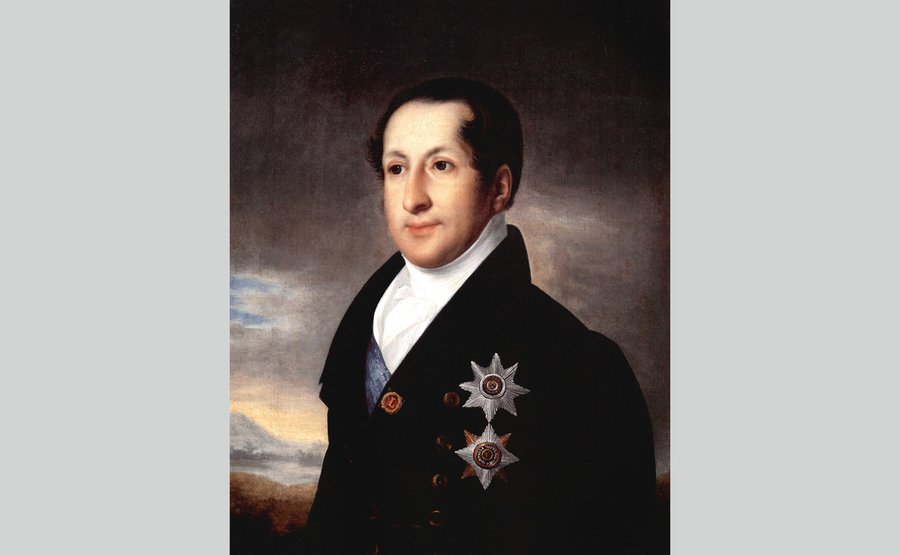
V. A. Tropinin. «Portrait of Prince Sergei Mikhailovich Golitsyn.» After 1828
The portrait of Prince Golitsyn is among the works where Tropinin addresses the depiction of members of the upper class. The foundation of the artistic solution was the individual characterization of the model, merged with the tradition of aristocratic portraiture. The social standing of the subject is significant not only through their personality but also through the very act of creating a commissioned painting intended to preserve family and social memory.
This work holds particular importance for the museum’s history. According to the materials from the «Origins» exhibition, this portrait was Tropinin’s first piece in the Vishnevsky collection.
The painting serves as a link between two collecting eras. Created for an aristocratic patron, it later became the nucleus of a private collection from which a state museum was established.
Fig. 1. V. A. Tropinin. «Portrait of Prince S. M. Golitsyn.» After 1828. Tropinin Museum. Image source: «Origins» exhibition.
2. V. A. Tropinin. «Portrait of Ekaterina Ivanovna Karzinkina in Russian Attire»
In Karzinkina’s portrait, an individual likeness is intertwined with a reference to national tradition. The Russian costume functions here not merely as a descriptor of the woman’s appearance, but as a cultural signifier. Its presence allows the painting to be viewed within the context of an interest in national identity, a characteristic of Russian society in the first half of the 19th century. Furthermore, the depicted attire does not necessarily represent the model’s everyday clothing; it may be part of a consciously constructed portrait image. Comparing the work with Dolitsyn’s portrait reveals the breadth of social representation employed by Tropinin. While the depiction of the prince relates to the tradition of aristocratic patronage, Karzinkina’s portrait highlights the significance of national costume in shaping personal identity. In the museum collection, both works stand as testaments to different conceptions of an individual’s place in society.
3. V. A. Tropinin. «Portrait of Platon Nikolaevich Zubov»
Zubov’s portrait continues the tradition of depicting representatives of the Russian aristocracy. The core of the work is an individual character study of the model, yet the nature of the commission itself necessitates maintaining a certain social distance between the depicted person and the viewer. When analyzing such portraits, the figure’s posture, the details of the costume, and the degree of formality in the compositional solution are especially significant. The piece is interesting when compared with other aristocratic portraits by Tropinin. It allows us to trace how much the artist preserved the traditional forms of representing an elite individual and in what instances he turned toward a more intimate characterization of the person. Within this collection, such comparisons help reveal the diversity of artistic problems Tropinin addressed while working with clients from the same social circle.
4. V. A. Tropinin. «Lace Maker.» Original version, 1830s
The painting depicts a young woman momentarily distracted from lace-making. Her hands remain engaged with the work, while her gaze is directed straight at the viewer. This technique creates the sensation of a suddenly interrupted action, simultaneously transforming an everyday scene into a portrait. The lace-making tools signify the heroine’s occupation, but the artist does not strive to show the labor process in detail. It is significant that the museum holds one version of this well-known composition. Tropinin’s repeated engagement with this subject suggests that the image has gained the status of an established artistic archetype. For the collection, such a work is important not only as a standalone piece but also as material for researching authorial repetitions, the popularity of specific subjects, and the evolution of their perception.
Fig. 4. V. A. Tropinin. «Lace-Maker.» Artist’s rendition. V. A. Tropinin Museum. Image source: Artefact.
5. V. A. Tropinin. «Girl with a Dog.» 1831.
The work presents an intimate scene featuring a child alongside a pet. The dog functions as a vehicle for the heroine’s emotional characterization, allowing her portrait to connect with ideas of affection and the immediacy of childhood feeling. This interpretation is characteristic of sentimental painting, where a mundane motif acquires moral and emotional significance. According to the museum’s description, the painting is a free copy of a work by the French artist Jean-Baptiste Greuze. This fact allows it to be viewed as evidence of Tropinin’s familiarity with European artistic traditions. Within the museum collection, the piece expands the understanding of the master’s creative sources, demonstrating that his intimate figures were not formed exclusively within the Moscow school.
Fig. 5. V. A. Tropinin. «Girl with a Dog.» 1831. Tropinin Museum. Image source: Artefact.
V. A. Tropinin. «Girl with a Pot of Roses.» 1850.
The piece depicts a young woman with a blooming plant. The juxtaposition of the heroine’s face and the roses becomes one of the principal means of forming the image, connecting human beauty with natural beauty. The flowerpot holds particular significance. Its ornament is incorporated into the composition, but simultaneously contains the artist’s signature and date, which later allowed for the work’s attribution. The painting’s history is particularly telling regarding Vishnevsky’s collecting method. He acquired it from an antique store as the work of an unknown artist. Subsequent research allowed for the attribution to be restored and established the painting’s former ownership by the Imperial Collection and the Russian Museum. Therefore, within the collection, it holds value both as a work by Tropinin and as a testament to the recovered history of the museum object.
Fig. 6. V. A. Tropinin. «Young Woman with a Rose Pot.» 1850. Tropinin Museum. Image and provenance source: Artefact.
7. V. A. Tropinin. «Self-Portrait with Brushes and Palette Against a Window View of the Kremlin.» 1844.
The self-portrait depicts the artist alongside his professional tools against the backdrop of a Moscow landscape. The brushes and palette signify his craft, while the Kremlin connects Tropinin’s persona to urban culture. These elements coalesce to form a complete image of a master who presents himself not just as an individual, but as a professional artist occupying a distinct place in society. The work was commissioned in connection with Tropinin’s election as an honorary member of the Moscow Fine Arts Society. Consequently, its significance transcends that of a mere personal self-portrait. Within the context of a modern museum, the painting takes on an almost programmatic quality, visually unifying the artist’s name and the city of Moscow. This very connection forms the foundation of the concept of the institution that bears his name.
Ill. 7. V. A. Tropinin. «Self-Portrait with Brushes and Palette Against a Window View of the Kremlin.» 1844. Image source: Artefact.
8. V. A. Tropinin. «Portrait of Merchant Sergey Alekseevich Mazurin, First Guild Member.» 1844, approximate
In Mazurin’s portrait, Tropinin addresses the image of a representative of Moscow’s merchant class. Unlike aristocratic portraits, the model’s social standing here is primarily connected to entrepreneurial activity. However, the very creation of a commissioned painting demonstrates the merchant class’s aspiration toward forms of cultural representation previously belonging predominantly to the nobility. Comparing Mazurin’s and Golitsyn’s portraits allows us to investigate the expansion of the social function of portrait painting. Both works are created within the framework of a single artistic tradition but represent different social groups. In the museum collection, they allow us to view Tropinin’s work as evidence of the changing structure of Moscow society in the first half of the 19th century.COLLECTION Magazine
9. V. A. Tropinin (?). «Portrait of Elizaveta Ivanovna Naryshkiny.» No later than 1816.
The work is a female portrait belonging to the early period of Tropinin’s artistic career, should authorship be confirmed. The features of the composition and the manner in which the model is characterized can be examined in comparison to the portrait tradition of the early 19th century. However, stylistic similarity alone is not sufficient grounds for a definitive attribution. Within the materials for the «Origins» exhibition, Tropinin’s name is listed with a question mark. This fact is particularly significant for analyzing the museum collection, as it demonstrates the variability of the attribution status of the works. The painting may retain historical and artistic value regardless of the final decision on authorship, but its place within the artist’s monographic body of work will consequently be different.
10. V. A. Tropinin. «Portrait of Prince Vladimir Alexandrovich Cherkassky.» 1837, presumed.