Introduction
The same question can be transposed to an audio guide—a familiar sonic format in museums. It is most often about illustration: the voice conveys the date, technique, and context, explaining what is depicted and what it signifies. The listener receives information, viewing the work as if through a narrative about it and cross-referencing what they hear with what they see.
Field
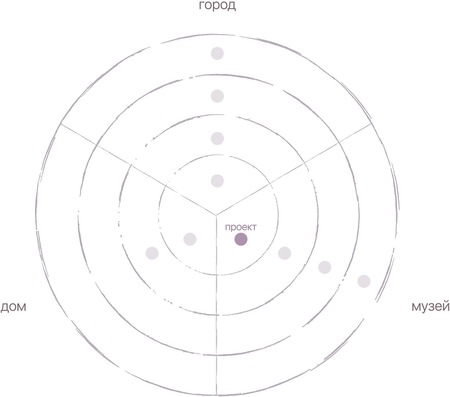
The diagram illustrates audio formats based on two criteria: where they take place (city/home/museum) and how much the voice explains within them (circles). The closer to the center, the less explanatory the content is.City — guided audio tour (Bread Factory No. 9) — audio play («Giant Pumpkins, ” Remote Moscow) — interactive audio walk with tasks („We will go for a walk in the woods“) — sound practices (performances) Home — audio tour guide instruction („9 movements“) — video meditation („Art Meditation with the Hermitage“) Museum — classic audio guide — mediation — narrative audio guide („What’s on my mind, ” GES-2)There is no format in the museum setting that does not explain the material and leave the listener with a task. This project is located there.
Roadmap