After 1945, humanity struggled to recover. Not just chronologically, but a new era began, and a new global system crystallized. 20th-century civilization was subtly crossing the threshold of maturity. The world depicted in post-war photographs appears beautiful in its simplicity, but such simplicity is usually only found in good cinema and almost never emerges from contact with the raw substance of life. Consequently, it seems that the material captured by the camera lens has already undergone aesthetic sublimation and script treatment.
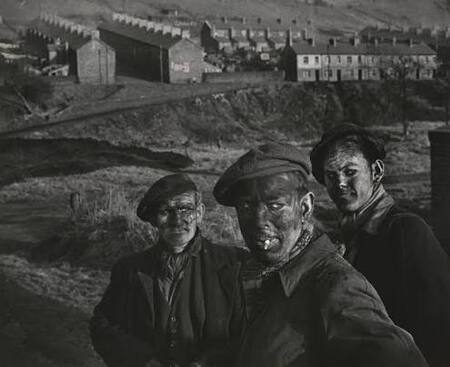
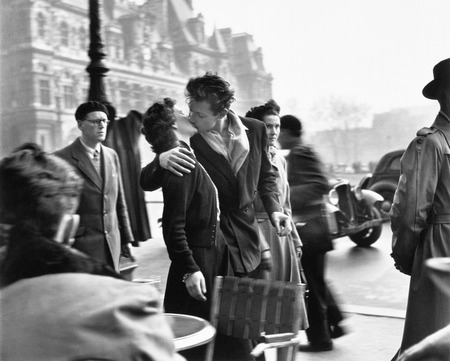
Eugene Smith. Three Generations of Welsh Miners. 1950 Robert Doisneau. Kiss at the Hôtel de Ville, Paris. 1950
The war is finally over. After 1945, humanity is slowly coming to terms with itself. The process of adapting to peacetime stretches out for nearly a decade and a half, complicated by acute geopolitical imbalance, a protracted Cold War, and recurrences of local conflicts. The United States experiences a period of might and prosperity, but Europe is struggling to regenerate its ravaged fabric. What was destroyed is being rebuilt; what was interrupted is resuming—yet many elements of former life are irrevocably lost. As the world renews itself, it seems to be trying to return to its former self, peering into the mirror of the past. But instead of a living connection of image and reflection—instead of a vital form gliding within the amalgam—it encounters a frozen image—the «copy» is incorrect.
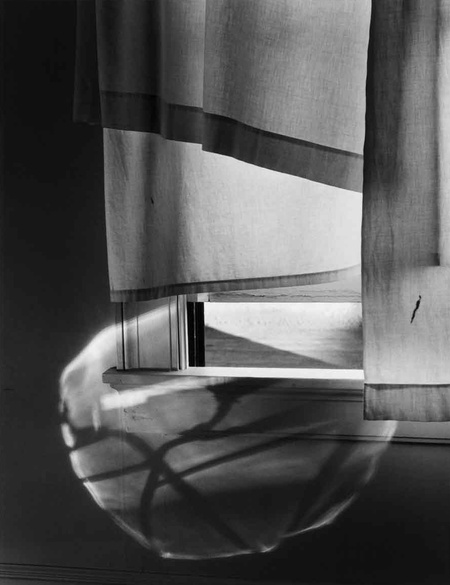
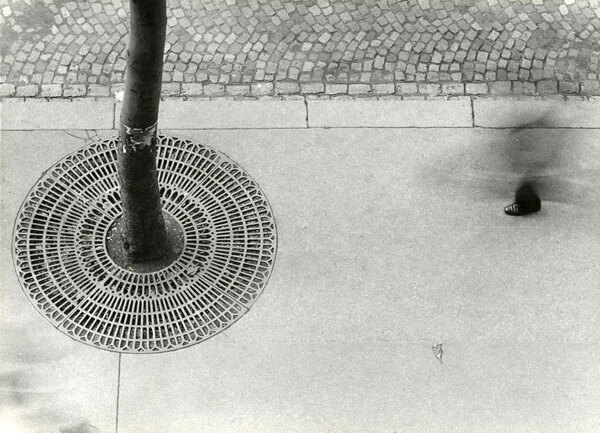
Wayne Minor. Daydreams by the Window. Rochester, New York. 1958 Otto Steinert. One-Legged Walker. 1950
Not only calendrically, but factually, a new epoch is dawning and a new global system is crystallizing. The civilization of the 20th century is imperceptibly crossing the threshold of maturity. The era of computerization is still a dream, and few realize the possibility of preserving life in the perfect compactness of digital code. Yet, society is already accustomed to duplicating its own existence, increasing volumes of analog memory, and easily reproducing what has been saved when necessary. Television is going through its childhood stage, but radio and cinema have already reached adulthood. And photography is still fresh and appealing.
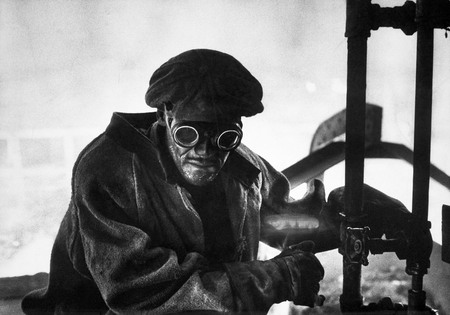
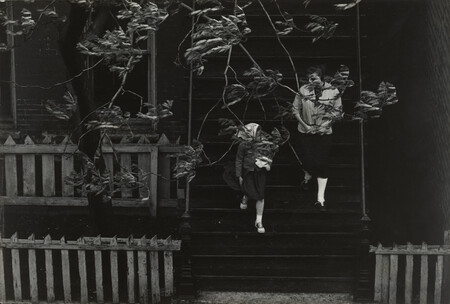
Eugene Smith. Steel mill worker, Pittsburgh, Pennsylvania. 1955 Ray K. Metzker. Chicago. Spring 1958
It is not only remaining the most influential medium of visual communication but is also undergoing a new renaissance. The world is accustomed to photography, and wartime has only reinforced that habit. Photo practice not only maintains a direct lineage from past decades, but the experience it has accumulated is substantially changing how reality is represented. The paradox, however, is that this transformation does not appear ostentatious—rather, it seems as if photography has attained the simplicity and naturalness of gaze that previously required considerable effort.
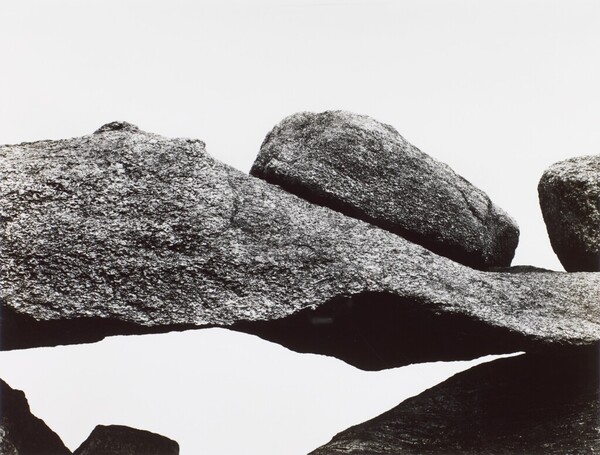
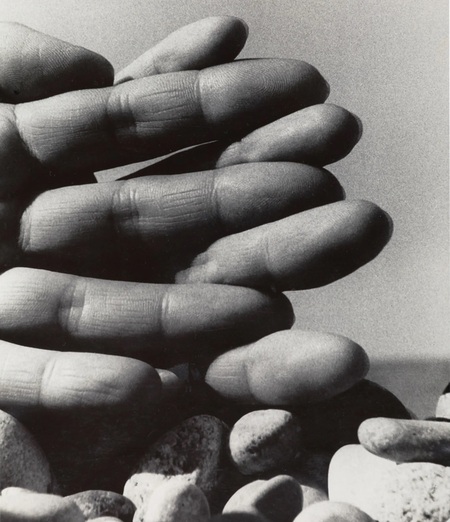
Aaron Siskind. Studios on Martha’s Vineyard Island. 1954 Bill Brandt. Angel Bay, France. 1959
The world depicted in post-war photographs appears beautiful in its simplicity, yet such simplicity is often confined to good cinema and rarely surfaces in contact with the raw substance of life. Consequently, it seems as though the material captured by the lens has already undergone an aesthetic sublimation—it has been pre-edited for narrative coherence.
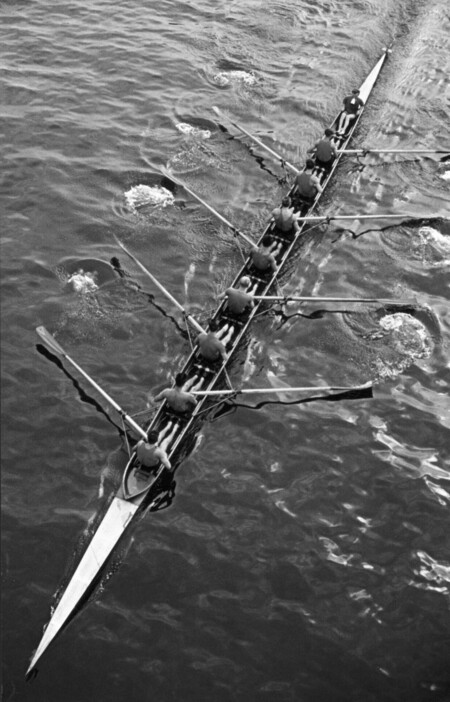
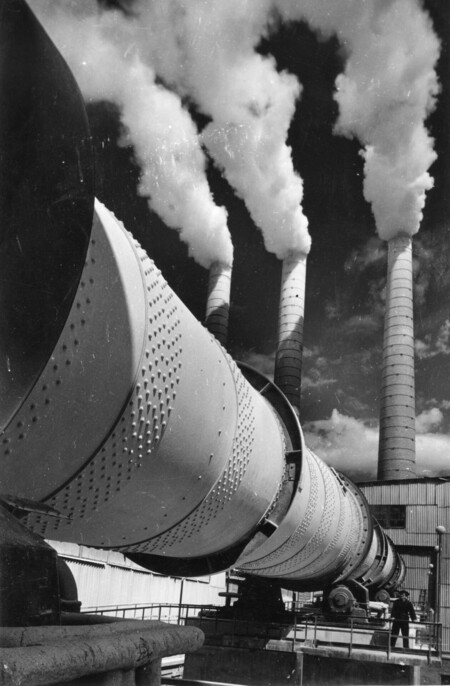
Lev Borodulin. Eight. 1955 Svyovolod Tarasevich. Concrete Plant. 1954
Reality, in and of itself, cannot be presented to a person as commensurate or «true»; it only becomes visible when placed within a specific, anthropologically constructed frame. Having revealed this secret, photography can never hold onto the illusion of objectivity—all that remains for it is to hone the craft of a subjective gaze. Before achieving institutional recognition or establishing itself as an artistic commodity, it stubbornly moves in this direction, embedding the quality of necessary interpretation into its very method.
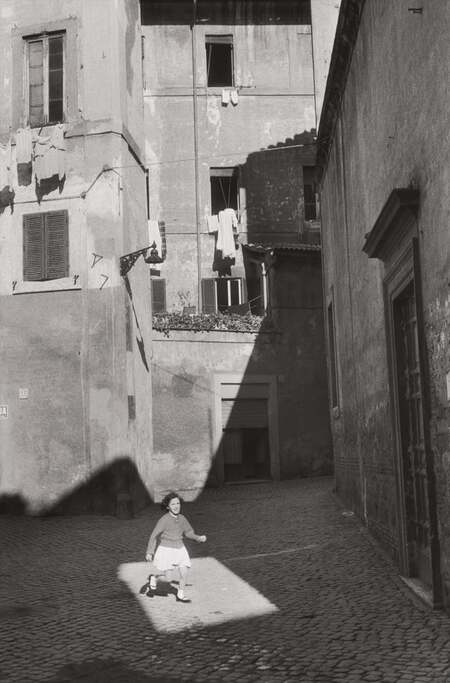
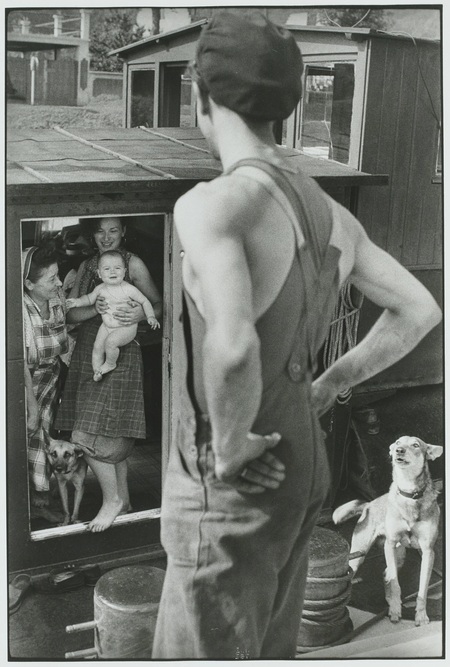
Henri Cartier-Bresson, Trastevere, Rome. 1959 Henri Cartier-Bresson, Bougival, France. 1956
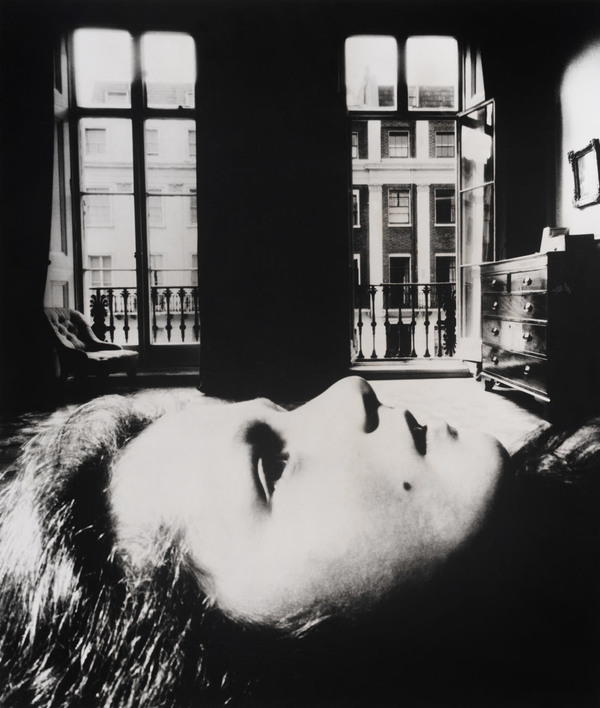
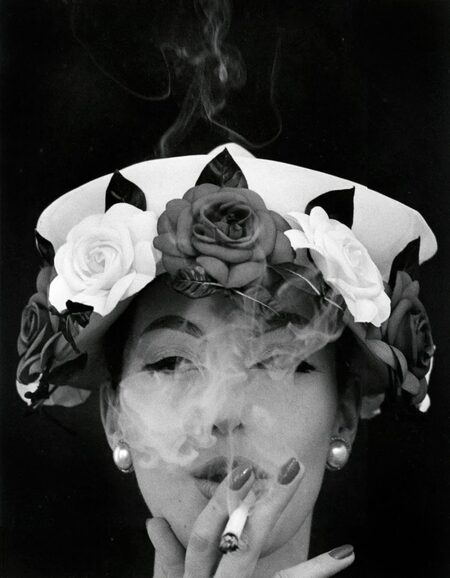
Bill Brandt. Portrait of a Young Girl. Eton Place, London. 1955 William Klein. Hat and 5 Roses. Paris (Vogue). 1956
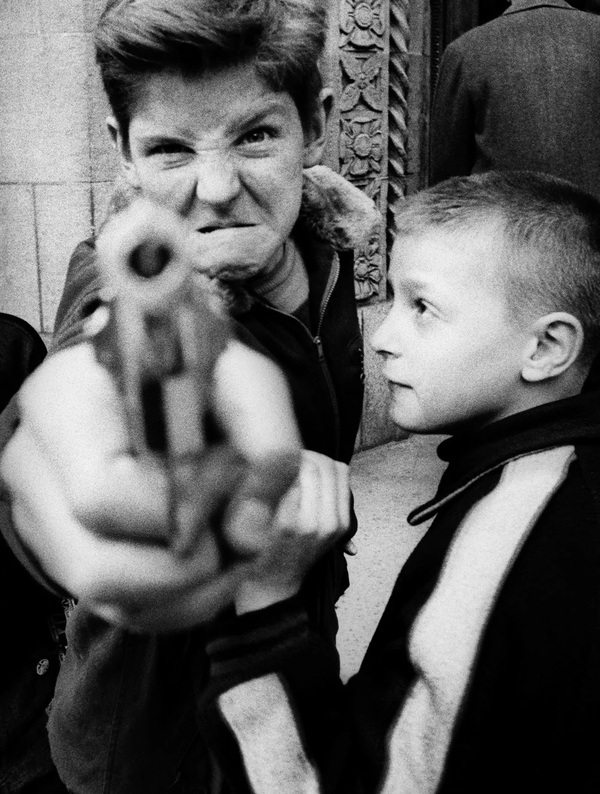
Interpretability is embedded not only in the production of images but also in the burgeoning industry of their exhibition in the 1950s. And that «human dimension» that currently saturates photographic practice manifests in a dual manner. It appears as a humanistic optimism, an inexhaustible metaphoricity, a penchant for the concise pleasures of everyday life, and an authentic stereotype of empathy for ordinary people—in everything known about neorealist cinema. But it also appears in the forceful projection of the photographer’s subjective viewpoint, which transforms reality—in the critical stance and the drive to dismantle stereotypes—in what would characterize the «New Wave» cinema.
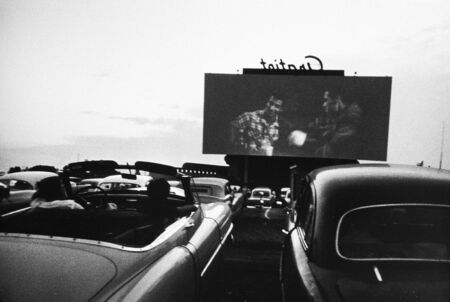
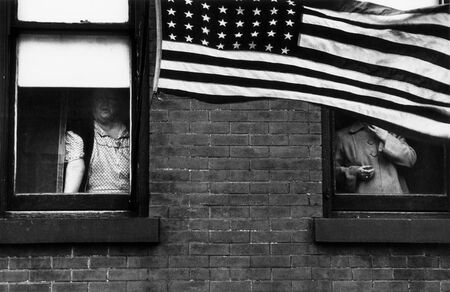
Robert Frank. Drive-in theater, Detroit. From the photo book «The Americans.» 1955 Robert Frank. Parade in Hoboken, New Jersey. From the photo book «The Americans.» 1955
The first trend reached its triumphant conclusion in 1955 with the grand exhibition «The Family of Man» at the Museum of Modern Art in New York, curated by Edward Steichen, a veteran of pictorial photography and director of the photo department at the New York Museum of Modern Art. The second trend was presented through a triad of exhibitions organized by German photographer Otto Steinert and unified under the title «Subjective Photography”—these took place in Saarbrücken in 1951, 1954, and 1958. The first trend closed the old humanist tradition, while the latter found an expanded continuation already in the practices of the 1960s.
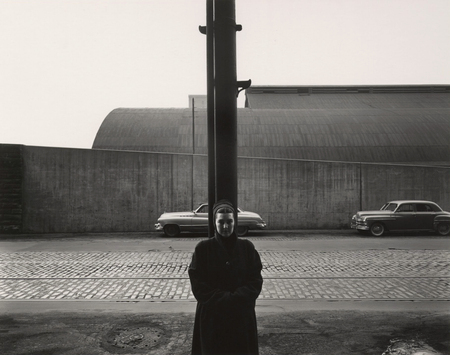
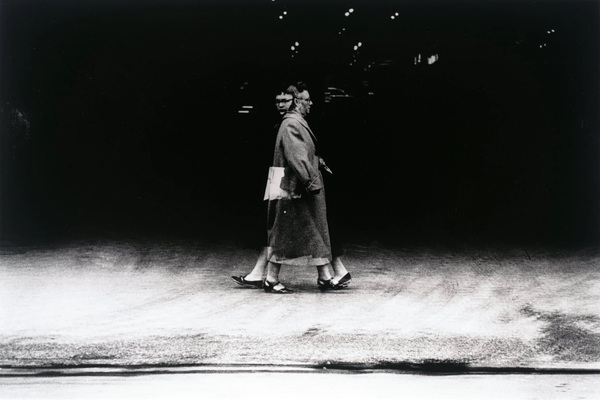
Harry Callahan. Eleanor. Chicago. 1953 Harry Callahan. Chicago. 1955
These projects not only presented the public with alternative trends of the decade. What was most intriguing about their parallel existence was that the curators drew upon a significant body of work by the same artists. Yet, by working with the proportional emotional mass of the material, they imbued each piece with the specific interpretive context they required. In other words, their approach to the volume of existing photographic practice was not an adequate response to the objectively «state of affairs, ” but rather a response to the reality that exists within photography itself.
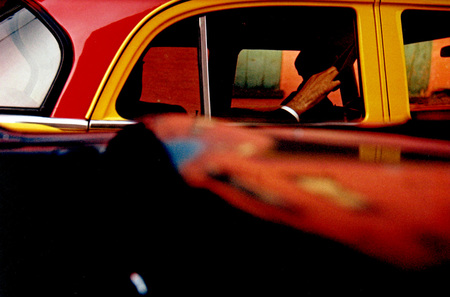
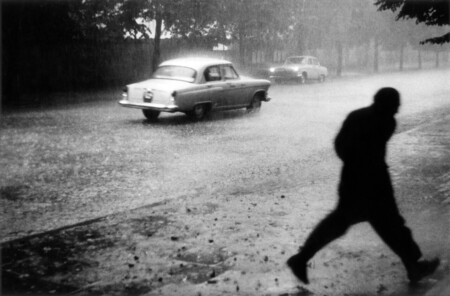
Sol Leiter. Taxi. 1957 Antanas Sutkus. Vilnius. Rain. 1959
The phantom of «objective reality» is being replaced by a subjective «selection» from the mass of visual data. Where before a captured motif strove for plastic completeness and sculptural autonomy within the frame, its expressiveness now leans toward graphic expression—sharp and light simultaneously. The frame isolates a fleeting fragment but does not sever its connection to the whole that remains outside its boundaries. Heightened attention to all manifestations of life equalizes the scale of events, figures, and objects. Everyday banality is now not only equivalent to historical achievements; it appears even more compelling, opening up as an inexhaustible source of material.
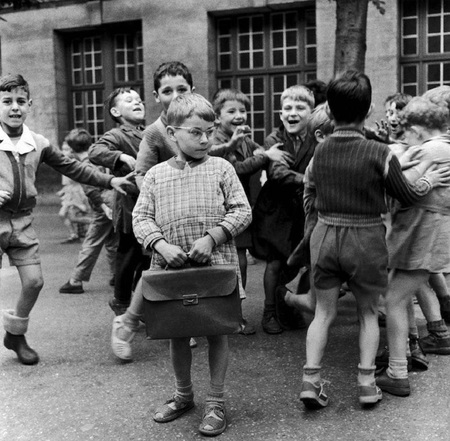
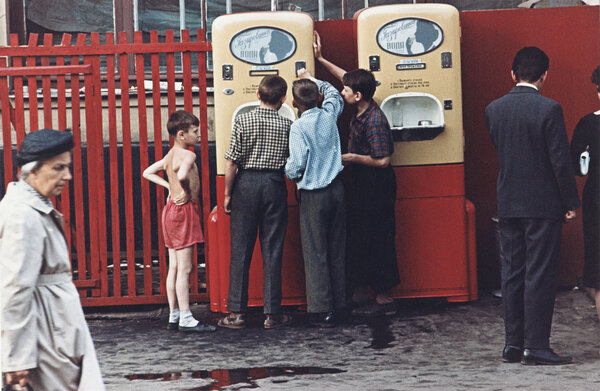
Robert Delaunay. New Portfolio. 1956 Dmitry Baltermanets. From the «Arbat Square» Series. 1960
In essence, the subject of photography is life itself, but life cannot visibly fit within a frame; the film captures only fragments of moments. Numerous illustrated magazines compile these moments into the highly popular form of the photoessay, while photographers themselves often prefer the photobook as a vehicle for their artistic expression. Photography presents itself less as an object and more as a sequence, occupying a space somewhere between literature and cinema, forming a cutting-edge trio alongside them.
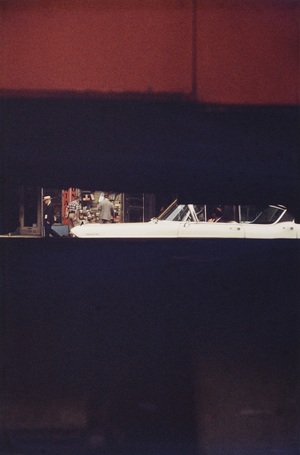
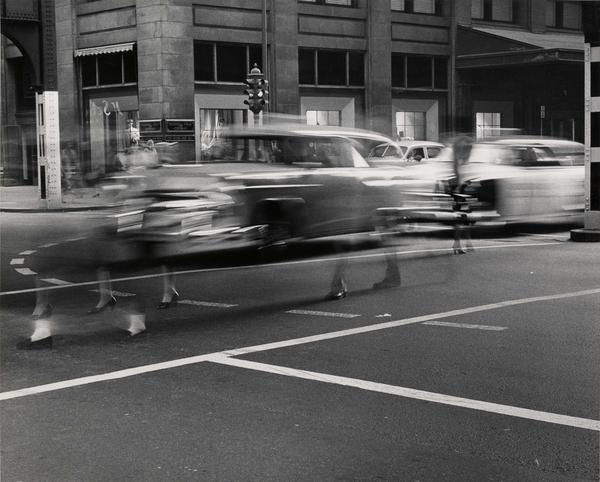
Sun Lighter. Through the Fence. 1957 Ray K. Metzker. Chicago. 1956
Key terms from film critic and director Alexander Astryuk («camera-pen») and photographer Henri Cartier-Bresson («the decisive moment») come into direct proximity. The photograph resembles a film frame, and the author’s cinematic approach breathes life into their own literary screenplay. Photography finally attains a unique aesthetic vitality. It becomes a purely personal experience, a way of life, and a means of expression.
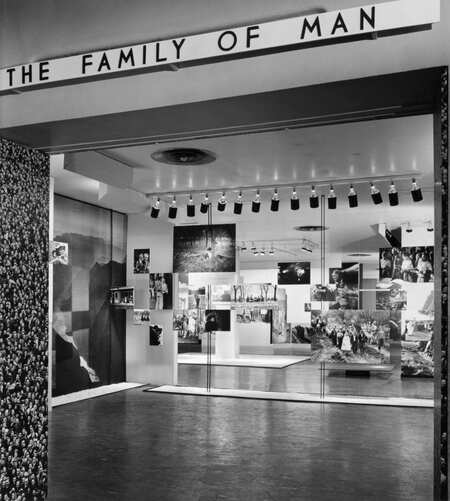
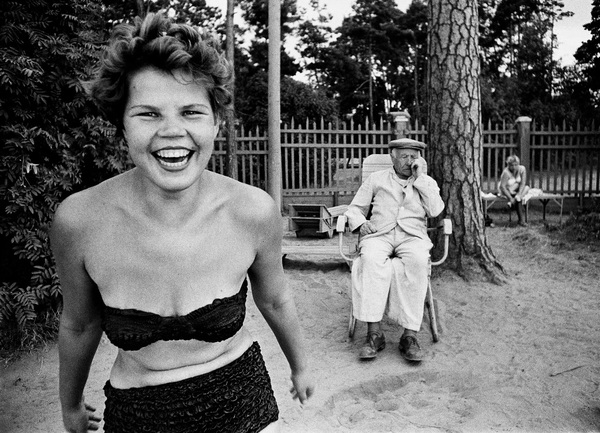
Ezra Stoller. View of the introductory section of the project exhibition «The Human Family.» January 24 — May 8, 1955 William Klein. Bikini. Moscow. From the photo-book «Moscow.» 1959
In the 1950s, photographic study appears as a magical crossroads—unclaimed territory where horizons of various specializations unfold. It seems these very years granted it a brief chance at incredible freedom, one unconstrained by societal standards or artistic canons. Yet, simultaneously, it possessed the capacity to be channeled to align with any function, standard, or canon.
Vladimir Levashov. Photovek. A very brief history of photography over the last 100 years. Moscow, 2016
https://americansuburbx.com/2011/11/william-klein-anthony-lane-on-william-klein-2003.html (07.17.2026)
https://www.moma.org/collection/works/54547 (07.17.2026)
https://artblart.com/wp-content/uploads/2017/02/robert-doisneau-le-baiser-de-lhocc82tel-de-ville-paris-1950-web.jpg (07.17.2026)
https://artblart.com/wp-content/uploads/2014/10/windowsill-daydreaming-rochester-new-york-july-1958-web.jpg (07.17.2026)
https://artblart.com/wp-content/uploads/2011/11/mgb11_p_smith_01_steelmillworker-web.jpg (07.17.2026)
https://www.moma.org/collection/works/49844 (07.17.2026)
https://www.sothebys.com/en/buy/auction/2020/photographs/aaron-siskind-marthas-vineyard-studies-1954 (07.17.2026)
https://museemagazine.com/features/2020/10/28/henri-cartier-bresson-le-grand-jeu-at-palazzo-grassi (07.17.2026)
https://artblart.com/wp-content/uploads/2022/11/portrait-of-a-young-girl-eaton-place.jpg (07.17.2026)
https://www.photographer.ru/events/afisha/8512.htm (07.17.2026)
https://www.exibartstreet.com/news/robert-doisneau-the-poetic-approach-to-street-photography/ (07.17.2026)
https://fabricworkshopandmuseum.org/exhibition/philadelphia-photographers-ray-k-metzker/ (07.17.2026)