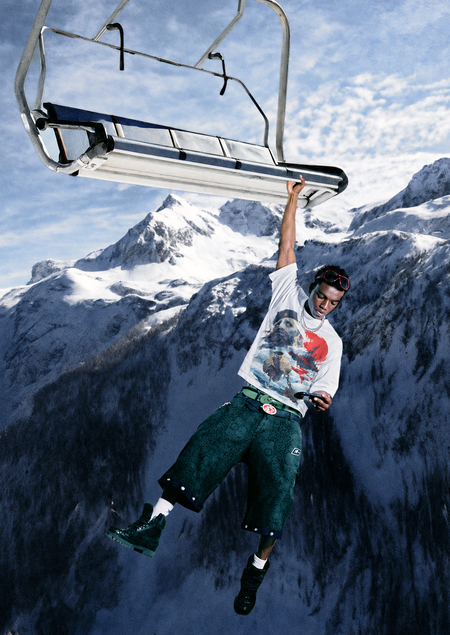
Factory: VERP
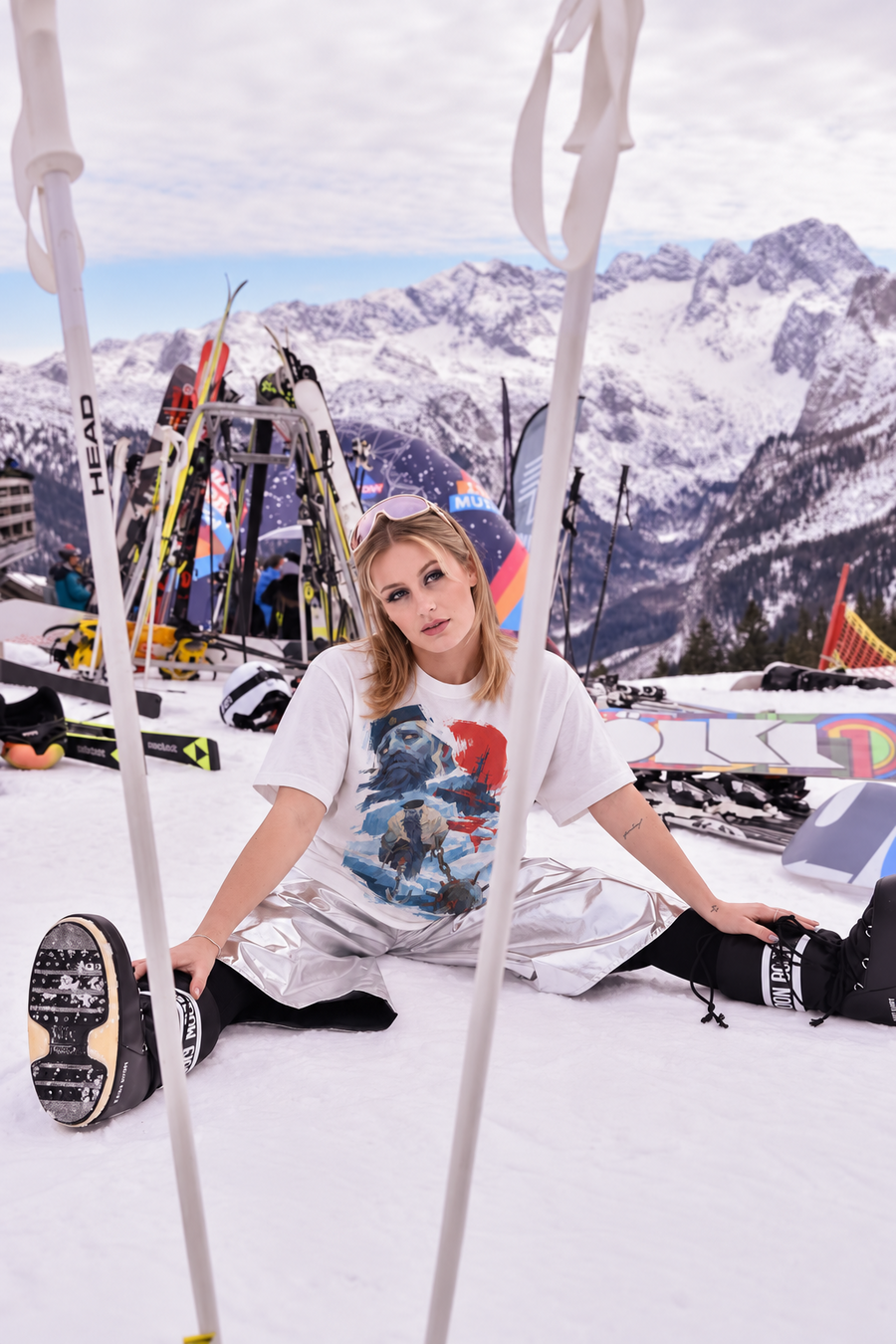
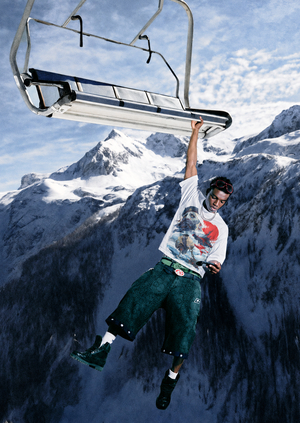
VERP Product Visualization
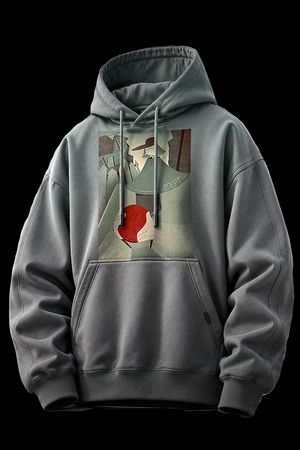
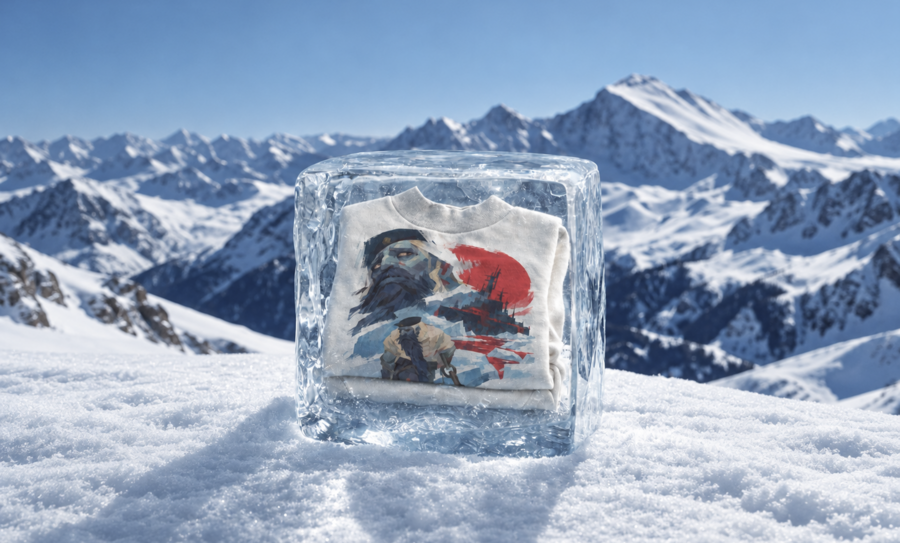
Working on the full-cycle character, Verp, I aimed to fuse the stark aesthetic of the Arctic, a military past, and the consequences of a scientific experiment, making the contrast between human and mutation the primary visual motif. Within the «Factory» project, the character was given a new interpretation and became the focal point of the T-shirt print. The print is designed in the style of a contemporary, artisanal poster, featuring a rough painterly execution, a restricted cool palette, and vibrant red accents.
Visualization
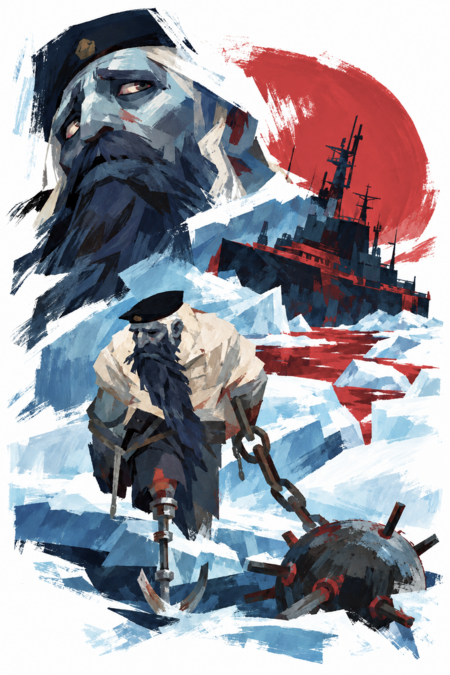
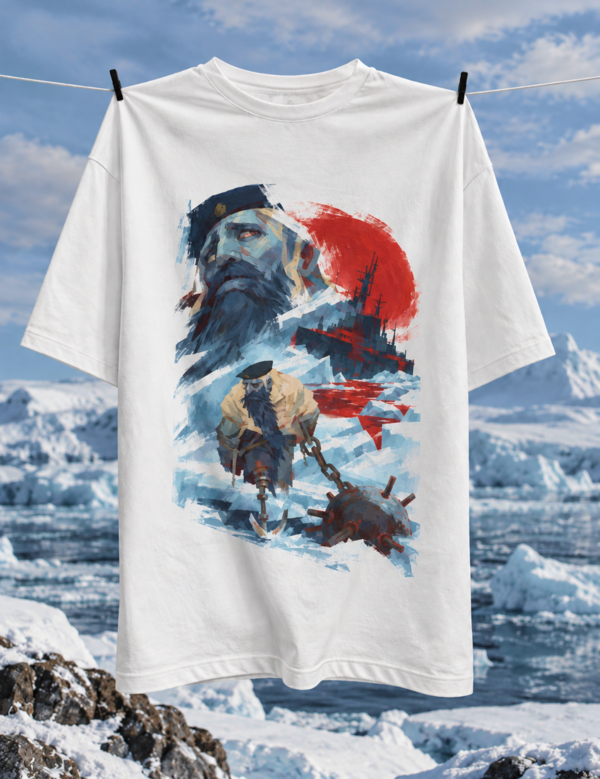
Product Print and Visualization: VERP
VERP Product Visualization
Technical Requirements
«Fashion. Free Format—Oversized T-Shirt»
Developed size—L. Back length—76 cm, chest width when laid flat—64 cm, sleeve length—23 cm.
Material—dense knitted fabric, 100% cotton, density 260 g/m². Color—white. Print application method—DTF printing (thermo-transfer printing).
Round neckline with a knit trim, short set-in sleeves, a straight silhouette, and a relaxed fit. The bottom hem and sleeve cuffs are finished with double stitching.
The front of the T-shirt features a colorful, original print depicting the character Verpa. The composition incorporates images of an icebreaker, fractured Arctic ice, a naval mine, and the character’s distinctive anchor foot. The illustration is rendered in the style of a contemporary painted poster, featuring broad, painterly strokes, a cool blue-cyan palette, and contrasting red accents.
Print size—23 cm wide, 28 cm high.
Materials and Production Cost Calculation
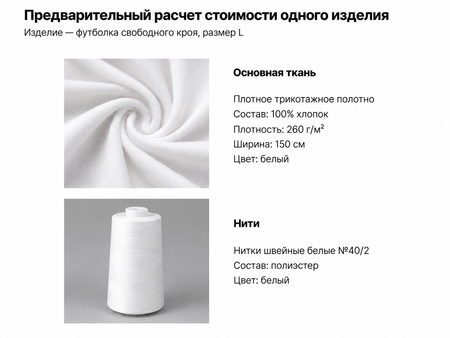
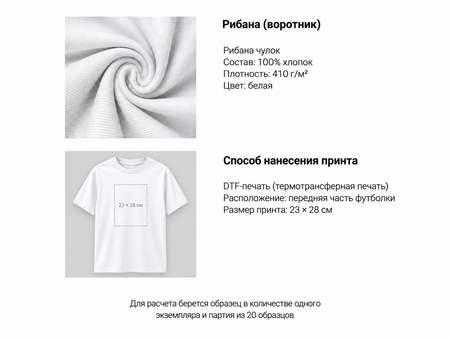
Production of one experimental sample: ₽3,110.
Cost of one T-shirt with a batch size of 20: ₽2,216.5.
Cost of manufacturing a batch of 20 T-shirts: ₽44,330.
Total budget for manufacturing the sample and the main batch: ₽47,440.
Projected retail price per T-shirt: ₽3,500.
Requested grant amount: ₽55,000. The funds are planned to cover the production of the test sample and the batch of 20 T-shirts, the printing of the original character image using DTF, material procurement, cutting and sewing, packaging, and product labeling. The difference between the calculated production cost and the grant amount is reserved for test printing, image color correction, adjustment of technological parameters after the sample is produced, and associated production expenses.
Potential Manufacturers:Reteks-Print, Moscow — full-cycle production: custom tailoring, DTF printing, creation of control samples; handles runs starting from 20 units. Phone: +7 (499) 398-12-38. Reteks-Print retex-print.ru
Maryjane, Moscow — industrial merchandise production, sewing, and DTF printing; sample creation is possible before starting a run. Phone: +7 (499) 113-89-28. Maryjane.ru opt.maryjane.ru
PINQ, Moscow — in-house textile production for merchandise, with options for material selection, technical consultation, packaging, and batch preparation. Phone: +7 (495) 215-55-32. PINQ pinq.ru
Production Stages
- Design Development
An original print featuring the character Verp was created, drawing inspiration from a blend of Arctic themes, military aesthetics, and imagery associated with the aftermath of a scientific experiment. The composition incorporates visuals of the character himself, an icebreaker, fractured ice floes, a naval mine, and a signature anchor leg. The illustration is rendered in the style of a modern graphic poster, utilizing a cool blue-cyan color palette accented with contrasting red highlights. The composition is positioned centrally on the front of the T-shirt.
- Pattern Drafting and Cutting
Patterns are developed for a size L T-shirt, taking into account a straight, relaxed silhouette. The main parts of the garment include the front piece, back piece, two sleeves, and a neck binding. Cutting is performed from the prepared patterns using dense cotton knit fabric, accounting for the necessary seam allowances.
- Garment Construction The t-shirt pieces are joined using an overlock stitch. The shoulder and side seams are sewn, followed by the attachment of the short sleeves. The round neckline is finished with a tight knit ribbing. The bottom of the t-shirt and sleeves are outlined with a double stitch to increase durability and neatness.
- Print Application
The original illustration is prepared for high-resolution printing, preserving the characteristic painterly brushstrokes, color contrasts, and fine details of the composition. The image is transferred to the front of the T-shirt using DTF printing with a heat press. This technology allows for the precise reproduction of the image’s cool tones, rich red accents, and the textural quality of the design.
- Final Finishing After the print is applied, a quality check is conducted on the print quality, the strength of the seams, and the finished product’s conformity to the original design mockup. Special attention is paid to the placement and proportions of the print on the front of the t-shirt. The final step is the wet-heat treatment of the garment, taking into account the characteristics of cotton knitwear and DTF printing.
Production Files
A set of three files containing the print image has been prepared as production materials. The main files are prepared in CMYK color mode at 300 DPI. The design is placed on a transparent background. There are no text elements in the composition. All files are prepared for further printing use while maintaining the original proportions and image quality.
VERP Product Visualization